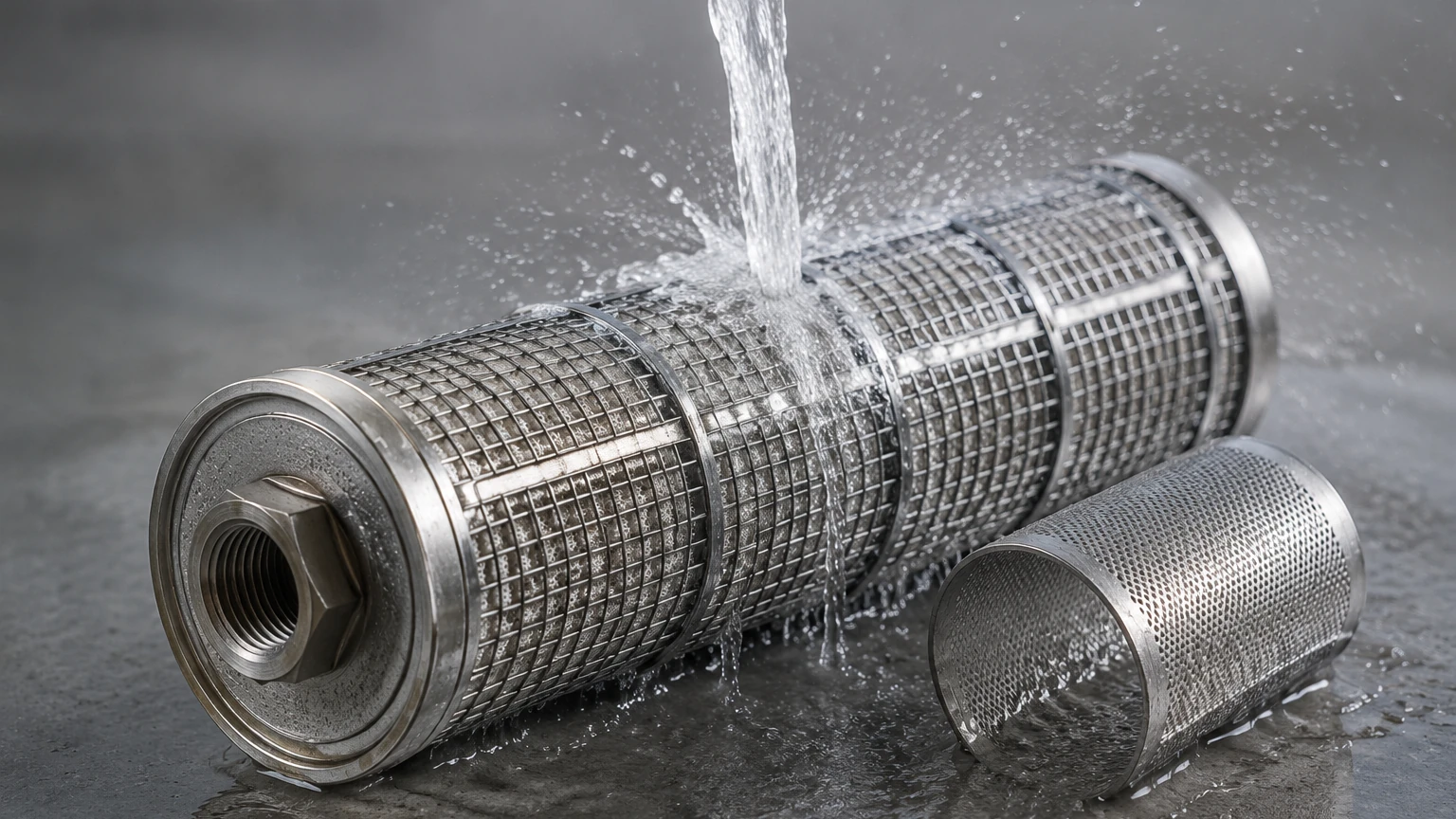
How Do You Backwash a Filter
In industrial filtration, the ability to clean and reuse filter media is a significant factor in operational efficiency and cost management. Unlike disposable depth filters, high-performance stainless steel filters are designed for regenerative processes. Central to this regeneration is backwashing. For engineers and plant managers, understanding the technical nuances of how do you backwash a filter is essential for maintaining system pressure, ensuring product purity, and extending the service life of expensive metal media.
Backwashing is the process of reversing the flow of fluid through a filter medium to dislodge and remove accumulated contaminants. In a standard forward-flow filtration cycle, particles are trapped on the surface or within the pores of the filter. Over time, this buildup creates a "filter cake" that increases resistance to flow, measured as differential pressure (ΔP). When this pressure reaches a critical threshold, the backwash cycle is initiated to restore the filter's permeability.
Understanding the Principles of Backwashing in Industrial Systems
The effectiveness of a backwash cycle depends on the physical relationship between the contaminant, the filter media, and the cleaning fluid. For stainless steel wire mesh or sintered metal cartridges, the process relies on hydraulic or pneumatic force to overcome the adhesion between the particles and the filter surface.
There are two primary methods used in industrial settings: steady-state backwashing and backpulsing. Steady-state backwashing involves a continuous reverse flow at a lower pressure for a longer duration. In contrast, backpulsing uses a high-pressure, short-duration burst of fluid or gas to "shock" the contaminant layer off the media. The choice between these methods depends on the nature of the solids—whether they are hard and granular or soft and deformable—and the structural limits of the filter element itself.
From an engineering perspective, the backwash fluid must be clean. Using contaminated fluid for backwashing risks pushing particles deeper into the media from the reverse side, a phenomenon known as "internal blinding," which can permanently damage the filter’s flow characteristics. Therefore, most systems utilize a portion of the filtered permeate or a separate clean water/solvent source for the cleaning cycle.
Step-by-Step Procedure: How Do You Backwash a Filter Effectively?
While specific system designs vary, the fundamental procedure for backwashing an industrial stainless steel filter follows a structured sequence to ensure safety and cleaning efficiency.
1. System Isolation
The first step is to isolate the filter housing from the main process stream. This is typically achieved through a series of automated or manual valves. If the process requires continuous operation, a duplex filter system is used, where one housing remains online while the other undergoes backwashing. It is critical to ensure that the forward flow is completely halted to prevent competing pressure gradients during the cleaning phase.
2. Pressure Equalization and Venting
Before introducing the reverse flow, the internal pressure of the housing may need to be adjusted. If the system uses compressed air or gas to assist the backwash (gas-assist), the housing might be partially drained to create an air pocket. This air pocket acts as a spring, amplifying the force of the backwash fluid when the valve is opened.
3. Initiation of Reverse Flow
This is the core of the question: how do you backwash a filter? The backwash valve is opened, allowing clean fluid to enter the filter from the downstream (clean) side. The fluid travels through the support core, through the stainless steel mesh or sintered layers, and exits from the upstream (dirty) side. The velocity of this reverse flow must be high enough to lift the filter cake but controlled enough to avoid mechanical deformation of the pleated mesh.
4. Contaminant Discharge
The reverse flow carries the dislodged solids out through a dedicated backwash drain or reclaim line. In many industrial applications, this effluent is sent to a secondary recovery system or a waste treatment facility. The duration of this phase is usually timed or determined by a clarity sensor (turbidity meter) on the drain line.
5. Rinsing and Return to Service
Once the backwash is complete, a short forward-rinse cycle is often performed. This ensures that any residual particles on the upstream side are flushed out before the filter is put back into the main process stream. Finally, the valves are repositioned to resume normal filtration, and the differential pressure is monitored to confirm that the media has returned to its "clean" baseline ΔP.
Engineering Parameters: Pressure, Flow, and Timing
To optimize the backwash process, several engineering parameters must be carefully calibrated. If the backwash is too weak, the filter will not be fully cleaned, leading to shorter subsequent filtration cycles (a phenomenon called "short cycling"). If it is too aggressive, the stainless steel media may suffer from fatigue.
* Differential Pressure (ΔP) Setpoints: Most automated systems trigger a backwash when the ΔP reaches between 0.7 and 1.5 bar (10–22 psi). Waiting too long can compress the filter cake so tightly that it becomes nearly impossible to remove, leading to permanent fouling.
* Backwash Flow Rate: As a general rule, the backwash flow rate should be 1.5 to 2 times the forward filtration flow rate. This higher velocity provides the necessary shear force to break the bonds between the particles and the metal wires.
* Temperature Considerations: In chemical processing, the temperature of the backwash fluid can impact efficiency. A warmer fluid may reduce the viscosity of trapped oils or resins, making them easier to flush out of a wire mesh structure.
For technical professionals looking for specific hardware compatibility data or custom housing configurations, the Main Page of the Kaifil website provides comprehensive resources on how different filter designs respond to these variables.
Backwashing Different Media Types: Wire Mesh vs. Sintered Metal
The construction of the filter media significantly influences how it should be backwashed. Stainless steel filters generally fall into two categories: woven wire mesh and sintered metal.
Woven Wire Mesh: These filters consist of precision-woven stainless steel wires. They offer a high open area and surface-loading characteristics, which makes them exceptionally easy to backwash. Because the contaminants are trapped primarily on the surface, a simple reverse flow usually clears the media quickly. However, pleated wire mesh requires internal support structures (like a perforated metal core) to withstand the reverse pressure without collapsing or deforming the pleats.
Sintered Metal Media: Sintered filters are made from metal powders or multiple layers of mesh bonded together under heat and pressure. These provide depth filtration and can capture much finer particles. Because particles can become trapped deeper within the tortuous path of the sintered structure, backwashing often requires higher pressures or the use of ultrasonic cleaning in conjunction with traditional backwashing. Engineers must ensure that the "bubble point" of the sintered media is not compromised by excessive backwash pressure.
Common Challenges and Risks in Automated Backwash Cycles
While backwashing is a standard procedure, it is not without risks. Improperly configured cycles can lead to equipment failure or process contamination.
* Media Fatigue: Stainless steel, while durable, is subject to work hardening and fatigue when exposed to repeated pressure pulses. Over thousands of cycles, the wires in a mesh filter can become brittle and eventually crack. Selecting the correct alloy (such as 316L for better corrosion resistance and ductility) and ensuring the pleat geometry is optimized for backwash loads can mitigate this risk.
* Incomplete Cleaning: If the backwash fluid finds a path of least resistance (channeling), it may clean only a portion of the filter. The remaining fouled areas will then be forced to handle the entire flow during the next filtration cycle, leading to rapid pressure spikes.
* Cross-Contamination: If the valves in a backwash system leak, there is a risk of backwash effluent entering the clean process stream. Regular seal maintenance and the use of high-quality industrial valves are essential components of a reliable filtration system.
Optimizing Total Cost of Ownership through Regenerative Filtration
Understanding how do you backwash a filter is more than a maintenance requirement; it is a strategy for reducing the total cost of ownership (TCO). While the initial investment in a stainless steel backwashable system is higher than that of a disposable plastic housing, the long-term savings are substantial.
1. Reduced Waste: Eliminating the disposal of contaminated filter cartridges reduces environmental impact and waste handling costs.
2. Labor Savings: Automated backwash systems require minimal operator intervention compared to the manual change-out of disposable filters.
3. Process Continuity: In industries like continuous chemical synthesis or large-scale water treatment, the ability to clean filters in-situ without stopping the process is a critical advantage.
When selecting a system, engineers should confirm the compatibility of the filter media with the intended backwash fluid and ensure that the housing design allows for the necessary flow velocities. Customization is often required to match the specific particle size distribution and fluid rheology of a given application.
For those in the procurement or engineering phase of a project, visiting the Main Page allows for a direct review of custom OEM capabilities and technical specifications for stainless steel filter cartridges designed specifically for high-frequency backwash environments.
Conclusion
Backwashing is a sophisticated engineering process that allows industrial operations to maintain high levels of purity while maximizing the lifespan of filtration hardware. By carefully managing flow rates, pressure differentials, and media selection, facilities can ensure that their stainless steel filters perform reliably over thousands of cycles. Whether dealing with hydraulic fluids, food products, or aggressive chemicals, the principles of how do you backwash a filter remain the same: precision, control, and the right material choice are the keys to successful filtration management.