


How to Set Up a Vacuum Filtration
Vacuum filtration is a fundamental process in industrial solid-liquid separation, utilized extensively in chemical processing, pharmaceuticals, and water treatment. Unlike gravity filtration, which relies solely on the weight of the fluid to pass through a medium, vacuum filtration utilizes a pressure differential—created by a vacuum pump—to pull the liquid through the filter. This method significantly increases the filtration rate and is essential for applications involving high-viscosity fluids or fine particulate matter that would otherwise clog a gravity-fed system.
For engineers and laboratory managers, understanding how to set up a vacuum filtration system correctly is critical to ensuring process efficiency, maintaining product purity, and extending the lifespan of filtration hardware. This guide provides a technical overview of the components, assembly steps, and engineering considerations necessary for a professional-grade vacuum filtration setup.
Essential Components for an Industrial Vacuum Filtration System
Before beginning the setup, it is vital to ensure that all components are compatible with the chemical nature of the filtrate and the thermal requirements of the process. A standard industrial or laboratory setup typically includes the following:
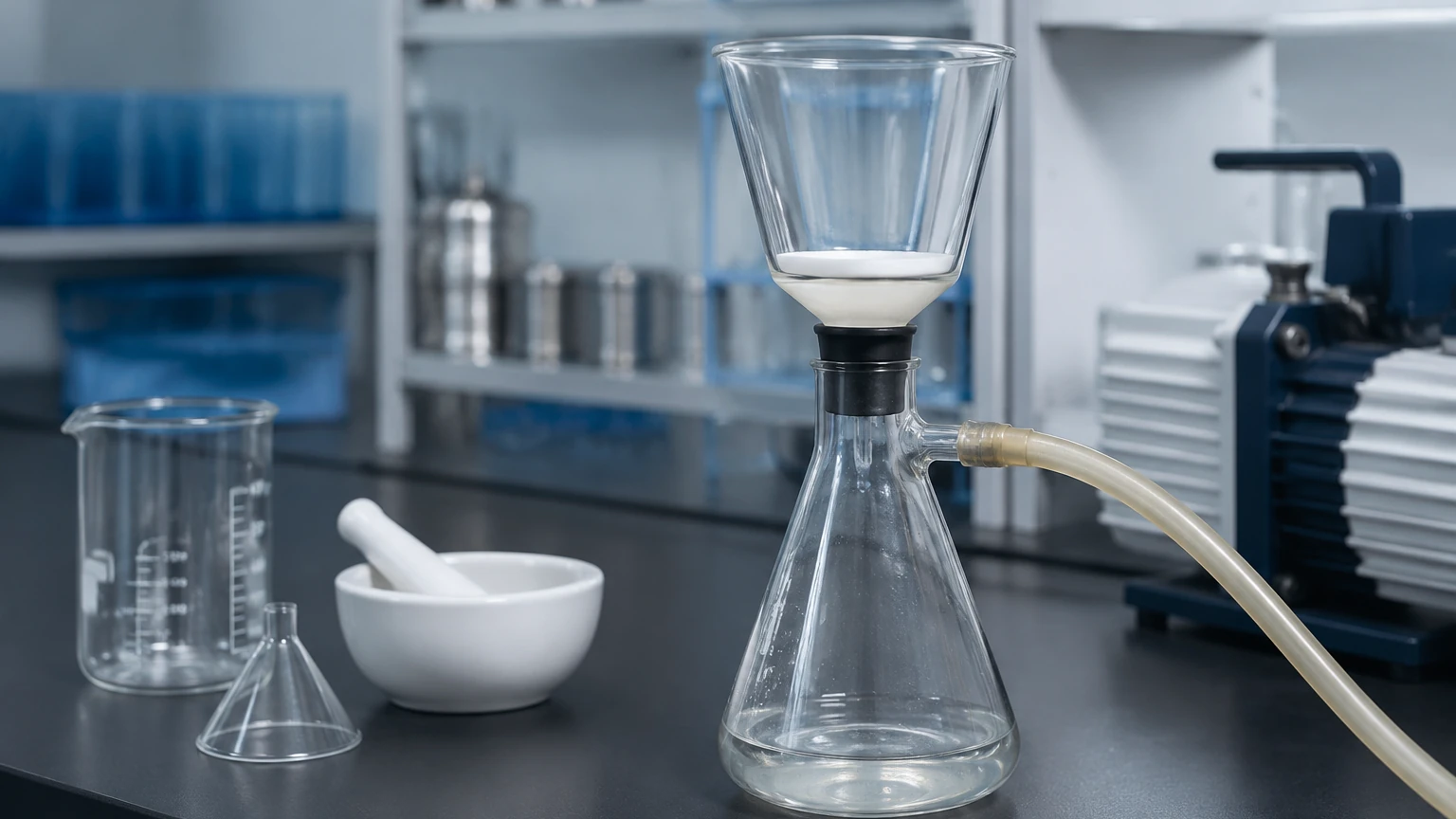
1. The Filter Holder/Funnel: In laboratory settings, this is often a Buchner funnel. In industrial applications, this is replaced by a stainless steel filter housing or a specialized metal filter plate designed to support high-pressure differentials.
2. Filter Media: This is the core of the system. While paper is common in basic labs, industrial applications require durable materials. Stainless steel wire mesh filters or sintered metal cartridges are preferred for their chemical resistance and ability to be cleaned and reused.
3. The Vacuum Flask or Receiver Tank: This vessel collects the filtrate. It must be constructed from heavy-walled glass or reinforced stainless steel to withstand the external atmospheric pressure without collapsing.
4. Vacuum Source: This is typically a vacuum pump (diaphragm, rotary vane, or water aspirator). The choice of pump depends on the required vacuum level and the volatility of the vapors being pulled through the system.
5. Tubing and Connectors: Heavy-walled vacuum tubing is required to prevent the lines from collapsing under negative pressure. Clamps and gaskets ensure airtight seals at all connection points.
6. Trap/Cold Trap: Positioned between the receiver flask and the vacuum pump, the trap prevents liquid or corrosive vapors from entering and damaging the pump.
Step-by-Step Guide: How to Set Up a Vacuum Filtration
Proper assembly is the first step in achieving consistent filtration results. Follow these technical steps to ensure a secure and efficient configuration.
1. Secure the Receiver Vessel
Begin by placing the vacuum flask or receiver tank on a stable, level surface. In an industrial environment, ensure the vessel is properly mounted or bolted to a skid. If using a glass flask, it should be secured with a three-prong clamp to a sturdy ring stand to prevent tipping once the heavy funnel and tubing are attached.
2. Install the Filter Support and Gasket
Place the rubber stopper or specialized gasket into the neck of the receiver vessel. The seal must be airtight. Insert the stem of the filter holder (or the outlet of the stainless steel housing) through the stopper. For high-performance industrial systems, metal-to-metal seals with O-rings (such as Viton or EPDM) are often used to ensure zero leakage under high vacuum.
3. Position the Filter Media
Place the filter medium—such as a custom-cut stainless steel wire mesh disc—onto the perforated plate of the funnel or inside the housing. If you are using a multi-layer sintered mesh, ensure it is oriented correctly according to the flow direction. It is critical that the filter medium lies perfectly flat and covers all perforations to prevent "bypassing," where solids escape around the edges of the filter.
4. Connect the Vacuum Line and Trap
Connect one end of the heavy-walled tubing to the side arm of the receiver flask. Connect the other end to the vacuum trap. Finally, connect the trap to the vacuum pump. Using a trap is a non-negotiable safety step in industrial setups to protect the mechanical integrity of the vacuum source from moisture and chemical carryover.
5. Priming and Leak Testing
Before introducing the actual process fluid, turn on the vacuum pump to check for leaks. A quick way to verify the seal is to apply a small amount of clean solvent or distilled water to the filter medium. This "primes" the filter, ensuring it is seated correctly and helping to create an initial seal. If the vacuum gauge reaches the desired level and holds steady, the system is ready for operation.
Selecting the Right Filter Media for High-Performance Applications
When considering how to set up a vacuum filtration system for long-term industrial use, the choice of filter media is the most significant factor affecting total cost of ownership (TCO). While disposable filters are inexpensive initially, they often fail under high pressure or dissolve in aggressive solvents.
Stainless steel filtration solutions, such as those found on the Main Page of specialized manufacturers, offer several technical advantages:
* Mechanical Strength: Stainless steel mesh can withstand significant pressure differentials without tearing or deforming, which is essential when the vacuum pump is operating at high capacity.
* Thermal Stability: Metal filters maintain their integrity at high temperatures where polymer-based filters would melt or degrade.
* Precision Filtration: Advanced weaving techniques allow for precise micron ratings, ensuring that even the smallest contaminants are captured consistently.
* Cleanability: Unlike paper, stainless steel filters can be backwashed, ultrasonically cleaned, or chemically sanitized, making them ideal for pharmaceutical and food-grade applications.
Engineering Considerations: Maximizing Throughput and Efficiency
To optimize a vacuum filtration setup, engineers must balance the flow rate against the filtration accuracy. Several variables influence this performance:
Pressure Differential ($ΔP$)
Increasing the vacuum strength generally increases the flow rate, but only up to a certain point. If the vacuum is too high, the filter cake (the layer of solids building up on the filter) can become overly compressed, actually decreasing the flow rate and making the cake difficult to remove. Monitoring the pressure differential across the filter medium is essential for maintaining an efficient cycle.
Surface Area
The effective filtration area (EFA) directly impacts how much volume the system can handle. If the filtration process is too slow, increasing the diameter of the filter holder or moving to a multi-cartridge vacuum housing may be necessary. Custom-engineered components allow for the maximization of surface area within a compact footprint.
Fluid Viscosity and Temperature
Viscosity is inversely proportional to flow rate. In many industrial vacuum setups, the slurry is heated to reduce viscosity and accelerate filtration. However, this requires that all components—including the gaskets and the filter media—be rated for the operating temperature.
Troubleshooting Common Setup and Operational Issues
Even with a correct initial setup, operational challenges can arise. Identifying these early prevents downtime and product loss.
* Loss of Vacuum: This is usually caused by a degraded gasket, a cracked tube, or an improperly seated filter. Regularly inspect all rubber and silicone components for signs of brittleness or chemical attack.
* Slow Flow Rate (Blinding): If the flow rate drops significantly despite a strong vacuum, the filter medium may be "blinded" (clogged). This often happens if the micron rating is too fine for the particle size distribution of the slurry. Switching to a graduated density filter or a different mesh weave can alleviate this.
* Filtrate Turbidity: If the liquid in the receiver flask appears cloudy, the filter medium may have a hole, or the particles may be smaller than the micron rating. Ensure the filter is properly seated and that the mesh size is appropriate for the target particle retention.
Safety Protocols and Maintenance for Vacuum Systems
Safety is paramount when dealing with vacuum-assisted equipment. Because the system is under negative pressure, the primary risk is an implosion of the receiver vessel.
1. Vessel Inspection: Never use a glass flask that has scratches or "star cracks," as these are weak points that can fail under vacuum.
2. Gradual Pressure Release: When the filtration is complete, never turn off the pump abruptly. Instead, slowly bleed air into the system using a vacuum release valve or by carefully disconnecting a hose. This prevents the filtrate from being sucked back into the filter or the pump.
3. Filter Maintenance: For stainless steel components, establish a regular cleaning schedule. Ultrasonic cleaning is highly effective for removing fine particulates trapped within the wire mesh pores, restoring the original flow characteristics of the filter.
Conclusion
Learning how to set up a vacuum filtration system is a vital skill for ensuring the success of industrial separation tasks. By selecting high-quality components—particularly durable stainless steel filter media—and following a rigorous assembly and testing protocol, engineering teams can achieve high throughput and exceptional product purity.
For those requiring specialized filtration components tailored to specific industrial environments, consulting with a professional manufacturer is the best path forward. Custom solutions ensure that the filtration media, housing, and seals are perfectly matched to the chemical and physical demands of the application, ultimately leading to a more reliable and cost-effective process. For more information on high-performance filtration components and custom engineering support, visit the Main Page to explore professional options for your next project.
