


Hplc Filtration
High-Performance Liquid Chromatography (HPLC) is a cornerstone of analytical chemistry, utilized extensively in pharmaceutical development, environmental monitoring, and chemical processing. The precision of HPLC results depends significantly on the purity of the mobile phase and the samples introduced into the system. Particulate contamination, even at the sub-micron level, can lead to catastrophic system failure, baseline noise, and inaccurate data. Consequently, hplc filtration is not merely a peripheral step but a critical engineering requirement for maintaining system integrity and chromatographic resolution.
For engineers and laboratory managers, selecting the correct filtration components involves understanding the intersection of fluid dynamics, material science, and chemical compatibility. This guide examines the technical aspects of filtration within HPLC systems, focusing on the role of stainless steel components and precision-engineered filter media in demanding industrial environments.
The Critical Role of Filtration in HPLC Systems
In an HPLC system, filtration occurs at multiple stages, each serving a specific protective function. The primary goal is to remove insoluble particulates that can originate from the mobile phase, the sample, or the mechanical wear of system components like pump seals.
Protecting the Stationary Phase
The HPLC column is the most sensitive and expensive component of the system. It is packed with fine silica particles, often ranging from 1.7 µm to 5 µm in diameter. If particulates enter the column, they accumulate at the inlet frit, leading to increased backpressure and distorted peak shapes (such as tailing or splitting). Effective filtration ensures that only dissolved analytes and pure solvents reach the stationary phase, thereby extending column life.
Maintaining Pump and Injector Performance
HPLC pumps operate at high pressures, often exceeding 6,000 psi (and up to 15,000 psi in UHPLC). Particulates in the mobile phase can cause abrasive wear on piston seals and sapphire plungers, leading to leaks and flow rate instabilities. Furthermore, automated injectors contain precision-machined rotors and stators that can be easily scratched by debris, resulting in cross-contamination or sample loss.
Material Selection: Stainless Steel vs. Polymeric Media
When designing or maintaining filtration systems for HPLC, material selection is dictated by the chemical nature of the solvents and the physical demands of the process. While polymeric membranes (such as PTFE, PVDF, or Nylon) are common for disposable syringe filters, industrial and OEM applications often rely on stainless steel for permanent or semi-permanent filtration stages.
Advantages of 316L Stainless Steel
For high-pressure applications and aggressive solvent environments, 316L stainless steel is the preferred material. Its benefits include:
* Mechanical Strength: Stainless steel filters can withstand extreme pressure differentials without deforming or shedding fibers.
* Chemical Inertness: It is resistant to a wide range of organic solvents, including acetonitrile, methanol, and THF, which are standard in HPLC.
* Thermal Stability: Stainless steel maintains its structural integrity across a broad temperature range, which is essential for high-temperature liquid chromatography.
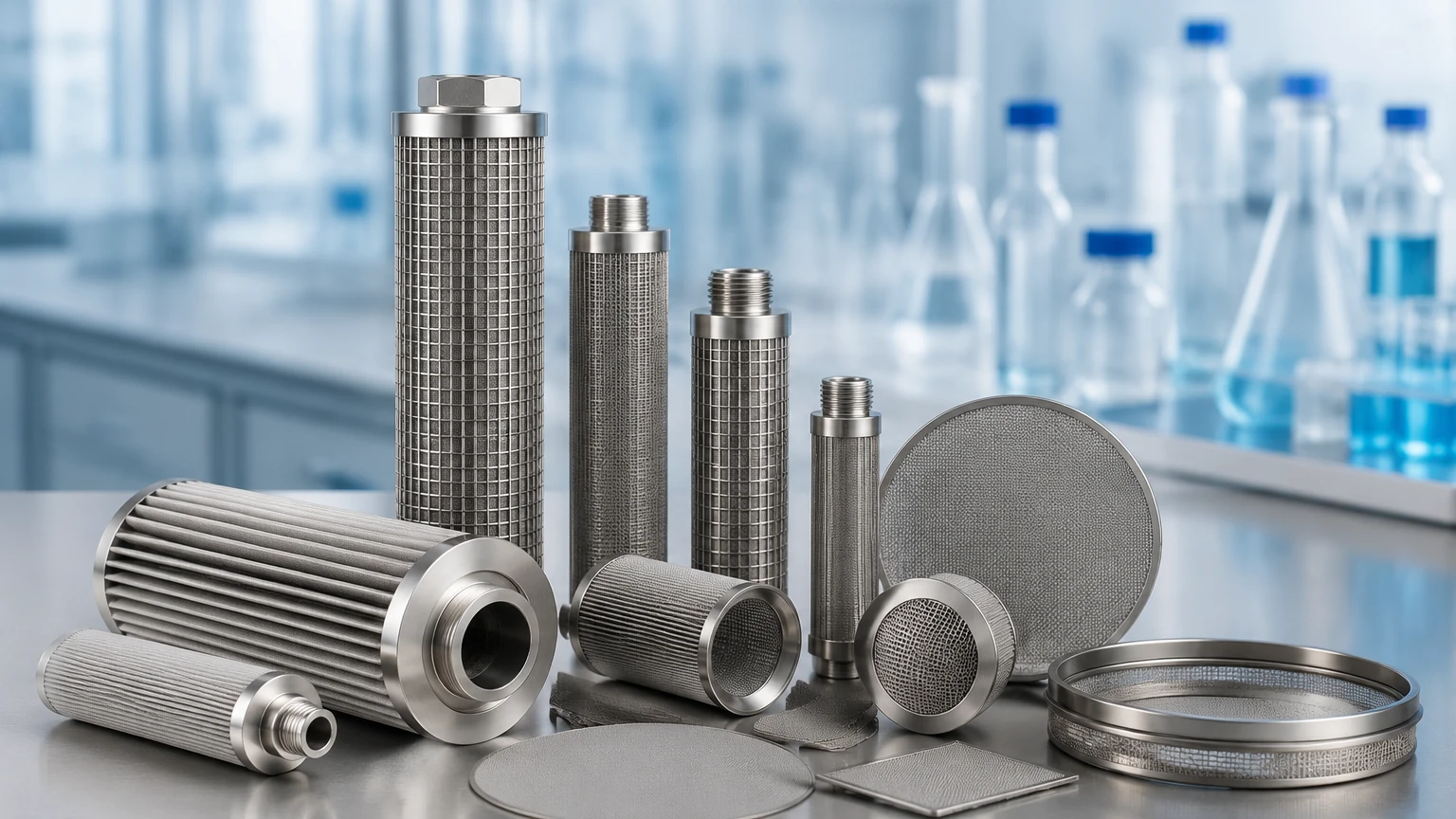
* Durability: Unlike disposable filters, stainless steel sintered filters or wire mesh components can often be cleaned and reused, reducing the total cost of ownership in industrial settings.
Sintered Metal Frits
Sintered metal frits are a specific type of stainless steel filter used at the head of HPLC columns and in mobile phase intake filters (sinkers). These are manufactured by compressing stainless steel powder or fine wire mesh and heating it until the particles bond without melting. This creates a porous structure with a highly controlled pore size distribution, providing uniform flow and excellent filtration efficiency.
Engineering Considerations for HPLC Filter Design
Engineers must evaluate several technical parameters when integrating filtration solutions into HPLC hardware. These factors directly influence the efficiency of the separation and the reliability of the instrument.
Pore Size and Filtration Rating
The standard pore size for HPLC filtration is 0.45 µm for general applications and 0.22 µm for UHPLC or when microbial removal is required. In industrial chromatography, where larger volumes are processed, pre-filtration with 2 µm to 10 µm stainless steel mesh is often employed to protect the finer downstream filters from premature clogging.
Dead Volume and Extra-Column Band Broadening
In the context of HPLC, "dead volume" refers to any space within the fluid path where the sample can mix and spread out. Excessive dead volume in a filter housing can lead to band broadening, which reduces the resolution of the chromatographic peaks. Engineers must design filter housings with minimal internal volume and optimized flow paths to ensure that the sample plug remains tight as it passes through the filter.
Pressure Drop (Delta P)
Every filter introduces a degree of resistance to the flow. In HPLC, where flow consistency is paramount, the pressure drop across the filter must be minimized. A high pressure drop can lead to solvent outgassing, which creates bubbles in the detector and disrupts the baseline. Selecting a filter with a high effective filtration area (EFA) helps maintain low resistance while achieving the required particle retention.
Common Challenges and Risks in HPLC Filtration
Despite its benefits, improper filtration can introduce its own set of problems. Understanding these risks is essential for technical professionals during the selection process.
Leachable Substances and Extractables
In analytical chemistry, the introduction of any foreign substance can interfere with the results. Some low-quality filters may contain lubricants, surfactants, or manufacturing residues that leach into the mobile phase. This can manifest as "ghost peaks" in the chromatogram. High-quality stainless steel filters from reputable manufacturers undergo rigorous cleaning processes, such as ultrasonic cleaning and passivation, to ensure they are free of contaminants.
Analyte Adsorption
Certain analytes, particularly proteins or highly polar compounds, may have an affinity for the surface of the filter media. This leads to sample loss and inaccurate quantification. When working with sensitive biomolecules, the surface of the stainless steel may require specific treatments or coatings to minimize non-specific binding.
Mechanical Failure and Shedding
In high-pressure environments, inferior filter media may experience "media migration," where small fragments of the filter itself break off and enter the fluid stream. This is particularly dangerous for HPLC systems, as these fragments can immediately clog the column. Sintered stainless steel is highly resistant to shedding, making it a safer choice for high-pressure OEM components.
Selection Guide: What Engineers Should Confirm
Before specifying a filtration component for an HPLC application, purchasing teams and engineers should verify several key data points with their supplier. This ensures the component is fit for purpose and will not compromise the analytical results.
1. Chemical Compatibility: Confirm that all wetted materials (including seals and O-rings) are compatible with the entire range of solvents and buffers to be used.
2. Pressure Rating: Ensure the filter housing and the media itself are rated for the maximum operating pressure of the system, including a safety margin for pressure spikes.
3. Connection Types: HPLC systems use specialized fittings, such as 10-32 threads or 1/4-28 flat-bottom fittings. The filter must integrate seamlessly with these interfaces to prevent leaks.
4. Micron Rating Verification: Ask for the filtration efficiency data. Is the rating nominal or absolute? For HPLC, absolute ratings are generally preferred for critical protection stages.
5. Cleanliness Standards: Verify that the filters are manufactured in a controlled environment and have undergone appropriate degreasing and passivation treatments.
For those seeking specialized industrial filtration components, you can Review product options and application support to find solutions tailored to specific HPLC and high-pressure fluidic requirements.
Maintenance and Replacement Cycles
Even the highest quality filters have a finite service life. As particulates accumulate, the backpressure will gradually rise. In an industrial B2B context, relying on reactive maintenance—waiting for the system to fail—is costly due to downtime and potential damage to columns.
Monitoring Backpressure
Modern HPLC systems often include pressure sensors. A steady increase in baseline pressure over several runs is a clear indicator that the inlet filters or column frits are becoming loaded. Establishing a threshold for filter replacement (e.g., a 15-20% increase over the initial pressure) is a best practice for preventive maintenance.
Cleaning Procedures for Stainless Steel Filters
One of the primary advantages of stainless steel hplc filtration components is their ability to be cleaned. Sintered filters can often be backflushed or cleaned in an ultrasonic bath with appropriate solvents (such as 6M nitric acid for passivation or organic solvents for removing lipid buildup). However, if the particulates are deeply embedded in the sintered structure, replacement is the only way to restore original flow characteristics.
Conclusion
Precision hplc filtration is a fundamental requirement for the success of any liquid chromatography application. By removing particulates that threaten the sensitive mechanics of pumps and the delicate chemistry of columns, high-quality filters ensure data accuracy and equipment longevity. For engineering teams, the choice between different materials and designs—such as sintered stainless steel frits versus disposable membranes—must be based on a rigorous assessment of pressure requirements, chemical compatibility, and the need for minimal dead volume.
Investing in high-performance filtration components, such as those manufactured with 316L stainless steel, provides a reliable foundation for industrial analytical processes. By following established engineering guidelines and maintaining a proactive replacement schedule, organizations can optimize their HPLC workflows and minimize the total cost of ownership for their analytical instrumentation.
