


Hydraulic Cylinder Vent
In industrial hydraulic systems, the presence of air is more than a minor inconvenience; it is a primary cause of component failure, system inefficiency, and unpredictable mechanical behavior. A hydraulic cylinder vent, often referred to as a bleed valve or air release plug, is a critical engineering feature designed to evacuate trapped air from the hydraulic circuit. For engineers and maintenance professionals, understanding the mechanics of venting is essential for maintaining the volumetric efficiency and structural integrity of high-pressure actuators.
Air can enter a hydraulic system through various avenues, including pump suction leaks, worn seals, or during the initial assembly and fluid replacement phases. Unlike hydraulic oil, which is relatively incompressible, air is highly compressible. When trapped within a cylinder, this air creates a "spongy" response, leading to jerky movements, loss of precision, and potential damage through phenomena such as cavitation and the diesel effect. This article explores the technical nuances of hydraulic cylinder venting, material considerations for vent components, and how precision filtration plays a role in maintaining system health.
The Critical Role of Air Management in Hydraulic Systems
The primary function of a hydraulic cylinder vent is to ensure that the working fluid remains as close to 100% liquid as possible. In a closed-loop system, air exists in three states: dissolved, entrained, and free. While dissolved air is generally harmless at stable pressures, free air—the pockets of air that collect at high points in the cylinder—poses the greatest risk to operational stability.
When a hydraulic cylinder operates with trapped air, the air pockets compress and expand as the piston cycles. This results in a time lag between the command (valve opening) and the physical movement of the rod. In precision applications, such as CNC machining or aerospace ground support equipment, this latency is unacceptable. Furthermore, the compression of air generates localized heat. If the air-oil mixture reaches a specific temperature and pressure, it can lead to micro-combustion, a process known as the diesel effect, which carbonizes the oil and destroys seals from the inside out.
Understanding Air Entrapment and the "Diesel Effect"
To appreciate the necessity of a high-quality hydraulic cylinder vent, one must understand the physics of the diesel effect. When air bubbles are rapidly compressed within the cylinder—often reaching pressures exceeding 3,000 PSI—the temperature of the air bubble can spike to over 1,000°C. This temperature is high enough to ignite the surrounding oil vapor.
The resulting micro-explosions cause several issues:
1. Seal Degradation: The intense heat hardens the elastomer seals, leading to brittleness and eventual leakage.
2. Oil Oxidation: The chemical structure of the hydraulic fluid breaks down, forming sludge and varnish that can clog precision orifices and filters.
3. Component Erosion: The shockwaves from these micro-explosions can pit the metal surfaces of the cylinder bore and piston.
By utilizing a strategic venting protocol, engineers can ensure that free air is purged before it has the opportunity to undergo these destructive cycles. This is particularly vital in systems that have been idle for long periods or those that have undergone recent maintenance.
Types of Hydraulic Cylinder Venting Mechanisms
There are several methods for venting air from a cylinder, ranging from simple manual plugs to sophisticated automatic venting valves. The choice depends on the system's complexity, the frequency of air ingress, and the accessibility of the cylinder.
Manual Bleed Screws and Plugs
Most industrial hydraulic cylinders are equipped with manual bleed screws located at the highest point of the end caps. Because air is lighter than oil, it naturally migrates to these high points. To vent the system, a technician slightly loosens the screw while the cylinder is under low pressure, allowing the air to hiss out. Once a steady stream of oil appears without bubbles, the vent is closed. These components must be manufactured with precision threads (such as NPT, BSPP, or Metric) to ensure a leak-proof seal under high operating pressures.
Automatic Air Release Valves
In systems where air ingress is a persistent issue or where cylinders are located in inaccessible areas, automatic air release valves are employed. These valves use a float or a pressure-sensitive diaphragm to distinguish between air and oil. When air accumulates in the valve chamber, the float drops, opening an orifice to vent the air. As oil fills the chamber, the float rises and seals the orifice. These are common in large-scale industrial hydraulic power units (HPUs).
Self-Bleeding Cylinders
Some advanced cylinder designs incorporate internal bypass grooves or specialized piston seals that allow small amounts of air to pass back to the reservoir through the return line during each stroke. While effective for minor aeration, these designs may not be sufficient for initial system priming.
Engineering Considerations: Material Integrity and Corrosion Resistance
The components of a hydraulic cylinder vent must withstand the same rigorous conditions as the cylinder itself. This includes high internal pressures, thermal cycling, and exposure to potentially corrosive environments.
Kaifil specializes in the manufacturing of custom stainless steel components that are frequently utilized in high-end hydraulic venting systems. Using materials like 304 or 316L stainless steel is critical for several reasons:
* Corrosion Resistance: In offshore, chemical processing, or food-grade environments, standard carbon steel vents can rust, leading to seized threads or particulate contamination within the fluid.
* Pressure Rating: Stainless steel provides the high tensile strength required to maintain a seal at pressures exceeding 5,000 PSI.
* Durability: Unlike brass or plastic components, stainless steel vents can be opened and closed repeatedly during maintenance cycles without stripping threads or deforming the sealing seat.
For specialized applications, precision-machined stainless steel vent bodies can be integrated with sintered metal media to provide a dual-purpose vent and breather, ensuring that as air is purged, no external contaminants can enter the system.
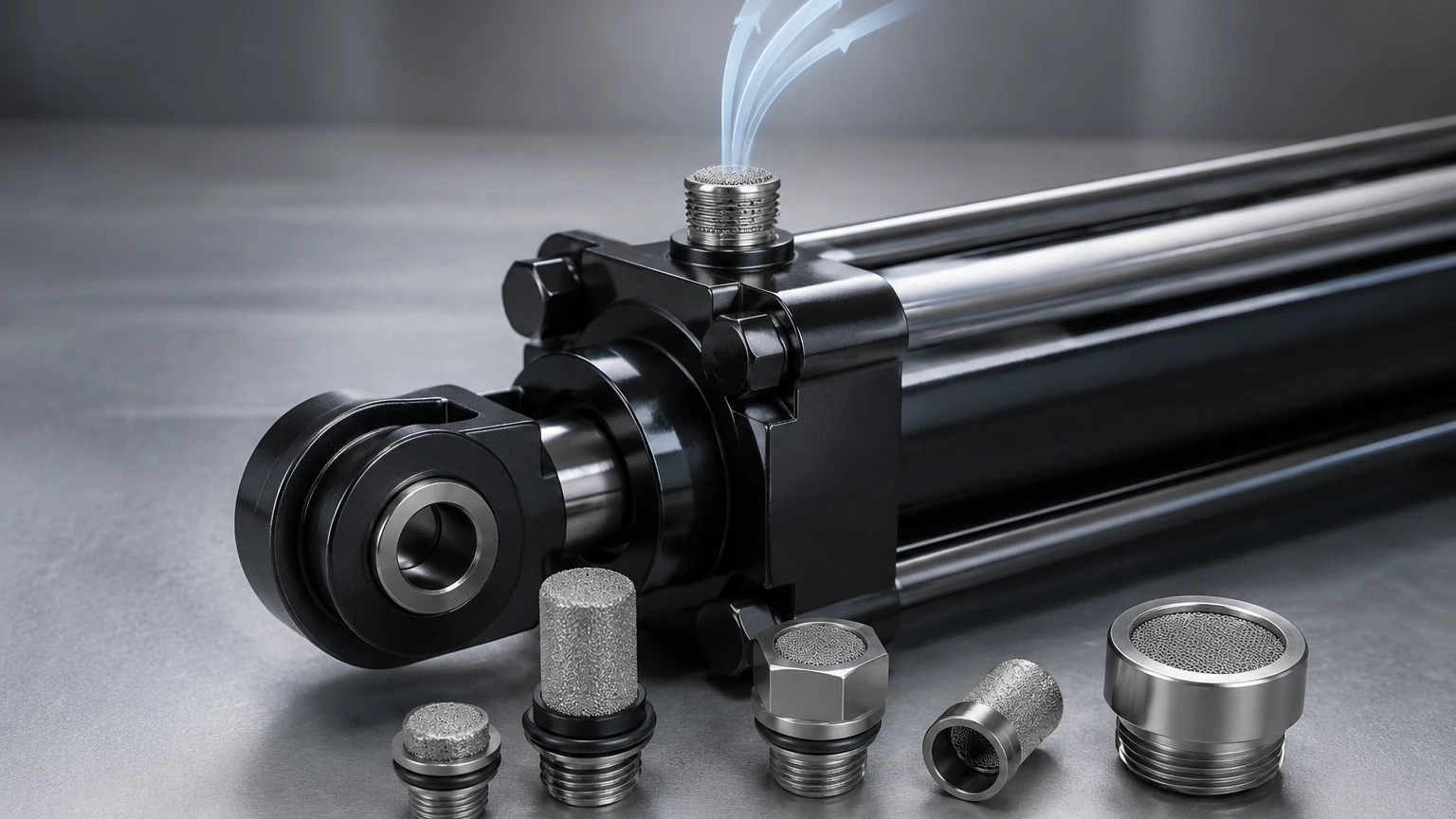
Integrating Filtration with Venting Solutions
While a hydraulic cylinder vent is designed to let air out, it is equally important to consider what might come in. In many hydraulic circuits, the venting process is linked to the reservoir's breathing cycle. As cylinders extend and retract, the fluid level in the reservoir fluctuates, drawing air in and pushing it out.
If this air is not filtered, it introduces moisture and particulate matter into the system. This is where high-performance filtration components become indispensable. Precision wire mesh and stainless steel filter cartridges are used to protect the system at these entry points. By maintaining high fluid cleanliness, the risk of air-entraining contaminants (which can stabilize foam and air bubbles) is significantly reduced.
Effective air management is a two-part strategy: removing trapped air via cylinder vents and preventing the ingress of contaminated air through reservoir breathers. For engineers looking to optimize these systems, you can Review product options and application support on our Main Page to see how custom filtration components support hydraulic longevity.
Installation Strategies for Optimal Air Removal
The effectiveness of a hydraulic cylinder vent is largely dependent on its placement. Because air always seeks the highest point in a fluid volume, vents must be located at the uppermost part of the cylinder in its installed orientation.
Vertical vs. Horizontal Mounting
* Vertical Mounting: If the cylinder is mounted vertically with the rod end up, the vent should be located in the rod-end cap. If the blind end is up, the vent belongs in the base cap.
* Horizontal Mounting: In horizontal applications, the vent should be positioned at the "12 o'clock" position on the cylinder barrel or end caps. If a cylinder is rotated during installation so that the vent is at the bottom, it will be impossible to purge the air effectively, as oil will be forced out while the air remains trapped at the top.
Bleeding Procedures
When commissioning a new system, the following steps are generally recommended:
1. Extend and retract the cylinder several times at low pressure without the vent open to move air toward the caps.
2. With the cylinder at the end of its stroke, slightly open the hydraulic cylinder vent.
3. Observe the discharge. Use a clear hose if possible to see the transition from foam to clear oil.
4. Tighten the vent to the manufacturer's specified torque to prevent vibration-induced loosening.
Selecting the Right Venting Solution for Industrial Applications
When specifying a venting component, purchasing teams and engineers should confirm several technical parameters to ensure compatibility and performance:
1. Thread Specification: Ensure the vent matches the porting of the cylinder (e.g., SAE, NPT, or ISO threads).
2. Sealing Method: Determine if the vent uses a metal-to-metal seat, an O-ring, or a bonded seal. Metal-to-metal seats are often preferred for high-temperature applications.
3. Environmental Exposure: If the cylinder is used in a wash-down environment (food processing) or a salt-spray environment (marine), stainless steel construction is mandatory to prevent galvanic corrosion.
4. Flow Rate: For automatic vents, the air discharge capacity must match the potential air ingress rate of the system to prevent pressure buildup.
Kaifil's expertise in custom stainless steel filtration and precision metal components allows for the development of bespoke venting solutions that meet these exact requirements. Whether it is a high-pressure bleed screw or a specialized breather assembly, the focus remains on durability and precision.
Conclusion: The Impact of Proper Venting on Total Cost of Ownership
Investing in a robust hydraulic cylinder vent and a disciplined venting protocol significantly reduces the total cost of ownership (TCO) for hydraulic machinery. By eliminating air, operators can prevent the catastrophic failure of seals, reduce the frequency of oil changes due to oxidation, and ensure the precise control necessary for modern industrial processes.
Proper venting, combined with high-quality stainless steel filtration components, creates a stable environment for hydraulic fluids to perform their work. For those designing or maintaining complex hydraulic systems, prioritizing air management is not just a maintenance task—it is a fundamental engineering requirement for system reliability. To explore customized filtration and component solutions that enhance hydraulic performance, visit our Main Page to learn more about our manufacturing capabilities and technical support.
