


Hydraulic Return Filter
In the complex architecture of industrial hydraulic systems, the return line represents the final stage of the fluid cycle before it re-enters the reservoir. A hydraulic return filter is strategically positioned in this line to capture contaminants generated by the system’s internal components—such as pumps, valves, and actuators—before they can settle in the tank. Unlike suction filters that protect the pump or pressure filters that protect sensitive downstream valves, the return filter serves as the primary means of maintaining the overall cleanliness of the hydraulic fluid over time.
For engineers and procurement teams, selecting the correct hydraulic return filter is not merely a matter of matching port sizes. It requires a deep understanding of fluid dynamics, material compatibility, and the specific contamination challenges of the industrial environment. As a specialized manufacturer of stainless steel filtration solutions, Kaifil provides the technical expertise necessary to navigate these complexities, ensuring that filtration components meet the rigorous demands of chemical processing, hydraulic power units, and heavy industrial machinery.
The Engineering Logic of Return Line Filtration
The primary function of a hydraulic return filter is to prevent the "re-ingestion" of wear particles. As hydraulic fluid travels through the system, it picks up metallic shavings, elastomeric seal fragments, and chemical byproducts. If these contaminants reach the reservoir, they can settle at the bottom, form sludge, or be pulled back into the pump, leading to a destructive cycle of accelerated wear.
One of the most significant advantages of return line filtration is its placement on the low-pressure side of the circuit. Because the pressure in the return line is significantly lower than in the supply line, engineers can utilize larger filter housings and finer media without the need for the heavy-duty, high-cost pressure-rated casings required elsewhere. This makes the return filter the most cost-effective location for high-efficiency, high-dirt-holding capacity filtration.
Furthermore, return filters capture debris from component failures immediately. If a cylinder seal fails or a valve begins to erode, the return filter traps the resulting debris before it can contaminate the entire reservoir. This localized containment is essential for maintaining the ISO 4406 cleanliness codes required by modern high-precision hydraulic components.
Material Selection and Structural Integrity
When specifying a hydraulic return filter for industrial applications, the choice of filter media is paramount. While disposable cellulose or synthetic fiber elements are common in light-duty applications, demanding industrial environments—such as those found in chemical processing or high-temperature hydraulic systems—often require the durability of stainless steel.
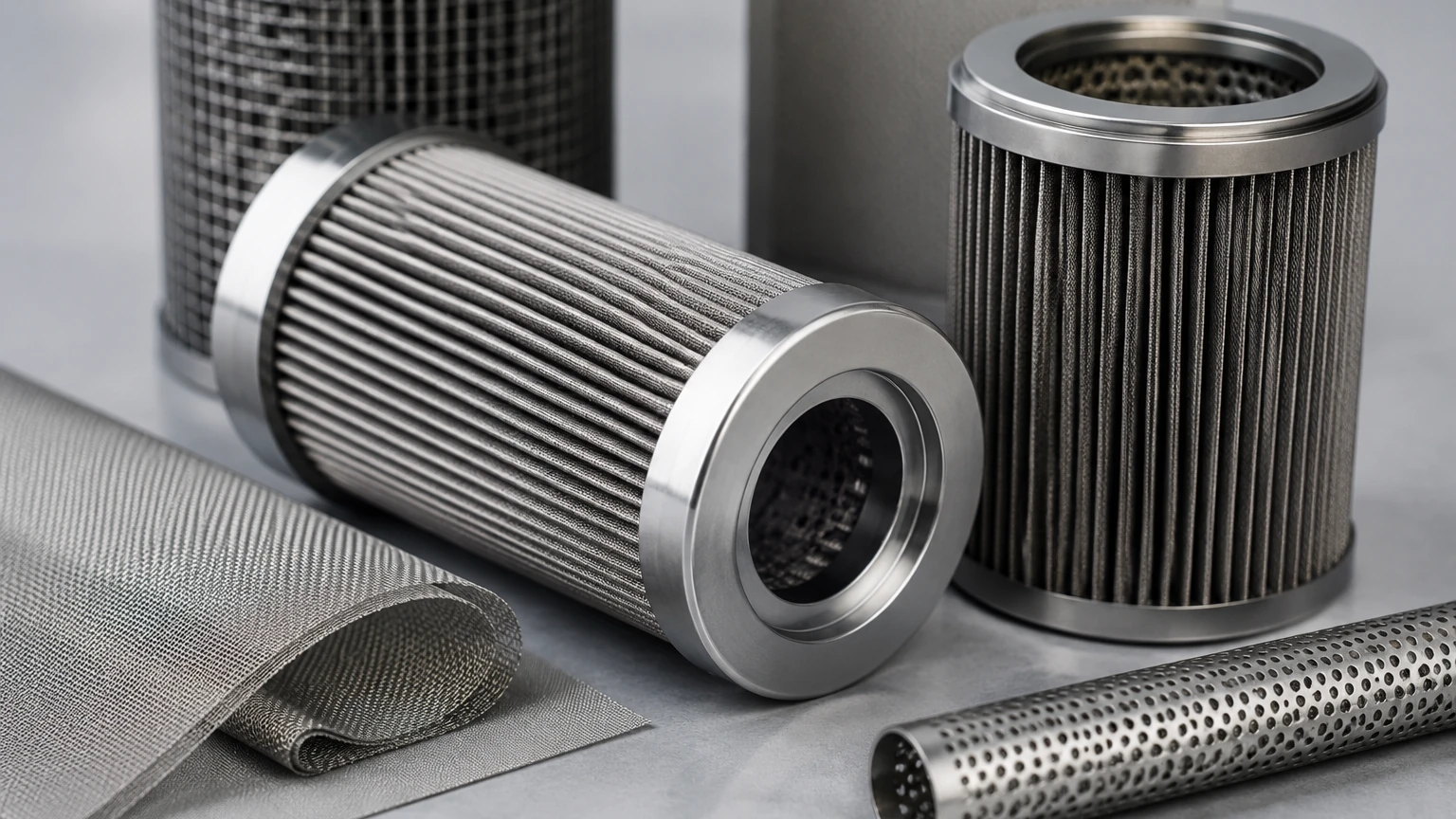
Kaifil specializes in manufacturing stainless steel wire mesh filters and sintered metal components that offer several technical advantages:
1. Chemical Compatibility: Stainless steel (typically 304 or 316L) is resistant to a wide range of hydraulic fluids, including fire-resistant phosphate esters, water-glycols, and aggressive chemical additives that might degrade standard paper filters.
2. Thermal Stability: Industrial hydraulic systems can operate at elevated temperatures. Stainless steel media maintains its structural integrity and filtration accuracy at temperatures where synthetic fibers might soften or lose their pore structure.
3. Cleanability and Reusability: Unlike disposable elements, stainless steel mesh filters can often be cleaned and reused, reducing the total cost of ownership and the environmental impact of hazardous waste disposal.
4. Pressure Surge Resistance: Return lines are subject to flow surges, especially when large cylinders retract quickly. Metal mesh provides the mechanical strength to withstand these transient pressure spikes without media migration or structural collapse.
Technical Parameters: Micron Ratings and Beta Ratios
Selecting a hydraulic return filter requires an analysis of filtration efficiency, often expressed through micron ratings and Beta ratios ($\beta$). An engineer must determine the target cleanliness level for the most sensitive component in the system and then select a filter that can achieve and maintain that level.
* Absolute vs. Nominal Ratings: A nominal rating is an internal manufacturer's value indicating the ability to retain a percentage of particles. For critical industrial systems, engineers prefer an absolute rating, which indicates the particle size at which the filter captures 99.9% of contaminants.
* The Beta Ratio ($\beta_x$): This is the industry standard for measuring filtration efficiency. It is the ratio of particles of a given size upstream of the filter to the particles of the same size downstream. For example, a $\beta_{10} = 200$ means that for every 200 particles of 10 microns entering the filter, only one passes through.
In return line applications, a common target is a 10-micron or 25-micron absolute rating. However, in systems with high-pressure piston pumps or proportional valves, a finer 5-micron or 3-micron return filter may be necessary to ensure the reservoir remains a source of clean fluid. Kaifil’s manufacturing process allows for precise control over the wire mesh weave, ensuring consistent pore sizes that meet these stringent technical specifications.
Design Variations: Tank-Mounted vs. In-Line Filters
The physical integration of the hydraulic return filter into the system affects both maintenance accessibility and space utilization. There are two primary configurations used in industrial design:
Tank-Mounted (Tank-Top) Filters
These are the most common for stationary industrial hydraulic power units. The filter head is mounted directly to the reservoir lid, and the filter bowl extends down into the tank. This design is highly space-efficient and simplifies the plumbing, as the filtered fluid discharges directly into the reservoir below the oil level to prevent aeration. Maintenance is also straightforward, as the element can be accessed from the top of the tank without draining the return lines.
In-Line Return Filters
In-line filters are installed directly into the return piping. These are often used when the reservoir is difficult to access or when the system layout requires the filter to be located closer to the work area. In-line filters require robust housings to handle the potential mechanical stresses of the piping system. For these applications, Kaifil provides custom-designed stainless steel filter cartridges that can be integrated into high-flow housings, ensuring long service life even under continuous vibration or flow pulsation.
Managing Pressure Drop and Bypass Cracking Pressure
A critical engineering consideration for any hydraulic return filter is the pressure drop ($ΔP$) across the element. As the filter captures contaminants, the resistance to flow increases, leading to a higher $ΔP$. If the pressure drop becomes too high, it can create backpressure in the return line, which may interfere with the operation of certain valves or cause seal leaks in actuators.
To protect the system, most return filters include a bypass valve. This valve is designed to open at a specific "cracking pressure" (typically between 1.5 and 3 bar) to allow fluid to bypass the filter element if it becomes clogged or if the fluid is too viscous during a cold start.
Engineers must balance the bypass cracking pressure with the filter’s dirt-holding capacity. A bypass that opens too easily allows contaminated fluid back into the reservoir, defeating the purpose of the filter. Conversely, a bypass that is too stiff risks damaging the filter element or the return line. Kaifil supports engineers in this selection process by providing detailed flow-pressure curves and custom-engineered mesh structures that optimize the surface area, thereby extending the time between cleanings and minimizing the initial pressure drop.
Customization and OEM Solutions for Industrial Filtration
Standard off-the-shelf filters often fall short in specialized industrial applications. Whether it is a unique mounting requirement, a specific chemical resistance need, or a non-standard flow rate, customization is frequently necessary to achieve optimal performance.
Kaifil’s expertise as an OEM manufacturer allows for the development of tailored filtration solutions. This includes:
* Custom Dimensions: Designing filter cartridges that fit existing housings or restricted spatial envelopes.
* Specialized End Caps: Utilizing stainless steel or specialized polymers for end caps to ensure compatibility with specific hydraulic fluids.
* Reinforced Structures: For systems with extreme flow surges, adding internal support cores or external shrouds to the filter mesh to prevent deformation.
* Multi-Layer Sintered Mesh: Combining different layers of wire mesh to provide both fine filtration and high mechanical strength in a single, robust component.
By working closely with global customers, Kaifil ensures that every hydraulic return filter is engineered for the specific demands of its application, from food-grade water treatment systems to heavy-duty hydraulic presses in steel mills.
Conclusion: Achieving Total System Reliability
The hydraulic return filter is a fundamental component in the quest for system longevity and reduced downtime. By capturing wear particles at the end of the circuit, it ensures that the reservoir remains a clean source of fluid, protecting the pump and every subsequent component in the system. Selecting the right filter involves a technical evaluation of media material, micron efficiency, and structural design.
For engineers and purchasing professionals seeking reliable, high-performance filtration components, partnering with a manufacturer that understands the nuances of industrial environments is essential. Kaifil provides the manufacturing precision and engineering support required to develop durable, custom stainless steel filtration solutions that stand up to the most demanding conditions. To explore our full range of capabilities and technical resources, please visit our Main Page for detailed product specifications and application support.
