


Hydrocyclone Sand Separators
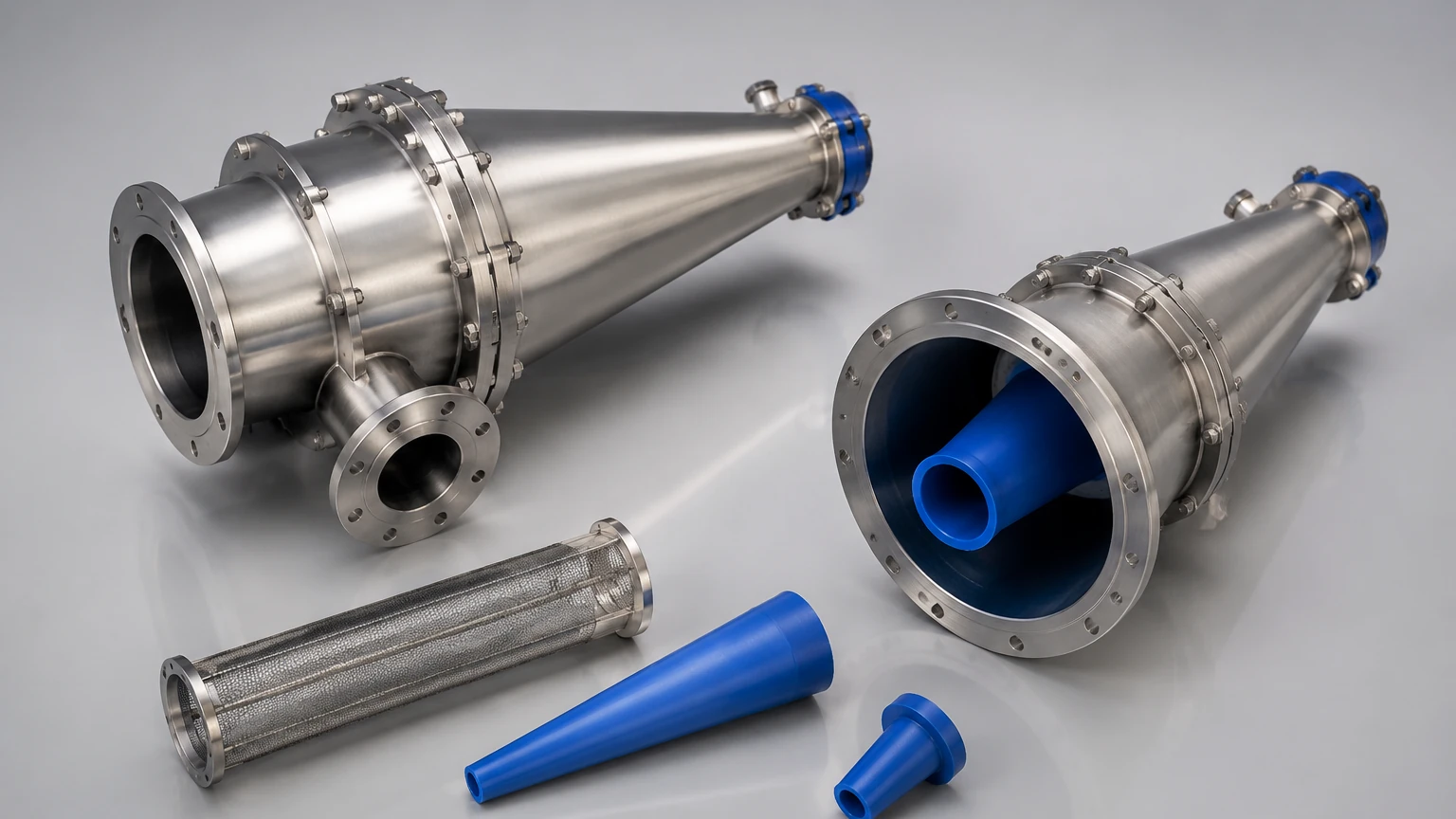
In industrial fluid processing, the management of suspended solids is a critical factor in maintaining system efficiency and protecting downstream equipment. Hydrocyclone sand separators represent a primary solution for the removal of sand, grit, and other high-density particles from liquid streams. Unlike traditional barrier filtration, which relies on a physical mesh or media to trap particles, hydrocyclones utilize centrifugal force to achieve separation. This mechanical approach is particularly effective in high-flow applications where abrasive solids could otherwise cause rapid wear or clogging of fine filtration components.
For engineers and procurement professionals, understanding the technical nuances of hydrocyclone sand separators is essential for optimizing system performance. These devices are frequently employed as pre-filters, serving as the first line of defense for more sensitive components such as stainless steel wire mesh filters and precision cartridges. By removing the bulk of heavy solids before they reach the secondary filtration stage, hydrocyclones significantly extend the service life of filter media and reduce the frequency of maintenance cycles.
The Physics of Centrifugal Separation
The operation of hydrocyclone sand separators is based on the principles of fluid dynamics and centrifugal acceleration. The process begins when the liquid enters the cylindrical chamber of the separator at a tangential angle. This entry method converts the linear velocity of the fluid into a high-speed rotational flow, creating a vortex.
As the fluid spins downward through the conical section of the device, the centrifugal force drives the heavier particles—those with a higher specific gravity than the liquid—toward the outer walls of the chamber. These particles then slide down the wall and settle into a collection chamber or "underflow" at the bottom. Meanwhile, the cleaned liquid, which is less dense, is forced toward the center of the vortex. Because the bottom of the cone is restricted, the cleaned fluid reverses direction and moves upward through a central "vortex finder" to the outlet at the top, known as the overflow.
This separation process is entirely mechanical and requires no moving parts, which is a significant advantage in industrial environments. However, the efficiency of the separation is highly dependent on the velocity of the fluid. If the flow rate is too low, the centrifugal force will be insufficient to move particles toward the walls; if it is too high, the resulting turbulence may prevent particles from settling effectively.
Key Engineering Considerations for Selection
When specifying hydrocyclone sand separators for an industrial application, several technical parameters must be evaluated to ensure the unit meets the required performance standards. Engineering teams should focus on the following criteria:
Flow Rate and Pressure Drop
Hydrocyclones are flow-dependent devices. Each unit is designed to operate within a specific flow range to maintain the internal vortex. A critical metric is the pressure drop (ΔP) across the separator. Typically, a pressure drop of 5 to 15 psi is required for optimal separation. If the system's flow rate fluctuates significantly, it may be necessary to install multiple units in a manifold configuration to maintain consistent velocity across each individual cyclone.
Particle Size and Removal Efficiency
The effectiveness of a hydrocyclone is often measured by its "cut point" (d50), which represents the particle size at which 50% of the solids are removed. For most industrial sand separators, the goal is to remove 98% of particles larger than 74 microns (200 mesh) with a specific gravity of 2.6 or higher (typical of sand and silica). While they are highly effective for heavy solids, they are not designed to remove organic matter, oils, or particles with a density similar to that of water.
Material Selection and Abrasion Resistance
Because hydrocyclones handle abrasive materials at high velocities, the material of construction is paramount. While carbon steel is common in some sectors, stainless steel (304 or 316L) is the preferred choice for demanding industrial environments. Stainless steel offers superior resistance to both corrosion and erosion, ensuring that the internal geometry of the vortex chamber remains intact over years of operation. At Kaifil, our expertise in custom stainless steel fabrication ensures that these components are built to withstand the rigorous demands of chemical processing and water treatment.
Integrating Hydrocyclones with Fine Filtration Systems
One of the most effective strategies in industrial filtration is the use of a multi-stage approach. Hydrocyclone sand separators are rarely used in isolation when high-purity fluid is required. Instead, they are integrated into a system where they protect downstream precision filters.
In a typical configuration, the hydrocyclone removes the large, abrasive sand and grit. The fluid then passes through a secondary stage, such as a stainless steel wire mesh filter or a pleated cartridge. This integration offers several benefits:
1. Reduced Filter Loading: By removing 90% or more of the heavy solids, the hydrocyclone prevents the fine mesh from becoming prematurely blinded. This allows the fine filter to focus on removing smaller, lower-density contaminants.
2. Protection Against Abrasion: Sand particles can be highly abrasive. If allowed to impact a fine wire mesh at high velocity, they can cause mechanical damage or erode the wire diameter over time. The hydrocyclone eliminates this risk.
3. Lower Operational Costs: Because hydrocyclones do not use disposable media and require minimal maintenance, using them as a pre-filter reduces the replacement frequency of more expensive filter cartridges.
For organizations looking to optimize their filtration stages, reviewing the Main Page of a specialized manufacturer can provide insights into how custom-engineered metal filters can be paired with centrifugal separators for a complete solution.
Common Applications in Industrial Sectors
Hydrocyclone sand separators are versatile tools used across a wide range of industries where water or process fluids are sourced from wells, rivers, or open-loop cooling systems.
* Water Treatment and Irrigation: Removing sand from well water is essential to prevent the clogging of spray nozzles and the wear of pump impellers. In municipal water treatment, hydrocyclones protect membranes and fine filtration stages from heavy sediment loads.
* Chemical and Petrochemical Processing: In these sectors, separators are used to remove catalysts or sand from process streams, ensuring that the final product meets purity standards and that downstream heat exchangers remain clear of debris.
* Food and Beverage Industry: Maintaining clean wash water and process water is critical. Stainless steel hydrocyclones are often used here due to their ability to meet hygiene standards while providing robust separation of soil and grit from produce wash lines.
* Hydraulic and Cooling Systems: Cooling towers often accumulate scale and atmospheric dust. Side-stream filtration using hydrocyclones helps maintain the clarity of the cooling water, preventing the buildup of solids in heat exchangers and chillers.
Maintenance and Performance Monitoring
One of the primary selling points of hydrocyclone sand separators is their low maintenance requirement. Since there are no filters to replace and no moving parts to lubricate, maintenance is largely focused on the management of the underflow chamber.
There are two primary methods for managing the collected solids:
1. Manual Purging: The collection chamber is equipped with a valve that is opened periodically by an operator to flush out the accumulated sand.
2. Automated Purging: An automated timer or a solids-level sensor triggers a motorized valve to purge the chamber. This is the preferred method for high-solids applications to ensure the chamber never overfills, which would cause the solids to re-entrain into the overflow stream.
Engineers should also monitor the pressure gauges at the inlet and outlet. A significant change in the pressure differential (ΔP) usually indicates a change in flow rate or a potential blockage in the vortex finder, requiring immediate investigation.
Total Cost of Ownership (TCO) Analysis
When evaluating the purchase of hydrocyclone sand separators, it is important to look beyond the initial capital expenditure. The Total Cost of Ownership for a hydrocyclone is typically much lower than that of a barrier filter with similar flow capacity.
* Zero Media Costs: There are no bags, cartridges, or sand media to purchase, store, or dispose of.
* Minimal Downtime: Because the units can be purged while in operation, there is no need to shut down the process for cleaning.
* Energy Efficiency: While there is a pressure drop associated with the unit, the lack of a pump-intensive backwash cycle (common in sand media filters) often results in lower overall energy consumption.
However, the TCO is only optimized if the unit is correctly sized. An oversized hydrocyclone will fail to create a strong enough vortex, leading to poor separation and the bypass of solids into downstream equipment, which increases the maintenance costs of those secondary systems.
Specification Checklist for Purchasing Teams
Before finalizing a purchase order for hydrocyclone sand separators, purchasing teams and engineers should confirm the following technical details with the manufacturer:
* Fluid Properties: Confirm the specific gravity, viscosity, and temperature of the liquid.
* Contaminant Profile: Identify the expected particle size distribution and the specific gravity of the solids to be removed.
* Flow Range: Provide the minimum, normal, and maximum flow rates expected in the system.
* Connection Standards: Specify flange types (ANSI, DIN, etc.) and sizes to ensure seamless integration into existing piping.
* Material Certification: For chemical or food-grade applications, ensure the stainless steel grade is certified and that the internal welds meet the required finish standards.
* Customization Options: Determine if the application requires a specific footprint, specialized coatings, or a particular orientation of the inlet and outlet ports.
Conclusion
Hydrocyclone sand separators are an indispensable component in the industrial filtration landscape. By leveraging centrifugal force to remove heavy solids, they provide a robust, low-maintenance, and cost-effective solution for protecting downstream equipment and ensuring process fluid quality. When constructed from high-quality materials like stainless steel and correctly integrated into a multi-stage filtration system, these devices offer long-term reliability in even the most demanding environments.
For technical professionals seeking to enhance their filtration systems, working with a manufacturer that understands the complexities of precision metal filtration is vital. By combining the bulk removal capabilities of a hydrocyclone with the fine-tuned accuracy of custom stainless steel filter cartridges, industrial operations can achieve optimal fluid purity and system longevity. To explore high-performance filtration components and customized engineering support, visit the Main Page to review available solutions and technical specifications.
