


Improve Cip Efficiency
In the modern industrial landscape, particularly within the food and beverage, pharmaceutical, and chemical processing sectors, Clean-in-Place (CIP) systems are the backbone of operational hygiene and safety. A CIP system is designed to clean the interior surfaces of pipes, vessels, process equipment, filters, and associated fittings without the need for manual disassembly. However, as production demands increase and sustainability goals become more stringent, the pressure to improve cip efficiency has never been higher.
Efficiency in this context is not merely about speed; it is a multi-dimensional metric involving the reduction of water consumption, the optimization of chemical usage, the minimization of energy expenditure, and the maximization of equipment uptime. For engineers and facility managers, achieving these goals requires a deep understanding of the interaction between cleaning fluids and the mechanical components of the system, especially filtration units. High-quality components, such as those found on the Kaifil Main Page, play a critical role in ensuring that filtration media do not become the bottleneck in a cleaning cycle.
The Fundamentals of CIP Efficiency: The TACT Parameters
To understand how to improve cip efficiency, one must first look at the four pillars of the cleaning process, often referred to as the TACT parameters: Time, Action (Turbulence), Chemical, and Temperature. These four variables are interdependent; if one is reduced, one or more of the others must typically be increased to maintain the same level of cleanliness.
1. Time: The duration of the cleaning cycle. Reducing this directly increases production uptime but requires more aggressive action or higher temperatures.
2. Action: This refers to the mechanical force applied to the soil. In piping and filters, this is achieved through fluid velocity and turbulence. Higher Reynolds numbers generally lead to better soil removal.
3. Chemical: The concentration and type of cleaning agents (caustics, acids, and sanitizers). Optimizing chemical delivery reduces waste and environmental impact.
4. Temperature: Heat helps to break down fats, proteins, and sugars. However, excessive heat can lead to the "baking on" of certain soils and increases energy costs.
Improving efficiency involves fine-tuning these parameters so that the system reaches the required hygiene standard with the lowest possible resource input.
The Role of Filtration in CIP Optimization
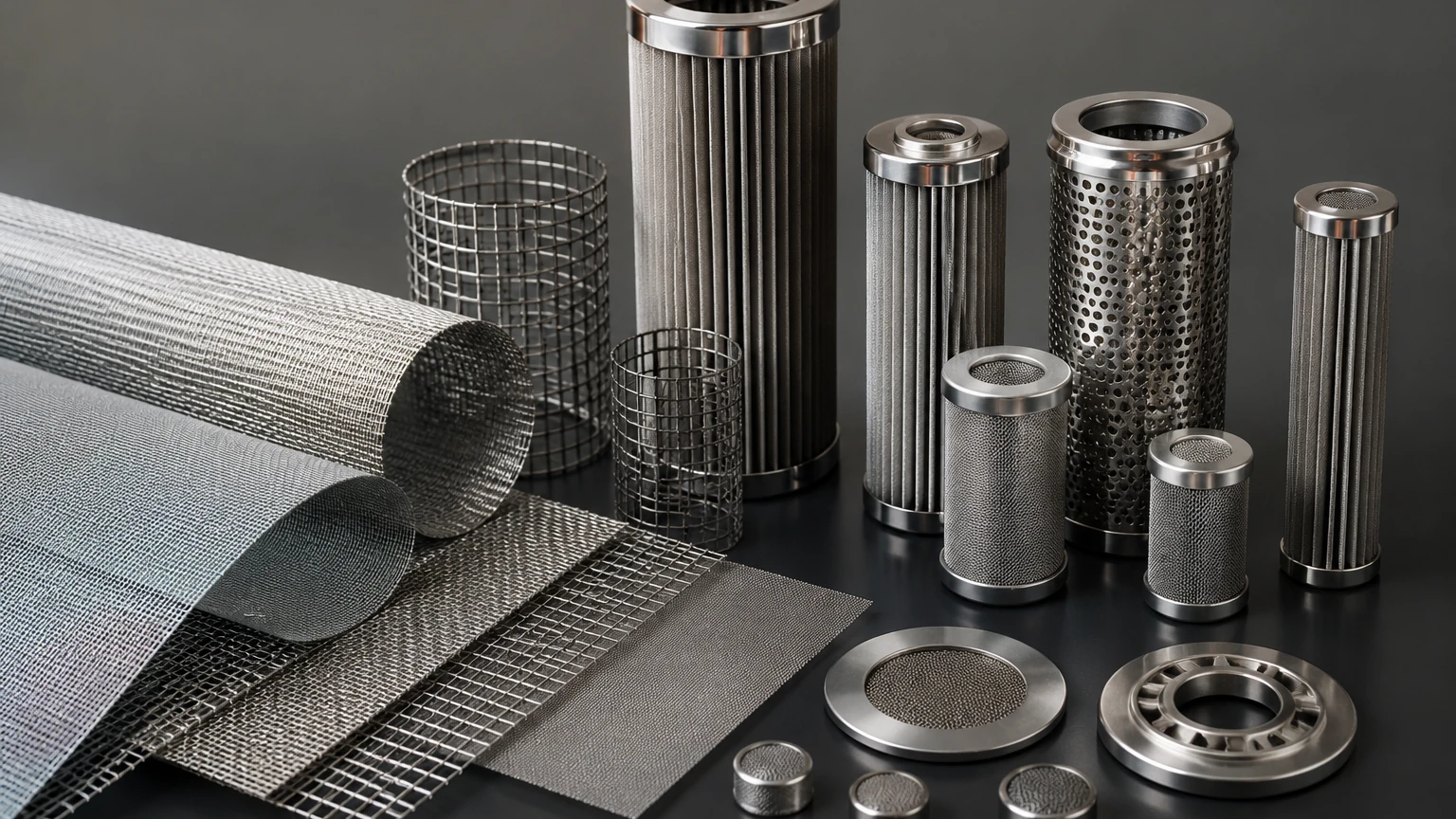
Filtration components are often the most challenging parts of a system to clean. Whether it is a stainless steel wire mesh filter or a sintered metal cartridge, the complex geometry of the filter media provides numerous sites for soil entrapment. If a filter is not designed for easy cleaning, it becomes a source of cross-contamination and a primary cause of extended CIP cycles.
Material Selection and Surface Integrity
To improve cip efficiency, the material of the filter must be inherently resistant to the harsh chemicals and high temperatures used in the cleaning process. Stainless steel 316L is the industry standard due to its excellent corrosion resistance. However, the surface finish is equally important.
In sanitary applications, a surface roughness (Ra) of 0.8 μm or less is typically required. A smoother surface reduces the mechanical bond between the soil and the metal, allowing the cleaning fluid to strip away contaminants more effectively. Electropolishing is often employed to further enhance the cleanability of stainless steel filter housings and elements by removing microscopic peaks and valleys where bacteria can hide.
Structural Integrity and Backpulsing
Many high-efficiency CIP systems utilize backpulsing or backwashing to clean filters in situ. This involves reversing the flow of fluid through the filter media to dislodge accumulated solids. For this to be effective, the filter element must possess high structural integrity. Precision-welded wire mesh and sintered metal components are preferred because they can withstand the pressure shocks associated with backpulsing without deforming. If a filter element deforms, it creates "dead zones" where cleaning fluid cannot circulate, significantly hindering efforts to improve cip efficiency.
Engineering Strategies for Enhanced Cleaning
Optimizing the mechanical design of the filtration system is a direct path to better CIP performance. Engineers should focus on several key areas during the design and procurement phases.
Eliminating Dead Legs and Stagnant Zones
Dead legs are areas in a piping system where fluid does not circulate freely. In a CIP cycle, these areas act as reservoirs for dirty fluid and bacteria. To improve cip efficiency, the ratio of the length of a branch to its diameter (L/D ratio) should be kept as low as possible, ideally under 2:1. In filtration assemblies, this means ensuring that the housing is designed for full drainage and that there are no trapped pockets around the seals or support structures.
Turbulence and Flow Velocity
Mechanical action is driven by turbulence. To ensure effective cleaning of the filter surface, the CIP fluid must reach a minimum velocity, typically around 1.5 to 2.1 meters per second (5 to 7 feet per second). This velocity ensures a high Reynolds number, creating the hydrodynamic shear stress necessary to lift particles from the wire mesh or sintered pores. If the flow is too laminar, the cleaning fluid will simply glide over the soil rather than removing it.
Optimized Spray Ball Design
For the cleaning of large filter housings or tanks, the choice of spray technology is vital. Static spray balls are common but often consume large volumes of water. Rotary spray heads or jet cleaners provide higher impact and use less fluid by covering the surface in a programmed pattern. Switching to high-impact rotary cleaning technology is one of the most effective ways to improve cip efficiency in large-scale filtration installations.
Technical Considerations for Filter Media Selection
When selecting filters from a manufacturer like Kaifil, engineers must balance filtration precision with cleanability.
* Wire Mesh Filters: These provide a "surface filtration" mechanism. Because the contaminants are stopped on the surface of the mesh, they are generally easier to remove during a CIP cycle. They are ideal for applications with high flow rates and relatively large particle loads.
* Sintered Metal Filters: These offer "depth filtration" or very fine surface filtration. While they provide exceptional precision, the labyrinthine structure of sintered pores can be more difficult to clean. To improve cip efficiency with sintered media, it is often necessary to use specialized cleaning protocols, such as ultrasonic cleaning or extended chemical soaking, if the standard CIP cycle is insufficient.
Understanding the nature of the "soil" is also critical. For example, in the dairy industry, protein fouling requires different chemical concentrations and temperatures than mineral scale in water treatment. The filter media must be compatible with these specific cleaning regimes.
Monitoring and Validation: The Path to Continuous Improvement
One cannot improve cip efficiency without accurate data. Modern CIP systems are equipped with sensors that monitor conductivity (to check chemical concentration), flow rates, temperature, and pressure.
Differential Pressure (ΔP) Monitoring
For filtration, the most important metric is differential pressure. By monitoring the ΔP before and after a CIP cycle, operators can determine the effectiveness of the cleaning. If the "clean" pressure drop begins to creep upward over several cycles, it indicates that the CIP process is failing to fully remove internal fouling, a condition known as "permanent fouling." This data allows maintenance teams to intervene before a complete blockage occurs, thereby protecting the total cost of ownership.
Conductivity and TOC Sensors
Conductivity sensors help in determining exactly when the cleaning chemicals have been rinsed out, preventing the over-use of rinse water. In the pharmaceutical industry, Total Organic Carbon (TOC) sensors provide a high-sensitivity method to validate that all biological residues have been removed. Using these sensors to automate the transition between CIP steps is a proven way to improve cip efficiency by cutting out unnecessary buffer time.
Total Cost of Ownership (TCO) and Sustainability
While high-quality stainless steel filters may have a higher initial purchase price, their contribution to CIP efficiency results in a lower Total Cost of Ownership.
* Reduced Chemical Costs: Efficient cleaning requires fewer chemicals, which not only saves money but also reduces the load on wastewater treatment plants.
* Energy Savings: Shorter cycles and lower required temperatures for highly cleanable surfaces lead to significant steam and electricity savings.
* Extended Component Life: Filters that are easy to clean are less likely to be subjected to aggressive manual cleaning or over-pressurization during failed backwash attempts, leading to a longer service life.
By focusing on these technical details, companies can transform their CIP process from a necessary overhead into a streamlined, sustainable operation.
Conclusion and Next Steps for Engineers
To improve cip efficiency, a holistic approach is required that combines high-performance hardware with optimized process parameters. Engineers should prioritize filters with superior surface finishes, robust mechanical designs, and materials that are fully compatible with their specific chemical environments.
Before finalizing a filtration solution, it is recommended to confirm the following with your supplier:
1. Chemical Compatibility: Does the filter media and the sealing material (O-rings/gaskets) withstand the specific concentrations of caustic and acid used in your CIP cycle?
2. Pressure Ratings: Can the filter element handle the reverse pressure required for effective backpulsing?
3. Validation Support: Can the manufacturer provide documentation regarding surface roughness and material certifications (e.g., 3.1B certs) to support your hygiene validation?
For those looking to upgrade their current systems or design new installations, exploring specialized stainless steel filtration options is the first step. You can find detailed technical specifications and support for custom filtration designs by visiting the Kaifil Main Page. By selecting the right filtration partner, you ensure that your CIP system operates at peak efficiency, safeguarding both product quality and operational profitability.
