


Indufil Filters
In the demanding landscape of industrial filtration, the name Indufil is synonymous with high-performance solutions for rotating equipment, particularly within the oil and gas, power generation, and petrochemical sectors. These systems are engineered to protect critical assets such as gas turbines, centrifugal compressors, and high-speed gearboxes from particulate contamination and moisture. For engineers and procurement specialists, understanding the technical nuances of indufil filters is essential for maintaining system integrity, optimizing maintenance intervals, and ensuring the longevity of expensive downstream components.
Industrial filtration is not merely about removing debris; it is about precision fluid management under extreme conditions. Whether dealing with lubrication oil, seal gas, or liquid fuel, the filtration media must withstand high pressures, chemical aggression, and thermal fluctuations. As a professional manufacturer of custom stainless steel filtration solutions, Kaifil provides the technical expertise required to evaluate these complex systems and offer high-quality replacement elements that meet or exceed original equipment manufacturer (OEM) specifications. For more information on our technical capabilities, you can visit our Main Page.
Technical Specifications and Engineering Standards
Indufil filters are designed to operate in environments where failure is not an option. The engineering behind these filters focuses on several key performance indicators that define their reliability. When evaluating indufil filters or their high-quality stainless steel alternatives, engineers must prioritize the following technical specifications:
Material Compatibility
Most high-end industrial filters utilize stainless steel for both the housing and the internal support structures. Common materials include 304 and 316L stainless steel, which offer excellent resistance to corrosion and high temperatures. In applications involving sour gas or aggressive chemical solvents, the choice of material is critical to prevent premature degradation of the filter element.
Micron Ratings and Filtration Efficiency
Filtration efficiency is typically expressed through the Beta ratio (β). For critical rotating equipment, absolute filtration is often required. An absolute-rated filter ensures that a specific percentage of particles (usually 99.9%) above a certain micron size are captured. Indufil filters often specify ratings as low as 1 to 3 microns for seal gas applications, where even microscopic particles can cause catastrophic wear on dry gas seals.
Pressure Ratings and Collapse Strength
Filter elements must be able to withstand the differential pressure (ΔP) that builds up as the media captures contaminants. The collapse pressure rating is a vital safety metric; if an element collapses, it can release a "slug" of concentrated contaminants into the downstream system. High-quality stainless steel pleated elements are engineered with heavy-duty inner cores and outer support mesh to maintain structural integrity even under high-pressure surges.
The Mechanics of Duplex Filtration Systems
One of the defining features of many indufil filters is the duplex configuration. In continuous-process industries, shutting down a turbine or compressor to change a filter element is economically unfeasible. Duplex systems solve this by employing two filter housings connected by a changeover valve.
Continuous Operation
The changeover valve allows the operator to divert flow from the "duty" filter to the "standby" filter without interrupting the fluid stream. This ensures that the machinery remains protected while maintenance is performed on the clogged element. The design of the changeover valve is critical; it must provide a leak-tight seal to prevent bypass and ensure a smooth transition of flow to avoid pressure spikes.
Integrated Instrumentation
Modern duplex systems are equipped with differential pressure transmitters and gauges. These instruments provide real-time data to the control room, allowing for predictive maintenance. Instead of replacing filters on a fixed schedule, engineers can wait until the ΔP reaches a specific threshold, thereby maximizing the service life of each indufil filters element and reducing waste.
Filtration Media: Stainless Steel vs. Synthetic
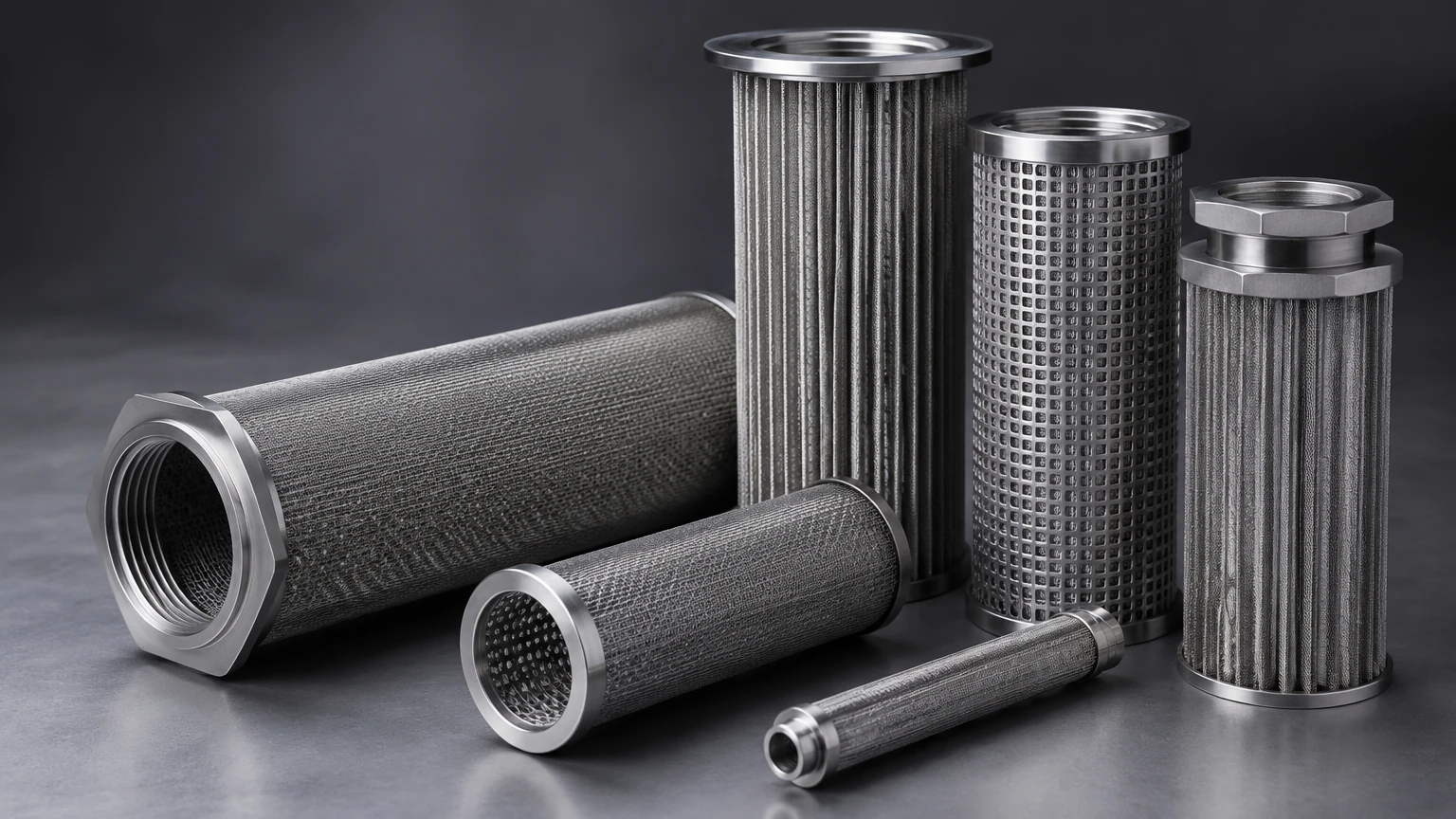
While some industrial filters use disposable glass fiber or paper media, many high-performance applications benefit from stainless steel wire mesh or sintered metal fiber. The choice of media significantly impacts the performance and cost-effectiveness of the filtration system.
1. Stainless Steel Wire Mesh: This media provides precise surface filtration. It is highly durable and can be cleaned and reused in certain applications. It is ideal for removing large particulate loads and protecting pumps from coarse debris.
2. Sintered Metal Fiber: For high-efficiency depth filtration, sintered metal fiber is often used. This media consists of fine stainless steel fibers that are bonded together through a high-temperature sintering process. It offers a high dirt-holding capacity and low initial pressure drop, making it a preferred choice for high-pressure gas filtration.
3. Synthetic Media: While often cheaper upfront, synthetic media can be prone to chemical breakdown or thermal degradation in harsh environments. In B2B industrial settings, the trend is moving toward all-metal construction for its superior reliability and predictable performance.
Application-Specific Challenges in Industrial Filtration
Different industries present unique challenges that indufil filters are designed to address. Understanding these challenges is key to selecting the right filtration strategy.
Power Generation
In gas turbines, the lubrication oil system is the lifeblood of the machine. Varnish—a byproduct of oil oxidation—can coat internal components and cause sticking valves or bearing failure. Specialized filtration elements are required to remove both hard particulates and soft varnish precursors. Furthermore, moisture removal is essential to prevent corrosion within the oil reservoir.
Oil and Gas Processing
In the upstream and midstream sectors, seal gas filtration is paramount. Dry gas seals are precision-engineered components with extremely tight tolerances. Any particulate matter in the seal gas can lead to seal face damage and costly downtime. Indufil filters in these applications must provide high-efficiency removal of both solids and liquid aerosols (coalescing).
Chemical and Petrochemical
Chemical compatibility is the primary concern here. Filters must be able to handle a wide range of pH levels and temperatures. Stainless steel 316L is the standard, but exotic alloys like Hastelloy or Monel may be required for specific high-corrosion environments. Kaifil specializes in manufacturing these custom metal filter components to meet these exact requirements.
Evaluating Replacement Filter Elements
When it comes time to replace indufil filters, procurement teams often face the choice between OEM elements and high-quality aftermarket alternatives. To make an informed decision, several technical factors must be verified:
* Dimensional Accuracy: The replacement element must fit perfectly within the existing housing. Even a millimeter of misalignment can lead to bypass, rendering the filtration system ineffective.
* Seal Integrity: High-quality O-rings or gaskets (typically Viton or PTFE) must be used to ensure a positive seal between the element and the housing.
* Flow Capacity: The replacement must be able to handle the full system flow rate without exceeding the recommended initial pressure drop. This requires careful calculation of the effective filtration area.
* Certification and Testing: Reliable manufacturers provide documentation regarding the filtration efficiency and collapse pressure of their elements, often following ISO or multi-pass testing standards.
Total Cost of Ownership and Maintenance Cycles
Focusing solely on the purchase price of indufil filters can be a costly mistake. The Total Cost of Ownership (TCO) includes the initial price, shipping, storage, installation labor, disposal costs, and—most importantly—the cost of potential equipment downtime.
Stainless steel filter elements often provide a lower TCO over the long term. Because they are more robust, they can withstand cleaning cycles in some applications, extending their life far beyond that of disposable alternatives. Furthermore, their superior structural integrity reduces the risk of bypass or collapse, protecting the multi-million dollar machinery they serve.
Engineers should also consider the ease of maintenance. Duplex systems with quick-opening covers and integrated vent and drain valves can significantly reduce the labor time required for an element changeout. When specifying custom filtration solutions, these ergonomic and operational features should be prioritized alongside filtration performance.
Customization and Engineering Support
No two industrial processes are exactly alike. While standard indufil filters cover a wide range of needs, many applications require a customized approach. This is where a manufacturer like Kaifil adds significant value. By working closely with engineering teams, we can develop bespoke filtration solutions that address specific pain points, such as high contaminant loading, restricted installation space, or unique chemical environments.
Customization options include:
* Variable Pleat Geometry: Optimizing the number and depth of pleats to maximize filtration area for a given housing size.
* Reinforced Structures: Adding external cages or internal support tubes for extreme pressure applications.
* Multi-Stage Media: Combining different types of mesh or fiber to achieve both coarse and fine filtration in a single element.
Conclusion
Selecting and maintaining indufil filters requires a deep understanding of fluid dynamics, material science, and mechanical engineering. These components are vital for the reliable operation of the world’s most critical industrial infrastructure. By focusing on technical specifications—such as Beta ratios, material compatibility, and collapse pressure—engineers can ensure their systems remain protected against the damaging effects of contamination.
Whether you are looking for high-performance replacement elements or a completely custom filtration design, it is essential to partner with a manufacturer that understands the rigors of industrial applications. For more information on how Kaifil can support your filtration needs with precision-engineered stainless steel solutions, please visit our Main Page.
