


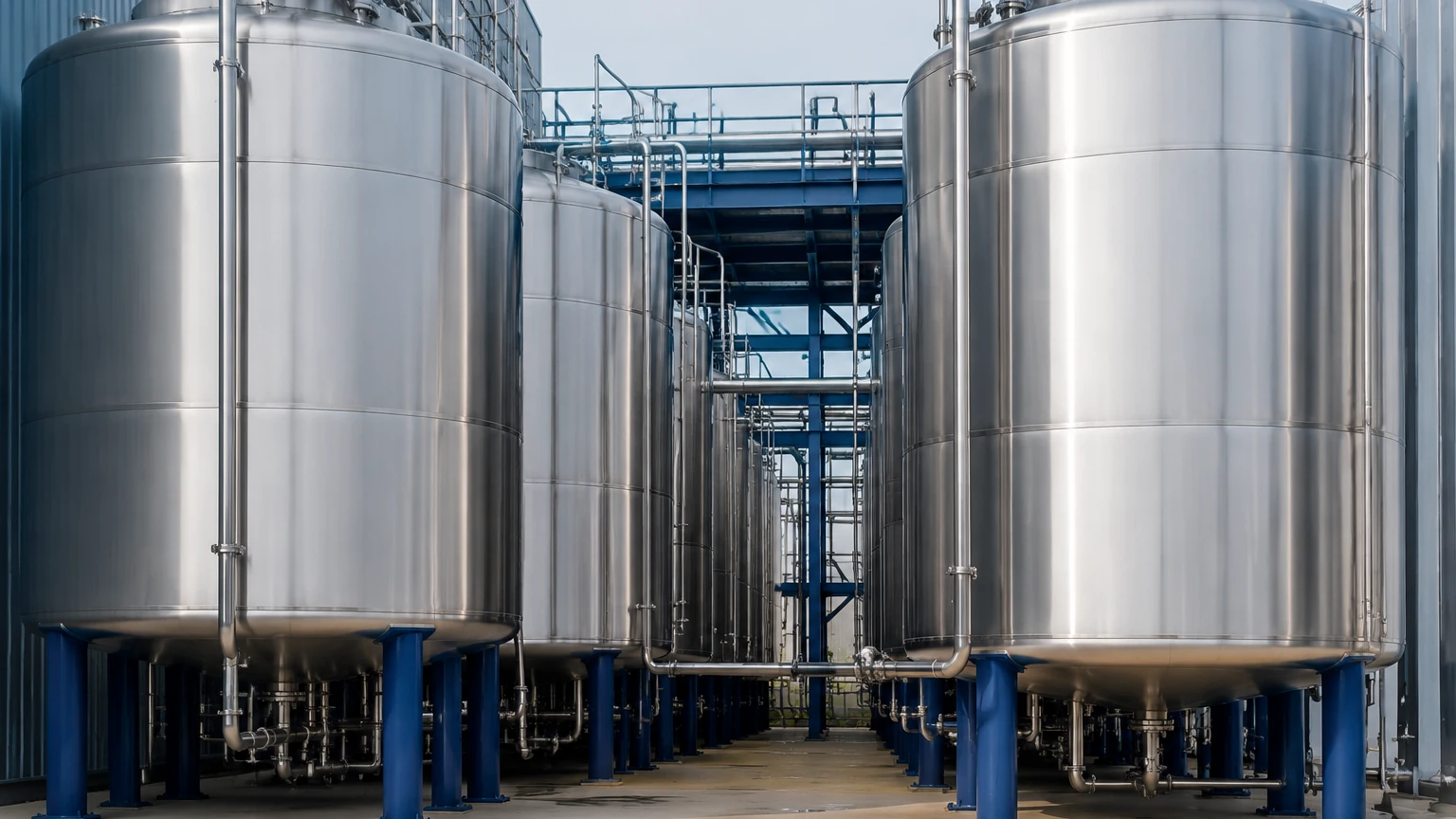
Industrial Chemical Storage Tank
In the landscape of modern industrial processing, the industrial chemical storage tank serves as a critical node for maintaining the continuity of production lines and ensuring the safety of chemical assets. Whether storing raw reagents, intermediate products, or finished chemical solutions, these vessels must be engineered to withstand corrosive environments, pressure fluctuations, and strict purity requirements. However, the tank itself is only one part of a complex system. To maintain the integrity of the stored media, engineers must integrate high-performance filtration components that prevent contamination during filling, venting, and extraction processes.
Selecting the right filtration solution for an industrial chemical storage tank requires a deep understanding of fluid dynamics, material science, and the specific chemical properties of the stored substance. As a professional manufacturer specializing in custom stainless steel filtration, Kaifil provides the technical expertise necessary to equip these storage systems with reliable, durable, and precise filter components. For more information on our specific manufacturing capabilities, you can visit our Main Page.
Understanding the Engineering Requirements of Industrial Chemical Storage Tanks
An industrial chemical storage tank is rarely a passive container. Depending on the application—ranging from pharmaceutical precursors to aggressive hydraulic fluids—the tank must be designed with specific engineering parameters in mind. The primary considerations include material compatibility, pressure ratings, and the prevention of atmospheric contamination.
Material Compatibility and Corrosion Resistance
Chemical storage often involves acids, alkalis, or solvents that can degrade standard materials. While the tank body might be constructed from specialized alloys or reinforced polymers, the internal components and filtration systems must match or exceed these resistance levels. Stainless steel, particularly grades 304, 316, and 316L, is the industry standard for these applications due to its high chromium and nickel content, which provides a protective oxide layer against corrosion.
Pressure and Temperature Dynamics
Storage tanks undergo constant thermal expansion and contraction, as well as pressure changes during the loading and unloading of chemicals. Filtration components integrated into these tanks must be able to withstand these mechanical stresses without losing structural integrity or filtration accuracy. For instance, a filter cartridge used in a pressurized storage system must have a high collapse pressure rating to ensure it does not fail under sudden flow surges.
The Critical Role of Filtration in Chemical Storage Systems
Filtration is the primary defense mechanism for an industrial chemical storage tank. Without effective filtration, contaminants such as particulates, moisture, and airborne microorganisms can compromise the chemical composition of the stored fluid, leading to downstream equipment failure or product spoilage.
Inbound Filtration (Filling)
When chemicals are transferred from transport tankers into a storage tank, they often carry particulates picked up during transit or from the transfer hoses. High-flow stainless steel filter cartridges or wire mesh filters installed at the inlet ensure that only clean fluid enters the tank. This reduces the accumulation of sediment at the bottom of the tank, which can be difficult and costly to clean.
Outbound Filtration (Dispensing)
As chemicals are drawn from the tank for use in production, a final stage of filtration is often required. This ensures that any scales or precipitates that may have formed during storage are captured before they reach sensitive processing equipment. Precision metal filter components are ideal here because they offer consistent pore sizes and can be tailored to specific micron ratings required by the application.
Material Selection and Compatibility for Harsh Chemical Environments
The performance of a filter within an industrial chemical storage tank is largely dictated by its material composition. In the B2B sector, engineers must look beyond basic functionality and evaluate how materials interact with specific chemical families.
1. Austenitic Stainless Steels (304/316L): These are the most common materials for chemical filtration. 316L, with its low carbon content and addition of molybdenum, offers superior resistance to chlorides and pitting, making it essential for pharmaceutical and high-purity chemical storage.
2. Specialty Alloys: For exceptionally aggressive chemicals, such as concentrated hot acids, materials like Hastelloy or Monel may be used in the construction of wire mesh filters. These materials provide the necessary longevity in environments where standard stainless steel would succumb to rapid oxidation.
3. Filter Media Structure: The choice between plain weave, twill weave, or Dutch weave wire mesh depends on the required filtration accuracy and the viscosity of the chemical. Dutch weave, for example, provides a dense, multi-layered structure that offers excellent fine filtration and high mechanical strength, which is vital for high-pressure storage applications.
Vent Filtration: Protecting Tank Integrity and Fluid Purity
One of the most overlooked aspects of an industrial chemical storage tank is the vent or "breather." As a tank is emptied, air must enter to displace the fluid and prevent a vacuum from forming, which could lead to tank collapse. Conversely, as the tank is filled, air must be expelled.
Preventing Atmospheric Contamination
The air drawn into a chemical storage tank is often laden with dust, moisture, and microbes. If left unfiltered, these contaminants react with the stored chemicals. For example, hygroscopic chemicals will absorb moisture from the air, degrading their quality. Vent filters equipped with fine stainless steel mesh or specialized hydrophobic membranes prevent these particles from entering the system.
Emission Control
In applications involving volatile organic compounds (VOCs) or hazardous vapors, the vent filter also serves to capture droplets or particulates before they are released into the atmosphere. Custom-designed filter housings can be integrated with the tank's venting system to ensure compliance with environmental regulations while maintaining the necessary airflow rates.
Customized Filtration Solutions for Specialized Storage Applications
No two industrial chemical storage tank setups are identical. Factors such as flow rate, chemical concentration, and physical space constraints necessitate customized filtration designs. OEM and customized filtration solutions allow engineers to specify the exact dimensions, connection types (such as NPT, flange, or quick-connect), and micron ratings needed for their specific process.
Engineering for High Viscosity
Some industrial chemicals, such as polymers or heavy oils, have high viscosities that require specialized filter structures. A standard filter might experience a high pressure drop, reducing the efficiency of the storage system. Custom-engineered pleated wire mesh cartridges increase the available surface area, allowing for higher flow rates and longer service intervals even with thick fluids.
Precision Metal Components
For pharmaceutical or semiconductor-grade chemical storage, the level of precision required is immense. Precision metal filter components manufactured through advanced sintering or specialized weaving processes ensure that filtration levels remain consistent across the entire surface of the media, providing a reliable barrier against sub-micron contaminants.
Evaluating Performance and Maintenance Cycles
For purchasing teams and maintenance engineers, the total cost of ownership (TCO) of an industrial chemical storage tank system is a primary concern. While initial costs are important, the durability and cleanability of the filtration components play a larger role in long-term profitability.
Cleanability and Reusability
Unlike disposable plastic or paper filters, stainless steel filtration components are often cleanable and reusable. In a chemical storage context, this is a significant advantage. Filters can be cleaned using backwashing, ultrasonic cleaning, or chemical solvents, restoring them to near-original performance levels. This reduces waste and the frequency of purchasing replacement parts.
Monitoring Pressure Drop
Engineers should monitor the differential pressure across the filter. A sudden increase in pressure drop indicates that the filter is reaching its dirt-holding capacity. By selecting filters with high-quality wire mesh, the interval between these cleaning cycles can be extended, ensuring the industrial chemical storage tank remains operational for longer periods without intervention.
Replacement Cycles
Even the most durable stainless steel filters will eventually require replacement due to mechanical wear or irreversible fouling. When selecting a manufacturer, it is crucial to confirm that they provide consistent quality and can supply replacement components that match the original specifications exactly. This ensures that the storage system's performance does not degrade over time.
Conclusion
The integrity of an industrial chemical storage tank depends heavily on the filtration systems that support it. From protecting the purity of the stored media to ensuring the structural safety of the vessel during venting, filtration is an essential engineering consideration. By focusing on high-quality stainless steel materials, customized designs, and precise manufacturing, industrial operators can optimize their chemical storage processes for safety and efficiency.
For engineers and purchasing professionals seeking reliable filtration components tailored to demanding industrial environments, Kaifil offers a range of wire mesh filters, cartridges, and precision components designed to meet the most rigorous standards. To explore our full range of solutions and technical support, please visit our Main Page.
