


Industrial Dust Collector Manufacturer
In the landscape of modern manufacturing, air quality management is not merely a regulatory requirement but a fundamental component of operational efficiency and workplace safety. Selecting an industrial dust collector manufacturer is a critical decision for engineers and plant managers across the chemical, pharmaceutical, food and beverage, and metalworking sectors. These systems are responsible for capturing airborne particulates, preventing environmental contamination, and protecting sensitive machinery from abrasive or corrosive dust.
Understanding the technical capabilities of a manufacturer, the engineering principles behind their filtration media, and the long-term maintenance requirements of their systems is essential for making an informed procurement decision. This guide explores the technical considerations involved in selecting a manufacturer and the specialized filtration components that define high-performance dust collection systems.
The Role of an Industrial Dust Collector Manufacturer in Process Safety
An industrial dust collector manufacturer does more than assemble hardware; they provide an engineered solution to complex air quality challenges. Industrial dust often carries risks that range from respiratory hazards to combustible dust explosions. For instance, in wood processing or chemical manufacturing, fine particulates can become explosive when suspended in the air at specific concentrations. A qualified manufacturer must understand standards such as those set by the National Fire Protection Association (NFPA) to design systems with appropriate explosion venting and suppression features.
Beyond safety, these manufacturers play a vital role in process continuity. In applications like laser cutting or thermal spraying, the dust generated is highly abrasive. If the collection system is inefficient, these particles can settle on precision components, leading to premature wear and unplanned downtime. By partnering with a manufacturer that offers customized filtration solutions, facilities can ensure that their specific particulate profile is addressed through appropriate airflow design and media selection.
Technical Criteria for Evaluating Filtration Components
When evaluating an industrial dust collector manufacturer, the focus often shifts to the core of the system: the filter media. The efficiency of a dust collector is largely determined by the ability of its filters to capture particles while maintaining a manageable pressure drop. For engineers, understanding the nuances of filter construction is paramount.
Micron Ratings and Filtration Efficiency
Filtration efficiency is typically categorized by the micron rating, which indicates the size of particles the media can reliably capture. In industrial environments, sub-micron particles (less than 1 micrometer) are often the most difficult to manage and the most hazardous to human health. A manufacturer should provide detailed performance data on their filter cartridges, specifying whether they meet HEPA standards or other industry-specific efficiency benchmarks. For those looking for specialized metal filtration components, it is helpful to Main Page to review product options and application support that align with high-precision requirements.
Air-to-Cloth Ratio
The air-to-cloth (A/C) ratio, also known as filtration velocity, is the volume of air passing through each square foot of filter media per minute. A manufacturer must calculate this ratio accurately based on the dust type. For example, sticky or hygroscopic dust requires a lower A/C ratio to prevent "blinding," where the filter pores become permanently clogged. High-quality manufacturers provide custom engineering to ensure the A/C ratio is optimized for the specific dust load of the facility.
Material Engineering: The Advantage of Stainless Steel and Metal Media
While many standard dust collectors use fabric bags or paper-based cartridges, demanding industrial environments often require more robust materials. This is where the expertise of a specialized industrial dust collector manufacturer becomes evident. In high-temperature or highly corrosive environments, traditional media may fail rapidly.
Corrosion and Temperature Resistance
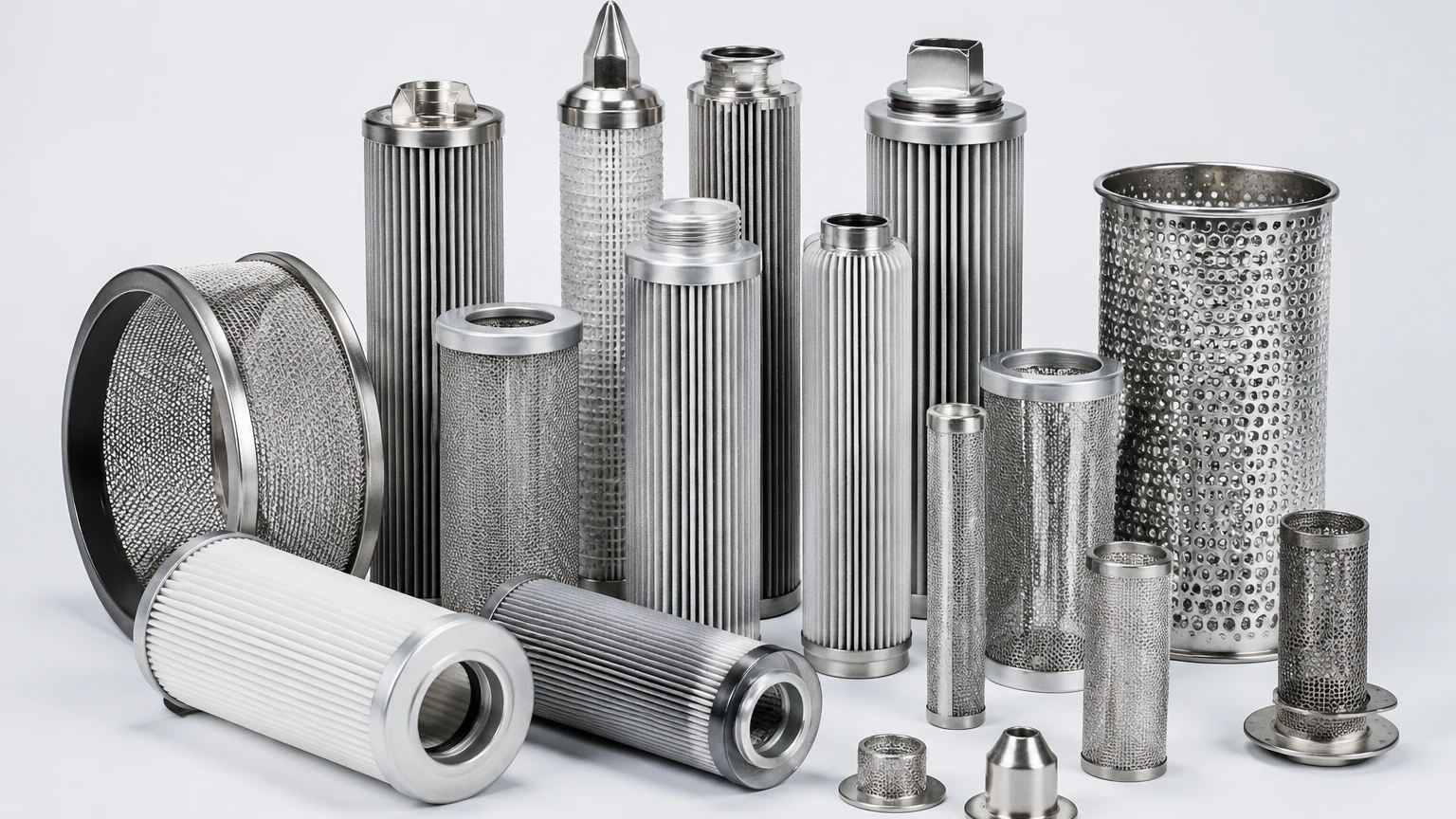
In chemical processing or pharmaceutical manufacturing, the air stream may contain acidic or alkaline vapors alongside dry dust. Stainless steel wire mesh filters and sintered metal components offer superior resistance to chemical attack compared to synthetic polymers. Furthermore, in applications such as smelting or glass manufacturing, air temperatures can exceed the melting point of standard fabric filters. Stainless steel filtration media can operate at significantly higher temperatures without losing structural integrity.
Structural Rigidity and Longevity
Metal filters provide a level of structural rigidity that prevents the media from collapsing under high differential pressure. This is particularly important in pulse-jet cleaning systems, where high-pressure air is blasted through the filter in the reverse direction to dislodge accumulated dust. Metal media can withstand thousands of these cleaning cycles without the fraying or tearing common in textile-based filters, leading to a lower frequency of filter replacements.
Customization and OEM Integration Capabilities
One of the most significant differentiators for a top-tier industrial dust collector manufacturer is their ability to provide OEM and customized solutions. Off-the-shelf systems rarely meet the exact spatial and performance constraints of a specialized production line.
Bespoke Filter Design
Customization involves more than just changing the size of a filter cartridge. It includes selecting the specific weave pattern of a wire mesh, determining the number of pleats to maximize surface area, and choosing the appropriate alloy for the environment. Manufacturers with in-house engineering teams can collaborate with clients to develop prototypes that are tested under actual operating conditions before full-scale production.
Integration with Existing Systems
For many facilities, the goal is not to replace an entire dust collection system but to upgrade its performance. An experienced manufacturer can design custom replacement filters that fit into existing housings while providing improved filtration accuracy or better airflow. This modular approach allows companies to enhance their air quality management without the capital expenditure required for a completely new installation.
Understanding Total Cost of Ownership (TCO) in Filtration
When selecting an industrial dust collector manufacturer, the initial purchase price is only one part of the financial equation. Engineers and purchasing teams must evaluate the Total Cost of Ownership (TCO), which includes energy consumption, maintenance labor, and replacement parts.
Energy Efficiency and Pressure Drop
A filter with a high initial pressure drop requires the system's fan to work harder, consuming more electricity. High-quality manufacturers design their filters to maintain a low stable pressure drop over time. By optimizing the pleat geometry and media permeability, they ensure that the system operates efficiently, reducing the monthly utility costs for the facility.
Maintenance and Replacement Cycles
The durability of the filter media directly impacts maintenance costs. If a facility has to replace fabric bags every six months due to chemical degradation, the labor costs and disposal fees can quickly exceed the cost of the filters themselves. In contrast, investing in high-performance stainless steel or precision metal filters may have a higher upfront cost but results in a significantly longer service life and fewer maintenance interventions.
Common Risks and Performance Pitfalls in Dust Collection
Even the most advanced dust collection system can fail if certain technical risks are not addressed during the design and manufacturing phase. A reputable industrial dust collector manufacturer will guide the client through these potential pitfalls.
1. Filter Blinding: This occurs when moisture or oils in the air stream combine with dust to create a "cake" that cannot be removed by pulse cleaning. Manufacturers must specify whether oleophobic or hydrophobic coatings are necessary, or if a different media type is required.
2. Bypass Leakage: If the seals between the filter cartridge and the housing are not precision-engineered, contaminated air will bypass the filter entirely. This is a common issue in low-quality systems and can lead to non-compliance with air quality standards.
3. Abrasive Wear: In industries like mining or sandblasting, the dust itself acts as an abrasive. Without proper baffling or the use of wear-resistant metal mesh, the filter media can be physically eroded, leading to holes and system failure.
Conclusion: Selecting a Strategic Partner
Choosing an industrial dust collector manufacturer is a strategic decision that impacts the safety, efficiency, and regulatory compliance of a manufacturing facility. By focusing on technical specifications—such as material selection, air-to-cloth ratios, and OEM customization—engineers can ensure they are investing in a system that meets the specific demands of their process.
Whether the application involves the delicate requirements of pharmaceutical cleanrooms or the harsh conditions of chemical processing, the quality of the filtration components remains the most critical factor. Manufacturers that prioritize engineering excellence and offer durable, high-performance solutions like stainless steel wire mesh and precision metal filters provide the greatest long-term value. For those seeking to optimize their industrial filtration performance, a focus on technical expertise and customized design will lead to more reliable and cost-effective air quality management.
