


Dual Basket Strainer
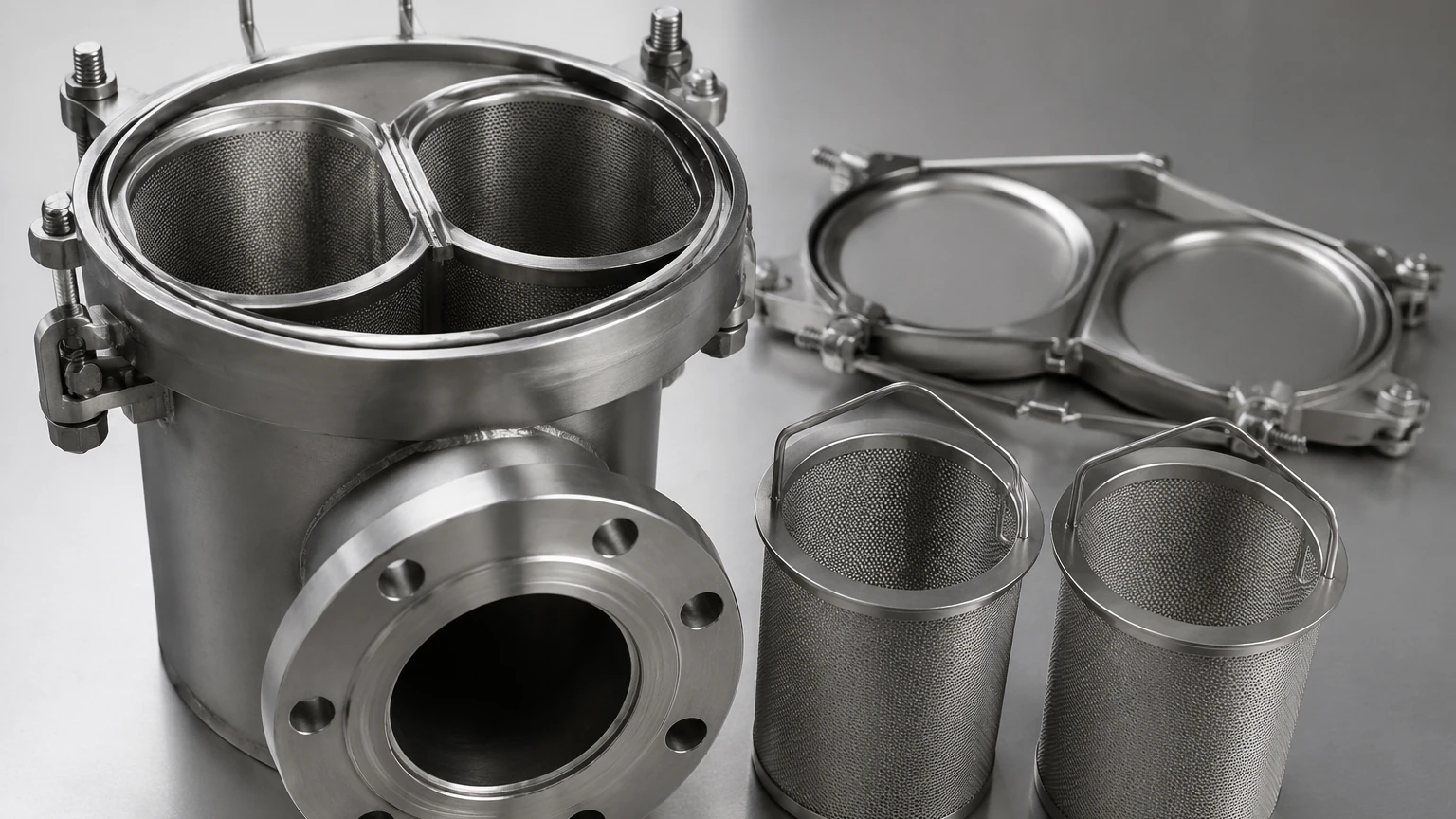
In industrial fluid handling, the requirement for continuous operation often dictates the choice of filtration hardware. For processes that cannot be shut down for routine maintenance or filter cleaning, the dual basket strainer—commonly referred to as a duplex strainer—serves as a critical engineering solution. This component allows for the removal of particulate matter from liquid streams without interrupting the flow, ensuring that downstream equipment such as pumps, valves, and heat exchangers remain protected from debris and contamination.
Selecting a dual basket strainer requires a comprehensive understanding of hydraulic dynamics, material compatibility, and operational safety protocols. For engineers and procurement teams, the decision-making process involves balancing initial capital expenditure with long-term reliability and ease of maintenance. As a professional manufacturer, Kaifil provides the technical expertise necessary to navigate these variables, offering customized stainless steel filtration solutions through our Main Page and specialized engineering support.
Understanding the Dual Basket Strainer Mechanism
The fundamental advantage of a dual basket strainer lies in its parallel-chamber design. Unlike a simplex strainer, which requires a system shutdown to clean the filter element, a duplex system consists of two separate strainer baskets housed in individual chambers connected by a common manifold. A diverter valve mechanism—typically a ball, plug, or butterfly valve—directs the fluid flow through one chamber while the other remains isolated and "offline."
When the "online" basket becomes clogged with debris, the operator can switch the flow to the clean, "offline" basket using a single lever or handwheel. This transition is designed to be seamless, preventing pressure surges or flow interruptions. Once the flow is diverted, the isolated chamber can be depressurized, opened, and the basket removed for cleaning or replacement. This zero-downtime capability is essential in industries such as chemical processing, power generation, and marine cooling systems, where even a brief stoppage can lead to significant financial losses or equipment damage.
Key Engineering Considerations for Selection
When specifying a dual basket strainer for an industrial application, several technical parameters must be evaluated to ensure the unit performs according to the system's design requirements. These considerations go beyond simple pipe size and include flow rate, pressure drop, and filtration accuracy.
Flow Rate and Pressure Drop
One of the most critical factors is the "clean pressure drop" ($ΔP$). Every filter introduces a degree of resistance to the flow. Engineers must calculate the maximum allowable pressure drop at the required flow rate to ensure the system's pump capacity is sufficient. Factors influencing $ΔP$ include the viscosity of the fluid, the open area ratio of the basket mesh, and the internal geometry of the strainer housing. A common rule of thumb is to size the strainer so that the clean pressure drop does not exceed 2 psi at the maximum flow rate.
Filtration Accuracy (Micron Rating)
The level of filtration required depends on the sensitivity of the downstream equipment. Filtration accuracy is measured in microns (μ) or mesh size. A dual basket strainer can be fitted with baskets ranging from coarse perforated plates (for large debris) to fine stainless steel wire mesh (for microscopic particles). It is important to avoid "over-filtering," as a mesh that is too fine will clog rapidly, leading to frequent changeovers and higher maintenance costs. The goal is to select the largest micron rating that still provides adequate protection for the system.
Pressure and Temperature Ratings
Industrial strainers must be rated for the maximum operating pressure and temperature of the system. This often involves adherence to standards such as ASME B16.5 for flanges and ASME Section VIII for pressure vessel construction. In high-temperature applications, the thermal expansion of the diverter valve and the integrity of the seals (O-rings and gaskets) must be verified to prevent bypass or external leaks.
Material Science in Industrial Filtration
The longevity of a dual basket strainer is largely determined by the materials used in its construction. Because these units are often exposed to corrosive fluids, high pressures, and abrasive particles, material selection is a primary engineering concern.
Stainless Steel Construction
Stainless steel is the industry standard for high-performance filtration. Kaifil specializes in utilizing Grade 304 and Grade 316L stainless steel for both the housing and the internal baskets.
- Grade 304: Offers excellent strength and general corrosion resistance, suitable for water treatment and food-grade applications.
- Grade 316L: Contains molybdenum, which provides superior resistance to chlorides and pitting, making it the preferred choice for chemical processing and marine environments.
Seal and Gasket Compatibility
While the metal housing handles the structural load, the internal seals ensure the integrity of the diversion process. Choosing the wrong seal material can lead to swelling, degradation, and eventual failure. Common materials include:
- Buna-N (Nitrile): Suitable for oil and water applications at moderate temperatures.
- Viton (FKM): Excellent for high temperatures and aggressive chemicals.
- PTFE (Teflon): Provides near-universal chemical resistance but requires specific housing designs to ensure a proper seal.
Operational Efficiency: Maintenance and Cleaning Cycles
The total cost of ownership for a dual basket strainer is heavily influenced by how easily it can be maintained. A well-designed system includes features that simplify the cleaning process and protect the operator.
Differential Pressure Monitoring
To eliminate guesswork, industrial duplex strainers should be equipped with differential pressure ($ΔP$) gauges. These gauges measure the pressure difference between the inlet and outlet of the strainer. As the basket fills with debris, the $ΔP$ increases. Operators typically schedule a changeover when the pressure drop reaches a predetermined limit (e.g., 10-15 psi above the clean pressure drop). Automated systems can use differential pressure switches to trigger an alarm or even automate the valve changeover process.
The Changeover Procedure
Safety is paramount during the changeover and cleaning cycle. Modern dual basket strainers often incorporate an "equalizing line." Before switching the flow to the clean chamber, the operator opens a small bypass valve to fill the idle chamber with fluid and equalize the pressure. This prevents a sudden pressure drop or hydraulic shock (water hammer) when the main diverter valve is moved. Additionally, vent and drain valves allow the isolated chamber to be safely emptied before the cover is removed.
Basket Cleaning and Replacement
Stainless steel wire mesh baskets are generally designed to be cleaned and reused. Cleaning methods include back-flushing, ultrasonic cleaning, or manual pressure washing, depending on the nature of the contaminants. However, in applications involving resins or adhesives, baskets may be treated as semi-consumable components. Engineers should evaluate the structural integrity of the basket frame to ensure it can withstand the differential pressure without collapsing when fully loaded with debris.
Customization and OEM Integration for Demanding Environments
Off-the-shelf filtration solutions often fail to meet the specific spatial or performance constraints of complex industrial skids. This is where customized engineering and OEM capabilities become essential. A dual basket strainer can be tailored in several ways:
1. Connection Types: While flanged connections are standard, applications may require NPT threaded, socket weld, or sanitary tri-clamp connections for pharmaceutical and food industries.
2. Housing Orientation: In tight mechanical rooms, the orientation of the inlet and outlet ports can be customized (e.g., offset or right-angle configurations) to minimize piping complexity.
3. Specialty Coatings: For highly abrasive slurries, internal surfaces can be lined with specialized materials to extend the service life of the stainless steel housing.
4. Heating Jackets: In applications involving high-viscosity fluids like bitumen or chocolate, steam or electric heating jackets can be added to the strainer housing to maintain fluid temperature and prevent solidification.
Kaifil works closely with global customers to develop these high-performance components, ensuring that every filter meets the specific demands of the application. By focusing on precision manufacturing and rigorous quality control, we provide filtration solutions that reduce the risk of unplanned downtime.
Conclusion: Making Informed Purchasing Decisions
For technical professionals, the selection of a dual basket strainer is an investment in system reliability. By prioritizing high-quality materials like stainless steel and ensuring the unit is correctly sized for flow and pressure requirements, companies can achieve significant long-term savings. The ability to maintain continuous flow while protecting sensitive equipment is a fundamental requirement in modern industrial processes.
When evaluating suppliers, engineers should look for manufacturers who offer deep technical support and the ability to customize designs. Understanding the nuances of micron ratings, material compatibility, and safety features will lead to a more efficient and durable filtration system. For more information on our range of stainless steel filter cartridges, wire mesh filters, and custom industrial solutions, please visit our Main Page to review product options and application support. Through engineering excellence and a commitment to quality, Kaifil remains a trusted partner for demanding industrial filtration needs.
