


Industrial Oil Purification Systems
In modern industrial environments, the reliability of hydraulic systems, turbines, and large-scale lubrication networks is directly proportional to the cleanliness of the fluid circulating within them. Contamination is cited as the cause for approximately 70% to 80% of all hydraulic system failures. To mitigate these risks, industrial oil purification systems are employed to remove solid particulates, water, and gaseous contaminants that compromise fluid integrity.
For engineers and maintenance professionals, selecting the right purification strategy involves more than just choosing a pump and a motor; it requires a deep understanding of filtration media, fluid dynamics, and the specific environmental challenges of the application. High-performance components, such as those found on the Kaifil Main Page, play a critical role in ensuring these systems meet the stringent ISO cleanliness codes required by modern high-pressure equipment.
The Critical Role of Fluid Cleanliness in Industrial Operations
Industrial oils, including hydraulic fluids, gear oils, and turbine lubricants, serve multiple functions: power transmission, heat dissipation, lubrication, and corrosion protection. When these fluids become contaminated, their ability to perform these functions diminishes, leading to accelerated component wear, valve sticking, and eventual system breakdown.
Contaminants generally fall into three categories:
1. Solid Particulates: Metal shavings, dust, and silica that cause abrasive wear.
2. Water: Both free and dissolved water, which leads to oxidation, additive depletion, and loss of lubricity.
3. Gases: Entrained air that causes cavitation in pumps and spongy hydraulic response.
Industrial oil purification systems are designed to address these issues through continuous or batch processing. By maintaining the oil in a "like-new" state, facilities can extend oil change intervals, reduce hazardous waste disposal costs, and significantly improve the Mean Time Between Failures (MTBF) for critical machinery.
Core Technologies in Industrial Oil Purification Systems
Not all oil purification systems are created equal. The choice of technology depends on the type of oil, the nature of the contaminants, and the required throughput.
Mechanical Filtration
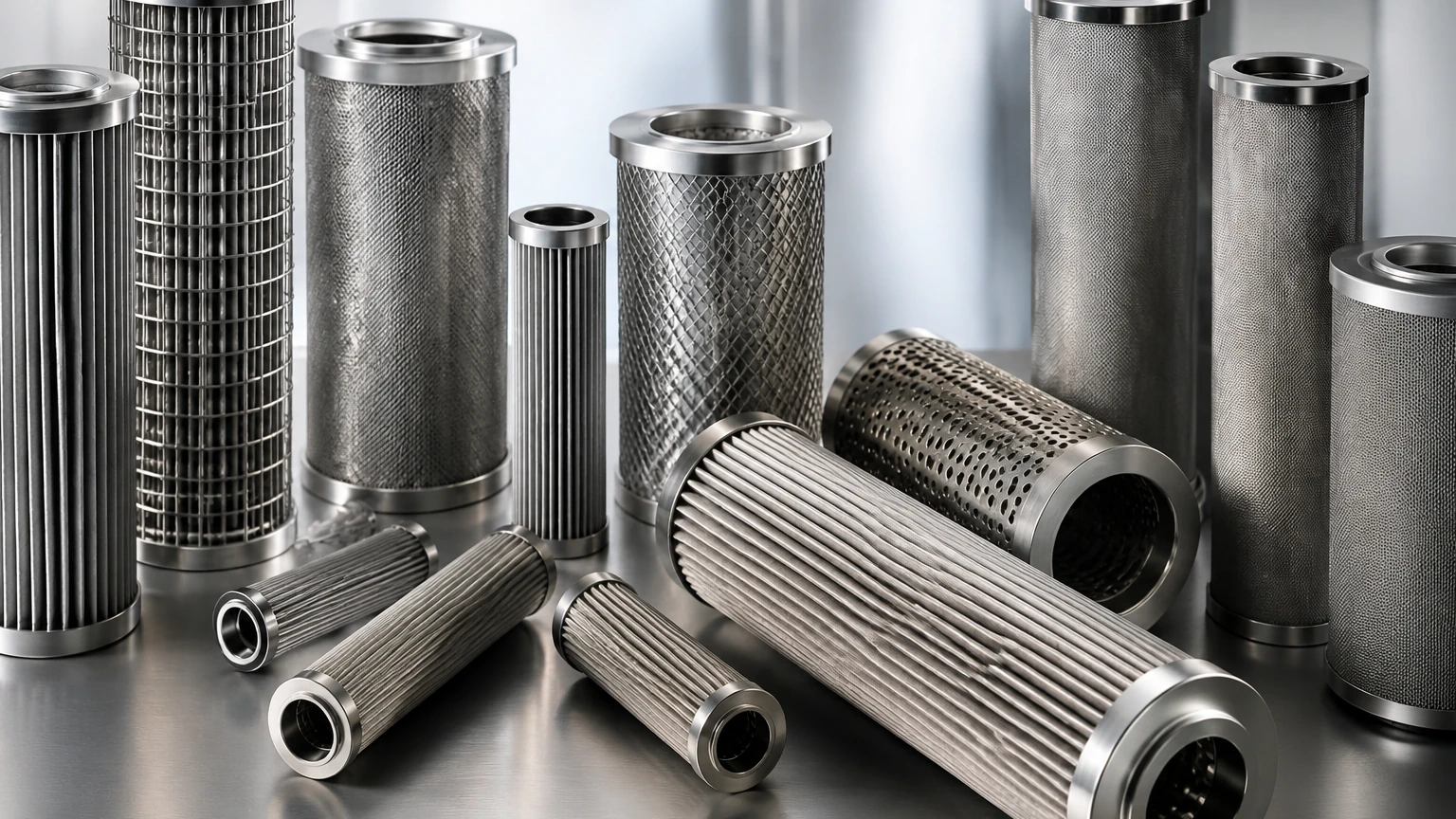
Mechanical filtration is the primary line of defense. It utilizes porous media to trap solid particles. In high-demand industrial settings, stainless steel wire mesh and sintered metal filters are preferred over paper or cellulose media due to their structural integrity and resistance to pressure spikes. These filters provide precise micron ratings and can be cleaned and reused, making them a cost-effective choice for long-term operations.
Vacuum Dehydration
For systems plagued by water contamination, vacuum dehydration is the gold standard. This process works by exposing the oil to a vacuum, which lowers the boiling point of water. This allows water to be evaporated at temperatures low enough (typically 50°C to 60°C) to prevent thermal degradation of the oil. This method is highly effective at removing both free and dissolved water, as well as entrained air and gases.
Centrifugal Separation
Centrifugal purifiers use high-speed rotation to separate contaminants based on density. Heavier particles and water are forced to the outer edge of a bowl, while the lighter, clean oil remains in the center. This technology is particularly useful for high-volume applications where large amounts of free water or heavy sludge are present, such as in marine or heavy power generation sectors.
Engineering Specifications for High-Performance Filter Elements
The heart of any industrial oil purification system is the filter element. Engineers must evaluate several technical parameters to ensure the element is compatible with the system's operational demands.
Micron Rating and Beta Ratio
The micron rating indicates the size of particles the filter can trap. However, a nominal rating can be misleading. Engineers should look for the Beta Ratio ($\beta$), which defines the filter's efficiency at a specific micron size. For example, a $\beta_{10} \ge 200$ means that for every 200 particles of 10 microns entering the filter, only one passes through, representing 99.5% efficiency. High-precision industrial oil purification systems often require absolute-rated stainless steel cartridges to maintain consistent performance.
Material Compatibility
The choice of filter material is dictated by the chemical composition of the oil and the operating temperature. Stainless steel (304 or 316L) is the material of choice for synthetic fluids, phosphate esters, and high-temperature applications where standard polymers would fail. Stainless steel wire mesh filters offer excellent chemical resistance and can withstand the aggressive additives often found in high-performance industrial lubricants.
Differential Pressure ($\Delta P$)
As a filter traps contaminants, the resistance to flow increases, leading to a rise in differential pressure. Filter elements must be designed with sufficient surface area—often achieved through pleating—to keep the initial $\Delta P$ low. This ensures that the system does not enter bypass mode prematurely, which would allow unfiltered oil to circulate through the machinery.
Addressing Contaminant Types: Particulates, Water, and Varnish
Effective industrial oil purification systems must be versatile enough to handle evolving contamination profiles.
Particulate Control and ISO 4406
The industry standard for measuring oil cleanliness is ISO 4406. This code uses three numbers (e.g., 18/16/13) to represent the number of particles larger than 4, 6, and 14 microns per milliliter of fluid. Each increase in the code number represents a doubling of the contaminant level. Industrial oil purification systems are often tasked with bringing a system from a "dirty" 22/20/18 level down to a "clean" 16/14/11, which can extend the life of hydraulic components by up to four times.
The Varnish Problem
Varnish is a thin, insoluble film that deposits on internal surfaces of lubrication systems. It is caused by the thermal and oxidative degradation of the oil. Standard mechanical filters often fail to capture varnish precursors because they are sub-micron in size. Specialized purification systems using electrostatic or depth filtration technology are required to remove these soft contaminants before they can bake onto valves and bearings.
Evaluating Total Cost of Ownership and Maintenance Cycles
When purchasing or specifying industrial oil purification systems, the initial capital expenditure is only one part of the equation. Technical professionals must consider the Total Cost of Ownership (TCO), which includes:
* Consumable Costs: How often do filter elements need to be replaced? Systems utilizing cleanable stainless steel mesh filters from manufacturers like Kaifil can significantly reduce annual spend compared to disposable glass-fiber elements.
* Energy Consumption: Vacuum pumps and heaters in dehydration units require significant power. High-efficiency designs that utilize heat exchangers to recover energy can lower operational costs.
* Oil Life Extension: The primary economic driver is the reduction in oil purchases. By maintaining oil quality, a facility can potentially double or triple the service life of their fluid, leading to massive savings in large-volume systems.
* Maintenance Labor: Systems designed with quick-change filter housings and automated monitoring (such as moisture sensors and particle counters) reduce the man-hours required for system oversight.
Customization and OEM Integration for Specialized Applications
Standard off-the-shelf purification units may not meet the requirements of specialized industries. Customization is often necessary to address unique challenges:
* Chemical Processing: Requires high-grade 316L stainless steel components to resist corrosive environments and aggressive chemical additives.
* Food and Beverage: Demands "food-grade" materials and designs that prevent bacterial growth, often requiring electro-polished surfaces and specific seal materials like EPDM or Viton.
* Hydraulic Systems: Often require compact, mobile purification units (kidney loop systems) that can be moved from one machine to another for periodic cleaning.
Manufacturers specializing in precision metal filtration, such as Kaifil, work closely with OEM partners to develop bespoke filter cartridges and housings that fit within the specific footprint and performance envelopes of proprietary industrial oil purification systems. This collaborative engineering approach ensures that the filtration media is perfectly matched to the pump flow rates and the expected contaminant loading of the target application.
Technical Selection Summary for Engineers
Before finalizing the specification for an oil purification solution, engineers should confirm the following data points:
1. Fluid Type and Viscosity: Ensure the system and filter media are rated for the fluid's viscosity at both start-up (cold) and operating (hot) temperatures.
2. Target Cleanliness Level: Define the desired ISO 4406 code based on the most sensitive component in the system (usually high-pressure pumps or servo valves).
3. Flow Rate: The purification system should typically process the entire reservoir volume 3 to 5 times per day for offline systems.
4. Environmental Conditions: Consider ambient temperature, humidity, and the presence of external dust or chemicals that might necessitate specialized seals or stainless steel housings.
By focusing on high-quality filtration components and robust system design, industrial facilities can transform oil maintenance from a reactive chore into a proactive strategy for operational excellence. For detailed specifications on custom stainless steel filtration components that support these systems, you may review product options and application support on the Kaifil Main Page.
