


Industrial Water Filter Manufacturers
In the landscape of modern industrial processing, the efficiency of water treatment systems is directly tied to the quality of the filtration components utilized. For engineers and procurement managers, identifying and vetting industrial water filter manufacturers is a critical step in ensuring operational continuity, protecting downstream equipment, and meeting stringent regulatory standards. Industrial water filtration is rarely a one-size-fits-all application; it requires a deep understanding of fluid dynamics, material science, and mechanical engineering to select a partner capable of delivering high-performance solutions.
Selecting a manufacturer involves more than comparing price lists. It requires an evaluation of engineering capabilities, material integrity, and the ability to customize components for specific flow rates, pressure differentials, and particle retention requirements. As a specialist in stainless steel filtration, Kaifil provides the technical foundation necessary for these demanding environments, offering everything from wire mesh filters to precision-engineered cartridges.
Technical Engineering Considerations for Industrial Water Filtration
When evaluating industrial water filter manufacturers, the technical specifications of the filter media and housing are paramount. Industrial water can contain a wide array of contaminants, ranging from coarse sand and scale to microscopic organic matter and chemical precipitates.
Material Selection and Corrosion Resistance
Stainless steel is the industry standard for durable industrial filtration. Manufacturers typically offer Grade 304 or Grade 316L stainless steel. Grade 304 is suitable for general water treatment, but for applications involving high salinity, brackish water, or chemical additives, 316L is preferred due to its superior resistance to pitting and crevice corrosion. A reputable manufacturer must provide material certifications to ensure the alloy composition meets the required standards for the specific operating environment.
Filtration Accuracy: Nominal vs. Absolute
Engineers must distinguish between nominal and absolute filtration ratings. A nominal rating refers to a filter's ability to retain a major percentage of particles of a specific size, whereas an absolute rating indicates that 99.9% or more of particles at that micron size are captured. Industrial water filter manufacturers should provide clear beta ratios and efficiency data to help engineers predict the performance of the filter under real-world conditions.
Pressure Drop and Flow Rate
The design of the filter must account for the Clean Pressure Drop (ΔP). A high initial pressure drop limits the service life of the filter and increases energy consumption for pumps. Custom manufacturers like Kaifil optimize the open area of wire mesh and the pleating geometry of cartridges to maximize flow rates while maintaining structural integrity under high differential pressures.
Key Evaluation Criteria for Selecting Industrial Water Filter Manufacturers
Choosing a manufacturing partner requires a systematic audit of their production processes and quality management systems. Because filtration components often serve as the last line of defense for expensive machinery, such as high-pressure pumps or membranes, the reliability of the manufacturer is non-negotiable.
1. Customization and OEM Capabilities: Many industrial systems have unique spatial constraints or specialized connection types (NPT, Flanged, BSP). A manufacturer that offers OEM services can adapt filter dimensions, end-cap configurations, and reinforcement layers to fit existing infrastructure without requiring costly system modifications.
2. Quality Control and Testing: Inquire about the manufacturer’s testing protocols. Do they perform bubble point tests to verify pore size? Are the filters subjected to hydraulic collapse tests? Reliable manufacturers maintain ISO-certified facilities and provide documented proof of quality for every batch.
3. Manufacturing Technology: Advanced manufacturing techniques, such as vacuum sintering and precision plasma welding, are essential for producing high-quality stainless steel filters. These methods ensure that there are no loose wire ends or weak weld points that could lead to media migration—a common failure where fragments of the filter itself enter the process stream.
4. Technical Support and Engineering Expertise: The best industrial water filter manufacturers act as consultants. They should be able to analyze your water quality reports and recommend the optimal mesh count or filter structure to achieve the desired clarity while minimizing maintenance intervals.
To explore specific product specifications and engineering support for your next project, you can visit the Main Page for a comprehensive overview of available filtration solutions.
Comparing Filter Media and Structures
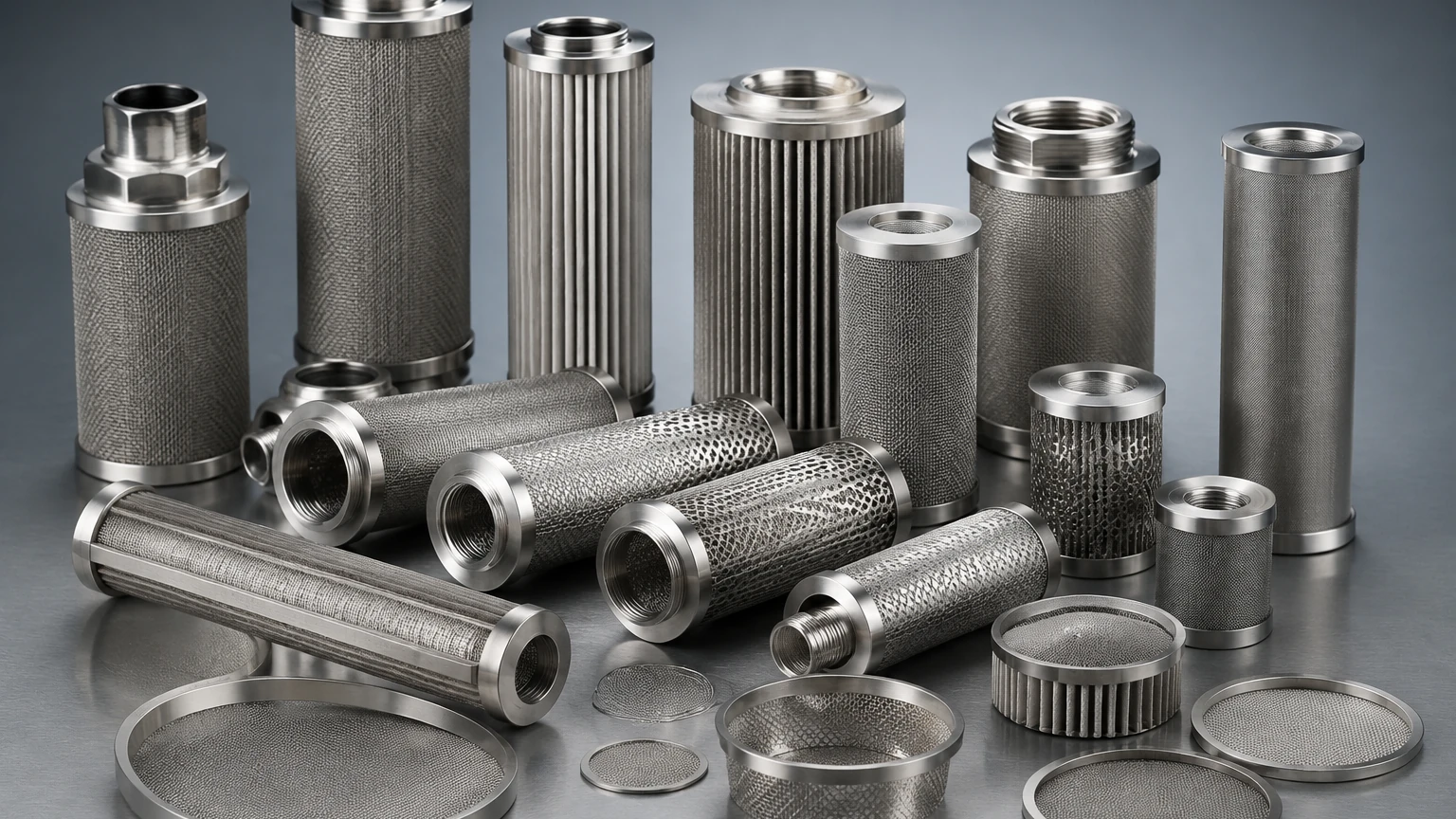
Industrial water filtration utilizes several different structures depending on the solids loading and the required micron rating. Understanding these differences is essential for making an informed purchasing decision.
Stainless Steel Wire Mesh Filters
Wire mesh is ideal for surface filtration. It is characterized by a precise pore size and a high open area, making it excellent for high-flow applications. It is also highly cleanable, allowing for backwashing or ultrasonic cleaning, which significantly reduces the total cost of ownership compared to disposable filters.
Sintered Metal Filters
For applications requiring extreme durability and fine filtration (down to 1 micron or less), sintered metal is the preferred choice. These are created by fusing multiple layers of wire mesh or metal powder under high heat and pressure. The result is a rigid, porous structure that can withstand high temperatures and aggressive cleaning cycles without deforming.
Wedge Wire Screens
In heavy-duty industrial water intake or primary treatment, wedge wire (V-wire) screens are often used. These are resistant to clogging due to their unique V-shaped profile, which allows only two-point contact with particles. They are particularly effective for removing large debris and sand in high-volume water systems.
Common Risks and Mitigation in Procurement
Procuring filtration components from unverified industrial water filter manufacturers carries several operational risks. Identifying these risks early can prevent system downtime and expensive repairs.
* Bypass Issues: If the filter cartridge does not seal perfectly within the housing, or if the end caps are poorly bonded, unfiltered water will "bypass" the media. This leads to downstream contamination. Engineers should look for manufacturers that use precision-machined end caps and high-quality gaskets (EPDM, Viton, or PTFE).
* Structural Failure: Under high differential pressure, lower-quality filters may collapse or burst. This is often due to insufficient internal support cores or poor welding. Ensure the manufacturer specifies the maximum allowable differential pressure (PSID) for their products.
* Material Non-Compliance: Using low-grade alloys in a corrosive environment can lead to rapid filter degradation. This not only necessitates frequent replacements but also risks introducing rust particles into the process water. Always request material mill test reports (MTRs).
Total Cost of Ownership (TCO) and Maintenance
While the initial purchase price is a factor, the Total Cost of Ownership (TCO) is a more accurate metric for industrial filtration. High-quality stainless steel filters from reputable industrial water filter manufacturers often have a higher upfront cost than polymer or disposable alternatives but offer significant long-term savings.
* Longevity: Stainless steel filters can last for years if properly maintained, whereas disposable cartridges may need replacement every few weeks.
* Reduced Downtime: Durable filters require fewer change-outs, meaning the system stays online longer.
* Waste Reduction: Using cleanable metal filters aligns with corporate sustainability goals by eliminating the waste stream associated with used disposable cartridges.
Maintenance cycles should be determined by monitoring the pressure differential across the filter. When the ΔP reaches a predetermined limit, the filter should be cleaned. Manufacturers like Kaifil provide guidance on the best cleaning methods—whether chemical soaking, back-pulsing, or ultrasonic cleaning—to restore the filter to its original performance levels.
Essential Questions for Technical Procurement
Before finalizing a contract with an industrial water filter manufacturer, engineering teams should confirm the following details:
* What is the absolute micron rating of the media? Ensure it aligns with the protection requirements of your downstream equipment.
* Can the manufacturer provide custom dimensions? If you are retrofitting an old system, standard sizes may not fit.
* What is the maximum operating temperature and pressure? Confirm these exceed your system's worst-case scenarios.
* What certifications are available? Depending on the industry (e.g., food and beverage), you may require FDA-compliant materials or specific industry certifications.
* What is the typical lead time for custom orders? Industrial projects often operate on tight schedules, and reliable delivery is as important as product quality.
By focusing on these technical and operational parameters, purchasing teams can establish a partnership with industrial water filter manufacturers that enhances system reliability and optimizes filtration performance. For those seeking specialized stainless steel components, reviewing the Main Page of a dedicated manufacturer like Kaifil can provide the necessary technical data to begin the selection process.
