


Wedge Wire Filter Screen
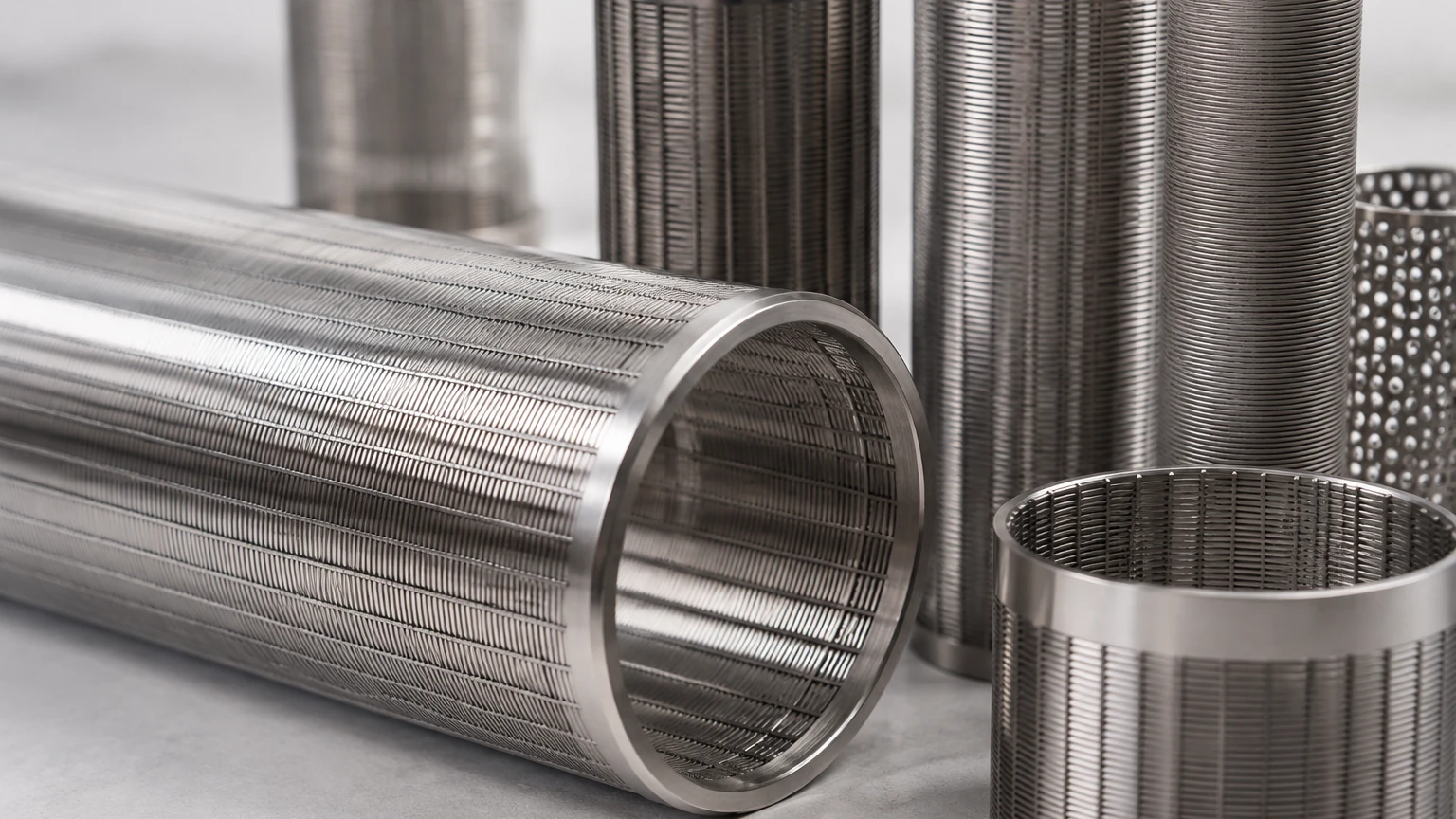
In the landscape of industrial filtration, the wedge wire filter screen stands as a critical component for processes requiring high mechanical strength, precise slot control, and long-term durability. Unlike traditional woven wire mesh or perforated plates, wedge wire—often referred to as profile wire—is engineered through a process of resistance welding V-shaped stainless steel wires onto support rods. This creates a robust, non-clogging surface that is essential in demanding sectors such as chemical processing, water treatment, and food and beverage production. For engineers and procurement teams, understanding the technical nuances of these screens is vital for optimizing system performance and minimizing downtime.
As a professional manufacturer, Kaifil specializes in providing customized stainless steel filtration solutions that address the specific challenges of industrial environments. By focusing on material integrity and precision engineering, we ensure that every filtration component meets the rigorous standards required for modern industrial applications. You can explore our full range of capabilities on our Main Page.
Engineering Principles of the Wedge Wire Design
The primary advantage of a wedge wire filter screen lies in its unique geometry. The V-shaped profile of the surface wire is designed so that the narrowest part of the aperture is at the filtration surface. As particles pass through the slot, the opening widens inwardly. This design ensures that any particle small enough to enter the slot will pass through without becoming wedged or stuck, a phenomenon known as "blinding."
The Non-Clogging Mechanism
Traditional mesh filters often struggle with near-size particles that get trapped within the weave. In contrast, the two-point contact provided by the V-wire ensures that solids are either blocked at the surface or allowed to pass freely. This characteristic makes wedge wire exceptionally effective for media retention, solid-liquid separation, and applications involving viscous fluids where clogging would otherwise necessitate frequent maintenance cycles.
Structural Rigidity
Unlike flexible filter media, the wedge wire filter screen is a rigid structure. The surface wires are welded at every intersection with the underlying support rods. This creates a high-integrity unit capable of withstanding significant pressure differentials and mechanical stresses. In high-pressure hydraulic systems or large-scale water intake screens, this rigidity prevents the deformation of the filter slots, ensuring consistent filtration accuracy over the life of the component.
Material Specifications for Demanding Environments
Material selection is perhaps the most critical decision an engineer faces when specifying a wedge wire filter screen. Because these components are often exposed to corrosive chemicals, high temperatures, and abrasive slurries, the choice of stainless steel grade directly impacts the filter's service life.
1. Grade 304 Stainless Steel: This is the standard choice for general industrial applications. It offers good corrosion resistance and is cost-effective for water treatment and basic food processing environments where chemical exposure is minimal.
2. Grade 316/316L Stainless Steel: For more aggressive environments, such as pharmaceutical manufacturing or chemical processing, Grade 316 is preferred due to the addition of molybdenum, which enhances resistance to chlorides and pitting. The "L" (low carbon) variant is often specified for welded structures to prevent carbide precipitation during the welding process, ensuring the integrity of the joints.
3. Duplex and Super Alloys: In extreme cases involving high-salinity water or highly acidic processes, specialized alloys may be required. These materials provide superior yield strength and exceptional resistance to stress corrosion cracking.
At Kaifil, we prioritize material traceability and quality control, ensuring that the stainless steel used in our filter cartridges and screens matches the exact metallurgical requirements of the application.
Performance Evaluation: Flow Rates and Pressure Drop
When integrating a wedge wire filter screen into a system, engineers must calculate the balance between filtration efficiency (slot size) and hydraulic performance (pressure drop). The "open area" of a screen is the ratio of the total slot area to the total surface area. A higher open area results in lower entrance velocities and reduced pressure drop, which in turn lowers energy consumption for pumps and reduces the risk of particle impingement erosion.
Calculating Open Area
The formula for open area in a wedge wire screen is relatively straightforward:
`Open Area % = (Slot Width / (Slot Width + Wire Width)) x 100`.
For example, a screen with a 0.5mm slot and a 1.5mm wire width would have a 25% open area. Engineers must select a wire profile that is wide enough to provide structural strength but narrow enough to maximize the open area for the required flow rate.
Slot Orientation and Flow Direction
Flow direction is another critical engineering consideration. Wedge wire screens can be configured for:
* Flow Out-to-In (FOTI): Common in filter cartridges where the solids are collected on the exterior surface for easy cleaning.
* Flow In-to-Out (FITO): Often used in centrifuge baskets or internal pipe liners where the V-profile faces inward.
Furthermore, the slots can be oriented axially (parallel to the flow) or radially (perpendicular to the flow), depending on whether the application involves mechanical scraping or backwashing.
Addressing Common Operational Risks
While the wedge wire filter screen is inherently durable, certain operational factors can lead to premature failure if not properly addressed during the design phase.
Erosion and Abrasion
In applications involving high-velocity fluids with abrasive solids, such as mining or sand filtration, the leading edges of the V-wires can wear down over time. This erosion gradually increases the slot width, compromising filtration accuracy. Specifying hardened materials or increasing the wire profile thickness can mitigate this risk.
Mechanical Fatigue
Systems subject to rapid pressure cycling or vibration can experience mechanical fatigue at the weld points. It is essential to ensure that the support rod spacing is sufficient to handle the maximum expected load. For high-vibration environments, reinforced frames or heavier support profiles are often necessary to maintain structural integrity.
Chemical Incompatibility
Even stainless steel can fail if exposed to incompatible cleaning agents or process fluids. For instance, high concentrations of chlorine can lead to rapid pitting in Grade 304. Engineers should always confirm the chemical composition of both the process fluid and the CIP (Clean-In-Place) solutions used in the facility.
Customization and OEM Manufacturing Capabilities
No two industrial filtration challenges are identical. A standard off-the-shelf solution rarely provides the optimal balance of performance and longevity. This is where custom manufacturing becomes essential. Kaifil provides extensive OEM capabilities, allowing engineers to specify every dimension of the wedge wire filter screen.
Customization options include:
* Precision Slot Widths: Ranging from as small as 20 microns up to several millimeters, depending on the particle size distribution of the media.
* End Fittings: Custom flanges, threaded connections, or reinforced rings can be integrated to ensure a seamless fit into existing housings.
* Surface Finishes: Options such as electropolishing are available for pharmaceutical and food-grade applications to ensure a smooth, crevice-free surface that inhibits bacterial growth.
By working closely with a manufacturer that understands the nuances of precision metal filtration, purchasing teams can ensure that their components are built to exact specifications, reducing the need for field modifications.
Maintenance Protocols for Industrial Longevity
One of the primary reasons engineers specify a wedge wire filter screen is its ease of maintenance. The smooth, metallic surface is highly conducive to various cleaning methods, which can significantly extend the replacement cycle compared to disposable media.
Backwashing and Backpulsing
Because of the non-clogging V-wire profile, reversing the flow of the fluid (backwashing) is highly effective at dislodging accumulated solids. The rigid structure can handle the sudden pressure spikes associated with backpulsing, allowing for automated cleaning cycles that keep the system online for longer periods.
Mechanical Cleaning
In applications like pulp and paper or wastewater treatment, mechanical scrapers or brushes are often used to clean the screen surface. The durability of the stainless steel wire allows for aggressive mechanical cleaning without damaging the filter slots, provided the scraper material is compatible with the screen's hardness.
Technical Checklist for Procurement Teams
Before finalizing a purchase order for a wedge wire filter screen, engineers and purchasing professionals should confirm the following technical details to ensure the product is fit for purpose:
* Slot Size and Tolerance: What is the required filtration rating, and what is the allowable deviation in slot width?
* Operating Pressure and Temperature: What are the normal and maximum peak values the screen will encounter?
* Flow Rate and Direction: Is the screen designed for Out-to-In or In-to-Out flow?
* Material Certification: Is a mill test report (MTR) required to verify the stainless steel grade?
* Connection Type: Does the screen require specific flanges, threads, or support frames for installation?
* Cleaning Method: Will the screen be cleaned via backwashing, mechanical scraping, or manual removal?
Conclusion
The wedge wire filter screen is a sophisticated engineering tool that offers unparalleled durability and efficiency in industrial solid-liquid separation. By selecting the correct wire profile, material grade, and structural configuration, industrial facilities can achieve reliable filtration performance while minimizing the total cost of ownership.
Kaifil remains committed to supporting global industries with high-performance, customized stainless steel filtration components. Our expertise in manufacturing precision wire mesh filters and cartridges ensures that your specific application requirements are met with technical accuracy and quality craftsmanship. For more information on our customized filtration solutions, please visit our Main Page.
