


Inline Carbonation
In industrial beverage production, chemical processing, and water treatment, the efficient dissolution of gases into liquids is a critical process requirement. Inline carbonation represents the modern standard for achieving precise carbon dioxide (CO2) saturation levels within a flowing liquid stream. Unlike traditional batch carbonation, which relies on static pressure over time in a vessel, inline systems utilize dynamic injection methods to achieve immediate and consistent results. For engineers and system designers, understanding the technical nuances of diffusion media, fluid dynamics, and thermodynamic variables is essential for optimizing these systems.
Understanding the Principles of Inline Carbonation
At its core, inline carbonation is governed by Henry’s Law, which states that the amount of dissolved gas in a liquid is proportional to the partial pressure of that gas above the liquid. In a flowing system, this process is accelerated by increasing the contact surface area between the gas and the liquid.
By injecting CO2 directly into a process line, manufacturers can achieve higher throughput and better consistency. The efficiency of this process depends on several critical factors:
1. Temperature: Gas solubility increases as the temperature of the liquid decreases. Most industrial carbonation processes are performed at temperatures near freezing (0°C to 4°C) to maximize CO2 absorption.
2. Pressure: Higher system pressure forces more gas into the solution. Inline systems must maintain a "head pressure" higher than the saturation pressure to prevent the gas from breaking out of the solution.
3. Contact Surface Area: This is where the engineering of the injection hardware becomes paramount. Smaller gas bubbles provide a significantly higher surface-area-to-volume ratio, allowing for faster mass transfer into the liquid.
The Role of Porous Metal Diffusers in Carbonation
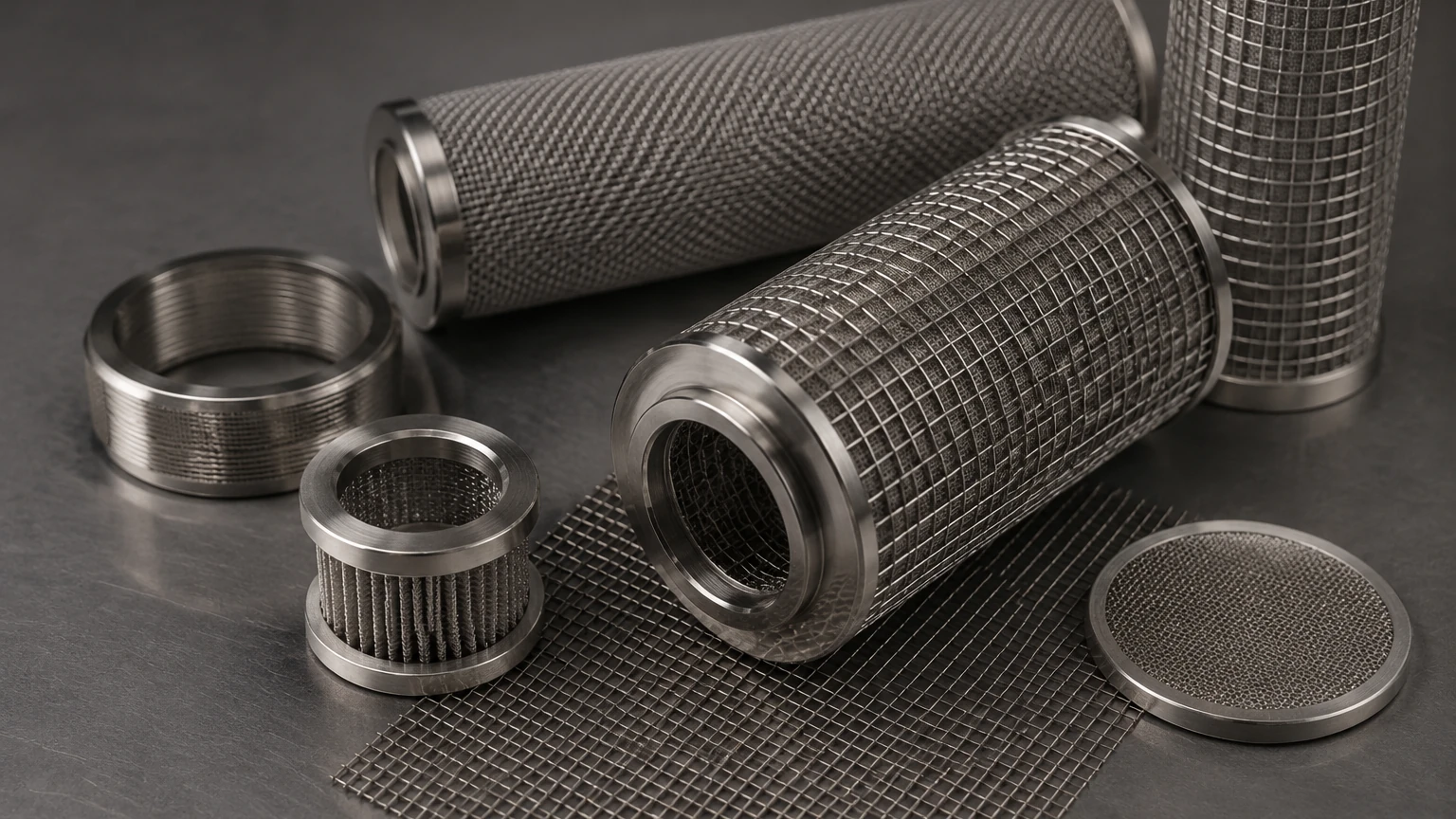
To achieve the micro-bubble diffusion required for efficient inline carbonation, industrial systems utilize porous metal components, often referred to as carbonation stones or spargers. These components are typically manufactured from sintered stainless steel or multi-layer wire mesh.
As a manufacturer specializing in custom stainless steel filtration solutions, Kaifil provides precision-engineered porous media designed to withstand the high differential pressures and rigorous cleaning cycles common in carbonation applications. The choice of material—typically 316L stainless steel—ensures corrosion resistance and compatibility with food-grade and chemical-grade requirements.
Bubble Size and Micron Ratings
The porosity of the diffusion element determines the initial size of the CO2 bubbles. For most inline carbonation applications, micron ratings between 0.5 and 10 microns are preferred. A 0.5-micron element produces extremely fine bubbles that dissolve almost instantly, reducing the length of the "reaction pipe" needed downstream of the injection point. However, finer micron ratings require higher gas pressure to overcome the bubble point of the media.
Engineering Considerations for System Design
Designing an inline carbonation system requires more than just selecting a diffuser; it involves a holistic look at the piping architecture and flow characteristics. Engineers must account for the following:
Differential Pressure (Delta P)
To ensure a steady flow of gas into the liquid stream, the gas supply pressure must be higher than the liquid line pressure. This difference is known as the differential pressure. If the Delta P is too low, the liquid may backflow into the gas line, potentially fouling the porous media or gas regulators. Conversely, excessively high Delta P can lead to "coalescence," where small bubbles merge into larger ones, reducing absorption efficiency.
Turbulence and Mixing
While laminar flow is often desired in filtration, a degree of controlled turbulence downstream of the injection point can assist in gas dissolution. Static mixers are frequently installed immediately after the inline carbonation stone to ensure the CO2 is mechanically sheared and evenly distributed throughout the liquid cross-section.
Material Selection and Durability
In many industrial environments, the liquid being carbonated may be acidic or contain abrasive particulates. Utilizing 316L stainless steel for the diffusion element provides the necessary mechanical strength and chemical resistance. Furthermore, the structural integrity of the sintered metal allows it to withstand high-pressure spikes without deforming, a common risk in hydraulic and high-speed bottling lines.
Maintenance and Cleaning Protocols
One of the primary challenges in maintaining inline carbonation efficiency is the fouling of the porous diffusion media. In the food and beverage industry, organic residues or mineral scaling can block the microscopic pores, leading to uneven carbonation and increased pressure requirements.
Clean-In-Place (CIP) Compatibility
High-quality stainless steel filters and spargers are designed to be fully compatible with Clean-In-Place (CIP) systems. This allows operators to circulate caustic or acidic cleaning agents through the system without disassembling the piping. It is critical to ensure that the cleaning cycle includes a back-flush or a gas-purge phase to clear any loosened debris from the pores of the carbonation stone.
Replacement Cycles
While stainless steel components are highly durable, they are not infinite. Over time, repeated thermal cycling and chemical exposure can lead to pore enlargement or permanent clogging. Engineers should monitor the gas flow rate versus pressure differential over time. A significant increase in the pressure required to achieve the same carbonation level is a primary indicator that the diffusion element requires professional ultrasonic cleaning or replacement.
Filtration and Purity in Carbonation Systems
Inline carbonation does not exist in a vacuum; it is often part of a larger filtration and processing train. The purity of the CO2 gas itself is vital. Any oil, moisture, or particulate matter in the gas line will be injected directly into the product. Therefore, high-efficiency gas filters should be installed upstream of the carbonation stone.
Similarly, the liquid must be pre-filtered to prevent large particles from settling on the surface of the diffuser. As a professional manufacturer of wire mesh filters and stainless steel filter cartridges, Kaifil emphasizes the importance of integrated filtration to protect the sensitive components of the carbonation system. For more information on tailored industrial filtration components, technical professionals can refer to the Main Page to review product options and application support.
Common Risks and Mitigation Strategies
When implementing inline carbonation, several operational risks must be managed to ensure product quality and equipment longevity:
* Gas Breakout: If the pressure drops too significantly after carbonation (e.g., at a filling valve), the CO2 will come out of solution, causing foaming and inconsistent fill levels. This is mitigated by maintaining backpressure and controlling flow velocity.
* Media Blinding: As mentioned, the microscopic pores of the sparger can become "blinded" by particulates. Proper pre-filtration of both the gas and liquid streams is the primary defense.
* Oxygen Pickup: In many applications, particularly brewing, oxygen is the enemy of shelf stability. The inline carbonation system must be completely airtight, and the CO2 used must be of high purity (99.9% or higher) to prevent oxidation of the product.
Selecting the Right Inline Carbonation Solution
Choosing the correct hardware for inline carbonation depends heavily on the specific application requirements. A craft brewery carbonating 50 hectoliters an hour has vastly different needs than a large-scale chemical plant using CO2 for pH adjustment in wastewater.
Key information to confirm before procurement includes:
* Flow Rate: The maximum and minimum liquid flow rates (GPM or L/min).
* Target Carbonation Level: Usually measured in volumes of CO2 or grams per liter (g/L).
* Line Size and Connection Type: Ensuring the housing matches existing piping (e.g., Tri-clamp, NPT, or Flanged).
* Operating Temperature and Pressure: Defining the environmental limits for the seals and the metal media.
By focusing on these technical parameters, engineering teams can ensure they select a system that provides reliable, long-term performance. Customization is often necessary, as standard off-the-shelf components may not meet the specific pressure drop or micron requirements of a specialized process.
Conclusion
Inline carbonation is a sophisticated process that blends fluid dynamics with material science. The use of porous stainless steel diffusion media remains the most effective method for achieving high-precision gas dissolution in industrial settings. By prioritizing material quality, precise micron ratings, and robust system design, manufacturers can achieve consistent carbonation levels while minimizing downtime and maintenance costs. For those seeking to optimize their filtration and gas injection processes, partnering with an experienced manufacturer like Kaifil ensures access to the technical expertise and custom-engineered components required for demanding industrial environments.
