


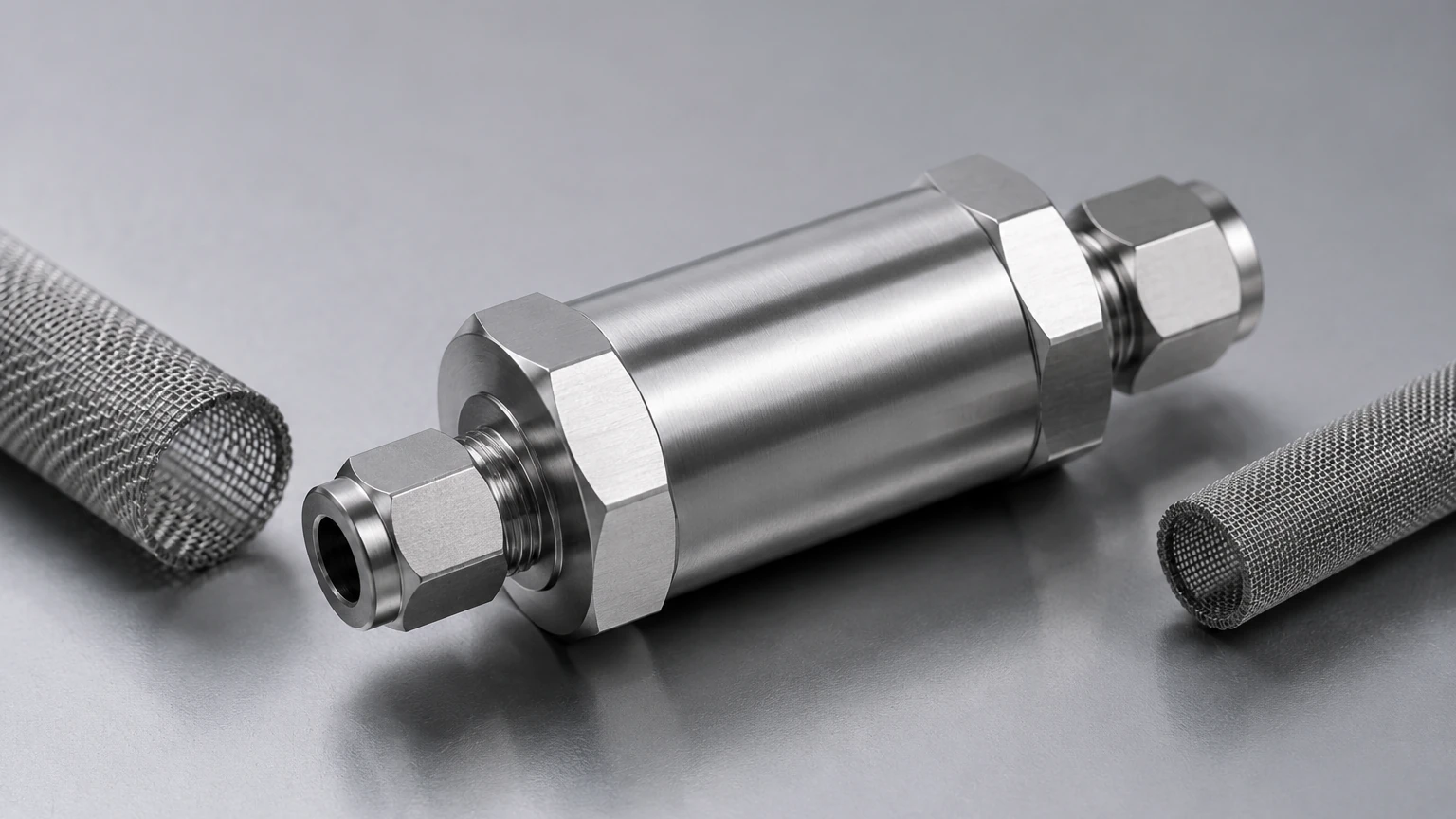
Inline Nitrogen Gas Filter
Nitrogen gas is a cornerstone of modern industrial processing, utilized for inerting, blanketing, purging, and as a carrier gas in sensitive analytical applications. However, the efficacy of nitrogen in these roles depends entirely on its purity. Contaminants such as pipe scale, rust, moisture, and fine particulates can compromise downstream equipment, contaminate chemical batches, or degrade the quality of food and pharmaceutical products. An inline nitrogen gas filter serves as the critical line of defense, ensuring that the gas stream remains within specified purity limits before it reaches the point of use.
For engineers and procurement specialists, selecting the right filtration component requires a deep understanding of gas dynamics, material compatibility, and the specific demands of the industrial environment. As a specialized manufacturer of stainless steel filtration solutions, Kaifil provides the technical expertise and high-precision components necessary to optimize these systems. For a comprehensive overview of available technologies, professionals can Review product options and application support to align their system requirements with engineered filtration solutions.
Technical Principles of Nitrogen Gas Filtration
Filtration in a gas stream differs significantly from liquid filtration due to the compressibility of the medium and the velocities involved. An inline nitrogen gas filter must manage high flow rates while maintaining a low pressure drop to ensure system efficiency. The primary goal is the removal of solid particulates through several mechanical mechanisms:
1. Inertial Impaction: Larger particles, unable to follow the gas streamlines around the filter fibers, collide with the media and become trapped.
2. Interception: Mid-sized particles that follow the gas flow come within one particle radius of a fiber and are captured.
3. Diffusion (Brownian Motion): Very small particles move erratically due to gas molecule collisions, increasing the likelihood of they will contact the filter media.
In nitrogen systems, especially those drawing from bulk tanks or nitrogen generators, the filter must be capable of handling varying pressure levels. Whether the system is operating at low-pressure blanketing levels or high-pressure cylinder pressures, the structural integrity of the filter element is paramount to prevent media migration or collapse.
Material Selection: The Case for Stainless Steel
When specifying an inline nitrogen gas filter, the choice of material determines the filter’s lifespan and its resistance to environmental stressors. While polymer-based filters exist, stainless steel (typically 304 or 316L) is the industry standard for high-performance industrial applications for several reasons:
Corrosion Resistance
Nitrogen itself is inert, but the environments in which these filters operate are often not. In chemical processing or offshore applications, the exterior of the filter housing and the internal media are exposed to corrosive atmospheres. 316L stainless steel provides superior resistance to pitting and crevice corrosion, ensuring the filter does not become a source of contamination itself.
Temperature Stability
Cryogenic nitrogen applications or high-temperature purging processes require materials that maintain mechanical properties across a wide thermal range. Stainless steel filter cartridges do not become brittle at low temperatures nor lose structural integrity at high temperatures, unlike many synthetic alternatives.
Durability and Reusability
Industrial environments are demanding. Stainless steel wire mesh and sintered metal filters offer high mechanical strength, resisting pressure surges that might rupture delicate membrane filters. Furthermore, many stainless steel elements are cleanable via ultrasonic baths or back-flushing, reducing the total cost of ownership over the life of the system.
Key Technical Specifications for Engineers
To ensure an inline nitrogen gas filter performs as expected, several technical parameters must be confirmed during the design or procurement phase. Vague requirements often lead to undersized filters that cause excessive pressure drops or oversized filters that increase costs unnecessarily.
Filtration Rating (Micron Level)
Filtration accuracy is typically defined by the micron rating. For nitrogen gas, this can range from 0.1 microns for high-purity electronics grade gas to 50 microns for general industrial purging. It is essential to distinguish between nominal ratings (50-90% efficiency) and absolute ratings (99.9% or higher efficiency) to meet specific process standards.
Flow Rate and Pressure Drop ($ΔP$)
The flow capacity of a filter is a function of its surface area and the density of the gas. Engineers must calculate the maximum flow rate (measured in SCFM or Nm³/h) at the minimum operating pressure. A high initial pressure drop across the filter reduces the available pressure for downstream processes and can indicate that the filter is undersized.
Connection Types and Housing Compatibility
The "inline" nature of these filters means they must integrate seamlessly into existing piping. Standard options include NPT or BSP threaded connections for smaller lines, and flanged (ANSI/DIN) or Tri-clamp connections for larger industrial or hygienic lines. Ensuring the housing material and seal types (such as Viton, EPDM, or PTFE) are compatible with the operating environment is a critical step in the selection process.
Applications Across Industrial Sectors
The requirements for an inline nitrogen gas filter vary significantly depending on the industry. Understanding these nuances helps in selecting a filter that provides the necessary protection without over-engineering the solution.
Pharmaceutical and Biotechnology
In these sectors, nitrogen is used to maintain an inert atmosphere during the packaging of oxygen-sensitive drugs. Filters must not only remove particulates but often need to be sterilizable and made from FDA-compliant materials. Precision wire mesh filters are often used here to ensure no fibers are shed into the gas stream.
Food and Beverage Processing
Nitrogen is frequently used for modified atmosphere packaging (MAP) to extend shelf life. The gas must be free of moisture, oil aerosols, and particulates. Stainless steel filters are preferred for their ability to withstand the rigorous Clean-in-Place (CIP) protocols common in food production facilities.
Electronics and Semiconductor Manufacturing
This industry requires the highest levels of gas purity. Nitrogen is used for wafer cooling and chamber purging. Even microscopic particulates can cause defects in semiconductor layers. High-efficiency sintered metal filters are often employed to achieve the sub-micron filtration levels required for these cleanroom environments.
Chemical and Petrochemical
In large-scale chemical plants, nitrogen is used for tank blanketing to prevent explosions. The inline nitrogen gas filter must be robust enough to handle high volumes of gas and potential exposure to aggressive chemical vapors. Durability and long service intervals are the primary concerns for maintenance teams in these settings.
Installation and Maintenance Best Practices
Even the highest quality inline nitrogen gas filter will underperform if installed or maintained incorrectly. Following engineering best practices ensures the longevity of the filtration system.
Proper Positioning
Filters should be installed as close to the point of use as possible to capture any contaminants picked up from the distribution piping. If the system uses a nitrogen generator, a pre-filter should be placed immediately after the generator to protect the main distribution line, with secondary fine filters at individual workstations.
Monitoring Differential Pressure
The most effective way to determine when a filter element needs replacement or cleaning is by monitoring the differential pressure. Installing gauges upstream and downstream of the filter allows operators to see the exact moment the media becomes loaded with contaminants. Waiting for a noticeable drop in downstream pressure often means the filter has already exceeded its optimal service life.
Cleaning Procedures
One of the primary advantages of Kaifil’s stainless steel filter elements is their cleanability. For non-hazardous contaminants, ultrasonic cleaning is highly effective at removing trapped particles from the depths of the wire mesh or sintered structure. This process restores the original pressure drop characteristics and extends the functional life of the component.
Customization and OEM Solutions
Standard off-the-shelf filters do not always meet the unique spatial or performance constraints of specialized industrial machinery. This is where custom manufacturing becomes essential. When working with a manufacturer like Kaifil, engineers can specify unique dimensions, custom end-cap configurations, and specific mesh weaves to achieve a precise balance between filtration efficiency and flow capacity.
Customization also extends to the integration of the filter into OEM equipment. By designing the filter as an integral part of the machine’s gas handling system, manufacturers can ensure better performance, easier maintenance access, and a more compact footprint. Whether it is a unique micron rating for a proprietary chemical process or a specific housing geometry to fit a tight enclosure, bespoke filtration solutions provide a competitive edge in equipment design.
Conclusion: Making Informed Procurement Decisions
Selecting an inline nitrogen gas filter is a technical decision that impacts the safety, efficiency, and quality of an industrial operation. By focusing on material integrity, precise technical specifications, and industry-specific requirements, engineers can ensure their nitrogen systems operate at peak performance.
Before finalizing a purchase, it is advisable to confirm the maximum operating pressures, the required absolute micron rating, and the compatibility of the seal materials with the ambient environment. For those looking to optimize their filtration strategy with reliable, high-performance stainless steel components, the Main Page offers a wealth of technical resources and product details to guide the selection process. Investing in high-quality filtration today prevents costly downtime and equipment failure tomorrow, securing the integrity of the entire gas distribution network.
