


Interbridge Reactors
In the landscape of complex chemical synthesis and industrial fluid processing, interbridge reactors represent a sophisticated approach to multi-stage reaction engineering. These systems are designed to facilitate sequential chemical transformations or physical separations where the transition between stages—the "bridge"—must be managed with extreme precision. For engineers and plant operators, the efficiency of these reactors is often dictated not just by the chemical kinetics within the vessels, but by the integrity of the internal components that manage flow, retain catalysts, and prevent cross-stage contamination.
High-performance filtration is the silent enabler of these processes. In interbridge reactors, where fluids or gases move through various catalyst beds or reaction zones, the demand for durable, heat-resistant, and chemically inert filtration media is paramount. Stainless steel filtration solutions, such as those found on the Kaifil Main Page, provide the mechanical robustness required to withstand the rigorous environments typical of these reactor configurations.
Understanding the Role of Filtration in Interbridge Reactors
Interbridge reactors are frequently employed in processes involving heterogeneous catalysis, where a liquid or gaseous reactant passes through a solid catalyst bed. The term "interbridge" often refers to the connecting infrastructure or the internal stages that allow for intermediate cooling, heating, or the addition of secondary reactants between primary reaction zones.
From a filtration engineering perspective, the primary challenge in these systems is catalyst retention. If catalyst fines or particles escape one stage and migrate to the next, it can lead to several operational failures:
1. Catalyst Poisoning: Migration of materials between stages can deactivate sensitive catalysts in subsequent zones.
2. Downstream Fouling: Fine particles can accumulate in heat exchangers, pumps, or valves, leading to increased maintenance and unexpected downtime.
3. Product Contamination: In industries such as pharmaceuticals or food and beverage, any particulate matter in the final output can lead to batch rejection.
To mitigate these risks, engineers specify precision-engineered wire mesh or sintered metal filters. Unlike polymer-based filters, stainless steel components offer the structural integrity needed to maintain precise micron ratings under the high-pressure differentials often found in interbridge reactor transitions.
Engineering Considerations for Reactor Internals
When designing or retrofitting interbridge reactors, several engineering variables must be evaluated to ensure the filtration media does not become a bottleneck.
Pressure Drop (Delta P) Management
In any multi-stage reactor, maintaining the correct flow rate is critical for achieving the desired residence time. A filter that is too restrictive will cause a significant pressure drop, forcing pumps to work harder and potentially damaging the reactor internals. Conversely, a filter with too high a porosity may fail to capture the necessary particulates. Engineering a solution requires a balance between the effective filtration area (EFA) and the mechanical strength of the mesh.
Thermal Stability
Chemical reactions within interbridge reactors are often exothermic or require high-temperature inputs. Filtration components must maintain their geometric stability at temperatures that would cause synthetic fibers to soften or degrade. Stainless steel alloys, particularly 316L, retain their tensile strength and pore size accuracy even when subjected to thermal cycling, which is common during reactor start-up and shut-down phases.
Mechanical Stress and Vibration
Industrial reactors are dynamic environments. Fluid turbulence and mechanical vibrations can cause fatigue in poorly designed internal components. For interbridge reactors, the filtration media is often integrated into support grids or housings that must resist these forces over long operational cycles. Sintered wire mesh, which fuses multiple layers of stainless steel together, is often the preferred choice here because it combines the precision of fine mesh with the structural rigidity of a plate.
Material Selection: Why Stainless Steel is the Standard
The selection of material for interbridge reactor filters is governed by the chemical composition of the process stream. While various alloys exist, stainless steel remains the industry standard for several technical reasons.
Corrosion Resistance: Interbridge reactors often handle aggressive solvents, acids, or bases. 316L stainless steel, with its molybdenum content, provides superior resistance to pitting and crevice corrosion compared to 304-grade steel. For even more extreme environments, specialized alloys like Hastelloy can be utilized within the same manufacturing frameworks.
Longevity and Reusability: One of the most significant advantages of stainless steel filtration in industrial reactors is the ability to clean and reuse the components. In many interbridge reactor applications, the cost of the filter is evaluated over its total lifecycle. While the initial investment in a stainless steel cartridge is higher than a disposable alternative, the ability to perform ultrasonic cleaning or backwashing significantly reduces the total cost of ownership.
Precision Manufacturing: Modern manufacturing techniques allow for the creation of wire mesh with incredibly tight tolerances. Whether the application requires a 5-micron absolute rating or a 200-micron nominal rating, stainless steel wire can be woven and inspected to ensure it meets the rigorous standards required for reactor internals.
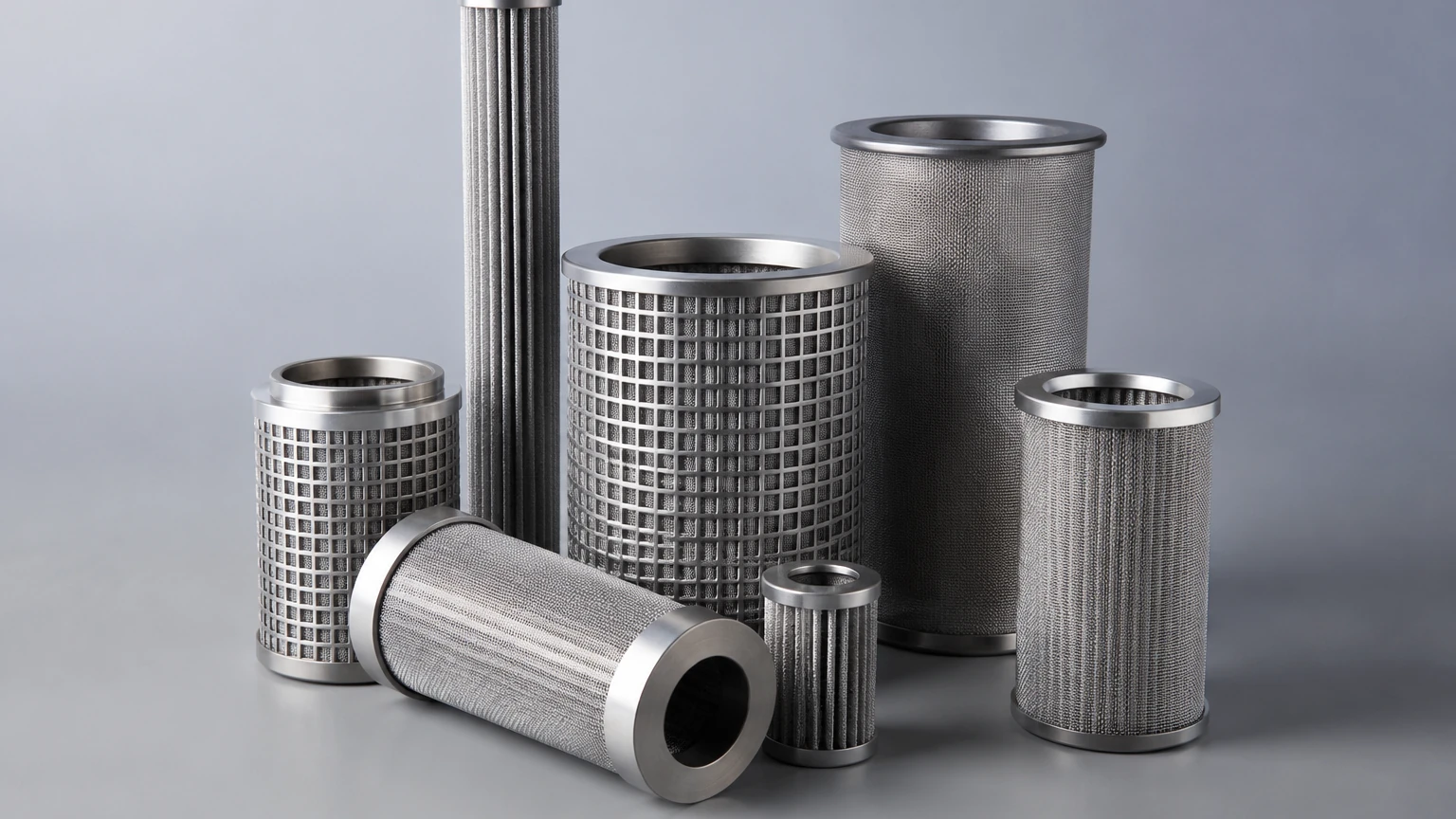
Customization: Adapting Filtration to Specific Reactor Designs
No two interbridge reactors are identical. Variations in vessel diameter, flow direction (up-flow vs. down-flow), and catalyst particle size necessitate customized filtration designs. OEM capabilities allow for the development of bespoke components that fit seamlessly into existing reactor architectures.
Weave Types and Performance
The choice of weave—plain, twill, or Dutch weave—affects how the filter performs within the reactor. For example, a Reverse Dutch Weave provides high mechanical strength and is ideal for high-pressure backwashing applications, whereas a Plain Dutch Weave offers a high degree of filtration precision for fine catalyst recovery.
Geometric Configuration
Filters for interbridge reactors can be manufactured as flat discs, pleated cartridges, or conical strainers. Pleated designs are particularly useful when the reactor design limits the available space for filtration but requires a large surface area to minimize pressure drop. By folding the mesh, manufacturers can increase the filtration surface by several times compared to a standard cylindrical element.
Operational Efficiency and Total Cost Considerations
For purchasing teams and lead engineers, the decision to invest in high-quality filtration for interbridge reactors is often a matter of risk management and operational efficiency. A failure in a single filtration stage can halt an entire production line, leading to losses that far exceed the cost of the filter itself.
Replacement Cycles: Calculating the optimal replacement cycle is essential. In many reactor environments, filters are replaced during scheduled turnarounds. However, by monitoring the pressure differential across the interbridge stages, operators can identify when a filter is reaching its loading capacity. High-quality stainless steel filters typically offer more predictable loading profiles, allowing for better maintenance planning.
Cleaning Protocols: The ability to restore a filter to near-original performance through cleaning is a major benefit. Engineers must confirm that the filter design can withstand the cleaning method, whether it involves chemical baths, high-pressure steam, or thermal burn-off processes.
Technical Support: Working with a manufacturer that understands the nuances of industrial filtration is vital. From material certification to flow rate calculations, the technical documentation provided by the supplier ensures that the filtration components meet the regulatory and safety requirements of the specific industry, whether it be pharmaceutical-grade purity or heavy industrial durability.
Conclusion: Optimizing the Interbridge Reactor Lifecycle
Interbridge reactors are critical assets in the modern industrial landscape, enabling the production of everything from advanced polymers to essential chemical intermediates. The reliability of these systems is inextricably linked to the performance of their internal filtration components. By selecting high-grade stainless steel wire mesh and customized filter cartridges, engineers can ensure that their reactors operate at peak efficiency, with minimal risk of catalyst migration or downstream contamination.
When evaluating filtration solutions for these demanding applications, it is important to focus on technical specifications such as micron accuracy, material integrity, and mechanical design. For those seeking to explore a wide range of industrial filtration options and technical support, visiting the Kaifil Main Page provides access to a wealth of information on custom stainless steel filtration solutions tailored for the world's most challenging industrial environments. By prioritizing quality and engineering precision, organizations can protect their equipment, optimize their processes, and achieve long-term operational success.
