


Internormen
In the landscape of industrial hydraulic and lubrication systems, Internormen—now a brand under the Eaton umbrella—has long been established as a benchmark for high-performance filtration. For engineers and procurement specialists, understanding the technical nuances of these filtration systems is essential for maintaining fluid cleanliness, protecting sensitive components, and ensuring the longevity of heavy machinery. Whether you are managing chemical processing plants, food and beverage production lines, or hydraulic power units, the integration of precise filtration components is a critical factor in operational efficiency.
At Kaifil, we specialize in the engineering and manufacturing of custom stainless steel filtration solutions that interface with or replace standard industrial elements. By examining the specifications associated with Internormen technology, technical teams can make more informed decisions regarding material selection, filtration accuracy, and the total cost of ownership. This guide provides a technical overview of filtration principles, material considerations, and the advantages of customized stainless steel components in demanding environments.
Understanding Internormen Filtration Standards in Industrial Systems
Internormen filtration technology is designed around the core objective of achieving specific fluid cleanliness levels, typically defined by ISO 4406 standards. In hydraulic systems, particulate contamination is the leading cause of component failure, leading to abrasive wear in pumps, valves, and actuators. To counter this, filter elements must provide consistent performance under varying flow rates and pressure fluctuations.
Filtration Efficiency and Beta Ratios
A primary metric used to evaluate these filters is the Beta Ratio (β). This ratio defines the filtration efficiency by comparing the number of particles upstream of the filter to the number of particles downstream for a specific micron size. For instance, a filter with a βx(c) ≥ 1000 indicates that for every 1000 particles of a certain size (x) entering the filter, only one passes through. High-quality industrial filters often target these high beta ratios to ensure that even the finest silt and metallic debris are captured before they can cause internal damage.
Pressure Drop and Flow Dynamics
Another critical engineering consideration is the clean pressure drop (Δp). Every filter element introduces a degree of resistance to the fluid flow. If the initial pressure drop is too high, it reduces the available energy for the system and shortens the effective service life of the element before it reaches its bypass pressure. Engineering teams must balance the need for high filtration fineness (low micron ratings) with the requirement for low flow resistance, a balance that is often achieved through optimized pleat geometry and advanced media selection.
Technical Specifications of High-Performance Filter Elements
When evaluating filter elements for industrial applications, several technical parameters must be confirmed to ensure compatibility and performance. These specifications go beyond simple dimensions and include the structural integrity of the filter core and the chemical compatibility of the seals.
1. Micron Ratings: Elements are typically available in ratings ranging from 1 micron to 200 microns or more. Absolute ratings are preferred in critical hydraulic circuits, while nominal ratings may suffice for less sensitive lubrication tasks.
2. Collapse Pressure Rating: The structural strength of the filter element is vital. In high-pressure systems, elements must withstand significant differential pressure without collapsing. Standard elements might be rated for 20 bar (290 psi), while high-strength versions can exceed 210 bar (3045 psi).
3. Operating Temperature: The materials used in the filter media, adhesives, and end caps must remain stable at the system's operating temperature. While standard glass fiber media handles moderate temperatures, specialized applications may require the thermal stability of stainless steel.
4. Fluid Compatibility: Filters must be compatible with a wide range of fluids, including mineral oils, synthetic lubricants, water-glycols, and high-water-base fluids. This necessitates careful selection of O-ring materials, such as Nitrile (Buna-N), Viton (FKM), or EPDM.
For those seeking detailed specifications on how custom components can meet these rigorous standards, you may visit our Main Page to review product options and application support.
Material Selection: Why Stainless Steel Wire Mesh is Critical
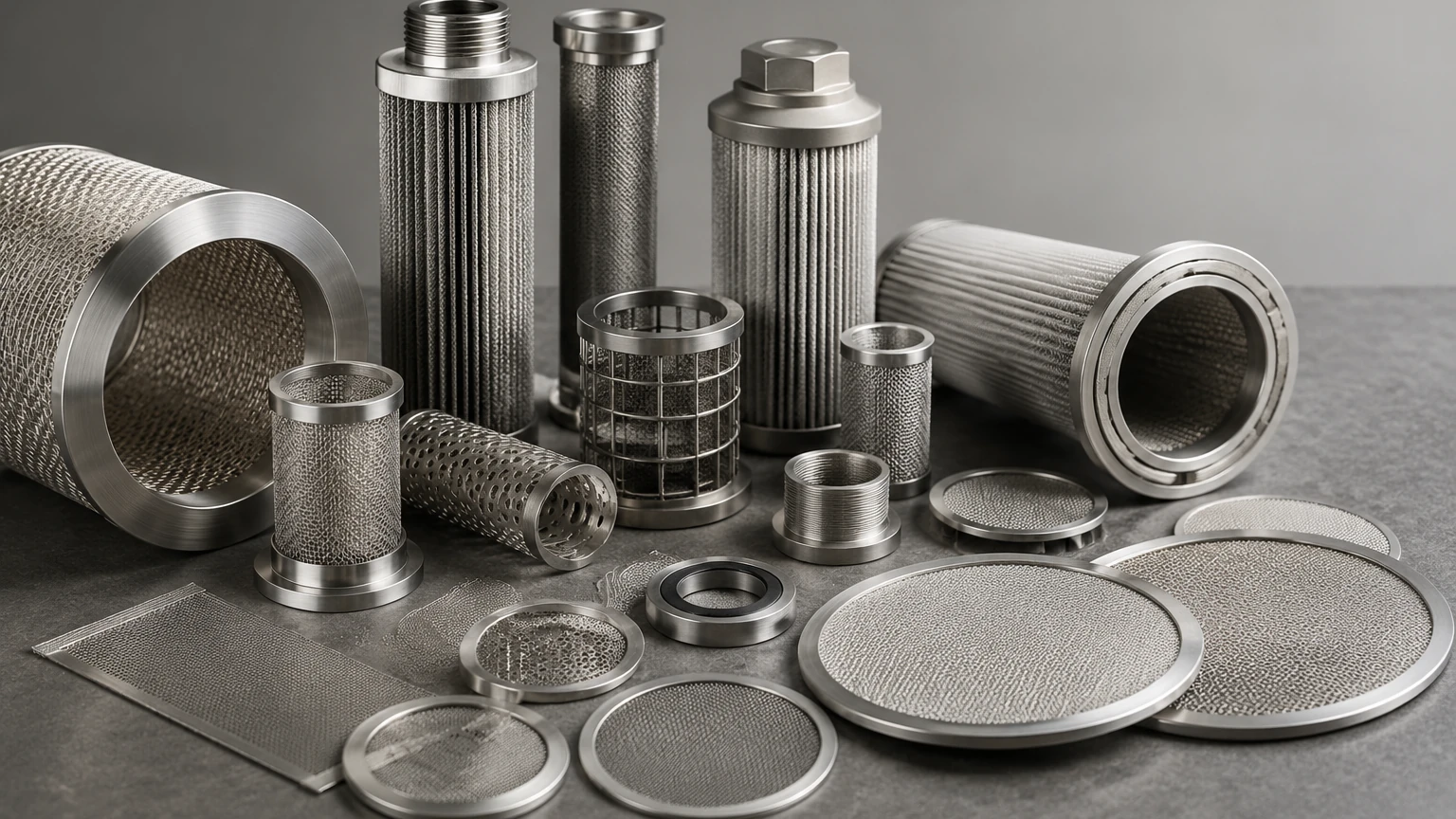
While many standard industrial filters utilize disposable glass fiber or paper media, many demanding applications require the durability and reusability of stainless steel. Kaifil’s expertise lies in the production of stainless steel wire mesh filters and sintered metal components that offer distinct advantages over traditional media.
Durability and Chemical Resistance
Stainless steel (typically Grade 304, 316, or 316L) provides exceptional resistance to corrosion and chemical attack. In industries like chemical processing or pharmaceutical manufacturing, the filter media is often exposed to aggressive solvents or caustic cleaning agents. Unlike synthetic fibers, stainless steel does not degrade or shed fibers into the process stream, ensuring high purity levels.
Cleanability and Reusability
One of the most significant advantages of stainless steel wire mesh is that it can be cleaned and reused. Through ultrasonic cleaning, backwashing, or chemical baths, accumulated contaminants can be removed, restoring the filter’s original flow characteristics. This significantly reduces the long-term cost of ownership and minimizes the environmental impact associated with disposing of used filter cartridges.
Precision Engineering of Wire Mesh
The performance of a wire mesh filter depends on the precision of the weave. At Kaifil, we utilize various weave patterns—such as plain weave, twilled weave, and Dutch weave—to achieve specific filtration characteristics. Sintered wire mesh, which involves bonding multiple layers of mesh through a high-temperature heat treatment process, provides even greater structural rigidity and precise pore size control, making it ideal for high-pressure and high-velocity applications.
Evaluating Replacement and Alternative Filter Components
For many facilities, the decision to use OEM parts versus high-quality alternatives involves a complex assessment of risk, performance, and cost. When considering replacement elements for Internormen housings, engineers should focus on the following evaluation criteria:
* Dimensional Accuracy: The replacement must fit perfectly within the existing housing to prevent bypass. This includes the length, outer diameter, and the configuration of the end caps and seals.
* Surface Area: The effective filtration area determines the dirt-holding capacity. A filter with fewer pleats or lower-quality media will saturate faster, leading to more frequent maintenance intervals.
* Performance Validation: Reliable manufacturers provide test data to prove that their elements meet or exceed the original specifications for beta ratio and pressure drop. This data is essential for maintaining system warranties and ensuring process safety.
Customized filtration solutions allow for the optimization of these parameters. For instance, if a standard element is failing prematurely due to high viscosity fluids or heavy particulate loads, a custom-designed stainless steel element can be engineered with a reinforced core or a specific mesh structure to handle the increased stress.
Engineering Considerations for Custom Filtration Solutions
Customization is often the most effective route for specialized industrial equipment. When standard catalog items do not meet the unique demands of a process, engineering teams must collaborate with manufacturers to develop bespoke components. Key considerations in this process include:
Application Environment
Is the filter located in a high-vibration environment? Will it be subjected to pressure surges or "water hammer" effects? These factors dictate the need for reinforced support tubes and specialized end-cap bonding techniques. In hydraulic systems, the presence of air (aeration) or water (emulsification) can also influence media selection, as certain materials are better at coalescing or resisting moisture-related degradation.
Filtration Accuracy vs. Flow Rate
There is always a trade-off between how fine a filter can capture particles and how much fluid it can process. In custom designs, we can manipulate the surface area and the porosity of the metal media to maximize flow while maintaining the required ISO cleanliness code. This is particularly important in high-flow lubrication systems for turbines or large gearboxes, where even a slight increase in flow resistance can lead to cooling issues.
Total Cost of Ownership (TCO)
While the initial purchase price of a custom stainless steel filter may be higher than a disposable fiberglass element, the TCO is often much lower. By calculating the cost of replacement labor, disposal fees for hazardous waste, and the potential cost of downtime, the investment in a durable, cleanable stainless steel solution often pays for itself within a few maintenance cycles.
Installation and Maintenance Protocols for Hydraulic Filters
Proper installation and a proactive maintenance strategy are just as important as the quality of the filter itself. Even the most advanced Internormen-style element will fail to protect a system if it is installed incorrectly or bypassed when clogged.
Monitoring Differential Pressure
Most industrial filter housings are equipped with differential pressure indicators—either visual gauges or electronic sensors. These devices monitor the pressure drop across the element. It is critical to replace or clean the element before it reaches the bypass pressure. If a filter goes into bypass mode, the fluid flows around the filter media to prevent the element from collapsing, but this means unfiltered oil is circulating through the system, posing a severe risk to downstream components.
Sampling and Fluid Analysis
Regular oil analysis is the best way to verify that your filtration system is working as intended. By taking fluid samples and performing particle counts, maintenance teams can identify trends in contamination levels. If particle counts begin to rise despite regular filter changes, it may indicate that the current filtration rating is insufficient or that there is an internal component failure generating excessive wear debris.
Correct Handling and Storage
Filter elements should remain in their original packaging until the moment of installation to prevent contamination from the ambient environment. When replacing an element, technicians should ensure that the housing is thoroughly cleaned and that all seals are lubricated with compatible fluid to prevent tearing during assembly.
Conclusion
Navigating the complexities of industrial filtration requires a deep understanding of both the equipment standards, such as those set by Internormen, and the material science behind the filter media. For engineers seeking to optimize their systems, the choice between standard disposable elements and customized stainless steel solutions depends on the specific demands of the application, including temperature, pressure, and chemical exposure.
Kaifil remains committed to providing the technical expertise and manufacturing precision necessary to support these demanding environments. By focusing on high-quality materials and engineered designs, we help our global partners achieve reliable, cost-effective, and precise filtration performance. For more information on our capabilities and to explore our full range of stainless steel filtration components, please visit our Main Page. Whether you require a standard replacement or a fully customized filtration solution, our team is ready to assist with technical selection and application guidance.
