


Is a Filter Press Affordable
When evaluating liquid-solid separation equipment, the question "is a filter press affordable" is rarely answered by a single price tag. For process engineers and procurement teams, affordability is a multi-dimensional calculation that balances initial capital expenditure (CAPEX) against long-term operational expenses (OPEX), maintenance requirements, and the efficiency of the filtration process itself.
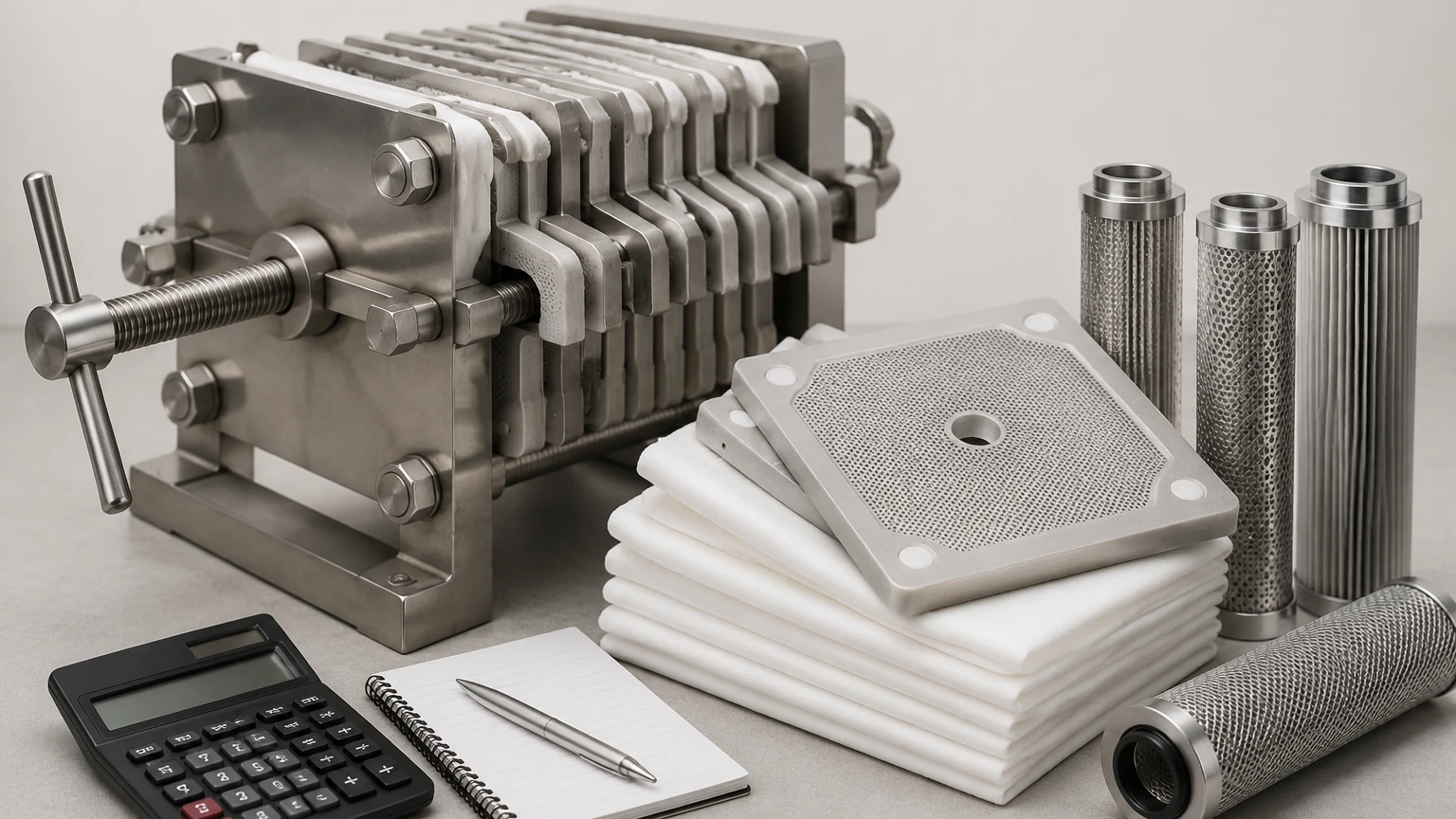
A filter press is a batch-operation machine designed to separate solids from liquids by using pressure to force a slurry through a filter medium. While the technology is decades old, modern advancements in automation and material science—particularly the use of high-grade stainless steel components—have shifted the economic landscape of these systems. To determine if a filter press is affordable for a specific application, one must look beyond the purchase price and analyze the total cost of ownership (TCO) over the equipment's lifespan.
Understanding the Initial Investment: CAPEX Drivers
The upfront cost of a filter press varies significantly based on size, level of automation, and materials of construction. Determining is a filter press affordable starts with identifying the minimum technical requirements for your process.
Size and Capacity
Capacity is measured by the total volume of the filter chambers (cake capacity) and the total filtration area. A small, manual 470mm press with a few chambers may be highly affordable for pilot plants or small-batch chemical processing. However, large-scale industrial operations requiring 1500mm or 2000mm plates represent a significant capital investment. The cost scales with the number of plates and the size of the heavy-duty steel frame required to withstand the clamping pressure.
Automation Levels
Automation is perhaps the biggest variable in initial pricing.
- Manual Presses: These require an operator to physically move plates to discharge the cake. They are the most affordable upfront but carry high labor costs.
- Semi-Automatic: These often feature hydraulic closure systems but still require manual intervention for cake release.
- Fully Automatic: These systems include automatic plate shifters, cloth washing systems, and integrated control logic. While the CAPEX is higher, the reduction in labor often makes these more affordable in high-volume environments.
Materials of Construction
For corrosive or high-purity applications, such as those in the pharmaceutical or food and beverage industries, standard carbon steel frames and polypropylene plates may not suffice. Stainless steel cladding or full stainless steel construction increases the initial cost but prevents premature equipment failure. For specialized components, visiting the Main Page of a dedicated manufacturer like Kaifil can provide insight into how custom metal filtration components are integrated into these larger systems to ensure durability.
Operational Costs and the Efficiency Factor
To answer the question of whether a filter press is affordable, one must account for the daily costs of running the machine. Unlike continuous filters, filter presses operate in cycles, which influences energy and labor consumption.
Energy Consumption
The primary energy draw in a filter press system is the feed pump and the hydraulic power unit used to keep the press closed. Because filter presses can achieve higher pressures (often up to 100 or 225 PSI) than vacuum filters or belt presses, they often produce a drier cake. Drier cakes require less energy for subsequent drying stages and reduce the volume of waste, which directly impacts the bottom line.
Filter Media and Consumables
The choice of filter media—whether it is traditional cloth or advanced stainless steel wire mesh—affects both performance and cost. While polypropylene cloths are inexpensive, they require frequent replacement and cleaning. In contrast, precision metal filter components may have a higher initial cost but offer significantly longer service lives in harsh chemical environments, reducing the frequency of downtime and replacement labor.
Labor Requirements
If a process requires 24/7 operation, the labor cost of a manual press can quickly exceed the cost of the machine itself within the first year. In such cases, a more expensive automatic press is actually the more affordable choice over a three-to-five-year horizon.
Waste Disposal and Cake Dryness: The Hidden Savings
In many industrial sectors, the single largest operational cost is the disposal of hazardous or non-hazardous waste. This is where the filter press often proves its affordability compared to other technologies like centrifuges or belt presses.
Maximizing Solids Capture
Filter presses typically achieve much higher solids capture rates (often exceeding 99%) compared to other separation methods. This means the filtrate (the liquid) is cleaner, potentially allowing for it to be recycled back into the process or discharged with minimal additional treatment.
Reducing Hauling Fees
Disposal sites charge by weight or volume. A filter press can produce a cake with 30% to 70% solids, depending on the material. A centrifuge might only achieve 20% to 25% solids for the same slurry. The difference in water weight can save a facility tens of thousands of dollars annually in hauling and landfill fees. When calculating is a filter press affordable, the reduction in waste volume is often the factor that tips the scale toward a positive ROI.
Maintenance and Long-Term Durability
A machine that breaks down frequently is never affordable. The durability of the internal components is critical. Industrial filtration environments are often abrasive or corrosive, leading to wear on the plates, manifolds, and valves.
Engineering for Longevity
Using high-quality stainless steel for critical components helps maintain filtration accuracy and structural integrity. Kaifil specializes in manufacturing these types of durable, precision-engineered metal filter components. By selecting materials that are compatible with the chemical profile of the slurry, engineers can extend the mean time between failures (MTBF). For those looking to optimize their system’s performance, reviewing technical specifications on the Main Page can help in selecting the right materials for custom filtration needs.
Common Maintenance Tasks
- Plate Gaskets: In gasketed recessed plate presses, the seals must be inspected to prevent leaking.
- Hydraulic Fluid: Regular testing and replacement of hydraulic oil ensure the clamping mechanism functions safely.
- Cloth/Mesh Cleaning: Blinded media increases cycle times and reduces efficiency. Automated washing systems can mitigate this but add to the mechanical complexity.
Comparing Filter Presses to Alternative Technologies
Is a filter press affordable when compared to a centrifuge or a belt press? The answer depends on the slurry characteristics.
| Feature | Filter Press | Centrifuge | Belt Press |
| :— | :— | :— | :— |
| Cake Dryness | Very High | Moderate | Low to Moderate |
| Solids Capture | Excellent | Good | Fair |
| Energy Use | Low to Moderate | High | Moderate |
| Chemical Use | Low (often no polymer) | High (requires polymer) | High (requires polymer) |
| Footprint | Moderate | Small | Large |
For slurries that are difficult to dewater or where high filtrate clarity is required, the filter press is almost always the most cost-effective solution. While a centrifuge has a smaller footprint and operates continuously, its high electricity consumption and the need for expensive chemical flocculants often make it more expensive to operate over time.
How to Calculate the ROI of a Filter Press
Before making a purchase, engineers should conduct a Return on Investment (ROI) analysis. This involves several steps:
1. Baseline Costs: Calculate current costs for waste disposal, water usage, and labor.
2. Pilot Testing: Perform bench-scale or pilot testing with a small filter press to determine the achievable cake dryness and cycle time. This data is essential for sizing the full-scale machine.
3. Projected Savings: Estimate the reduction in disposal weight and the value of recycled filtrate.
4. Total Cost of Ownership: Add the CAPEX to the projected 5-year OPEX and compare it to the 5-year savings.
In many cases, the payback period for a well-engineered filter press is between 12 and 24 months, particularly in industries like mining, electroplating, and industrial wastewater treatment.
Customization and Selection Advice
To ensure a filter press remains affordable, it must be sized correctly for the application. Over-sizing leads to unnecessary CAPEX, while under-sizing leads to process bottlenecks and excessive labor costs.
Engineers should work closely with manufacturers to specify the correct plate geometry and media type. For example, if the process involves high temperatures or aggressive solvents, standard plastic components will fail. In these instances, integrating custom stainless steel filtration solutions is necessary. Professionals seeking high-performance components for demanding environments can find detailed information and support on the Main Page.
Final Verdict: Is a Filter Press Affordable?
For most industrial applications requiring high-efficiency liquid-solid separation, a filter press is not only affordable but often the most economical choice available. Its ability to produce high-solids cakes, its relatively low energy consumption, and its flexibility in handling various slurry types provide a level of value that few other technologies can match. By focusing on quality materials—such as stainless steel for corrosive environments—and choosing the right level of automation, companies can ensure that their investment provides reliable service for decades, making the initial cost a minor factor in the overall success of the operation.
