


Vertical Pressure Leaf Filter
In industrial liquid-solid separation, the vertical pressure leaf filter (VPLF) stands as a critical component for processes requiring high clarity, efficient cake handling, and a compact footprint. As a closed filtration system, it is designed to handle hazardous, volatile, or high-value fluids where environmental containment and operator safety are paramount. For engineering and procurement teams, understanding the mechanical nuances, material requirements, and operational variables of the vertical pressure leaf filter is essential for optimizing plant throughput and ensuring long-term equipment reliability.
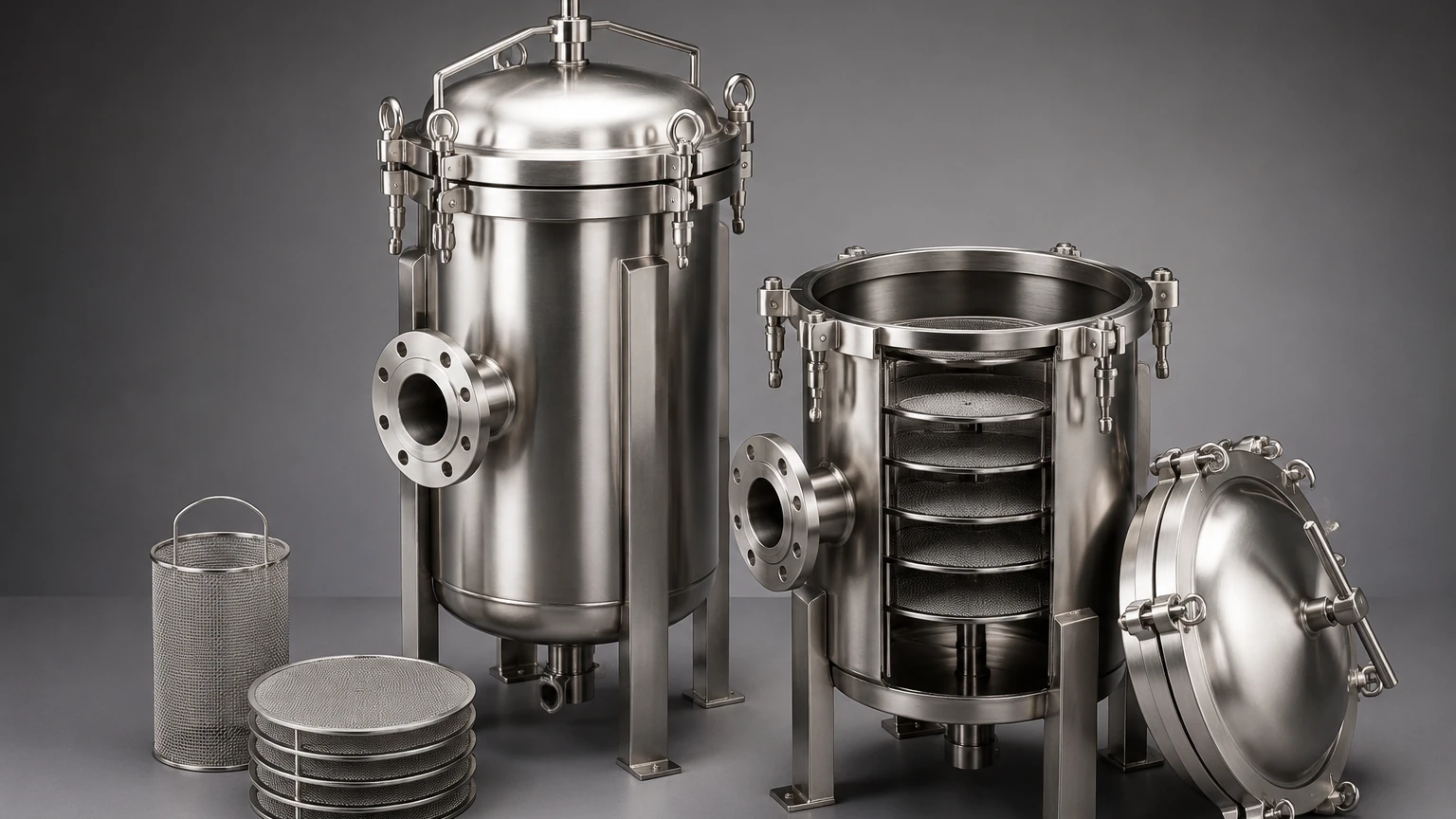
At its core, the VPLF utilizes a series of vertically oriented filter leaves housed within a cylindrical pressure vessel. These leaves serve as the primary filtration media, supporting the formation of a filter cake that performs the actual separation. Because the system operates under pressure—typically provided by a feed pump—it can handle higher flow rates and finer particle retention than gravity-based or vacuum systems. For specialized requirements, manufacturers like Kaifil provide the precision-engineered stainless steel components necessary to maintain these systems at peak performance. To explore specific component specifications, professionals often visit the Main Page for technical support and product data.
Technical Principles of the Vertical Pressure Leaf Filter
The operation of a vertical pressure leaf filter is a batch process consisting of several distinct phases: filling, pre-coating, filtration, cake drying, and cake discharge. Unlike horizontal filters, the vertical orientation is specifically engineered to minimize floor space requirements while maximizing the available filtration area.
The Filtration Cycle
1. Filling and Pre-coating: The vessel is filled with the process liquid. In many applications, a pre-coat layer (often diatomaceous earth or perlite) is applied to the filter leaves. This layer protects the stainless steel mesh from blinding and ensures immediate clarity of the filtrate.
2. Filtration: The slurry is pumped into the vessel under pressure. The liquid passes through the pre-coat and the filter leaf mesh, entering the internal drainage chamber of the leaf, while solids accumulate on the exterior surface.
3. Cake Drying: Once the filtration cycle is complete, the remaining liquid is displaced, often using compressed air or nitrogen. This reduces the moisture content of the cake, making it easier to handle and reducing waste volume.
4. Cake Discharge: The vertical design allows for efficient cake removal. In "dry discharge" systems, a pneumatic vibrator at the top of the leaf assembly shakes the leaves, causing the cake to fall into a conical hopper at the bottom of the vessel. In "wet discharge" systems, high-pressure spray headers wash the cake off the leaves.
Engineering the Filter Leaf: The Heart of the System
The performance of a vertical pressure leaf filter is almost entirely dependent on the quality and design of the filter leaves. A standard leaf consists of several layers of stainless steel wire mesh, held together by a sturdy outer frame and a drainage nozzle.
Multi-Layer Mesh Construction
Most industrial filter leaves utilize a 3-layer, 5-layer, or 7-layer construction. The outer layers consist of a fine filtration mesh, often a Dutch weave or Twill Dutch weave, which provides the necessary micron rating. Beneath this are support layers and a central, coarse drainage mesh. This internal drainage layer is vital; it must provide enough open space for the filtrate to flow toward the discharge manifold without creating significant backpressure.
Structural Integrity and Frames
The frame of the leaf must be robust enough to withstand the pressure differentials encountered during the filtration cycle and the mechanical stresses of the vibration discharge. Frames are typically C-profile or tubular, welded to ensure no bypass of solids occurs at the edges. For engineers, selecting the correct frame thickness and welding technique is a key factor in preventing leaf warping, which can lead to uneven cake formation and premature failure.
Material Selection and Chemical Compatibility
Given that vertical pressure leaf filters are frequently used in the chemical, pharmaceutical, and food industries, material selection is a primary engineering consideration. Stainless steel is the industry standard due to its corrosion resistance and mechanical strength.
* Grade 304/304L: Suitable for general industrial applications where corrosion risk is moderate.
* Grade 316/316L: The preferred choice for food processing, pharmaceuticals, and applications involving chlorides or organic acids, offering superior pitting resistance.
* Specialty Alloys: In highly aggressive environments, such as those involving high-temperature brine or concentrated acids, alloys like 904L or Duplex stainless steel may be required for the mesh and frames.
Kaifil specializes in the manufacture of these precision components, ensuring that the wire mesh weave and alloy grade meet the specific demands of the process environment. Proper material matching extends the replacement cycle of the leaves and prevents contamination of the process stream.
Key Evaluation Criteria for Engineers
When specifying or auditing a vertical pressure leaf filter system, engineers must evaluate several performance metrics to ensure the system is sized correctly for the application.
Filtration Area vs. Solids Loading
The total filtration area (measured in square meters or square feet) must be balanced against the solids concentration of the feed slurry. If the solids loading is too high for the available area, the cake will build up too quickly, leading to short cycle times and excessive downtime for discharge. Conversely, an oversized filter may lead to difficulties in maintaining a stable pre-coat.
Micron Rating and Flow Velocity
The choice of wire mesh weave determines the micron rating. However, engineers must also consider the "face velocity"—the speed at which the liquid passes through the mesh. High velocities can force fine particles deep into the mesh pores (blinding) or cause the filter cake to compress, which drastically increases the pressure drop across the system.
Pressure Drop (Delta P)
Monitoring the pressure differential between the inlet and outlet of the VPLF is the primary way to track cycle progress. A well-designed system should operate within a specific Delta P range. If the pressure rises too rapidly, it may indicate improper pre-coating, incorrect mesh selection, or a change in the particle size distribution of the feed.
Common Operational Risks and Mitigation
Despite their efficiency, vertical pressure leaf filters are subject to specific operational challenges that can impact total cost of ownership.
1. Mesh Blinding: This occurs when fine particles become trapped within the weave of the wire mesh. It is often caused by inadequate pre-coating or the use of a mesh that is too fine for the application. Regular chemical cleaning or ultrasonic cleaning of the leaves can mitigate this.
2. Leaf Warping: If the pressure differential exceeds the structural limits of the leaf frame—often during a surge or a blocked manifold—the leaf can bend. Warped leaves prevent the cake from discharging cleanly and can cause mechanical interference within the vessel.
3. Bypass: If the seals at the leaf nozzles or the manifold connections fail, unfiltered slurry can bypass the media and contaminate the filtrate. This is often addressed by using high-quality O-rings or gaskets compatible with the process temperature and chemistry.
Applications Across Industrial Sectors
The versatility of the vertical pressure leaf filter makes it a staple in various sectors:
* Edible Oil Processing: Used for the removal of bleaching earth and catalyst residues in the refining of vegetable oils.
* Chemical Manufacturing: Ideal for recovering catalysts, filtering resins, and processing liquid sulfur.
* Food and Beverage: Employed in the clarification of sugar syrups, fruit juices, and beer, where high clarity is required without the use of disposable paper or cloth media.
* Pharmaceuticals: Used for the separation of active pharmaceutical ingredients (APIs) from solvents in a contained environment to prevent exposure.
Customization and OEM Solutions
Many industrial processes require more than a "standard" filter. Customization may involve specialized leaf spacing to accommodate thick cakes, unique manifold designs for high-viscosity liquids, or specific mesh weaves for sub-micron filtration. As a professional manufacturer, Kaifil provides OEM and customized filtration solutions that address these specific engineering challenges. By focusing on durability and precise filtration performance, these components help maintain the efficiency of the entire VPLF system.
Before finalizing a purchase or a maintenance overhaul, engineering teams should confirm the compatibility of the filter media with the process fluid, the expected solids volume per batch, and the required cleaning protocols. Accessing technical resources on the Main Page allows purchasers to align their hardware specifications with the operational realities of their facility.
In conclusion, the vertical pressure leaf filter remains a dominant technology in industrial filtration due to its high efficiency and small footprint. By focusing on the technical integrity of the internal filter leaves and selecting the appropriate materials and mesh configurations, industrial operators can achieve reliable, cost-effective, and high-performance liquid-solid separation.
