


Jet Pulse Bag Filter
Industrial air filtration and dust collection are critical components of modern manufacturing, particularly in sectors such as chemical processing, food and beverage, and pharmaceutical production. Among the various technologies available, the jet pulse bag filter—also known as a pulse-jet baghouse—stands as the most widely utilized system for high-efficiency particulate matter (PM) control. Its ability to provide continuous, automated cleaning without interrupting the airflow makes it indispensable for heavy-duty industrial applications.
For engineers and procurement professionals, selecting the right filtration system requires a deep understanding of the mechanical principles, material compatibility, and engineering specifications that ensure long-term reliability. While the filter media itself is a primary focus, the structural integrity of the internal components, including stainless steel filter cages and precision-engineered support structures, is equally vital to the system's overall performance.
Understanding the Mechanics of Jet Pulse Bag Filters
The jet pulse bag filter operates on a pressure-differential principle. Dust-laden gas enters the baghouse, where it is directed into a chamber containing a series of cylindrical filter bags. As the gas passes through the filter media from the outside in, particulate matter is trapped on the exterior surface of the bag, forming a "dust cake." The cleaned gas then exits through the top of the bags into a clean-air plenum.
What distinguishes the pulse-jet system from shaker or reverse-air designs is its cleaning mechanism. A jet pulse bag filter utilizes high-pressure compressed air to clean the filter bags while the system remains online. A pulse valve releases a short burst (typically 0.1 to 0.2 seconds) of compressed air into a blowpipe positioned above the bags. This air is directed through a venturi nozzle, creating a shockwave that travels down the length of the bag. This causes the bag to expand rapidly and then snap back against its support cage, dislodging the accumulated dust cake, which then falls into a hopper for collection.
This "on-line" cleaning capability allows for a constant pressure drop and consistent airflow, which is essential for processes that cannot afford downtime for cleaning cycles.
Key Components and Material Engineering
A jet pulse bag filter is a complex assembly where material selection directly impacts the lifespan and efficiency of the unit. For manufacturers like Kaifil, providing precision components such as stainless steel supports and wire mesh elements is a core part of ensuring these systems function in demanding environments.
Filter Bags and Media
Filter bags are manufactured from various synthetic fibers or, in specialized high-temperature applications, metal mesh. Common materials include polyester, aramid (Nomex), and PTFE. The choice depends on the operating temperature, chemical composition of the gas, and the required filtration accuracy.
Filter Cages
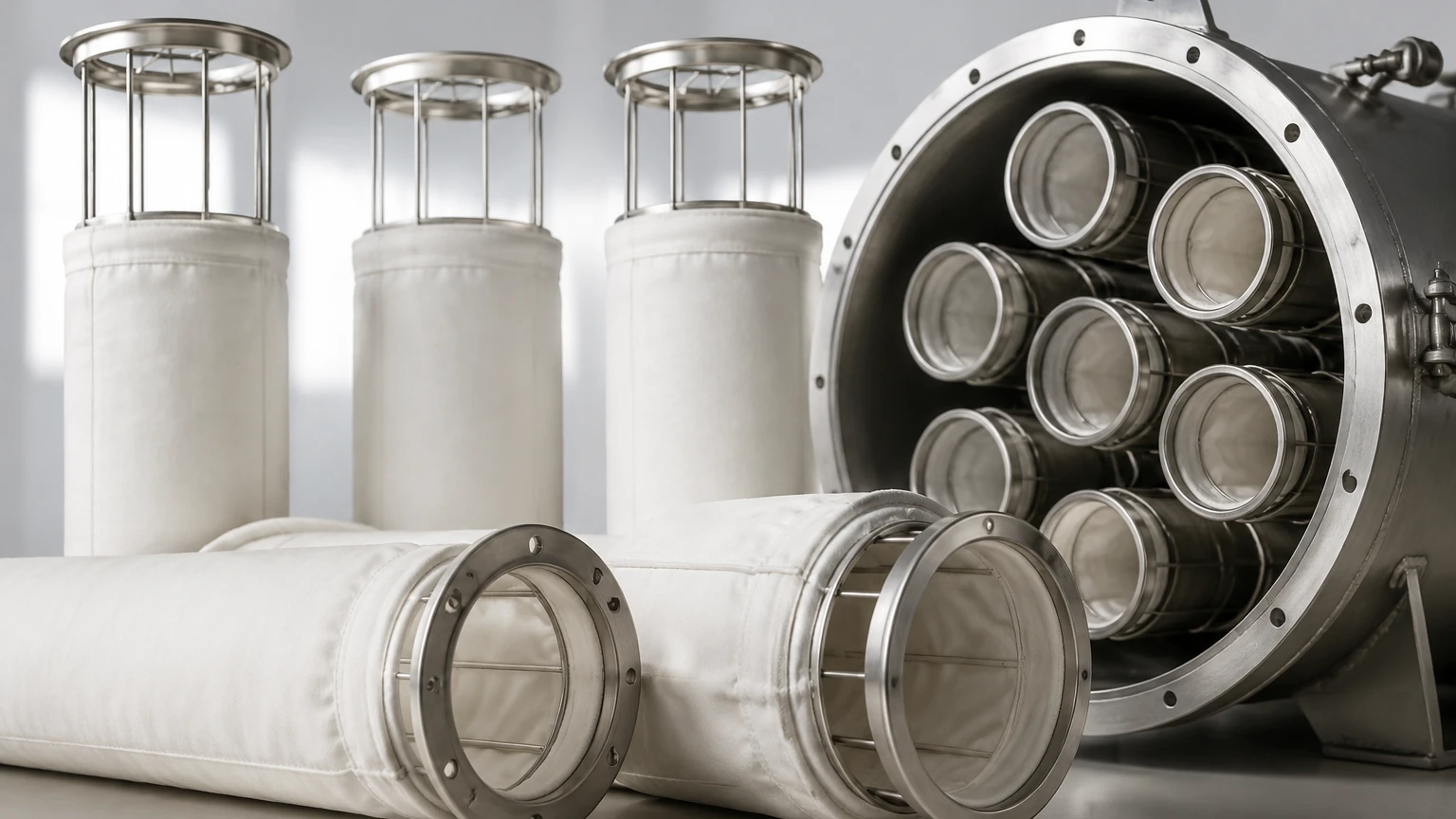
The filter cage provides the internal structural support for the bag, preventing it from collapsing under the pressure of the inward airflow. In corrosive or high-purity environments, such as pharmaceutical or food processing, stainless steel (304 or 316L) is the preferred material for these cages. Precision manufacturing ensures that the cage wires are smooth and free of burrs, which prevents premature wear and tearing of the filter bags.
Venturi and Blowpipes
The venturi is a critical component located at the top of the filter bag. It optimizes the induction of secondary air during the pulse, enhancing the cleaning efficiency. Blowpipes must be accurately aligned with the venturi to ensure the compressed air pulse is centered, preventing uneven wear on the bags.
Engineering Selection Criteria for Industrial Applications
When specifying a jet pulse bag filter, engineers must evaluate several technical parameters to ensure the system meets the specific needs of the facility. Failure to account for these variables can lead to frequent bag failures, high energy consumption, or non-compliance with environmental regulations.
Air-to-Cloth Ratio (Filtration Velocity)
The air-to-cloth (A/C) ratio is defined as the volume of gas passing through a square foot of filter media per minute (CFM/ft²). A lower A/C ratio generally results in higher filtration efficiency and longer bag life but requires a larger, more expensive baghouse. For jet pulse systems, typical A/C ratios range from 3:1 to 6:1, depending on the dust type and concentration.
Dust Characteristics
The physical and chemical properties of the dust—such as particle size distribution, abrasiveness, moisture content, and explosivity—dictate the design of the filter. For example, hygroscopic (moisture-absorbing) dust may require specialized coatings on the filter media to prevent "blinding," where the dust becomes a sticky paste that cannot be pulsed off.
Temperature and Chemical Compatibility
Operating temperatures must remain above the dew point to prevent condensation, which causes corrosion and bag blinding. Conversely, if the temperature exceeds the limits of the filter media, the bags will degrade thermally. In chemical processing, the presence of acids or alkalis necessitates the use of corrosion-resistant stainless steel internal components and chemically inert filter fabrics.
Advantages of Pulse-Jet Systems over Alternative Designs
Compared to shaker-type baghouses or reverse-air systems, the jet pulse bag filter offers several distinct advantages that make it the preferred choice for modern industrial plants:
1. Continuous Operation: Because cleaning occurs in milliseconds on a row-by-row basis, the entire system does not need to be shut down or bypassed during the cleaning cycle.
2. Higher Throughput: The ability to clean bags more frequently allows for higher air-to-cloth ratios, meaning a pulse-jet system can handle a larger volume of air in a smaller physical footprint compared to a shaker system.
3. Lower Maintenance Costs: With fewer moving parts (no mechanical shaking arms or heavy rotating manifolds), the mechanical wear on the system is reduced. Most maintenance is limited to the replacement of pulse valves and filter bags.
4. Improved Efficiency: Pulse-jet cleaning is more energetic than other methods, allowing for the use of denser, high-efficiency felted media rather than woven fabrics, resulting in lower emission levels.
Optimizing Performance: Maintenance and Differential Pressure
The most critical indicator of a jet pulse bag filter’s health is the differential pressure (DP) across the bags. Engineers monitor DP to determine when the bags are reaching the end of their service life or if the cleaning system is failing.
* High Differential Pressure: This usually indicates that the dust cake is not being effectively removed. Potential causes include insufficient compressed air pressure, malfunctioning pulse valves, or bag blinding due to moisture.
* Low Differential Pressure: While seemingly positive, an abnormally low DP can indicate a "leak" or a torn bag, allowing unfiltered air to bypass the system.
Regular inspection of the compressed air system is also vital. The air must be dry and oil-free; moisture in the pulse air can lead to corrosion of the stainless steel components and cause dust to clump on the bags. For those looking to optimize their filtration hardware, visiting the Main Page can provide insights into the specialized metal components required for these high-performance systems.
Custom Stainless Steel Solutions for Demanding Environments
In many industrial sectors, standard carbon steel components are insufficient. In the chemical, pharmaceutical, and food industries, the risk of contamination and corrosion is too high. This is where custom-manufactured filtration components become essential.
Stainless steel wire mesh filters and precision-machined filter supports are often integrated into jet pulse systems when the application involves high temperatures or aggressive chemical vapors. Manufacturers like Kaifil specialize in these high-durability solutions, providing the OEM components that allow a jet pulse bag filter to operate in environments where standard materials would fail within weeks.
Customization options often include specific alloy selections (such as 316L or Duplex stainless steel), specialized surface finishes to prevent bacterial growth, and reinforced cage designs for high-pressure applications. By focusing on the engineering details of the internal filtration elements, facilities can significantly extend the mean time between failures (MTBF) and reduce the total cost of ownership.
Conclusion
The jet pulse bag filter remains the workhorse of industrial dust collection due to its efficiency, reliability, and continuous operation. However, the performance of the system is only as good as its weakest component. From the selection of the filter media to the precision of the stainless steel support cages, every engineering choice impacts the facility's air quality and operational costs. By understanding the technical requirements and partnering with specialized manufacturers for high-quality filtration components, engineers can ensure their systems meet the rigorous demands of modern industrial processing.
