


Koi Pond Drum Filter
In the field of high-end aquaculture and large-scale aquatic environments, maintaining water clarity and biological health is a complex engineering challenge. The koi pond drum filter, technically known as a Rotary Drum Filter (RDF), represents the pinnacle of mechanical filtration technology. Unlike traditional static or pressurized filters that require frequent manual intervention, a drum filter provides automated, continuous removal of suspended solids. For engineers and facility managers, understanding the technical nuances of these systems—from mesh metallurgy to hydraulic flow dynamics—is essential for ensuring long-term operational stability and optimal water quality.
Understanding the Mechanics of Rotary Drum Filtration
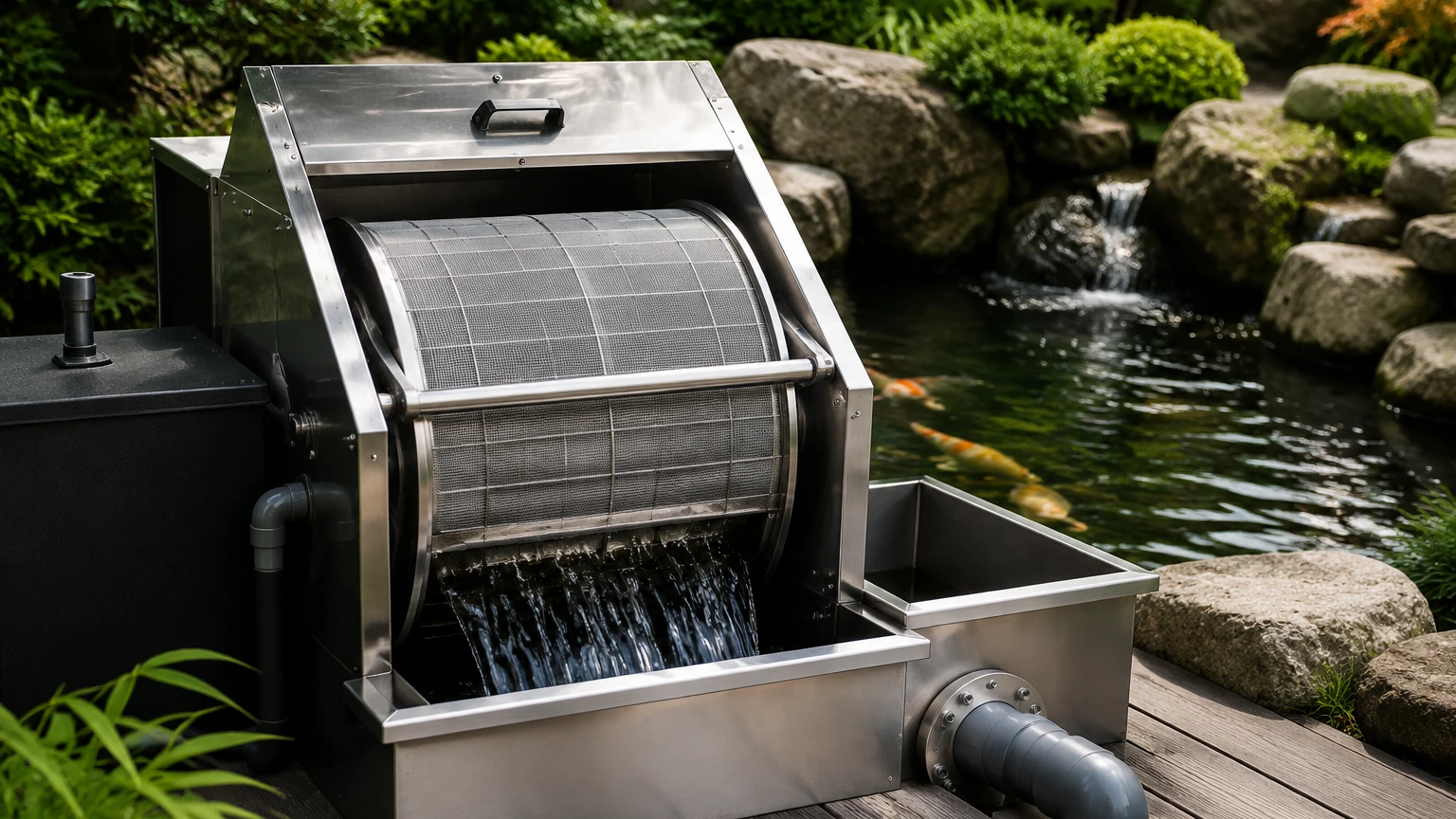
The fundamental principle of a koi pond drum filter is the separation of solids from liquids through a rotating screen. The system typically consists of a horizontal drum partially submerged in a filter tank. Raw water enters the interior of the drum, and as it passes through the fine mesh covering the drum's circumference, particles larger than the mesh openings are trapped on the internal surface.
As the mesh becomes clogged with debris, the water level within the drum rises (in gravity-fed systems) or the flow rate decreases, triggering a cleaning cycle. This cycle involves the rotation of the drum while high-pressure spray nozzles located outside the drum blast water through the mesh. This action dislodges the trapped waste into a collection trough, which then flushes the concentrated debris out of the system. This "filter-on-demand" approach ensures that waste is removed from the water column almost immediately, preventing it from breaking down and contributing to the dissolved organic load (BOD/COD) of the pond.
Material Engineering: The Role of Stainless Steel Wire Mesh
The performance and longevity of a koi pond drum filter are primarily dictated by the quality of the filter media. While some entry-level models use synthetic nylon mesh, industrial and professional-grade systems rely exclusively on stainless steel wire mesh. As a specialized manufacturer of filtration components, Kaifil emphasizes the importance of material selection in high-moisture, biologically active environments.
Corrosion Resistance and Alloy Selection
Stainless steel 304 is often the standard for freshwater applications, providing adequate resistance to corrosion. However, in systems where chemical treatments are frequent or in coastal areas with high salt content in the air, AISI 316L stainless steel is the preferred specification. The addition of molybdenum in 316L provides superior resistance to pitting and crevice corrosion, which is vital for the fine wires used in high-micron filtration.
Structural Integrity
Fine mesh screens are subjected to significant hydraulic pressure and mechanical stress during the backwash cycle. High-quality stainless steel mesh offers the tensile strength required to maintain its shape without sagging or tearing. Precision-woven mesh ensures uniform pore sizes, which is critical for consistent filtration performance. For those seeking specialized components, the Main Page offers a comprehensive look at how these materials are integrated into industrial filtration solutions.
Selecting the Correct Micron Rating for Koi Habitats
One of the most critical decisions in the design of a koi pond drum filter is the selection of the micron rating. The micron rating defines the size of the smallest particle the mesh will reliably trap. In the context of koi ponds, the goal is to balance water clarity with hydraulic efficiency.
* 40 to 60 Microns: This is considered the industry standard for high-clarity koi ponds. At this level, the filter removes the vast majority of suspended solids, including fine fish waste and algae clumps, resulting in "polished" water. However, finer mesh requires more frequent cleaning cycles and higher-pressure backwash pumps.
* 70 to 100 Microns: These ratings are often used in larger systems or those with higher flow rates where the primary goal is the removal of heavy solids before biological filtration. While the water may not appear as "polished," the system experiences less mechanical wear due to fewer cleaning cycles.
Engineers must calculate the total suspended solids (TSS) load and the desired turnover rate of the pond to determine if a finer mesh will lead to excessive backwashing, which can increase water consumption and wear on the drive motor.
System Integration and Customization for OEM Applications
For manufacturers and system integrators, the ability to customize the koi pond drum filter to specific site requirements is a significant advantage. A standard RDF might not fit the footprint of a specialized facility or meet the flow requirements of a unique architectural water feature. Customization options often include:
1. Drum Dimensions: Adjusting the length and diameter of the drum to accommodate specific flow rates (measured in cubic meters per hour or gallons per hour).
2. Inlet/Outlet Configurations: Modifying the size and position of flanges to match existing piping, whether the system is gravity-fed or pump-fed.
3. Housing Materials: While the drum is stainless steel, the outer housing can be constructed from high-density polyethylene (HDPE), stainless steel, or fiberglass, depending on the environment and budget.
4. Control Logic: Integrating the filter with building management systems (BMS) or specialized PLC controllers that monitor wash frequency, water usage, and motor torque.
Providing reliable OEM solutions requires a deep understanding of how these mechanical components interact with the overall life support system of the pond. Precision in the manufacturing of the filter panels ensures that there is no "bypass"—the term for unfiltered water leaking around the edges of the mesh.
Maintenance Protocols and Component Durability
While the koi pond drum filter is designed for automation, it is not a "fit and forget" device. Industrial-grade components are necessary to withstand the 24/7 operational demands of an active pond. Maintenance considerations should focus on three primary areas:
Biofilm and Mineral Scaling
Over time, a biofilm can develop on the stainless steel mesh, or calcium deposits can clog the pores, especially in hard water regions. Periodic deep cleaning with specialized solutions or high-pressure washing is necessary to restore the original flow capacity of the mesh.
Mechanical Wear Components
The drive system—consisting of a motor, gearbox, and often a drive belt or gear—is the most common point of failure. Specifying high-torque, IP67-rated motors ensures that the system can handle the weight of a debris-laden drum. Similarly, the support rollers that hold the drum in place must be made of wear-resistant materials like POM (Polyoxymethylene) or specialized stainless steel bearings.
Seal Integrity
The seal between the rotating drum and the stationary inlet chamber is a critical engineering point. If this seal fails, unfiltered water bypasses the mesh. High-quality silicone or EPDM seals are typically used for their flexibility and resistance to UV and ozone.
Economic Evaluation: Total Cost of Ownership in Filtration Systems
When evaluating a koi pond drum filter for a commercial or high-end residential project, the initial capital expenditure (CAPEX) is only one part of the equation. The Total Cost of Ownership (TCO) includes water consumption, electricity, and labor savings.
Traditional sand filters or bead filters require significant volumes of water for backwashing, often flushing out thousands of liters of treated pond water. In contrast, an RDF uses a targeted high-pressure spray that consumes a fraction of that volume. Furthermore, because the RDF removes waste before it breaks down, the load on the biological filter is reduced, leading to lower costs for chemical additives and less frequent water changes.
For purchasing teams, the durability of the stainless steel mesh is a key factor. Low-quality mesh that requires replacement every 12-18 months significantly increases the operational expenditure (OPEX). Investing in precision-engineered stainless steel components from a reputable manufacturer ensures that the core filtration element lasts for years, even under heavy waste loads.
Conclusion
The koi pond drum filter is an essential component for any large-scale aquatic system where water quality and operational efficiency are non-negotiable. By leveraging the mechanical advantages of rotary filtration and the material benefits of high-grade stainless steel mesh, facility managers can achieve unparalleled water clarity with minimal manual labor.
When selecting or designing a filtration system, it is vital to partner with a manufacturer that understands the technical rigors of the industry. From material selection to customized mesh configurations, the right engineering choices will dictate the success of the aquatic environment. For more information on custom filtration components and technical support, please visit the Main Page to explore our full range of industrial solutions.
