


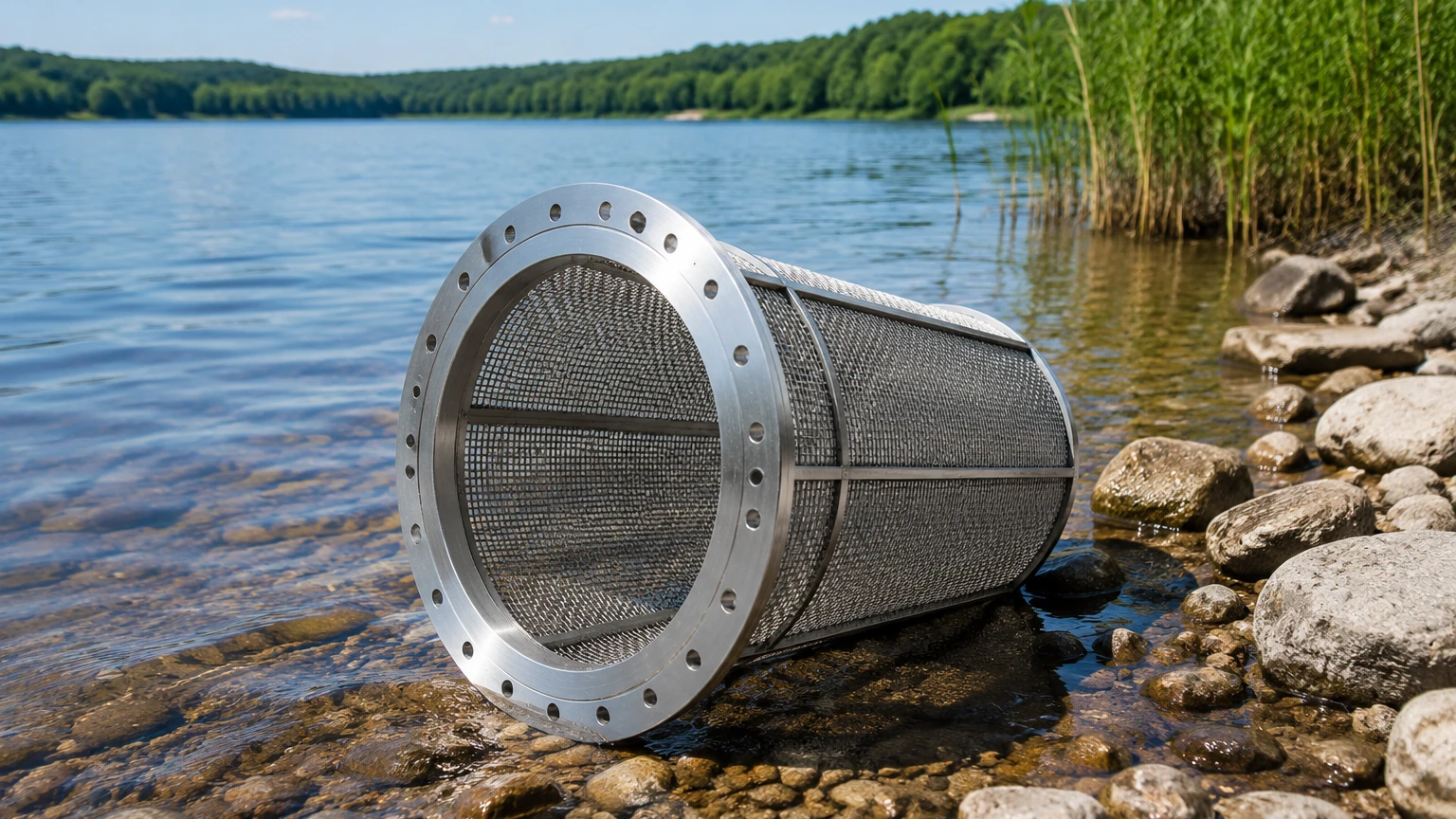
Lake Pump Intake Screen
In industrial and municipal water management, the extraction of raw water from surface sources such as lakes, reservoirs, and rivers requires a robust first line of defense. A lake pump intake screen serves as this critical primary barrier, designed to protect downstream pumping equipment, piping systems, and process components from debris, aquatic life, and suspended solids. For engineers and facility managers, selecting the appropriate intake screen is not merely a matter of sizing a pipe; it involves a complex evaluation of hydraulic performance, material science, and environmental compliance.
Industrial filtration solutions, particularly those involving stainless steel components, must withstand harsh submerged environments while maintaining consistent flow rates. As a specialized manufacturer, Kaifil provides high-performance stainless steel filtration components tailored to these demanding applications. Understanding the technical nuances of intake screen design ensures long-term operational efficiency and reduced maintenance costs.
Understanding the Engineering Requirements for Intake Screens
The primary function of a lake pump intake screen is to facilitate the passage of water while excluding unwanted materials. However, the engineering challenges extend beyond simple exclusion. An effective screen must manage the "approach velocity"—the speed at which water moves toward the screen surface—to prevent the impingement of aquatic organisms and the entrainment of smaller debris.
When specifying an intake screen, engineers must consider the following parameters:
* Flow Capacity (GPM/M3/h): The screen must be sized to handle the maximum peak flow of the pump system without creating excessive head loss.
* Mesh or Slot Size: This determines the filtration rating. In lake environments, this is often dictated by the smallest particle size that the downstream equipment can tolerate, balanced against the risk of rapid clogging.
* Open Area Ratio: This is the percentage of the screen surface that is actually open for water passage. A higher open area reduces pressure drop and lowers the through-slot velocity, which is critical for both pump efficiency and environmental safety.
For technical professionals evaluating these components, the Main Page of the Kaifil website offers a comprehensive overview of the manufacturing capabilities available for custom industrial filtration solutions.
Material Selection: The Case for Stainless Steel
Lake environments present a variety of corrosive and mechanical challenges. Unlike plastic or coated carbon steel alternatives, stainless steel is the industry standard for high-reliability intake screens due to its superior strength-to-weight ratio and resistance to environmental degradation.
304 vs. 316L Stainless Steel
In most freshwater lake applications, Grade 304 stainless steel provides excellent corrosion resistance and structural integrity. However, in lakes with high mineral content, brackish water, or industrial runoff, Grade 316L is often preferred. The addition of molybdenum in 316L enhances resistance to pitting and crevice corrosion, which is essential for submerged components that cannot be easily inspected or maintained.
Durability and Longevity
Stainless steel screens are resistant to UV degradation, which can embrittle plastic screens over time. Furthermore, the mechanical strength of stainless steel allows for thinner wire profiles or narrower ribs while maintaining the structural integrity required to withstand the suction forces of large industrial pumps. This strength also facilitates high-pressure cleaning methods, such as air-burst systems or high-pressure water jets, without risking damage to the filtration media.
Structural Design and Filtration Media Options
The geometry of a lake pump intake screen significantly impacts its performance. Depending on the specific debris load and flow requirements, different types of filtration media may be employed.
Wire Mesh Screens
Custom wire mesh filters offer precise filtration ratings. By utilizing different weave patterns, manufacturers can achieve specific micron ratings while maintaining the necessary mechanical strength. These are often used in applications where fine particulate exclusion is a priority. Kaifil specializes in custom wire mesh configurations that can be integrated into larger intake structures.
Wedge Wire (Profile Wire)
Many industrial intake screens utilize wedge wire technology. The V-shaped profile of the wire creates a slot that widens inwardly. This design is inherently non-clogging; particles that pass through the narrowest point of the slot are unlikely to become lodged further in. This is particularly effective for organic debris found in lakes, such as pine needles, leaves, and aquatic vegetation.
Perforated Metal
For heavy-duty applications where large debris (such as branches or stones) is a concern, perforated metal cylinders provide maximum structural rigidity. These are often used as an outer "shroud" to protect finer internal mesh layers, creating a multi-stage filtration effect within a single intake unit.
Hydraulic Performance and Flow Velocity Management
Hydraulic efficiency is the cornerstone of intake screen design. A poorly designed screen creates a high pressure drop (delta P), which forces the pump to work harder, increasing energy consumption and potentially leading to cavitation. Cavitation can cause catastrophic damage to pump impellers and housings over time.
To optimize hydraulic performance, the through-slot velocity must be kept low. In many jurisdictions, environmental regulations (such as the EPA 316(b) standards in the United States) mandate a maximum intake velocity—often 0.5 feet per second (fps)—to allow fish and other aquatic life to swim away from the intake flow. Achieving this low velocity requires a larger surface area, which is why industrial intake screens are often cylindrical or T-shaped to maximize the contact zone within a compact footprint.
Engineers must also account for "uniform flow distribution." If the suction is concentrated at one end of the screen, that area will clog prematurely while the rest of the screen remains underutilized. Internal flow-distributing baffles or specialized core tubes are often used to ensure that water is pulled evenly across the entire surface of the screen.
Maintenance Strategies and Biofouling Mitigation
No lake pump intake screen is entirely maintenance-free. Over time, screens will accumulate debris or become host to biofouling agents such as algae, bryozoans, or invasive species like zebra and quagga mussels.
Passive vs. Active Cleaning
* Passive Screens: These rely on the natural current of the water body to carry debris away or require manual cleaning by divers. They are cost-effective but suitable only for low-debris environments.
* Active Cleaning (Air-Burst Systems): This is a common industrial solution where a burst of compressed air is sent back through the intake screen from the shore. The rising air bubbles and reversed flow dislodge accumulated debris from the screen surface. This system requires the screen to be engineered to withstand internal pressure surges.
* Mechanical Scrubbing: In some high-fouling environments, screens are equipped with internal or external brushes that rotate periodically to clear the surface.
Biofouling Coatings
In addition to mechanical cleaning, some stainless steel screens can be treated with specialized coatings or manufactured from copper-nickel alloys to inhibit the growth of aquatic organisms. However, for most industrial applications, the durability and cleanability of high-grade stainless steel remain the preferred choice.
Specifying Custom Intake Solutions for Industrial Applications
When transitioning from a standard off-the-shelf product to a custom-engineered solution, purchasing teams and engineers should be prepared to provide detailed application data. A "one size fits all" approach often leads to premature failure or excessive operational costs.
Key data points for customization include:
1. Minimum and Maximum Water Levels: To ensure the screen remains submerged and avoids drawing in floating debris or air.
2. Water Chemistry: To determine the appropriate grade of stainless steel (304, 316, or Duplex).
3. Debris Profile: Is the primary concern silt, organic vegetation, or large solid objects?
4. Installation Constraints: Is the screen being mounted to a wet well wall, a floating barge, or a submerged concrete intake structure?
By partnering with a manufacturer like Kaifil, which has extensive experience in custom stainless steel filter cartridges and precision metal components, organizations can ensure that their intake systems are optimized for their specific environmental conditions. For more information on custom manufacturing capabilities and technical support, professionals are encouraged to visit the Main Page.
Conclusion: The Total Cost of Ownership
While the initial purchase price of a lake pump intake screen is a factor, the total cost of ownership (TCO) is heavily influenced by durability, energy efficiency, and maintenance requirements. A high-quality stainless steel screen that maintains low pressure drop and resists corrosion will pay for itself through reduced pump wear and fewer emergency cleaning interventions.
In the context of industrial water intake, the screen is not just a peripheral component; it is a critical safeguard for the entire water processing infrastructure. By focusing on engineering fundamentals—material integrity, hydraulic balance, and site-specific customization—facilities can ensure a reliable and compliant water supply for years to come.
