


Liquid Filter Housing
In industrial filtration systems, the liquid filter housing serves as the critical pressure vessel that contains the filter media, directs the flow of fluids, and ensures the integrity of the separation process. Whether in chemical processing, pharmaceutical manufacturing, or food and beverage production, the selection of an appropriate liquid filter housing is as vital as the selection of the filter element itself. A poorly specified housing can lead to bypass, excessive pressure drops, or even catastrophic mechanical failure in high-pressure environments.
As a professional manufacturer of custom stainless steel filtration solutions, Kaifil understands that engineers require more than just a container; they require a precision-engineered component that aligns with specific flow dynamics, chemical compatibilities, and regulatory standards. This guide examines the technical nuances of liquid filter housing design, material selection, and operational considerations to assist procurement and engineering teams in making informed decisions.
The Fundamental Role of Liquid Filter Housing
A liquid filter housing is designed to perform several key functions within a pressurized system. Its primary role is to provide a secure environment for filter cartridges or bags, ensuring that all fluid passes through the media without bypassing the seals.
Beyond simple containment, the housing manages the hydraulic forces exerted by the fluid. It must withstand the maximum operating pressure of the system, including potential pressure spikes. Furthermore, the internal geometry of the housing is engineered to minimize turbulence and pressure loss. By optimizing the transition from the inlet piping to the filter surface, a well-designed liquid filter housing helps maintain consistent flow rates and extends the service life of the internal filter elements.
Material Engineering and Chemical Compatibility
Material selection is the most significant factor in determining the longevity and safety of a liquid filter housing. In most industrial applications, stainless steel is the standard due to its mechanical strength and resistance to corrosion. However, the specific grade of stainless steel must be chosen based on the chemical nature of the fluid being processed.
Stainless Steel 304 vs. 316L
For general-purpose applications, such as water treatment or light industrial cooling, Type 304 stainless steel offers sufficient corrosion resistance and structural integrity. However, in environments involving chlorides, acids, or high-purity requirements, Type 316L is preferred. The addition of molybdenum in 316L provides superior resistance to pitting and crevice corrosion. The "L" designation signifies low carbon content, which is essential for preventing carbide precipitation during welding, ensuring the housing remains robust at the weld seams even in aggressive chemical environments.
Sealing Materials (O-Rings and Gaskets)
While the metal structure provides the strength, the seals provide the security. Engineers must confirm that the O-ring or gasket material is compatible with the process fluid and operating temperature. Common options include:
* EPDM: Excellent for water, steam, and dilute acids.
* Viton (FKM): Preferred for oils, fuels, and many chemicals at higher temperatures.
* Silicone: Commonly used in food and pharmaceutical applications due to its inert nature.
* PTFE/Teflon: Used for extreme chemical resistance, though it lacks the elasticity of elastomers.
Types of Liquid Filter Housing Configurations
Industrial housings are generally categorized by the type of media they hold and the volume of fluid they are designed to process. Understanding these configurations is essential for matching the housing to the application's scale.
Cartridge Filter Housings
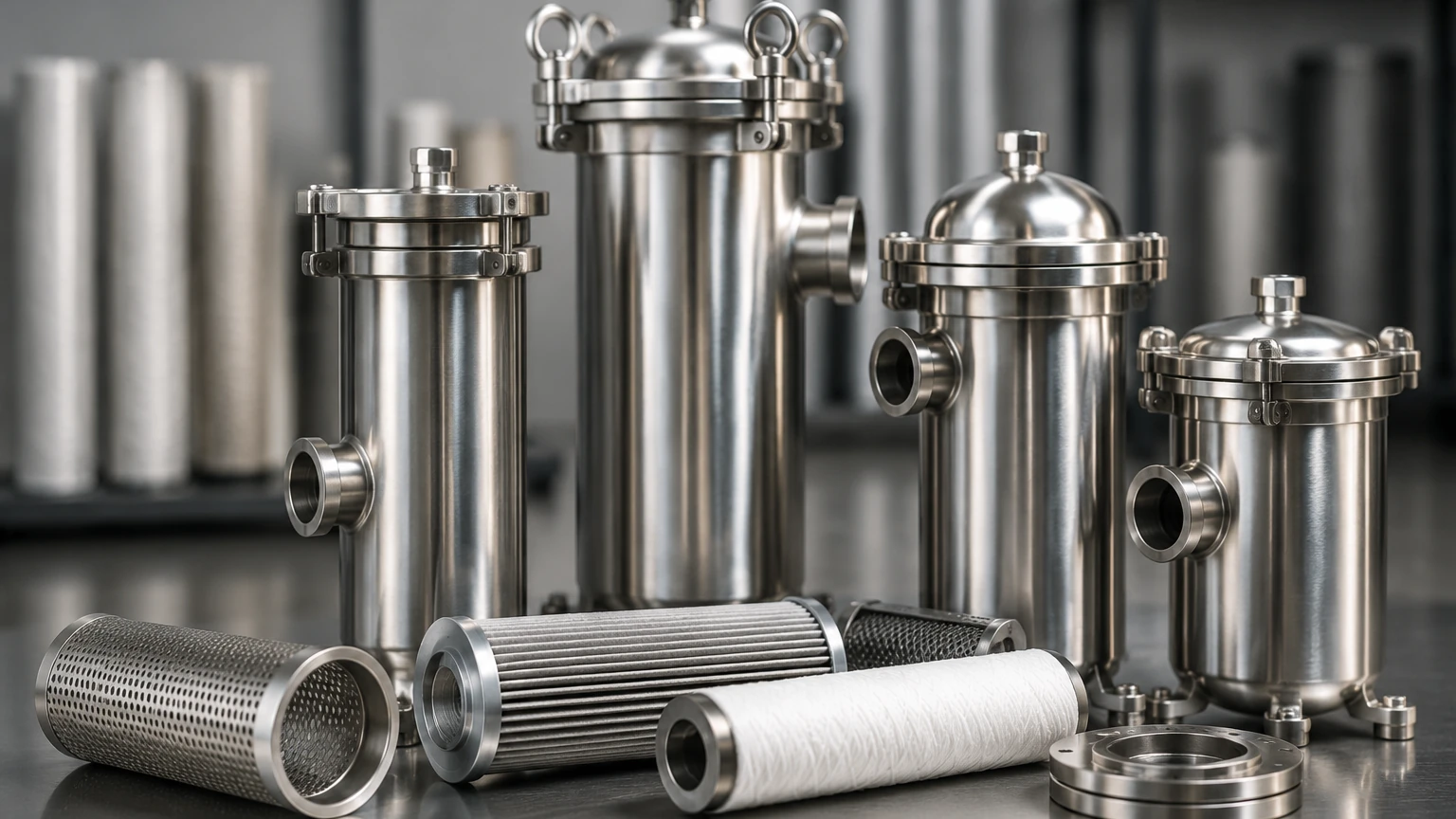
Cartridge housings are designed for high-precision filtration. They can accommodate a single cartridge for low-flow laboratory or pilot applications, or dozens of cartridges for large-scale industrial processes. These housings are often used when fine particulate removal (down to sub-micron levels) is required. The internal "top plate" or "tubesheet" must be precision-machined to ensure a tight seal with the cartridge end-caps, preventing any contaminated fluid from bypassing the media.
Bag Filter Housings
Bag filter housings are typically utilized for high-flow applications or where high solids loading is expected. They are robust and relatively easy to service. The liquid filter housing for bags includes an internal support basket (usually made of perforated stainless steel or wire mesh) to prevent the filter bag from bursting under pressure. Bag housings are common in wastewater treatment, paint and ink manufacturing, and bulk chemical transfer.
Multi-Round vs. Single-Round Housings
Single-round housings are compact and suitable for point-of-use filtration. Multi-round housings, which contain multiple cartridges or bags in a single vessel, are used when the required flow rate exceeds the capacity of a single element. Multi-round designs reduce the footprint of the filtration system and simplify maintenance by allowing the operator to change multiple elements at once through a single opening.
Engineering Standards and Design Considerations
When specifying a liquid filter housing, engineers must look beyond the physical dimensions and consider the regulatory and safety standards that govern pressure vessels.
Pressure and Temperature Ratings
Every liquid filter housing should be rated for a Maximum Allowable Working Pressure (MAWP) at a specific temperature. It is a standard engineering practice to select a housing with a pressure rating at least 20% higher than the maximum expected system pressure. For high-temperature applications, such as steam filtration or hot oil processing, the derating of the metal’s strength must be accounted for in the wall thickness design.
Connection Types
The method of connecting the housing to the piping system affects both installation ease and leak prevention.
* NPT/BSP Threaded: Common for smaller, low-pressure housings.
* Flanged (ANSI/DIN): The standard for industrial systems, providing a secure, bolt-on connection that is easy to disassemble for maintenance.
* Tri-Clamp (Sanitary): Essential for food, beverage, and pharmaceutical industries where "dead legs" must be avoided, and the system must be frequently disassembled for cleaning (CIP/SIP).
Surface Finish and Cleanability
In sanitary applications, the internal surface finish of the liquid filter housing is measured by its Roughness Average (Ra). A lower Ra value indicates a smoother surface, which prevents bacterial growth and facilitates more effective cleaning. Electropolishing is often employed to achieve the high-gloss, ultra-smooth finishes required in pharmaceutical grade housings.
Operational Efficiency and Maintenance
The total cost of ownership for a filtration system is heavily influenced by how easily the liquid filter housing can be maintained. Designing for "serviceability" ensures that downtime is minimized during filter change-outs.
Venting and Draining
A properly engineered housing must include vent and drain ports. The vent port, located at the highest point of the housing, allows air to be purged during startup, preventing air locks and ensuring the entire surface area of the filter media is utilized. The drain port, located at the lowest point, allows the vessel to be emptied before opening, which is a critical safety requirement when handling hazardous or hot liquids.
Differential Pressure Monitoring
To determine exactly when a filter element needs replacement, the liquid filter housing should be equipped with upstream and downstream pressure gauges. The difference between these two readings—the differential pressure (ΔP)—indicates the level of loading on the filter. Operating a system beyond the recommended ΔP can lead to element collapse or the "unloading" of trapped contaminants back into the process stream.
Closure Mechanisms
For housings that require frequent element changes, the closure mechanism is a vital consideration. While bolted-flange covers provide the highest pressure security, "V-clamp" or "Swing-bolt" closures allow for much faster access without the need for specialized tools, significantly reducing labor costs during maintenance cycles.
Customization and OEM Solutions
Not every industrial application fits into a standard product catalog. In many cases, the physical constraints of a facility or the specific flow requirements of a process necessitate a customized liquid filter housing.
Customization options often include:
* Custom Inlet/Outlet Orientations: Adjusting the height or angle of connections to fit existing piping.
* Heating Jackets: For fluids that must be maintained at a specific temperature to prevent solidification or maintain viscosity.
* Skid-Mounted Systems: Integrating the housing with pumps, valves, and controllers for a turn-key filtration solution.
* Specialized Materials: Using exotic alloys like Hastelloy or Monel for extremely corrosive environments where standard stainless steel would fail.
Kaifil specializes in these tailored solutions, working closely with engineering teams to develop filtration components that meet the exact demands of their specific industrial environment. For more information on our full range of stainless steel filtration components and custom manufacturing capabilities, please visit our Main Page.
Common Risks in Housing Selection
Failure to properly vet a liquid filter housing supplier can lead to several operational risks. One common issue is "bypass," where poor manufacturing tolerances in the housing’s sealing zone allow unfiltered liquid to leak around the filter element. This renders the entire filtration process ineffective.
Another risk is material non-compliance. In the global market, not all "316 stainless steel" is created equal. Without proper material certification (MTRs), a housing might contain impurities that lead to premature stress-corrosion cracking. Engineers should always confirm that their supplier provides full traceability for the materials used in the construction of the pressure vessel.
Finally, under-sizing a housing is a frequent mistake. While a smaller housing may have a lower initial cost, it results in higher fluid velocity through the media, leading to higher initial pressure drops and more frequent filter changes. Investing in a correctly sized liquid filter housing pays dividends in reduced operational costs and improved filtration efficiency over the life of the system.
Conclusion: Making the Informed Choice
The liquid filter housing is the backbone of any industrial filtration process. It ensures safety, maintains system pressure, and protects the high-value filter elements within. By focusing on material compatibility, adhering to engineering standards, and considering the long-term maintenance requirements, purchasing and engineering professionals can ensure their systems operate at peak performance.
When selecting a partner for your filtration needs, prioritize manufacturers who offer technical expertise and a commitment to quality. Whether you require a standard off-the-shelf unit or a complex, custom-engineered vessel, the integrity of your liquid filter housing is paramount to the success of your industrial application. To review product options and application support, explore the resources available on our Main Page.
