


Liquid Liquid Coalescer
In industrial process engineering, the separation of two immiscible liquids—typically water and a hydrocarbon—is a critical requirement for ensuring product purity, protecting downstream equipment, and meeting environmental regulations. A liquid liquid coalescer is a specialized filtration and separation device designed to merge small droplets of a dispersed phase into larger droplets, which can then be easily separated from the continuous phase via gravity.
For engineers and procurement teams in the chemical, pharmaceutical, and oil and gas sectors, selecting the correct coalescer technology is not merely a matter of purchasing a component but an engineering decision that impacts the efficiency and longevity of the entire process line. This guide examines the technical principles, material considerations, and selection criteria for industrial liquid-liquid coalescers.
Fundamental Principles of Liquid-Liquid Coalescence
The operation of a liquid liquid coalescer relies on the physical properties of the fluids involved, specifically their density difference, interfacial tension, and viscosity. Most industrial applications involve a "water-in-oil" or "oil-in-water" emulsion. When these emulsions are stable, the droplets are too small to settle out by gravity within a practical timeframe.
The coalescence process generally occurs in three distinct stages:
1. Interception and Capture: As the emulsion passes through the coalescing media—often a structured arrangement of stainless steel wire mesh or synthetic fibers—the fine droplets of the dispersed phase are intercepted by the media fibers. This is achieved through mechanical impingement and molecular attraction.
2. Coalescence (Growth): Once captured, the small droplets move along the fibers and collide with other captured droplets. Due to the surface properties of the media, these droplets merge (coalesce) into larger globules. The media must be "wettable" by the dispersed phase to facilitate this growth.
3. Separation: As the droplets grow, they reach a size where the gravitational force (based on the density difference between the two liquids) overcomes the viscous drag of the continuous phase. The large droplets then rise to the top or sink to the bottom of the separator vessel, where they can be decanted.
Engineering Considerations for Media Selection
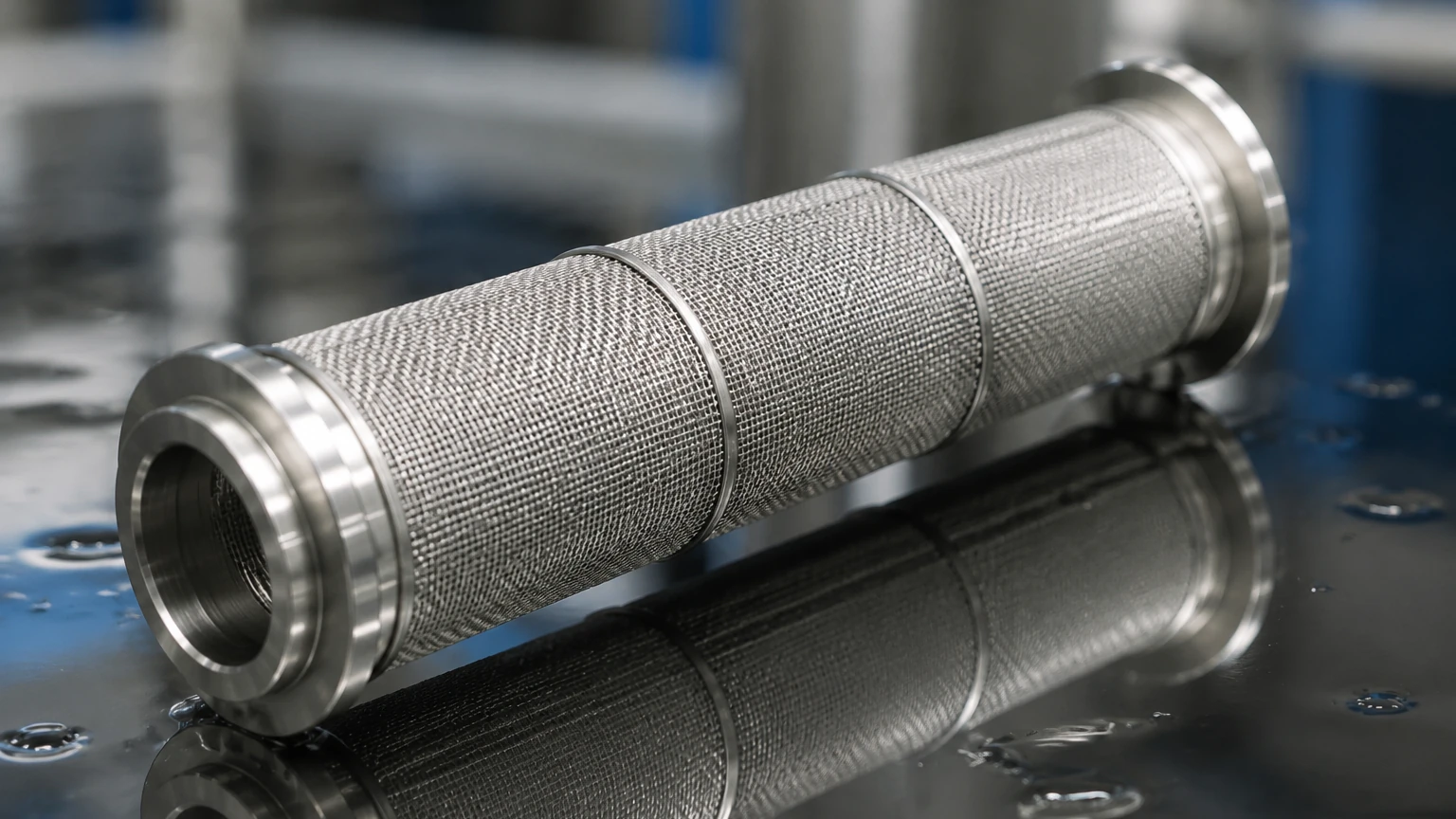
The heart of any coalescer is the media. For high-performance industrial applications, stainless steel filtration components are often preferred due to their mechanical strength and resistance to corrosive process fluids. When designing a liquid liquid coalescer, engineers must evaluate the following media characteristics:
Surface Energy and Wettability
For effective coalescence, the media must have a high affinity for the dispersed phase. For example, if removing water from fuel, the media should be hydrophilic (water-attracting). If the media is not correctly matched to the liquid's surface tension, the droplets will not adhere to the fibers, and coalescence will fail. Custom stainless steel mesh can be treated or layered to achieve specific surface energy requirements for complex chemical streams.
Pore Size and Porosity
There is a technical trade-off between filtration fineness and pressure drop. Smaller pores are more effective at capturing microscopic droplets but lead to a higher differential pressure ($ΔP$). In many industrial systems, a multi-stage approach is used: a pre-filter stage to remove solid particulates (which can stabilize emulsions and foul the coalescer), followed by the primary coalescing stage.
Material Compatibility
In the pharmaceutical and chemical industries, the fluids involved can be highly aggressive. Stainless steel (304, 316L, or specialty alloys) is the standard for these environments. Unlike polymer-based media, stainless steel does not degrade when exposed to high temperatures or solvent-heavy streams, ensuring the structural integrity of the filter cartridge over long service cycles.
Performance Metrics and Evaluation Criteria
When evaluating a liquid liquid coalescer for a specific application, technical professionals should focus on quantifiable performance metrics rather than generic marketing claims. The following parameters are essential for technical validation:
* Separation Efficiency: This is typically measured by the concentration of the dispersed phase in the effluent (e.g., reducing water content from 2,000 ppm to less than 10 ppm). Efficiency is heavily dependent on the influent droplet size distribution.
* Flux Rate (Flow Velocity): The velocity of the fluid through the media must be carefully controlled. If the velocity is too high, the shear forces can break apart coalesced droplets before they can separate, a phenomenon known as "re-entrainment."
* Differential Pressure (ΔP): A well-designed coalescer should operate with a low initial pressure drop. A rapid increase in ΔP usually indicates solid particulate fouling or the presence of surfactants that are coating the media.
* Turndown Ratio: Engineers must confirm that the coalescer maintains efficiency even when the process flow rate fluctuates. Some designs are highly sensitive to flow variations, while others, utilizing structured metal mesh, offer more stable performance across a range of velocities.
Overcoming Operational Challenges: Surfactants and Emulsions
One of the most significant risks to liquid-liquid separation is the presence of surfactants (surface-active agents). Surfactants lower the interfacial tension between the two liquids, stabilizing the emulsion and making it extremely difficult for droplets to coalesce.
In systems with low interfacial tension (typically below 20 dynes/cm), standard coalescers may fail. To address this, engineers may specify specialized media with high-surface-area-to-volume ratios or implement a secondary separation stage using a separator element (often made of hydrophobic materials like PTFE-coated stainless steel mesh). This secondary stage allows the continuous phase (hydrocarbon) to pass through while repelling the now-enlarged water droplets, forcing them to settle.
Furthermore, solid contaminants can act as emulsifiers by collecting at the interface of the droplets. This is why a high-quality pre-filtration system is non-negotiable for the longevity of a liquid liquid coalescer. By utilizing precision metal filter components as pre-filters, operators can protect the more expensive coalescing elements from premature fouling.
Customization and OEM Integration
Industrial filtration requirements are rarely "one size fits all." Factors such as vessel dimensions, existing piping layouts, and specific chemical compositions necessitate customized filtration solutions. For many OEMs, the ability to integrate a custom-designed filter cartridge into a proprietary system is a key competitive advantage.
Customization options often include:
* Bespoke End Cap Designs: Ensuring compatibility with existing housings (e.g., DOE, Code 7, or custom flange mounts).
* Layered Media Configurations: Combining different grades of stainless steel wire mesh to handle a broad spectrum of droplet sizes within a single element.
* Structural Reinforcement: Adding internal support cores or external cages to withstand high-pressure surges in hydraulic or high-viscosity applications.
For those looking to explore specific configurations or technical specifications for their filtration projects, visiting the Main Page provides a comprehensive overview of available manufacturing capabilities and material options.
Total Cost of Ownership and Maintenance
While the initial purchase price of a liquid liquid coalescer is an important factor, the total cost of ownership (TCO) is determined by service life, cleaning costs, and the impact on downstream product quality.
Stainless steel coalescing elements offer a distinct advantage in TCO because they are often cleanable and reusable. Unlike disposable glass fiber or paper elements, metal mesh can be backwashed or ultrasonically cleaned, significantly reducing the frequency of replacements. When calculating the TCO, engineers should consider:
1. Replacement Frequency: How long the media lasts before the ΔP reaches the terminal limit.
2. Disposal Costs: Disposable elements used in hazardous chemical streams can incur high disposal fees.
3. Energy Consumption: Higher pressure drops require more pump energy. A precision-engineered metal filter with high porosity minimizes these ongoing costs.
Technical Checklist for Purchasing Teams
Before finalizing a specification for a liquid liquid coalescer, the following data should be confirmed with the manufacturer:
* Fluid Properties: Density, viscosity, and interfacial tension of both phases at operating temperature.
* Contamination Profile: Concentration of the dispersed phase (ppm) and the nature of any solid contaminants.
* Operating Conditions: Maximum flow rate, operating pressure, and temperature range.
* Required Effluent Quality: The maximum allowable concentration of the dispersed phase after separation.
* Housing Constraints: Dimensions and connection types of the existing separator vessel.
By focusing on these factual engineering requirements, procurement teams can ensure they select a filtration solution that delivers reliable performance in demanding industrial environments. Whether the application involves dewatering jet fuel, separating oil from wastewater, or purifying chemical intermediates, the liquid liquid coalescer remains a cornerstone of efficient process separation. For further technical support and to Review product options and application support, engineers are encouraged to consult with filtration specialists who understand the nuances of metal media design.
