


Low Pressure Filters
In industrial fluid systems, filtration is often categorized by the operating pressure of the circuit. While high-pressure filters are designed to protect sensitive downstream components like servo valves and actuators from catastrophic failure, low pressure filters serve a broader, equally critical role in maintaining the long-term health of the entire system. Typically operating at pressures below 500 psi (approximately 35 bar), these filters are commonly found in suction lines, return lines, and low-pressure process loops.
Selecting the appropriate low pressure filters requires a deep understanding of fluid dynamics, material compatibility, and the specific contaminants present in the environment. For engineers and procurement teams, the goal is to balance filtration efficiency with system flow requirements to prevent issues such as pump cavitation or excessive backpressure. As a specialist in custom stainless steel filtration, Kaifil provides the technical expertise necessary to navigate these engineering challenges, ensuring that every component meets the rigorous demands of industrial applications. For a comprehensive look at available filtration technologies, professionals can visit the Main Page to review product options and application support.
Defining Low Pressure Filters in Industrial Applications
Low pressure filters are not a single product type but a category of filtration solutions defined by their placement within a hydraulic or process circuit. Their primary function is to remove particulate matter from the fluid before it reaches the reservoir or as it is drawn into the pump. Because they operate at lower pressures, these filters often feature larger surface areas and lighter-weight housings compared to their high-pressure counterparts.
Suction Line Filters
Suction filters, or strainers, are located on the inlet side of the pump. Their primary purpose is to protect the pump from large particles that could cause immediate mechanical damage. However, engineers must be cautious when specifying low pressure filters for suction lines. If the filter creates too much resistance (pressure drop), the pump may suffer from cavitation—a phenomenon where low pressure causes fluid to vaporize, creating bubbles that implode and erode metal surfaces. Consequently, suction filters usually employ coarser mesh sizes, often ranging from 74 to 150 microns.
Return Line Filters
Return line filters are the "workhorses" of system cleanliness. They are positioned at the end of the circuit, just before the fluid enters the reservoir. Their job is to capture all the wear debris generated by the system's components during operation. Because the fluid is returning to a tank at low pressure, these filters can utilize finer media to achieve high-level cleanliness without the risk of damaging expensive high-pressure pumps. Standard ratings for return line low pressure filters often fall between 10 and 25 microns.
Material Selection: The Case for Stainless Steel Wire Mesh
The choice of filter media is perhaps the most significant factor in the performance and longevity of low pressure filters. While disposable cellulose or synthetic fiber elements are common in light-duty applications, industrial environments involving high temperatures, corrosive chemicals, or high-viscosity fluids necessitate more robust materials.
Stainless steel wire mesh is the preferred choice for high-performance industrial filtration for several reasons:
1. Durability and Structural Integrity: Unlike paper or fiberglass, stainless steel mesh can withstand significant pressure differentials without collapsing or shedding fibers into the fluid stream (media migration).
2. Chemical and Thermal Resistance: In chemical processing or food production, filters are often exposed to aggressive cleaning agents or extreme heat. Stainless steel (specifically grades 304 and 316L) maintains its physical properties under conditions that would degrade polymers.
3. Cleanability and Reusability: One of the most significant advantages of stainless steel low pressure filters is that they are often cleanable. Through ultrasonic cleaning or backwashing, the accumulated contaminants can be removed, restoring the filter's original flow characteristics and significantly reducing the total cost of ownership (TCO).
Key Engineering Performance Metrics
When evaluating low pressure filters, engineers must look beyond the micron rating. A filter’s effectiveness is defined by its ability to maintain flow while capturing particles of a specific size. Key metrics include:
Pressure Drop (ΔP)
Pressure drop is the difference in pressure between the inlet and the outlet of the filter. Every filter creates some resistance to flow. In low-pressure systems, a high clean pressure drop is a sign of an undersized filter or an inappropriate media choice. Engineers must calculate the "Total ΔP," which is the sum of the pressure drop across the filter housing and the pressure drop across the clean filter element. As the filter accumulates dirt, the ΔP increases until it reaches the bypass valve setting or the element's collapse pressure.
Beta Ratio (β)
Filtration efficiency is technically measured using the Beta Ratio, derived from multi-pass testing. A Beta Ratio (βx = y) indicates that for a particle size 'x', the number of particles upstream divided by the number of particles downstream equals 'y'. For example, a β10 = 200 rating means that for every 200 particles of 10 microns entering the filter, only one passes through. This represents 99.5% efficiency.
Dirt Holding Capacity (DHC)
The DHC determines the service life of the filter element. It refers to the total weight of a standard contaminant that the filter can trap before the pressure drop reaches a predefined limit. In low pressure filters, maximizing DHC is often achieved through pleating, which increases the effective surface area within the same physical footprint.
Addressing Common Risks in Low Pressure Filtration
Even with high-quality components, improper selection or maintenance can lead to system failures. Understanding these risks is essential for engineers during the design phase.
Bypass Leakage: Most low pressure filters are equipped with a bypass valve. If the filter element becomes clogged and the pressure drop exceeds a certain threshold (e.g., 25-50 psi), the valve opens to allow fluid to bypass the filter. This prevents the element from collapsing but allows contaminated fluid to circulate through the system. Monitoring the differential pressure is critical to ensure the bypass does not become the primary flow path.
Cold Start Surges: In hydraulic systems, fluid viscosity is significantly higher when the system is cold. During a cold start, the high-viscosity fluid creates a momentary spike in pressure drop across the filter. If the filter housing or element is not designed to handle these surges, the bypass valve may open unnecessarily, or the filter media may be damaged. Selecting low pressure filters with high-strength stainless steel support cores can mitigate this risk.
Seal Compatibility: The performance of a filter is only as good as its seals. If the O-rings or gaskets are not compatible with the fluid (e.g., certain synthetic oils or chemicals), they can swell, shrink, or degrade, leading to internal leakage. Common seal materials include Nitrile (Buna-N), Viton (FKM), and EPDM, each suited for different chemical profiles.
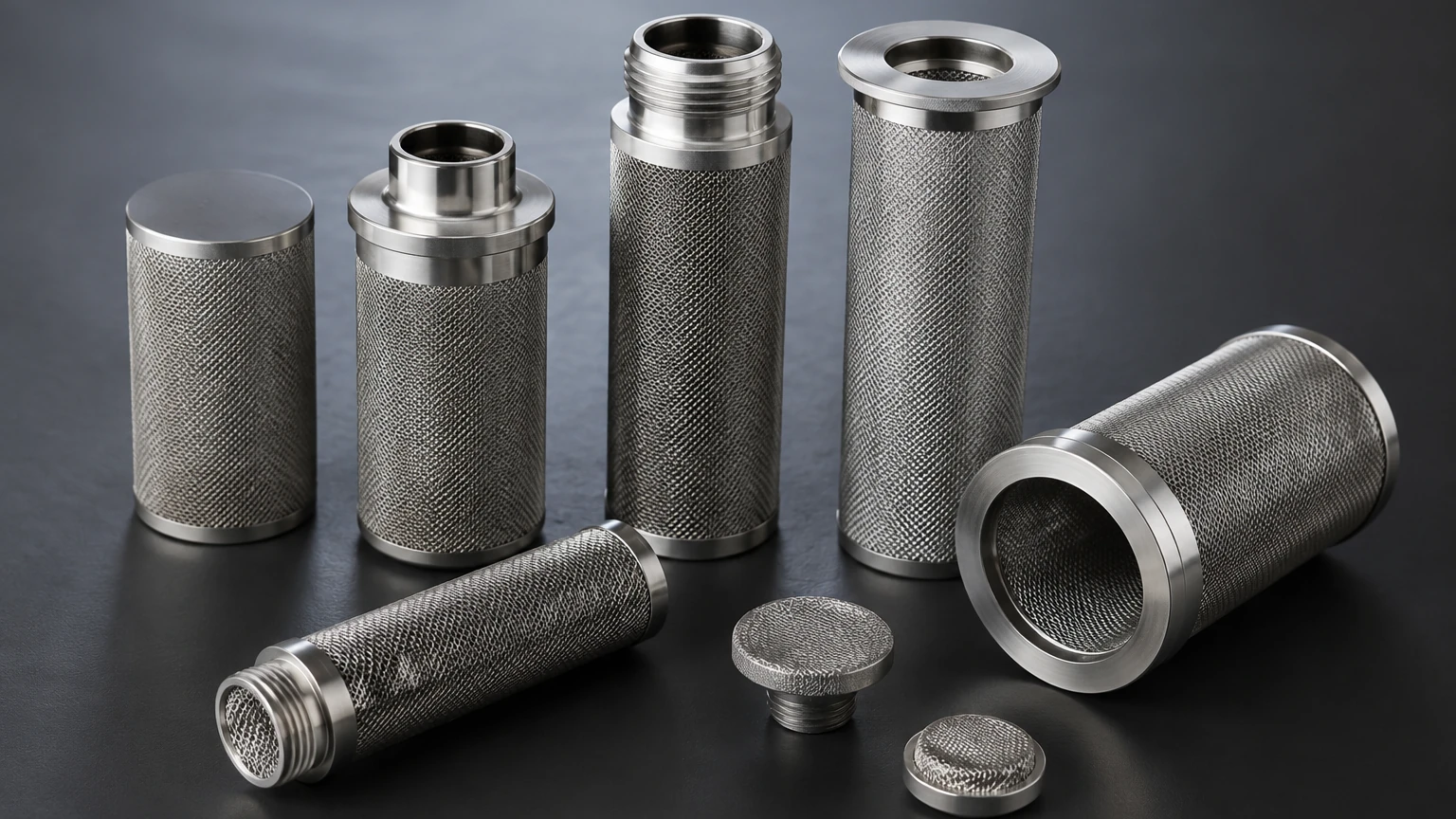
Customization and OEM Requirements for Filter Elements
Many industrial machines require filtration components that do not fit standard off-the-shelf specifications. This is where custom manufacturing becomes vital. For original equipment manufacturers (OEMs), the ability to integrate a filter directly into a proprietary housing or to meet a specific micron rating for a unique fluid is a competitive advantage.
Customization options for low pressure filters include:
* Custom Dimensions: Tailoring the length, diameter, and end-cap configuration to fit existing hardware.
* Reinforced Structures: Adding internal support tubes or external shrouds for applications with high flow velocities or frequent pressure pulsations.
* Sintered Media: For applications requiring extreme precision and strength, multiple layers of stainless steel wire mesh can be sintered (diffusion-bonded) together to create a rigid, high-strength filter medium that maintains its pore size even under mechanical stress.
Kaifil specializes in these customized solutions, working closely with engineering teams to develop filtration components that align with specific performance targets and spatial constraints.
Maintenance, Cleaning, and Replacement Strategies
The long-term success of any filtration strategy depends on maintenance. For low pressure filters using stainless steel media, the maintenance cycle is typically longer and more cost-effective than for disposable filters. However, a structured approach is still required.
1. Differential Pressure Monitoring: Installing visual or electrical indicators on filter housings allows operators to see exactly when a filter is approaching its capacity. This prevents premature replacement and avoids the risks associated with bypass operation.
2. Cleaning Protocols: When a stainless steel element reaches its dirt-holding limit, it should be cleaned according to manufacturer specifications. This often involves solvent cleaning, back-flushing with clean fluid, or ultrasonic baths. It is important to inspect the mesh for any signs of physical damage or permanent blinding after cleaning.
3. Total Cost of Ownership (TCO) Analysis: While stainless steel filters have a higher initial purchase price than cellulose filters, the TCO is often lower. By eliminating the need for frequent replacement, reducing waste disposal costs, and providing superior protection to expensive system components, stainless steel low pressure filters offer a significant return on investment.
Conclusion
Low pressure filters are foundational to the reliability of industrial fluid systems. Whether protecting a pump from large debris or ensuring that return fluid is free of wear particles, these components must be selected with technical precision. By focusing on high-quality materials like stainless steel wire mesh and considering critical metrics like Beta ratios and pressure drops, engineers can design systems that operate efficiently with minimal downtime.
For those seeking reliable, high-performance filtration components tailored to specific industrial needs, partnering with an experienced manufacturer is essential. Explore the Main Page to learn more about how Kaifil’s engineering and manufacturing capabilities can support your filtration requirements, from standard replacements to complex OEM designs. By prioritizing quality and technical accuracy in filter selection, purchasing teams and engineers can ensure the longevity and performance of their industrial equipment.
