


Membrane Filter Cartridges
In the landscape of industrial separation, membrane filter cartridges represent the pinnacle of precision filtration. Unlike traditional depth filters or coarse wire mesh, membrane cartridges are designed to provide absolute retention of particles, microorganisms, and contaminants at the sub-micron level. For engineers and procurement specialists in the pharmaceutical, chemical processing, and food and beverage sectors, selecting the correct membrane configuration is a critical decision that impacts product purity, equipment longevity, and process efficiency.
As a specialized manufacturer, Kaifil understands that filtration is rarely a one-size-fits-all solution. While many industrial processes rely on robust stainless steel mesh for primary filtration, the transition to membrane filter cartridges is necessary when the application demands sterile effluent or the removal of extremely fine colloidal particles. This guide explores the technical engineering considerations, material sciences, and selection criteria essential for integrating membrane technology into industrial workflows.
Fundamentals of Membrane Filtration Technology
Membrane filter cartridges operate primarily through surface filtration, where the pore structure of the membrane acts as a precise barrier. Unlike depth filters that trap particles within a thick matrix of fibers, membranes utilize a thin, engineered film with a highly controlled pore size distribution. This allows for "absolute" ratings, meaning the filter is validated to retain a specific percentage (often 99.9% or higher) of particles at its rated micron size.
Microfiltration vs. Ultrafiltration
Most industrial membrane cartridges fall under the category of microfiltration (0.1 to 10 microns). In these applications, the goal is typically the removal of bacteria, yeasts, or fine suspended solids. Ultrafiltration membranes, which feature even smaller pores, are used for removing macromolecules and viruses. The choice between these depends on the molecular weight cut-off (MWCO) required by the specific process fluid.
Pleated Design and Surface Area
To compensate for the relatively low flow rates inherent in fine-pore membranes, industrial cartridges utilize a pleated design. By folding the membrane material around a central core, manufacturers significantly increase the effective filtration area (EFA) within a standard 10-inch, 20-inch, or 30-inch footprint. A higher EFA results in lower clean pressure drops and extended service life, as the fluid velocity through any single point of the membrane is minimized.
Material Selection for Specific Industrial Fluids
The chemical and thermal compatibility of the membrane material is the most significant factor in determining the reliability of a filtration system. Selecting an incompatible material can lead to membrane swelling, pore collapse, or chemical leaching, which compromises the integrity of the filtrate.
Polyethersulfone (PES)
PES is the industry standard for aqueous applications. It is naturally hydrophilic, meaning it does not require pre-wetting agents that could contaminate the process. PES membranes offer high flow rates and low protein binding, making them ideal for biological fluids, pharmaceutical buffers, and bottled water filtration.
Polytetrafluoroethylene (PTFE)
For aggressive solvents, strong acids, and highly corrosive chemicals, PTFE is the material of choice. PTFE membranes are inherently hydrophobic, making them excellent for gas filtration and tank venting. In liquid applications involving organic solvents, chemically resistant PTFE ensures that the membrane structure remains intact under harsh conditions.
Nylon 6,6
Nylon membranes are robust and provide excellent chemical resistance to ketones and esters. They are often used in the electronics industry for photoresist filtration and in the food industry for beverage clarification. However, because Nylon is slightly hygroscopic, it may not be suitable for all high-temperature steam sterilization cycles compared to PES.
Polyvinylidene Fluoride (PVDF)
PVDF is valued for its low extractables and high thermal stability. It is frequently employed in pharmaceutical applications where the preservation of expensive active ingredients is paramount, as PVDF exhibits very low non-specific adsorption.
Structural Integrity and Design Configurations
While the membrane provides the filtration logic, the cartridge's physical structure ensures that the membrane can withstand industrial operating pressures. A standard membrane filter cartridge consists of several components: the inner support core, the outer cage, the end caps, and the membrane itself, often sandwiched between layers of support fleece.
The Role of Stainless Steel Support
In high-pressure or high-temperature environments, traditional plastic cores may fail. This is where specialized manufacturing expertise becomes vital. High-performance filtration systems often utilize stainless steel housings and, in some custom designs, metal-reinforced cores to prevent cartridge deformation. For those seeking comprehensive filtration hardware, you can Review product options and application support to see how custom metal components integrate with high-precision filter media.
End-Cap Styles and Sealing
To ensure zero bypass, the connection between the cartridge and the filter housing must be airtight. Common configurations include:
* Code 7: Two 226 O-rings with a locking fin, providing the highest level of security for critical applications.
* Code 3: Two 222 O-rings with a flat end.
* DOE (Double Open End): Utilizes flat gaskets on both ends, common in less critical industrial water applications.
Performance Metrics and Validation Standards
Engineers must evaluate membrane filter cartridges based on empirical data rather than marketing claims. The following metrics are essential for technical assessment:
Log Reduction Value (LRV)
In sterile filtration, the efficiency of a membrane is measured by its ability to retain specific microorganisms. An LRV of 7 means that the filter can reduce a challenge of 10^7 organisms per square centimeter to zero in the filtrate. For a 0.22-micron membrane to be considered "sterilizing grade," it must pass a challenge with *Brevundimonas diminuta*.
Bubble Point and Diffusion Testing
Integrity testing is a non-destructive way to verify that a membrane cartridge is free of defects and correctly installed. The Bubble Point Test measures the pressure required to force air through a liquid-saturated membrane. If the air passes through at a lower pressure than the specified threshold, it indicates a hole or a failed seal. Diffusion Testing measures the rate of gas flow through the liquid layer in the pores, which is more accurate for large-area multi-cartridge systems.
Extractables and Oxidizability
In the pharmaceutical and semiconductor industries, the filter must not add anything to the fluid. Cartridges are tested for "extractables"—non-volatile residues that might leach from the polymers or adhesives used in construction. High-quality cartridges are often pre-flushed with ultrapure water to minimize these levels before packaging.
Integration with Stainless Steel Filtration Systems
Membrane filter cartridges are rarely used in isolation. They are typically the final stage in a multi-stage filtration train. To protect the delicate and expensive membrane media, it is standard engineering practice to use pre-filters.
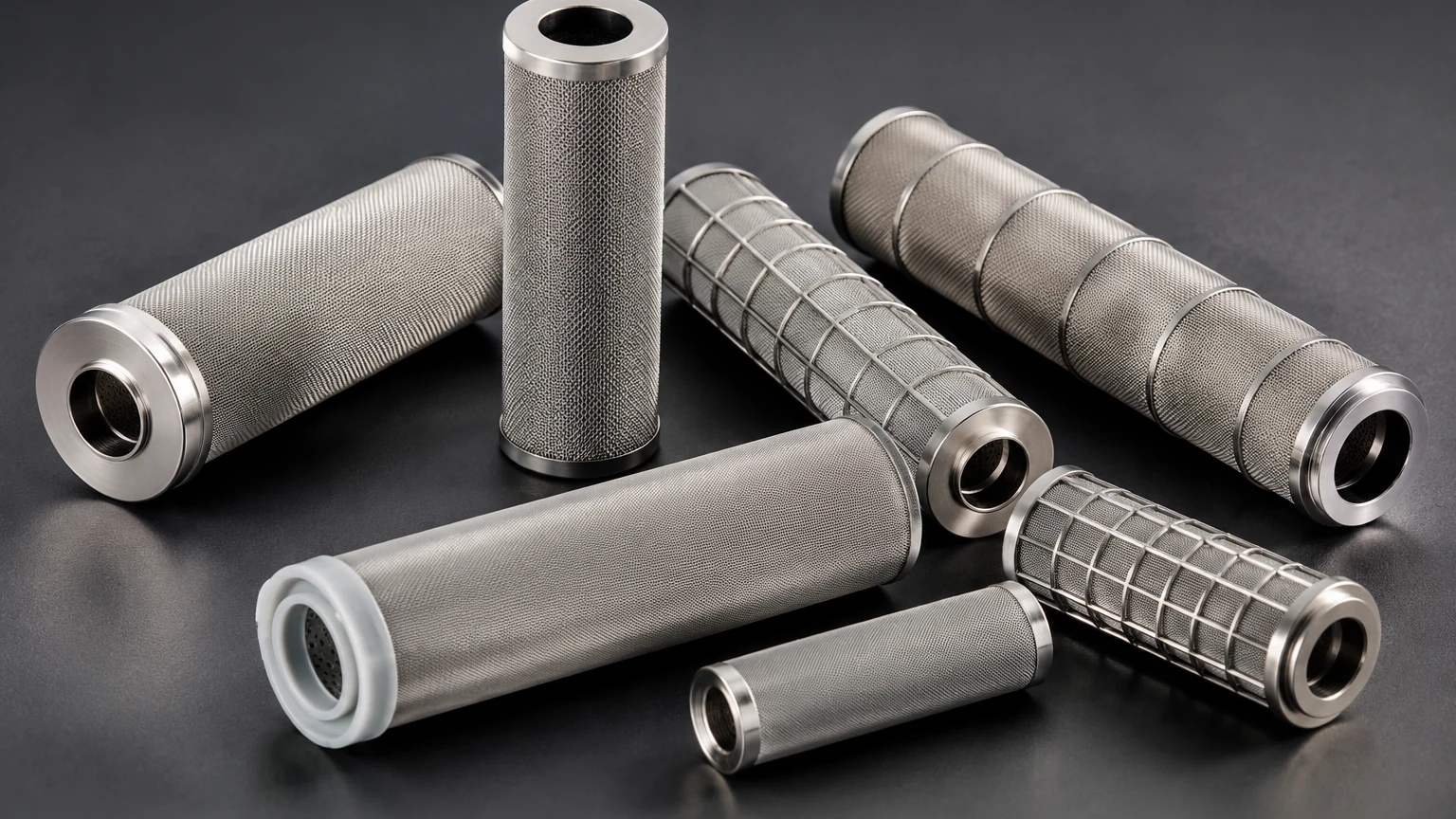
1. Coarse Pre-filtration: Using stainless steel wire mesh or pleated metal cartridges to remove large debris and scale. This stage is where the durability of Kaifil’s custom metal solutions provides the most value, shielding the downstream membrane from mechanical damage.
2. Fine Pre-filtration: Using depth filters (melt-blown or string-wound) to reduce the silt density index (SDI) of the fluid.
3. Final Membrane Stage: The membrane cartridge performs the final polishing or sterilization.
By housing these cartridges in precision-engineered stainless steel vessels, operators can maintain the high pressures required to drive fluid through sub-micron pores while ensuring a sanitary environment that resists bacterial growth and corrosion.
Maintenance, Sterilization, and Service Life
The lifespan of a membrane filter cartridge is determined by the total volume of solids it captures and the frequency of its cleaning or sterilization cycles. Unlike metal mesh filters, which can often be ultrasonically cleaned, polymeric membranes are usually treated as consumables. However, their life can be extended through proper maintenance.
Sterilization-in-Place (SIP) and Autoclaving
In pharmaceutical and food applications, cartridges must be sterilized. PES and PTFE membranes are generally capable of withstanding multiple steam-sterilization cycles at 121°C or 134°C. Engineers must track the cumulative steam time, as excessive heat exposure will eventually degrade the polymer structure and the thermal bonds of the end caps.
Differential Pressure (ΔP) Monitoring
A cartridge should be replaced when the differential pressure reaches the manufacturer’s recommended limit, typically between 2.0 and 2.5 bar (30-35 psi). Operating beyond this point risks "media migration" or a structural breach, where the pressure forces contaminants through the membrane or causes the pleats to collapse.
Selection Criteria for Engineering and Procurement
When specifying membrane filter cartridges for an industrial project, the following checklist should be confirmed with the manufacturer:
* Fluid Chemistry: Does the pH and solvent concentration align with the membrane material (e.g., PES vs. PTFE)?
* Operating Temperature: Will the process run at ambient temperatures, or does it require high-temperature stability?
* Sterilization Requirements: How many SIP cycles are expected over the filter's life?
* Compliance: Does the cartridge meet FDA, USP Class VI, or EC food contact regulations?
* Flow Rate Requirements: What is the maximum allowable pressure drop at the start of the cycle?
For complex industrial environments, the choice of filtration partner is as important as the choice of the filter itself. Manufacturers like Kaifil provide the necessary engineering support to ensure that the filtration hardware—from the housing to the internal support structures—is optimized for the specific demands of the application. For more information on professional-grade filtration components, visit the Main Page to explore technical specifications and customization capabilities.
In conclusion, membrane filter cartridges are sophisticated engineering tools that require a deep understanding of material science and fluid dynamics. By prioritizing chemical compatibility, validating integrity through rigorous testing, and protecting the membrane with robust pre-filtration hardware, industrial operators can achieve the highest levels of purity and process reliability.
