


Synthetic Pocket Filter
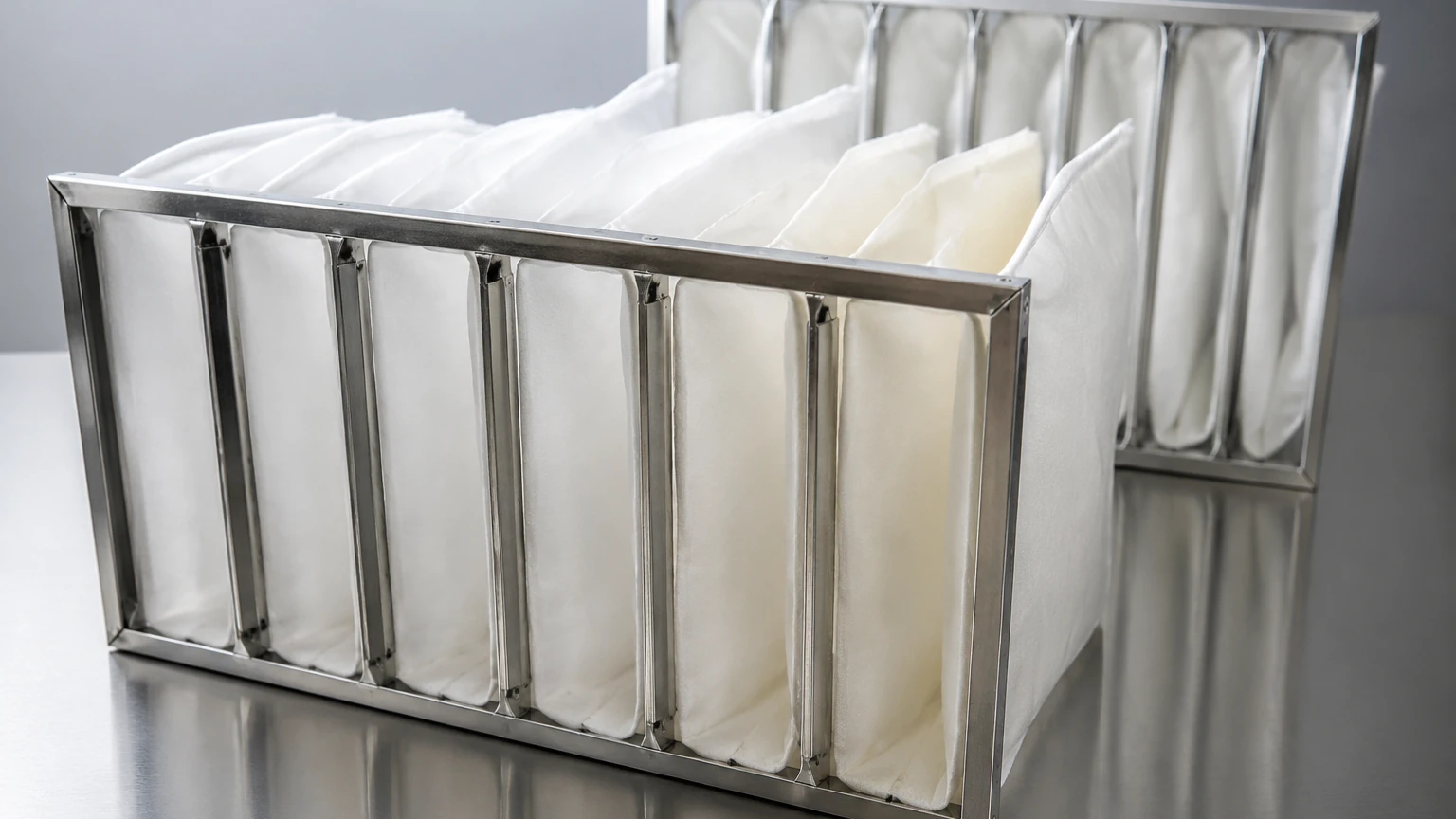
In industrial air filtration and HVAC systems, the synthetic pocket filter serves as a critical component for managing high air volumes while maintaining efficient particle capture. These filters, also known as bag filters, are designed with an extended surface area to provide a balance between high dust holding capacity and low resistance to airflow. For engineers and facility managers, selecting the correct synthetic media and pocket configuration is essential to optimizing system performance and reducing the total cost of ownership (TCO).
While industrial filtration often requires the extreme durability of stainless steel components—such as those found on the Main Page of specialized manufacturers—synthetic pocket filters play a distinct role in multi-stage filtration sequences. Understanding the technical nuances of synthetic media, pocket geometry, and performance ratings allows technical professionals to specify the right filter for pharmaceutical, chemical, and food processing environments.
Understanding Synthetic Pocket Filter Construction and Media
The performance of a synthetic pocket filter is primarily determined by the quality of the media and the structural integrity of the pocket design. Unlike fiberglass filters, which can shed fibers into the airstream, synthetic media is composed of polymer fibers—typically polypropylene or polyester—that are thermally bonded or melt-blown to create a multi-layered structure.
Media Composition
Synthetic media is often engineered in graduated layers. The upstream side usually features a coarser fiber structure to capture larger particles, while the downstream side consists of a dense, fine-fiber layer for final filtration. This depth-loading characteristic prevents the surface from blinding prematurely, thereby extending the service life of the filter. In sensitive industries like food and beverage or pharmaceuticals, synthetic media is preferred because it is moisture-resistant and does not provide a nutrient source for microbial growth.
Pocket Geometry and Aerodynamics
The "pockets" or bags are stitched or ultrasonically welded. For optimal performance, these pockets must remain inflated and separated during operation. This is achieved through internal spacers or "ribs" that ensure air is distributed evenly across the entire surface area. If the pockets collapse or touch (a phenomenon known as "crowding"), the effective filtration area is reduced, leading to a sharp increase in pressure drop and a decrease in filtration efficiency.
Performance Metrics: Efficiency, Pressure Drop, and Dust Holding Capacity
When evaluating a synthetic pocket filter for an industrial application, three primary metrics must be considered: the MERV rating, the initial pressure drop, and the dust holding capacity (DHC).
MERV Ratings and Particle Capture
Synthetic pocket filters are typically rated between MERV 11 and MERV 15 according to ASHRAE 52.2 standards.
- MERV 11-12: Suitable for commercial buildings and pre-filtration in industrial settings, capturing particles in the 1.0 to 3.0-micron range.
- MERV 13-15: Required for hospitals, pharmaceutical plants, and high-precision manufacturing, where capture of particles as small as 0.3 microns is necessary.
Pressure Drop (Resistance)
Initial resistance refers to the pressure drop across a clean filter at a specific face velocity (typically 500 FPM). A lower initial pressure drop is desirable as it reduces the load on the fan motor, leading to significant energy savings. However, as the filter loads with contaminants, the resistance increases. The "final pressure drop" is the point at which the filter must be replaced to prevent system inefficiency or mechanical failure.
Dust Holding Capacity (DHC)
DHC measures the total weight of synthetic dust a filter can retain before reaching its final pressure drop. A higher DHC directly correlates to a longer service life. In heavy industrial environments with high ambient particulate levels, choosing a filter with a high DHC is more cost-effective than choosing a cheaper filter that requires frequent replacement.
Engineering Comparison: Synthetic Media vs. Stainless Steel Mesh
In many industrial processes, engineers must decide between disposable synthetic pocket filters and cleanable stainless steel filtration components. The choice depends on the operating environment and the specific filtration goals.
| Feature | Synthetic Pocket Filter | Stainless Steel Wire Mesh |
| :— | :— | :— |
| Primary Use | HVAC, Air Intake, Pre-filtration | Liquid Filtration, High-Temp Air, Steam |
| Temperature Limit | Typically < 70°C (158°F) | Up to 500°C+ (932°F+) |
| Chemical Resistance | Moderate (varies by polymer) | Excellent (304/316L) |
| Cleanability | Disposable | Cleanable/Reusable |
| Initial Cost | Low | High |
| Durability | Low (fragile media) | High (mechanical strength) |
Synthetic pocket filters are ideal for high-volume air applications where the contaminants are non-hazardous and the filter can be easily disposed of. However, in applications involving high temperatures, corrosive chemicals, or where a permanent, cleanable solution is required, stainless steel filters—such as those detailed on the Main Page—are the industry standard. Often, these two technologies work in tandem: a synthetic pocket filter may serve as the primary stage to protect more expensive, high-precision metal secondary filters.
Application-Specific Selection for Industrial Environments
The selection of a synthetic pocket filter must be aligned with the specific demands of the facility. Different industries prioritize different performance characteristics.
Pharmaceutical and Healthcare
In these environments, the focus is on maintaining sterile conditions. Synthetic pocket filters with a MERV 14 or 15 rating are often used as pre-filters for HEPA systems. The synthetic nature of the media is crucial here, as it eliminates the risk of glass fiber shedding, which could contaminate cleanrooms or sensitive drug formulations.
Food and Beverage Processing
Moisture resistance is a key requirement in food processing due to frequent wash-downs and high humidity. Synthetic media is naturally hydrophobic, meaning it will not lose its structural integrity or support mold growth when exposed to moisture. This ensures that the air quality remains consistent even in humid processing zones.
Chemical and Gas Turbines
For gas turbine intake systems, synthetic pocket filters must handle massive air volumes with minimal pressure loss. In these cases, filters are often designed with high-burst strength to withstand the pressure fluctuations inherent in turbine operations. Specialized coatings may also be applied to the synthetic fibers to enhance oil and water repellency (oleophobic and hydrophobic properties).
Installation, Maintenance, and Replacement Protocols
Proper installation and maintenance are as important as the filter selection itself. Even the highest quality synthetic pocket filter will fail if bypassed by unfiltered air or left in service beyond its functional life.
Ensuring a Proper Seal
Air bypass is one of the most common causes of filtration system failure. When installing pocket filters into a holding frame, technicians must ensure that the gaskets are intact and that the clamping mechanism provides even pressure across the header. Any gap between the filter frame and the housing allows contaminants to circumvent the media entirely.
Monitoring Pressure Drop
Industrial systems should be equipped with differential pressure gauges (manometers). By monitoring the pressure drop, maintenance teams can move away from "calendar-based" replacement to "condition-based" replacement. This ensures that filters are used to their full capacity without risking a collapse of the media or a spike in energy costs.
Replacement Cycles
The typical life cycle of a synthetic pocket filter ranges from 3 to 9 months, depending on the dust concentration and air velocity. If a filter reaches its final recommended pressure drop (usually 1.0" to 1.5" w.g. for HVAC applications) too quickly, it may indicate that the pre-filtration stage is inadequate or that the filter media area is undersized for the application.
Procurement and Customization Considerations
For purchasing teams and engineers, the goal is to source filters that meet exact technical specifications while ensuring supply chain reliability. Standard sizes (e.g., 24"x24") are common, but many industrial housings require custom dimensions or specialized header types.
OEM and Custom Configurations
When standard off-the-shelf options do not meet the pressure drop requirements or fit the existing housing, custom manufacturing becomes necessary. This includes adjusting the number of pockets, the depth of the bags, and the specific blend of synthetic fibers. Manufacturers like Kaifil specialize in providing these tailored solutions, ensuring that the filtration component integrates seamlessly with the broader industrial system.
Total Cost of Ownership (TCO)
While the purchase price of a synthetic pocket filter is a factor, the TCO includes energy consumption and labor costs. A filter with a slightly higher initial cost but a significantly lower average pressure drop will often pay for itself through reduced electricity bills for the AHU (Air Handling Unit) fans. Furthermore, choosing a high-capacity filter that lasts twice as long as a standard alternative reduces the labor and disposal costs associated with filter changes.
Technical professionals should confirm the following before finalizing a purchase:
1. Tested Efficiency: Does the filter have a certified ASHRAE 52.2 test report?
2. Media Integrity: Is the synthetic media bonded to prevent fiber migration?
3. Frame Construction: Is the header made of galvanized steel or high-impact plastic suitable for the environment?
4. Operational Limits: What is the maximum operating temperature and recommended final pressure drop?
By addressing these technical criteria, engineers can ensure that their choice of synthetic pocket filter provides reliable protection for both equipment and personnel, maintaining the high standards required in modern industrial operations. For more information on integrated filtration solutions and high-performance components, visit the Main Page.
