


Mesh Filter 1 Micron
In industrial filtration, achieving a 1-micron rating represents a significant technical threshold. At this level of precision, the filtration media must effectively capture particles that are invisible to the naked eye, often requiring a sophisticated balance between mechanical strength and pore density. For engineers and procurement specialists, selecting a mesh filter 1 micron solution involves understanding the structural differences between traditional wire mesh and advanced sintered materials, as well as the operational implications of such fine filtration.
Stainless steel filtration components are preferred in high-stakes environments due to their thermal stability, chemical resistance, and cleanability. However, reaching a 1-micron absolute rating is not feasible with a single layer of standard square weave mesh. Instead, this level of performance is typically achieved through multi-layer sintering or specialized Dutch weave patterns. This article explores the engineering considerations, material choices, and performance metrics essential for integrating 1-micron filtration into industrial systems.
The Technical Challenge of Achieving 1-Micron Precision
Filtration at the 1-micrometer (1μm) level is classified as microfiltration. To put this in perspective, a human hair is approximately 50 to 70 microns in diameter. Creating a physical barrier that consistently stops 1-micron particles while allowing fluid to pass at industrial flow rates requires precise control over the pore geometry.
In standard woven wire mesh, the limit for a single layer is generally around 20 to 30 microns. To reach the 1-micron range, manufacturers utilize sintered metal mesh technology. Sintering involves bonding multiple layers of wire mesh together using heat and pressure without melting the metal. This process creates a stable, rigid structure where the pore sizes are fixed and cannot shift under pressure. This stability is critical for a mesh filter 1 micron application, as any deviation in pore size would compromise the filtration integrity and allow contaminants to bypass the media.
Sintered Wire Mesh vs. Traditional Weave Structures
When evaluating a mesh filter 1 micron, it is important to distinguish between nominal and absolute ratings. A nominal rating indicates the filter can trap a percentage of particles of a certain size, whereas an absolute rating (common in sintered mesh) implies that 99.9% or more of particles above the specified micron size are retained.
Multi-Layer Sintered Mesh
For 1-micron applications, a 5-layer or 7-layer sintered structure is common. This structure typically includes:
1. Filtration Layer: The finest mesh layer that determines the 1-micron rating.
2. Protective Layers: Finer mesh layers on either side of the filtration layer to prevent mechanical damage.
3. Support Layers: Coarser mesh layers that provide the structural rigidity necessary to withstand high differential pressures.
Specialized Weave Patterns
Beyond sintering, specialized weaves like Reverse Dutch Weave (RDW) or Twilled Dutch Weave (TDW) are used to create dense paths for the fluid. However, for a true 1-micron requirement, these weaves are often sintered to ensure the wires do not migrate during high-pressure backwashing or heavy loading cycles. For more information on the various configurations available, engineers often consult the Main Page of specialized manufacturers to review technical specifications.
Material Engineering for Demanding Industrial Environments
The choice of material is as important as the micron rating itself. In most B2B industrial applications, 304 or 316L stainless steel is the standard.
* 316L Stainless Steel: This is the preferred material for 1-micron filtration in the chemical, pharmaceutical, and food and beverage industries. The "L" stands for low carbon, which improves weldability and resistance to intergranular corrosion. Its high molybdenum content provides superior resistance to chlorides and acidic environments.
* High-Temperature Alloys: In specialized aerospace or petrochemical applications where temperatures exceed 300°C, alloys such as Inconel or Hastelloy may be used to maintain the integrity of the 1-micron pores.
Because a mesh filter 1 micron is often used as a final polishing stage or to protect high-precision downstream equipment (like spray nozzles or chromatography columns), material purity and the absence of media migration are paramount. Unlike polymer or paper filters, stainless steel mesh does not shed fibers into the filtrate, ensuring a high level of process hygiene.
Operational Performance: Pressure Drop and Loading Capacity
One of the primary concerns for engineers when implementing 1-micron filtration is the "Delta P" or differential pressure. Because the pores are so small, the resistance to flow is naturally higher than in coarser filters.
Flow Rate Considerations
To maintain an efficient flow rate with a mesh filter 1 micron, the surface area must be maximized. This is often achieved through pleating. A pleated 1-micron stainless steel cartridge can offer significantly more surface area than a cylindrical one, allowing for higher throughput and longer intervals between cleaning.
Dirt Holding Capacity
Fine filtration media can blind (clog) quickly if the fluid has a high concentration of large particles. In industrial system design, it is standard practice to use a multi-stage filtration approach. A 20-micron or 10-micron pre-filter should be placed upstream of the 1-micron mesh filter to remove the bulk of the contaminants, leaving the 1-micron stage to handle only the finest particulates. This strategy significantly extends the service life of the more expensive 1-micron component.
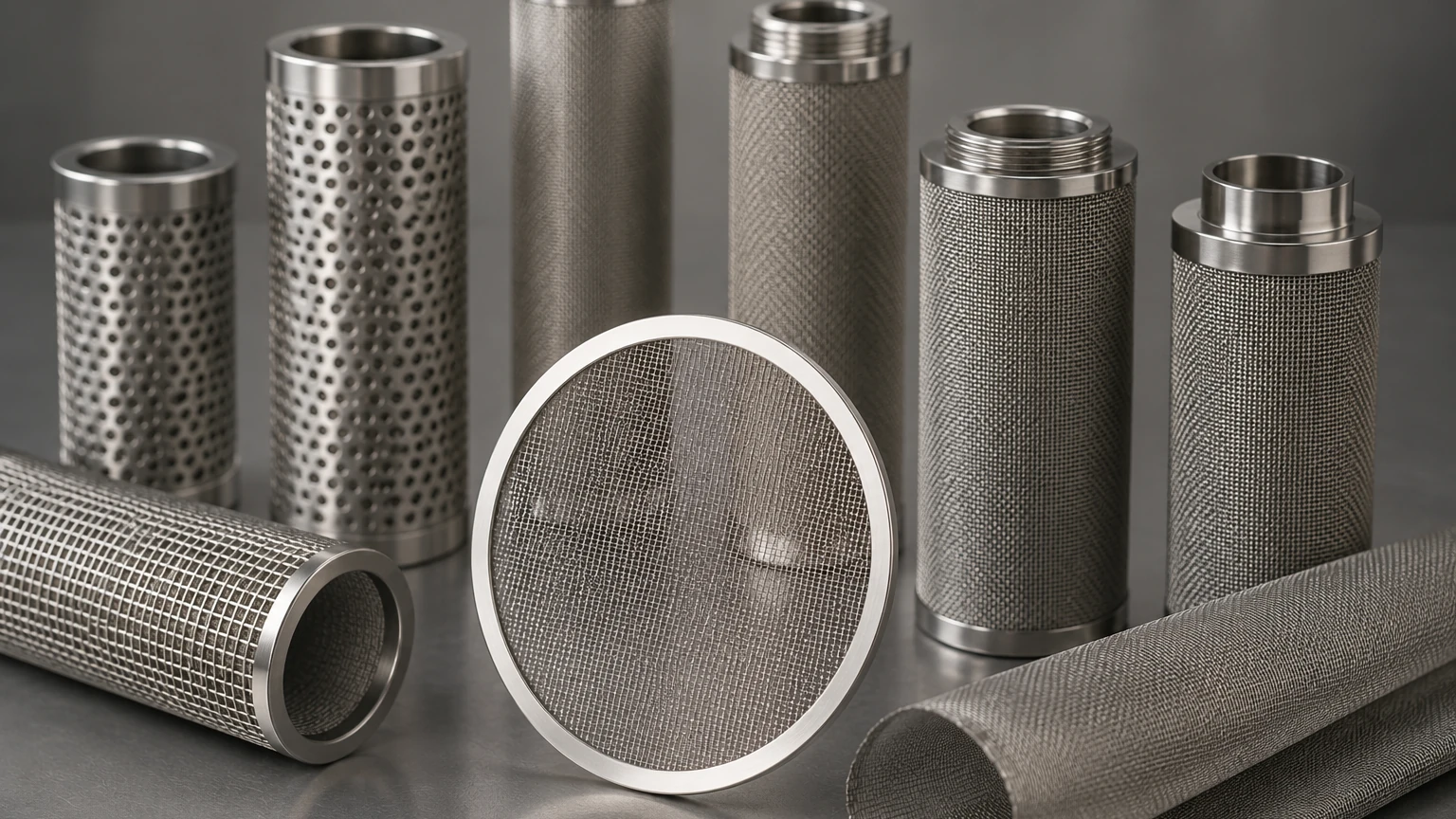
Custom Design and OEM Solutions for Specialized Filtration
Industrial applications rarely follow a one-size-fits-all model. A mesh filter 1 micron may need to be integrated into existing housing, requiring custom end-cap configurations (such as 222, 226, or DOE designs) or specific dimensions.
Manufacturers like Kaifil specialize in OEM solutions, where the filter is engineered to meet specific hydraulic or chemical requirements. This includes:
* Customized Layering: Adjusting the number of support layers to handle extreme pressure spikes.
* Precision Machining: Ensuring that the filter fittings provide a leak-proof seal, as even a microscopic gap can render a 1-micron filter ineffective.
* Housing Compatibility: Designing cartridges that fit seamlessly into high-pressure vessels used in oil and gas or water treatment.
Engineers looking for specific customization options can explore the technical resources on the Main Page to understand how custom metal filtration components are developed from material selection to final production.
Cleaning and Reusability: Maximizing Service Life
One of the most significant advantages of a stainless steel mesh filter 1 micron over disposable alternatives is its reusability. In a B2B context, the higher initial capital expenditure (CAPEX) is offset by the reduction in operational expenditure (OPEX) over time.
Cleaning Methods
1. Ultrasonic Cleaning: This is the most effective method for 1-micron filters. Ultrasonic waves create cavitation bubbles that dislodge fine particles trapped deep within the sintered layers.
2. Backwashing: For automated systems, high-pressure fluid is forced through the filter in the reverse direction. While effective for surface-loading contaminants, it may not remove all depth-loaded particles at the 1-micron level.
3. Chemical Cleaning: Using surfactants or specialized solvents to dissolve organic or chemical buildup that cannot be removed mechanically.
It is vital to establish a cleaning cycle based on differential pressure readings. Allowing the pressure drop to exceed the manufacturer's recommended limit can lead to "permanent blinding," where particles are forced so deeply into the mesh that they cannot be removed, necessitating a replacement.
Selection Criteria for Engineers and Purchasing Teams
When sourcing a mesh filter 1 micron, technical professionals should confirm several key data points with the manufacturer to ensure the component is fit for purpose:
* Absolute vs. Nominal Rating: Always clarify if the 1-micron rating is absolute. For critical applications like pharmaceutical sterile filtration or hydraulic fluid protection, only an absolute rating is acceptable.
* Operating Pressure and Temperature: Confirm the maximum allowable differential pressure (collapse pressure) and the operating temperature range, especially if the filter will undergo steam sterilization (SIP).
* Chemical Compatibility: Ensure the stainless steel grade and any sealing materials (O-rings like Viton, EPDM, or PTFE) are compatible with the process fluid.
* Certification: For food and beverage or pharmaceutical use, verify that the materials meet FDA or relevant international standards for food contact.
By focusing on these technical boundaries, purchasing teams can avoid the risks associated with under-specified filtration, such as frequent system downtime, equipment damage, or product contamination.
Conclusion
Integrating a mesh filter 1 micron into an industrial process is a strategic decision that requires a deep understanding of filtration physics and material science. While the 1-micron threshold is demanding, the use of multi-layer sintered stainless steel mesh provides a robust, cleanable, and highly precise solution that polymer filters cannot match in harsh environments.
Whether the goal is to protect sensitive hydraulic components or to ensure the purity of a chemical batch, the success of the application depends on selecting the right structure, material, and maintenance protocol. For those seeking reliable, high-performance filtration components tailored to specific industrial needs, reviewing the comprehensive offerings on the Main Page is the recommended next step for technical evaluation and procurement planning.
