


Metal Filter Cartridge
In industrial process engineering, the selection of filtration media is a critical decision that directly impacts product purity, equipment longevity, and operational efficiency. A metal filter cartridge represents a high-performance solution designed to operate where conventional polymer, paper, or glass fiber filters fail. Constructed primarily from stainless steel or specialized alloys, these cartridges provide the mechanical strength, thermal stability, and chemical resistance required for demanding B2B applications in chemical processing, pharmaceuticals, and heavy industry.
As a professional manufacturer, Kaifil specializes in engineering these components to meet precise technical requirements. Understanding the nuances of material science, construction methods, and performance metrics is essential for engineers and procurement teams tasked with optimizing filtration systems. This guide explores the technical foundations of metal filtration to support informed decision-making.
The Role of Metal Filter Cartridges in Industrial Systems
The primary function of a metal filter cartridge is to provide reliable particulate separation under conditions that would compromise the structural integrity of non-metallic media. In many industrial environments, filtration systems must contend with high differential pressures, extreme temperatures (both cryogenic and high-heat), and aggressive chemical solvents.
Unlike disposable depth filters, metal cartridges are surface or near-surface filtration media. They are designed for durability and, in many cases, reusability. By utilizing stainless steel wire mesh or sintered metal fibers, these cartridges offer a fixed pore structure that ensures consistent filtration accuracy throughout the service life of the element. This stability is vital in industries like pharmaceutical manufacturing or food processing, where any migration of the filter media into the process stream could result in catastrophic batch failure.
For technical teams evaluating their current filtration setup, moving to a metal-based system often involves a shift from a consumable-heavy model to a capital-intensive but long-term cost-effective model. To explore the full range of available configurations, engineers often refer to the Main Page of technical catalogs to compare flow rates and micron ratings against their specific system requirements.
Material Engineering and Chemical Compatibility
The performance of a metal filter cartridge is fundamentally tied to its metallurgy. The most common materials used in industrial filtration are 304 and 316L stainless steel, though specialized alloys like Hastelloy or Monel are employed for highly specific corrosive environments.
304 Stainless Steel
This is the standard grade for general industrial use. It offers good corrosion resistance and is suitable for most water treatment, hydraulic oil, and mild chemical applications. It is an economical choice when the process fluid is non-acidic and operating temperatures are moderate.
316L Stainless Steel
The "L" denotes low carbon content, which is crucial for components that undergo welding during manufacturing. 316L contains molybdenum, significantly increasing its resistance to pitting and crevice corrosion in chloride-rich environments. This makes it the industry standard for marine applications, pharmaceutical processing, and aggressive chemical filtration.
Thermal and Chemical Resistance
Metal cartridges can typically operate in temperatures ranging from -200°C to over 600°C, depending on the seal materials and the specific alloy used. Furthermore, they are compatible with a wide range of pH levels, making them indispensable for filtering hot caustic solutions or acidic process streams where synthetic fibers would dissolve or lose their mechanical properties.
Structural Design: Sintered Mesh vs. Pleated Metal
When specifying a metal filter cartridge, engineers must choose between different construction styles based on the required filtration area, dirt-holding capacity, and pressure drop constraints.
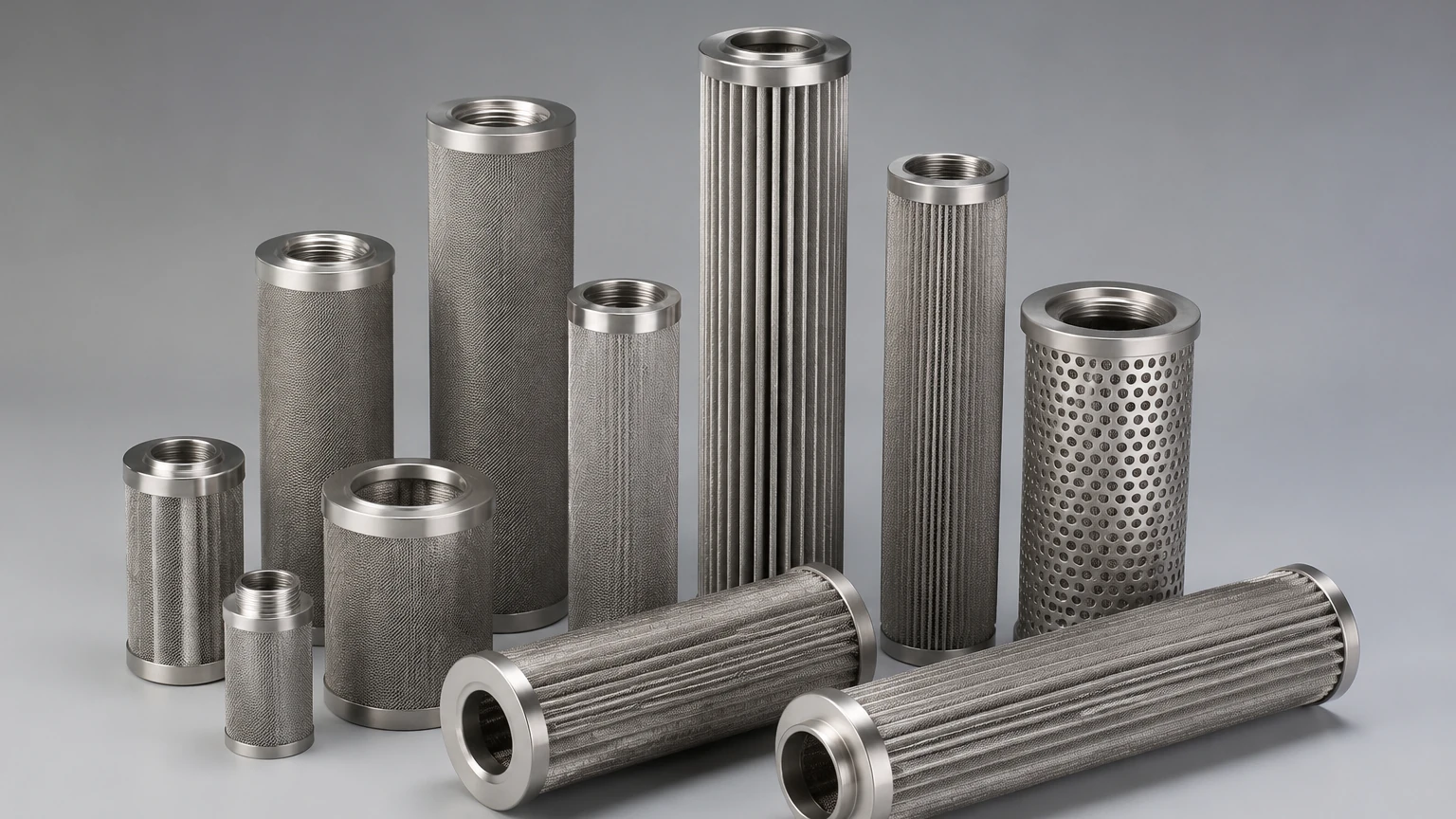
Sintered Metal Mesh Cartridges
Sintering is a process where multiple layers of stainless steel wire mesh are bonded together through heat and pressure without the use of binders. This creates a robust, integrated structure. Sintered cartridges are exceptionally strong and can withstand high reverse-flow pressures, making them ideal for backwashing systems. They provide a precise pore size and are often used for steam filtration, gas-solid separation, and polymer melt filtration.
Pleated Metal Filter Cartridges
For applications requiring high flow rates and low initial pressure drops, pleated designs are preferred. By folding the metal mesh or sintered fiber felt into a pleated configuration, the effective surface area is significantly increased—often by a factor of three to five compared to a cylindrical element of the same dimensions. This increased area allows for higher contaminant loading and longer intervals between cleaning cycles. Pleated cartridges are commonly found in hydraulic systems and high-viscosity fluid processing.
Sintered Metal Fiber Felt
Unlike woven mesh, fiber felt consists of non-woven stainless steel fibers that are sintered into a porous depth medium. This structure offers high porosity (up to 80%) and excellent dirt-holding capacity. It is particularly effective for filtering gel-like contaminants or fine particulates in high-pressure environments.
Technical Specifications and Performance Evaluation
To ensure a metal filter cartridge meets the needs of a specific application, several technical parameters must be confirmed during the procurement phase.
1. Micron Rating (Absolute vs. Nominal): In critical industrial processes, absolute micron ratings are preferred. An absolute rating signifies that the filter will capture 99.9% of particles at the specified size. Nominal ratings are less precise and indicate a general efficiency level. Kaifil provides detailed efficiency curves to help engineers select the correct precision level.
2. Differential Pressure (ΔP): This is the difference in pressure between the upstream and downstream sides of the filter. A high initial ΔP indicates that the filter may be undersized for the flow rate, leading to premature clogging.
3. Collapse Pressure: Engineers must know the maximum pressure the cartridge can withstand before structural failure occurs. This is vital in high-pressure hydraulic or gas systems.
4. Seal and Gasket Compatibility: While the cartridge body is metal, the seals (O-rings or gaskets) are often elastomeric. Selection of Viton, EPDM, PTFE, or Silicone seals must be based on the chemical nature of the fluid and the operating temperature.
Application-Specific Filtration Challenges
Different industries impose unique stresses on a metal filter cartridge. Addressing these requires a deep understanding of the process fluid behavior.
Chemical and Petrochemical Processing
In these sectors, filters are often exposed to volatile organic compounds (VOCs) and high-pressure catalysts. The metal cartridge must maintain its pore geometry even under the abrasive force of catalyst recovery processes. The ability to clean and reuse the filter is a significant advantage here, reducing the volume of hazardous waste generated by spent disposable filters.
Food and Beverage Industry
Hygiene is the priority. Metal cartridges used here must be designed with "dead-space-free" welding and polished surfaces to prevent bacterial growth. They are frequently used for "culinary steam" filtration, where they remove pipe scale and rust from steam used in direct contact with food products.
Pharmaceutical Manufacturing
Strict adherence to validation standards is required. Metal filters are used in the recovery of expensive active pharmaceutical ingredients (APIs) and in the filtration of solvents. The non-shedding nature of sintered metal ensures that no metallic fragments enter the final product, meeting stringent cGMP requirements.
Cleaning Protocols and Operational Longevity
One of the most compelling reasons to invest in a high-quality metal filter cartridge is its cleanability. Proper maintenance can extend the service life of a stainless steel filter to several years, significantly lowering the total cost of ownership (TCO) compared to frequent replacements of polymer cartridges.
Common cleaning methods include:
* Backwashing/Backpulsing: Using a reverse flow of clean fluid or gas to dislodge particulates from the surface of the media. This is often automated within the filtration system.
* Ultrasonic Cleaning: Submerging the cartridge in an ultrasonic bath where high-frequency sound waves create cavitation bubbles that strip contaminants from deep within the pore structure.
* Chemical Cleaning: Using surfactants, acids, or caustic solutions to dissolve organic or inorganic deposits. This must be done with careful consideration of the metal's chemical resistance.
* Burn-off/Pyrolysis: For polymer or organic heavy loading, heating the cartridge in a controlled vacuum oven can carbonize the contaminants, which are then removed via ultrasonic cleaning.
Establishing a clear pressure-drop threshold for cleaning (e.g., when ΔP reaches 1.5 bar) is essential for preventing permanent media blinding or structural deformation.
Selecting a Manufacturing Partner for Custom Solutions
Standard off-the-shelf filters rarely meet the complex needs of specialized industrial machinery. When sourcing a metal filter cartridge, working with a manufacturer that offers OEM and customization capabilities is a strategic advantage. Engineers should look for partners who can modify end-cap configurations (such as DOE, 222, 226, or threaded connections), adjust layer compositions for specific depth-loading characteristics, and provide material certifications (MTRs).
Kaifil works closely with global engineering teams to develop bespoke filtration components. Whether the requirement is for a high-flow pleated element for a hydraulic power unit or a fine-micron sintered disc for a laboratory reactor, the focus remains on durability and precision. By integrating advanced manufacturing techniques with rigorous quality control, we ensure that every component performs reliably in its intended environment.
For those in the early stages of system design or those looking to troubleshoot an existing filtration bottleneck, reviewing technical data and product options on the Main Page is the first step toward optimizing process performance. A well-engineered metal filter is more than a consumable; it is a vital piece of industrial infrastructure that protects downstream equipment and ensures the consistency of the final output.
