


Microporous Filters
In industrial process engineering, the efficiency of a filtration system is often determined by its ability to remove microscopic particulates without compromising system pressure or fluid integrity. Microporous filters represent a specialized category of filtration media designed to provide high-precision separation, typically operating in the range of 0.1 to 10 microns. Unlike standard coarse strainers, these components are engineered for applications where even trace amounts of contaminants can lead to equipment failure, product spoilage, or chemical instability.
For engineers and procurement teams, selecting the correct microporous media involves a deep understanding of material science, fluid dynamics, and the specific environmental rigors of the application. Whether used in pharmaceutical sterile venting, chemical catalyst recovery, or high-pressure hydraulic systems, the choice between different types of microporous filters—particularly stainless steel versus polymer-based options—has long-term implications for both performance and the total cost of ownership.
Understanding Microporous Filtration in Industrial Systems
Microporous filters function through a combination of surface and depth filtration mechanisms. In surface filtration, particles larger than the pore size are trapped on the upstream side of the media, forming a filter cake that can eventually act as an additional filtration layer. In depth filtration, the tortuous path created by the media's internal structure captures particles throughout the thickness of the material.
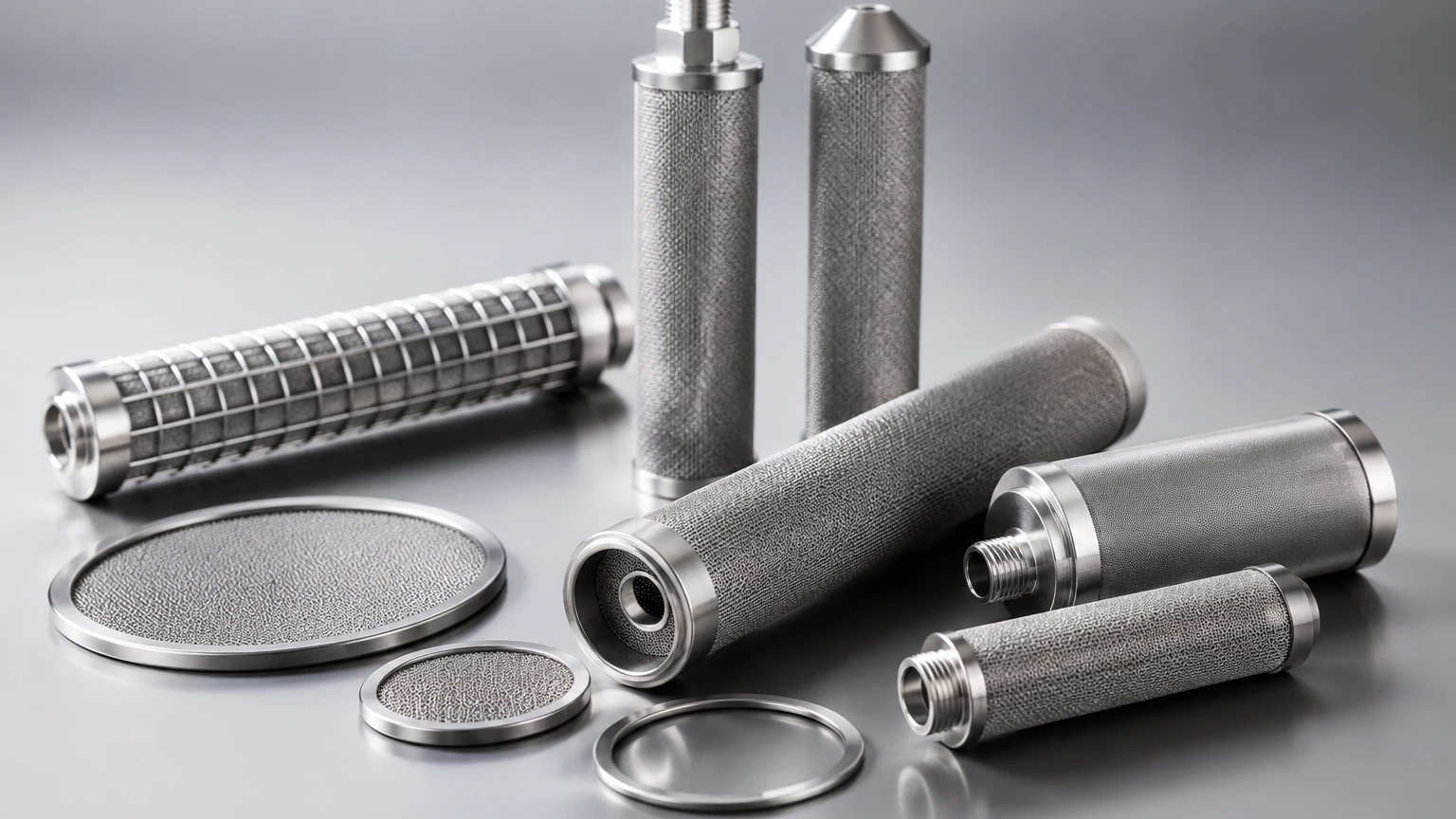
When dealing with stainless steel microporous filters, the structure is typically achieved through sintering. This process involves heating metal powders or multiple layers of wire mesh to a temperature just below their melting point, causing the particles or wires to fuse at their contact points. The result is a rigid, porous structure with highly controlled pore sizes. This metal-based approach is favored in B2B industrial sectors because it offers mechanical strength that synthetic membranes cannot match, particularly under high differential pressures or extreme temperatures.
Material Engineering: Stainless Steel vs. Polymer Media
While polymer membranes (such as PTFE or PES) are common in laboratory settings, industrial-scale microporous filters often require the durability of metallic alloys. Stainless steel, specifically grades 304 and 316L, is the standard for most microporous applications due to its corrosion resistance and structural stability.
Chemical Compatibility
316L stainless steel contains molybdenum, which provides enhanced resistance to chlorides and organic acids. This is a critical consideration for chemical processing plants and marine environments. In contrast, polymer filters may swell, degrade, or leach extractables when exposed to certain solvents or high-pH cleaning agents. For engineers, confirming the chemical compatibility of the filter media with both the process fluid and the cleaning chemicals is a primary step in the selection process.
Thermal Stability
One of the most significant advantages of metal microporous filters is their operating temperature range. While most polymer filters fail or deform above 100°C to 150°C, stainless steel components can maintain their structural integrity at temperatures exceeding 500°C (depending on the atmospheric conditions). This makes them indispensable for steam filtration, hot gas filtration, and high-temperature polymer melt processing.
Mechanical Strength
In high-viscosity applications or systems subject to pressure surges, the mechanical strength of the filter media is paramount. Microporous metal filters can withstand high differential pressures ($ΔP$) without collapsing or experiencing "media migration"—a phenomenon where the filter material itself breaks off and contaminates the downstream flow. This reliability is a key reason why Kaifil emphasizes the use of sintered metal structures for demanding industrial environments.
Critical Performance Metrics: Pore Size and Permeability
When evaluating microporous filters, engineers must distinguish between "nominal" and "absolute" filtration ratings. A nominal rating refers to the ability of the filter to retain a certain percentage (usually 60% to 90%) of particles of a specific size. An absolute rating, however, indicates that 99.9% or more of particles at that size will be captured. For critical applications like sterile air filtration or semiconductor wash water, an absolute rating is non-negotiable.
Pore Size Distribution
The uniformity of the pores is just as important as the average pore size. A wide pore size distribution means that while the average might be 5 microns, there could be 10-micron "leaks" that allow oversized contaminants through. High-quality manufacturing processes, such as vacuum sintering used by professional manufacturers, ensure a tight pore size distribution, providing consistent and predictable filtration performance.
Permeability and Flow Resistance
Every filter introduces a resistance to flow. The goal is to maximize the "void volume" (the percentage of open space within the filter) to allow for high flow rates while maintaining the required filtration accuracy. Microporous filters with high porosity reduce the initial pressure drop, which in turn reduces the energy requirements of the pumps or compressors driving the system. Engineers must balance the need for fine filtration with the practicalities of flow demand to avoid undersizing the filtration housing.
Structural Integrity and Pressure Management
The design of a microporous filter cartridge or component must account for the stresses of the operating environment. In many B2B applications, filters are subjected to backpulsing or backwashing—a process where flow is reversed to dislodge accumulated solids. The filter media must be able to withstand these reverse pressure cycles without fatigue or deformation.
Pleated vs. Cylindrical Designs
To handle higher flow rates in a compact footprint, microporous media is often pleated. Pleating increases the effective surface area of the filter by several times compared to a simple cylindrical element. This design choice is particularly effective for microporous filters used in gas filtration or low-viscosity liquids, as it extends the time between cleaning cycles by distributing the contaminant load over a larger area.
End Cap and Seal Selection
The structural integrity of the filter is only as good as its seals. For stainless steel filters, end caps are often TIG welded to the media to ensure a bypass-free construction. Choosing the right O-ring or gasket material (Viton, EPDM, Silicone, or PTFE) is essential to ensure that the filter remains seated correctly within the housing, especially under thermal cycling.
Cleaning Protocols and Service Life Extension
One of the most compelling arguments for investing in stainless steel microporous filters is their cleanability. While polymer filters are typically treated as consumables and discarded once they reach a terminal pressure drop, metal filters can be cleaned and reused multiple times. This significantly reduces the long-term operational costs and environmental impact of a facility.
Cleaning Methods
1. Backpulsing/Backwashing: Effective for removing surface cakes in liquid and gas systems.
2. Ultrasonic Cleaning: Uses high-frequency sound waves in a cleaning solution to dislodge fine particles trapped deep within the microporous structure.
3. Chemical Cleaning: Involves soaking the filter in acids, alkalis, or solvents to dissolve specific contaminants (e.g., organic fouling or mineral scale).
4. Burn-off/Pyrolysis: Used for removing organic polymers or carbonized residues by heating the filter in a controlled atmosphere.
Engineers should establish a clear maintenance schedule based on the pressure drop across the filter. Allowing the $ΔP$ to rise too high before cleaning can compress the contaminants into the pores, making them much harder to remove and potentially damaging the media.
Procurement Guide: Specifying Custom Microporous Components
When sourcing microporous filters for a new project or replacing existing elements, providing detailed specifications to the manufacturer is critical to ensuring the component performs as expected. Standardized off-the-shelf filters may not always meet the unique requirements of a specialized industrial process.
Key Information to Confirm:
* Fluid Characteristics: Viscosity, density, and chemical composition.
* Contaminant Profile: Type of particles (hard, soft, deformable), concentration, and particle size distribution.
* Operating Conditions: Normal and maximum operating temperature, operating pressure, and maximum allowable pressure drop.
* Filtration Goal: Is the objective to protect downstream equipment, achieve a specific purity level, or recover a valuable solid?
* Regulatory Requirements: Does the filter need to comply with FDA, 3A, or PED (Pressure Equipment Directive) standards?
By working with a manufacturer that offers OEM and customization capabilities, engineering teams can optimize the filter geometry, micron rating, and material to match their specific housing and flow requirements. This collaborative approach ensures that the resulting filtration solution is not just a component, but a reliable part of the industrial process.
Conclusion
Microporous filters are foundational to modern industrial processing, providing the precision necessary to maintain high standards of product quality and equipment safety. While the initial investment in high-quality stainless steel media may be higher than disposable alternatives, the durability, thermal resistance, and cleanability of metal filters offer a superior return on investment for demanding B2B applications. For more technical details on customized filtration components and to explore specific product configurations, engineers are encouraged to visit the Main Page for comprehensive product options and application support.
Selecting the right microporous filter requires a balance of technical specification and practical operational knowledge. By focusing on material compatibility, pore size accuracy, and structural integrity, industrial professionals can ensure their filtration systems operate at peak efficiency with minimal downtime.
