


Industrial Inline Water Filter
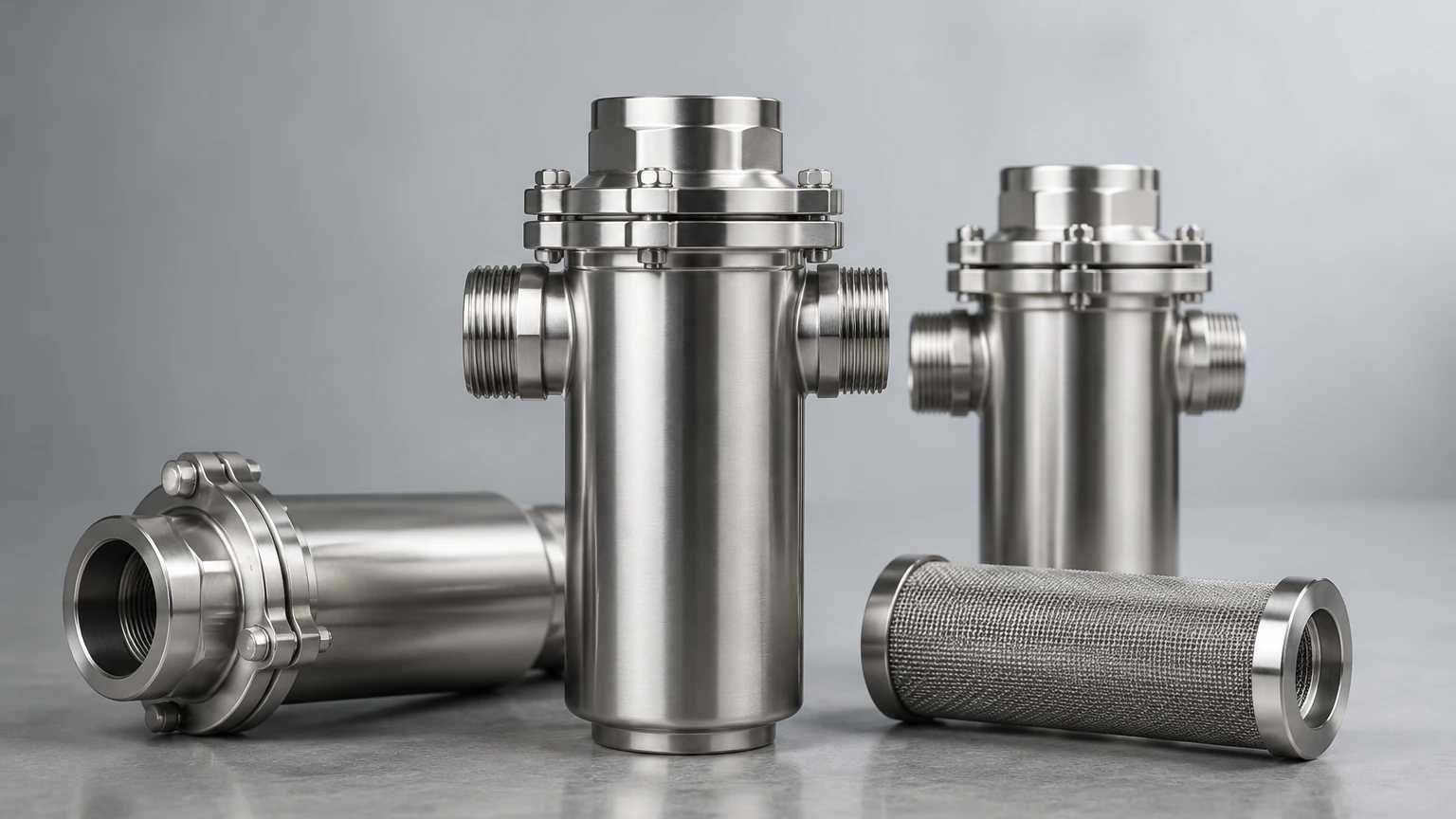
In industrial process engineering, the protection of downstream equipment is a critical operational priority. An industrial inline water filter serves as a primary line of defense, integrated directly into piping systems to remove particulate matter, debris, and contaminants that could otherwise damage pumps, clog spray nozzles, or foul heat exchangers. Unlike batch filtration systems, inline filters are designed for continuous or semi-continuous flow, making their selection a matter of precise hydraulic and material engineering.
For engineers and procurement teams, selecting the appropriate filtration solution requires a deep understanding of fluid dynamics, material science, and the specific demands of the application environment. Stainless steel filtration components, such as those manufactured by Kaifil, offer the durability and precision required for the most demanding industrial sectors, including chemical processing, food and beverage production, and high-pressure hydraulic systems.
Understanding Industrial Inline Water Filtration Systems
The term "inline" refers to the installation of the filter housing and element directly within the process line. This configuration is favored for its space-saving characteristics and its ability to provide real-time protection to sensitive components. Industrial inline water filters are typically categorized by their housing design—such as Y-strainers, T-type filters, or basket strainers—and the type of internal media used.
Stainless steel is the preferred material for these systems due to its inherent resistance to corrosion, high-temperature tolerance, and structural integrity under high-pressure conditions. While plastic or carbon steel filters may suffice for light-duty commercial use, industrial environments demand the longevity and reliability of metal alloys like 304 or 316L stainless steel. These materials ensure that the filter itself does not become a source of contamination through corrosion or structural failure.
Key Technical Specifications for Engineering Selection
When specifying an industrial inline water filter, engineers must balance several competing technical factors. A filter that is too fine may cause excessive pressure drop and require frequent cleaning, while a filter that is too coarse may fail to protect downstream equipment.
Micron Rating: Nominal vs. Absolute
One of the most critical decisions is the micron rating. It is essential to distinguish between nominal and absolute ratings. A nominal rating indicates the filter's ability to retain a majority of particles of a specific size, whereas an absolute rating refers to the diameter of the largest spherical particle that can pass through the media under laboratory conditions. For precision applications like pharmaceutical water treatment or fine chemical processing, absolute-rated stainless steel mesh is often required to ensure consistent performance.
Flow Rate and Differential Pressure (Delta P)
Every filter introduces a degree of resistance to the flow, known as pressure drop. As the filter accumulates debris, this pressure drop increases. Engineers must calculate the "clean pressure drop" to ensure the system pump can maintain required flow rates. If the industrial inline water filter is undersized, the velocity of the water through the media may become too high, potentially forcing contaminants through the mesh or causing structural deformation of the filter element.
Temperature and Pressure Ratings
Industrial water lines often operate at elevated temperatures or under significant pressure surges. Stainless steel filter cartridges are engineered to withstand these fluctuations without the risk of bypass or housing rupture. It is vital to confirm the maximum operating pressure (MAOP) and the temperature limits of any gaskets or seals (such as EPDM, Viton, or PTFE) used within the assembly.
Material Selection and Media Types
The performance of an industrial inline water filter is largely determined by the filter media. Kaifil specializes in various stainless steel configurations, each suited to different filtration challenges.
1. Woven Wire Mesh: This is the most common media for inline filters. It consists of stainless steel wires woven into a precise grid. It offers excellent flow rates and is easily cleaned. It is ideal for removing sand, scale, and larger particulates.
2. Sintered Metal Fiber/Mesh: For applications requiring high strength and fine filtration, sintering (bonding metal layers through heat and pressure) creates a rigid structure. Sintered elements can withstand high differential pressures and are often used in high-viscosity or high-pressure water systems.
3. Wedge Wire: Known for its non-clogging characteristics, wedge wire uses V-shaped profiles to ensure that particles only make contact at two points, making them easy to dislodge during backwashing or manual cleaning.
Material choice is equally important. While SS304 is suitable for general water filtration, SS316L is recommended for applications involving brackish water, deionized water, or environments where chloride-induced pitting is a concern. For more information on material compatibility and custom configurations, you can Review product options and application support.
Application-Specific Requirements
Industrial filtration is rarely a one-size-fits-all solution. Different sectors impose unique constraints on the design of an industrial inline water filter.
Food and Beverage Industry
In this sector, hygienic design is paramount. Filters must be constructed with smooth surface finishes (often electropolished) to prevent bacterial growth. The design must allow for "Clean-in-Place" (CIP) procedures, ensuring that the filter can be sanitized without complete disassembly.
Chemical and Petrochemical Processing
Compatibility with aggressive chemicals is the primary concern here. Beyond the stainless steel mesh, the housing and seals must be resistant to the specific chemical composition of the process water. Inline filters in these environments often act as "police filters," catching stray particles before they enter reactors or sensitive instrumentation.
Cooling Water and HVAC Systems
Large-scale cooling towers and heat exchangers are prone to scaling and biological fouling. An industrial inline water filter helps maintain thermal efficiency by removing the solids that contribute to scale buildup. In these high-volume applications, the focus is often on low maintenance and high flow capacity.
Maintenance, Cleaning, and Operational Longevity
A significant advantage of stainless steel inline filters over disposable polymer cartridges is their cleanability. In a B2B context, the Total Cost of Ownership (TCO) is greatly reduced when the filter element can be reused for years rather than replaced monthly.
Cleaning Cycles
Maintenance intervals are typically determined by monitoring the differential pressure across the filter. Once a predetermined pressure limit is reached, the filter must be cleaned. This can be done manually by removing the element and using ultrasonic cleaning or high-pressure water jets, or automatically through a backwashing mechanism.
Backwashing Mechanisms
For systems that cannot afford downtime, automatic backwashing inline filters are used. These systems detect the pressure rise and temporarily reverse the flow or use a rotating scanner to flush debris out of a waste port while the main flow continues. This is particularly useful in water treatment plants and large industrial cooling circuits.
Customization and OEM Integration
Many industrial systems have unique footprints or specialized performance requirements that standard off-the-shelf filters cannot meet. Customization is a core strength of manufacturers like Kaifil. Engineering teams often require bespoke solutions regarding:
* Custom Flange or Thread Connections: Ensuring the filter fits perfectly into existing infrastructure without the need for extensive piping modifications.
* Specialized Geometry: Designing filter elements that fit into compact housings or specific machinery orientations.
* Multi-Stage Filtration: Combining different mesh sizes within a single inline housing to provide graduated filtration, extending the life of the finest mesh layer.
By working closely with an OEM partner, companies can develop filtration components that are optimized for their specific flow velocities and contaminant profiles, leading to better equipment protection and reduced operational costs.
Risk Mitigation in Filter Procurement
Failure to properly specify an industrial inline water filter can lead to significant risks. Common issues include:
* Bypass: If the filter element does not seal correctly within the housing, contaminated water will bypass the media entirely. Precision machining of the filter seats is essential.
* Media Migration: In low-quality filters, the mesh or fibers may break off and enter the downstream flow. Using high-quality, sintered, or reinforced stainless steel prevents this risk.
* Corrosion Fatigue: In high-pressure cycling applications, inferior metals may develop stress cracks. Proper alloy selection and stress-relief manufacturing processes are vital for long-term safety.
Before finalizing a purchase, engineers should confirm the manufacturer's quality control standards, material certifications (such as Mill Test Reports), and the availability of technical support for sizing and installation.
Conclusion
The industrial inline water filter is a fundamental component in modern manufacturing and processing. By selecting high-quality stainless steel solutions, industrial operators can ensure the longevity of their equipment, maintain product purity, and optimize system efficiency. Whether the application involves simple scale removal in a cooling line or precision filtration in a pharmaceutical grade system, the engineering details—from micron ratings to material grades—dictate the success of the installation.
For organizations looking to optimize their filtration processes or develop custom OEM components, partnering with a specialist manufacturer ensures that technical requirements are met with precision. To explore the full range of custom stainless steel filtration solutions and technical specifications, visit the Kaifil Main Page.
