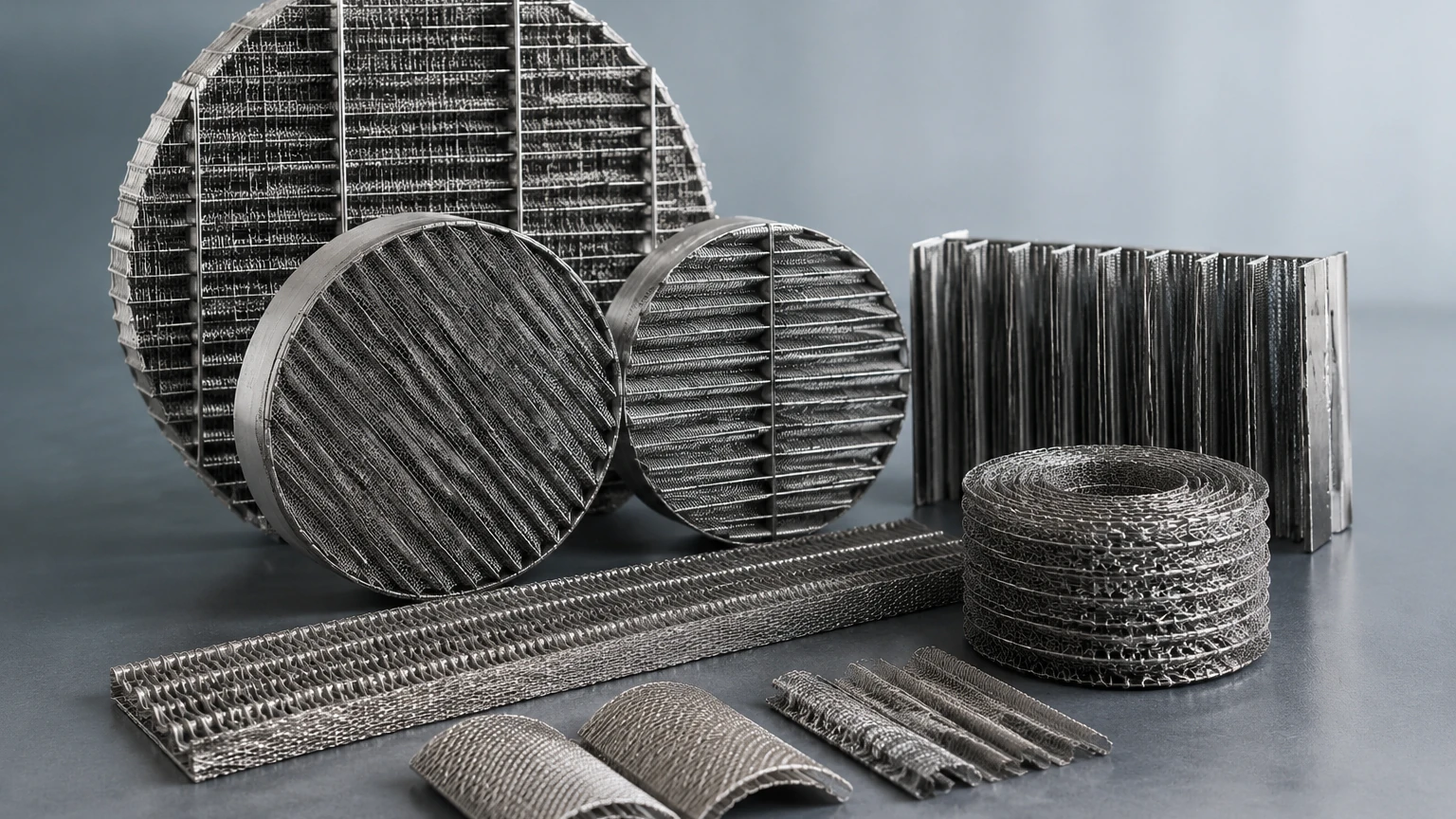
Mist Eliminator Manufacturers
In the complex landscape of industrial process engineering, the separation of liquid droplets from gas streams is a critical requirement for protecting downstream equipment, reducing product loss, and ensuring environmental compliance. Mist eliminators, also known as demisters, are the primary components tasked with this separation. However, the efficacy of these systems depends heavily on the technical expertise and manufacturing precision of the supplier. For procurement officers and process engineers, identifying qualified mist eliminator manufacturers involves more than comparing price points; it requires a deep dive into material science, fluid dynamics, and custom engineering capabilities.
The Role of Mist Eliminators in Industrial Systems
Mist eliminators function on three primary physical principles: inertial impaction, direct interception, and Brownian diffusion. As a gas stream laden with liquid droplets passes through the filtration media—typically a knitted wire mesh or a series of chevron vanes—the droplets' inertia causes them to strike the surface of the media. These droplets then coalesce into larger globes and drain away due to gravity.
Leading mist eliminator manufacturers must design these components to balance two competing factors: separation efficiency and pressure drop. A high-efficiency filter that captures sub-micron particles but causes a significant pressure drop can lead to increased energy consumption and reduced system throughput. Conversely, a design that prioritizes low pressure drop may allow excessive "carryover," leading to the corrosion of turbine blades or the contamination of chemical solvents. Understanding these trade-offs is essential when consulting with a manufacturer to ensure the component is optimized for the specific superficial velocity of the gas stream.
Technical Specifications to Confirm with Mist Eliminator Manufacturers
When evaluating mist eliminator manufacturers, technical professionals should focus on the specific performance metrics that dictate the longevity and reliability of the filtration system. A manufacturer’s ability to provide detailed data on the following specifications is a hallmark of technical competence:
1. Removal Efficiency by Droplet Size: Not all mist is created equal. Manufacturers should provide performance curves indicating the percentage of droplets removed at various micron levels. For example, wire mesh demisters are typically effective for droplets down to 3–5 microns, while high-efficiency fiber bed mist eliminators are required for sub-micron aerosols.
2. Pressure Drop (Delta P): This is the resistance to flow created by the mist eliminator. Engineers must confirm the clean pressure drop and the predicted pressure drop at the end of the filter's service life. High-quality manufacturers use computational fluid dynamics (CFD) to model these variables.
3. Void Volume: In wire mesh designs, void volume (typically 97% to 99%) determines the capacity of the filter to handle liquid loading without flooding. A manufacturer must be able to calculate the optimal density for the specific gas-to-liquid ratio of your application.
4. Maximum Allowable Velocity: If the gas velocity exceeds the "re-entrainment velocity," the captured liquid will be picked up by the gas stream again, rendering the eliminator useless. Manufacturers must provide the design limits for gas velocity based on the density of both the gas and the liquid.
Material Selection and Durability Factors
Industrial environments are often characterized by extreme temperatures and corrosive chemical compositions. Therefore, material selection is perhaps the most critical decision made during the design phase. Professional mist eliminator manufacturers typically offer a range of stainless steel and alloy options to suit different process conditions.
* Stainless Steel 304/304L: Suitable for general-purpose applications where moisture is the primary concern but chemical corrosion is minimal.
* Stainless Steel 316/316L: The industry standard for chemical processing and pharmaceutical applications due to the addition of molybdenum, which enhances resistance to chlorides and pitting.
* High-Nickel Alloys: For highly aggressive environments, such as those involving sulfuric acid or high-temperature steam, manufacturers may utilize Monel, Inconel, or Hastelloy.
Beyond the metal itself, the quality of the wire drawing and knitting process is vital. Inconsistent wire diameters or uneven mesh density can create "pathways of least resistance" where gas bypasses the filtration media entirely. Reliable manufacturers maintain strict quality control over the mechanical properties of the wire to ensure the structural integrity of the finished demister pad.
Customization and OEM Capabilities in Filtration
Off-the-shelf filtration components rarely meet the specific needs of specialized industrial vessels. Whether the application involves a horizontal separator, a vertical knockout drum, or a complex distillation column, the mist eliminator must be tailored to the vessel's internal geometry. This is where the value of OEM-focused mist eliminator manufacturers becomes apparent.
Customization involves more than just sizing. It includes the design of support grids, tie wires, and hold-down bars that ensure the filter remains secure under high-pressure surges. For large-diameter vessels, manufacturers provide the demister in sectional pieces that can fit through standard manways, allowing for easier installation and maintenance. When selecting a partner, engineers should verify the manufacturer's ability to produce custom shapes—such as annular, rectangular, or conical configurations—and their experience in integrating these components into existing OEM equipment.
Maintenance, Lifecycle, and Total Cost of Ownership
While the initial purchase price of a mist eliminator is an important factor, the Total Cost of Ownership (TCO) is a more accurate metric for B2B decision-making. TCO includes the cost of energy (due to pressure drop), the cost of downtime for cleaning or replacement, and the potential cost of damage to downstream equipment.
Experienced mist eliminator manufacturers provide guidance on maintenance intervals and cleaning protocols. In applications involving "dirty" gas streams—where solids or polymers are present—the filter may be prone to fouling. Manufacturers might recommend a multi-stage approach, using a coarse vane-type separator to remove larger droplets and solids before the gas reaches a fine wire mesh pad. This "pre-filter" strategy significantly extends the service life of the more expensive high-efficiency components.
Furthermore, the ease of replacement is a critical design consideration. A well-engineered mist eliminator should be easily accessible. Manufacturers who provide comprehensive documentation, including installation manuals and material certificates (MTRs), help maintenance teams reduce the duration of planned turnarounds.
Evaluating Supplier Reliability and Engineering Support
In the B2B sector, a manufacturer is not just a vendor but a technical partner. When vetting mist eliminator manufacturers, consider their level of engineering support. Do they offer consultation during the front-end engineering design (FEED) phase? Can they assist in troubleshooting carryover issues in an existing plant?
A reliable manufacturer should be able to demonstrate a track record of successful installations in your specific industry, whether it be oil and gas, food and beverage, or water treatment. They should also adhere to international quality standards such as ISO 9001, ensuring that the product delivered matches the technical specifications promised during the quotation phase.
To ensure your facility achieves optimal separation performance and long-term reliability, it is vital to work with a manufacturer that understands the nuances of precision metal filtration. For a comprehensive overview of industrial filtration solutions and to [Review product options and application support], visit the Main Page of our technical resource center.
Conclusion
Selecting the right mist eliminator is a high-stakes decision that impacts the efficiency, safety, and profitability of industrial operations. By focusing on technical specifications, material integrity, and the manufacturer's ability to provide customized engineering solutions, B2B buyers can mitigate the risks of equipment failure and process inefficiency. The best mist eliminator manufacturers are those who combine advanced manufacturing technology with a deep understanding of the physical principles of gas-liquid separation, providing products that stand up to the most demanding industrial environments.