


Mmo Titanium Anode
In the landscape of industrial electrochemistry and advanced fluid management, the mmo titanium anode (Mixed Metal Oxide titanium anode) represents a critical evolution in electrode technology. Historically, industrial processes relied on graphite, lead alloys, or magnetite anodes, which often suffered from high consumption rates, dimensional instability, and the risk of electrolyte contamination. The introduction of Dimensionally Stable Anodes (DSA), specifically those utilizing a titanium substrate with a noble metal oxide coating, revolutionized sectors ranging from chlor-alkali production to complex wastewater treatment. For engineers and procurement specialists, understanding the technical nuances of these components is essential for optimizing system longevity and process efficiency.
Understanding the Fundamentals of MMO Titanium Anodes
An mmo titanium anode consists of a high-purity titanium substrate—typically ASTM Grade 1 or Grade 2—coated with a thin layer of electrocatalytic mixed metal oxides. These oxides usually include iridium (Ir), ruthenium (Ru), tantalum (Ta), or titanium (Ti) in varying proportions. The primary function of the titanium base is to provide mechanical structure and excellent corrosion resistance, while the oxide coating facilitates the electrochemical reaction.
Unlike traditional sacrificial anodes, MMO anodes are considered "dimensionally stable." This means that during the electrochemical process, the physical dimensions of the anode remain constant. This stability is vital for maintaining a consistent gap between the anode and cathode, which ensures a stable operating voltage and predictable energy consumption. For industrial facilities, this translates to lower maintenance overhead and higher precision in chemical output.
Technical Composition and Coating Chemistry
The performance of an mmo titanium anode is dictated largely by its coating chemistry. The selection of the specific oxide mix depends on the environment in which the anode will operate and the primary electrochemical reaction desired (e.g., chlorine evolution or oxygen evolution).
1. Ruthenium-Iridium (Ru-Ir) Coatings
These are primarily used in applications involving the electrolysis of brine or seawater, such as electro-chlorination and chlor-alkali processes. Ruthenium is an excellent catalyst for chlorine evolution but is susceptible to corrosion in oxygen-evolving environments. The addition of iridium enhances the stability and lifespan of the coating.
2. Iridium-Tantalum (Ir-Ta) Coatings
In environments where oxygen evolution is the primary reaction—such as electrowinning, acidic water treatment, or cathodic protection in soil—Iridium-Tantalum coatings are the industry standard. Tantalum acts as a stabilizing agent, preventing the underlying titanium substrate from passivating (forming a non-conductive oxide layer) even under high current densities and acidic conditions.
3. The Manufacturing Process
The application of these coatings involves a sophisticated thermal decomposition process. The titanium substrate is first chemically etched to create a high-surface-area topography. Then, a liquid solution of metal salts is applied and baked at high temperatures (typically between 400°C and 600°C). This cycle is repeated multiple times to achieve the required coating thickness, which usually ranges from a few grams per square meter to over 20 grams per square meter depending on the target lifespan.
Performance Metrics and Engineering Selection Criteria
When evaluating an mmo titanium anode for industrial use, several performance metrics must be scrutinized to ensure the component meets the demands of the specific application.
* Current Density: This refers to the amount of electrical current per unit of surface area (measured in A/m²). High-performance MMO anodes can operate at significantly higher current densities than traditional materials, but exceeding the design limit can lead to premature coating failure.
* Operating Potential: A lower overpotential for the desired reaction (chlorine or oxygen evolution) means the system requires less energy to operate. Engineers look for coatings that minimize energy loss as heat.
* Accelerated Life Testing (ALT): Since industrial anodes are expected to last years, manufacturers use ALT—operating the anode at extremely high current densities in a controlled electrolyte—to project the actual service life under standard conditions.
* Substrate Quality: The purity of the titanium substrate is non-negotiable. Impurities in the titanium can lead to localized corrosion beneath the coating, causing the catalytic layer to flake off, a phenomenon known as spalling.
Industrial Applications: From Water Treatment to Cathodic Protection
The versatility of the mmo titanium anode allows it to be integrated into a wide array of industrial systems. Its reliability is particularly valued in sectors where downtime is costly.
Water Treatment and Disinfection
In municipal and industrial water treatment, MMO anodes are used for the on-site generation of sodium hypochlorite. By electrolyzing a salt solution or seawater, these anodes produce a powerful disinfectant without the need for transporting or storing hazardous chlorine gas. This is a common requirement in cooling tower maintenance and ballast water treatment systems.
Cathodic Protection
To prevent the corrosion of underground pipelines, storage tanks, and offshore platforms, Impressed Current Cathodic Protection (ICCP) systems utilize MMO anodes. Their low consumption rate and ability to operate in diverse environments (soil, freshwater, and seawater) make them more cost-effective over a 20-year lifecycle compared to magnesium or zinc sacrificial anodes.
Electroplating and Metal Recovery
In the electronics and automotive industries, MMO anodes are used in electroplating baths. Because they do not dissolve, they do not contaminate the plating solution with metal ions, ensuring a high-quality finish on the processed parts. Similarly, in electrowinning, they facilitate the recovery of metals like copper, gold, and zinc from leach solutions.
Integration with Industrial Filtration Systems
While the mmo titanium anode handles the electrochemical portion of fluid processing, its efficiency is often dependent on the quality of the surrounding filtration infrastructure. In many electrochemical cells, the presence of suspended solids or scale-forming minerals can significantly degrade anode performance.
For instance, in electro-flotation or electro-coagulation systems, precision filtration is required to remove large particles before they reach the electrode chamber. If particulate matter settles on the anode surface, it can create "dead zones" where the current density becomes unevenly distributed, leading to localized overheating and coating degradation. Furthermore, in systems where the anode produces gases (like oxygen or chlorine), the fluid must be clear of debris that could trap gas bubbles against the electrode surface, which increases electrical resistance.
Manufacturers like Kaifil provide the necessary stainless steel filtration components that work in tandem with these electrochemical systems. High-quality wire mesh filters and stainless steel cartridges ensure that the electrolyte remains free of contaminants that could foul the MMO coating. For more information on integrated filtration solutions, you can Main Page to explore technical specifications for filter media that support electrochemical processes.
Operational Challenges and Maintenance Strategies
Despite their durability, mmo titanium anode components are not indestructible. Engineers must be aware of several operational risks:
1. Polarity Reversal: Most MMO anodes are designed to operate strictly as anodes. Reversing the polarity (making the MMO-coated electrode the cathode) can cause the oxide layer to reduce and dissolve rapidly, destroying the catalytic properties.
2. Organic Fouling: Certain organic compounds in the electrolyte can adsorb onto the coating surface, blocking the active sites. This increases the operating voltage and may require chemical cleaning.
3. Scaling: In hard water applications, calcium and magnesium carbonates can deposit on the electrode. While this primarily affects the cathode, scale buildup in the cell can restrict flow and indirectly damage the anode. Periodic acid washing is often required to maintain performance.
4. Fluoride Contamination: Titanium is highly sensitive to fluoride ions, which can attack the titanium dioxide passive layer and lead to rapid substrate corrosion. If fluorides are present in the electrolyte, specialized coating formulations or alternative substrate materials may be necessary.
Procurement and Customization Considerations
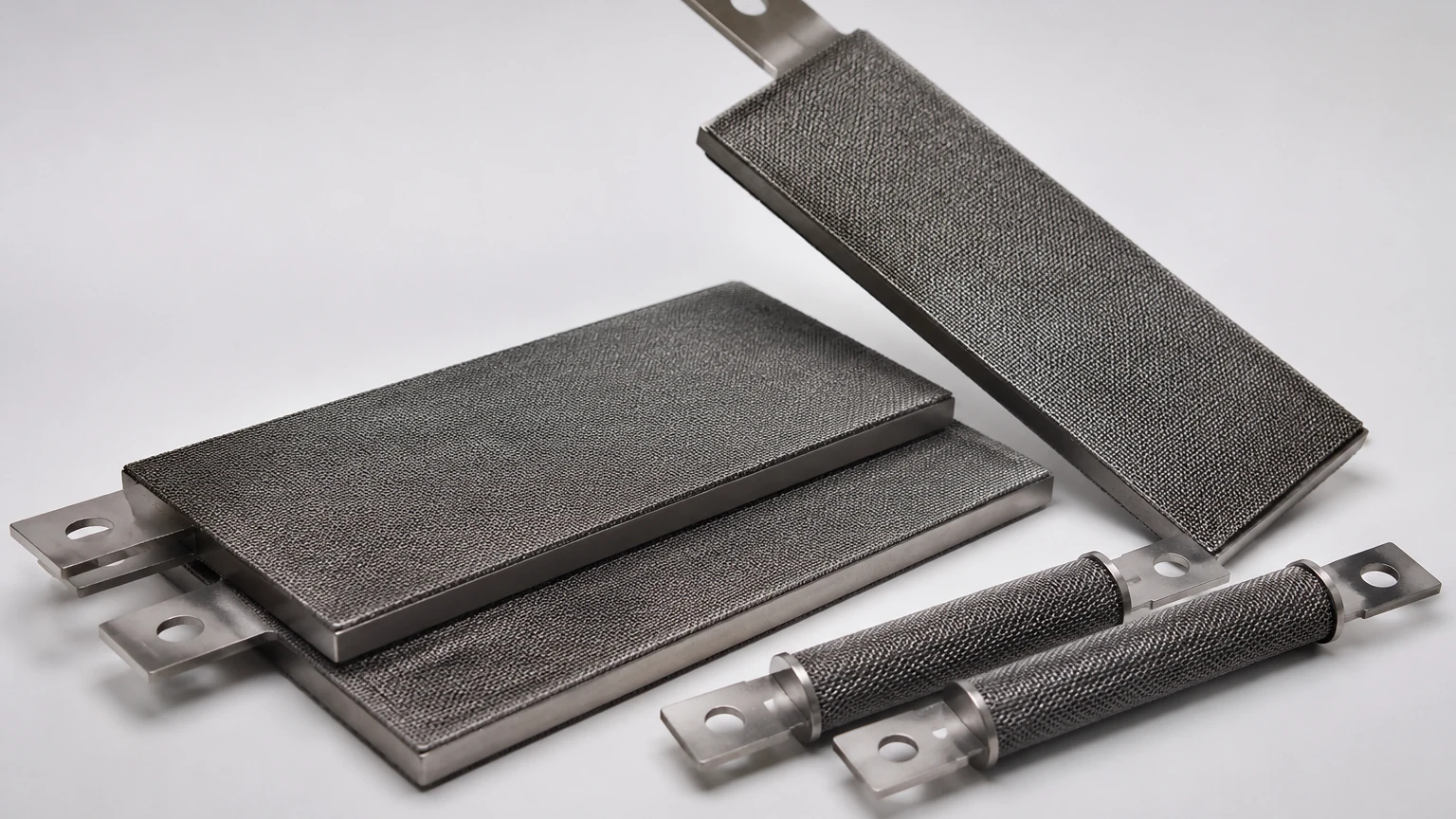
Selecting the right mmo titanium anode involves more than just choosing a coating type. The physical geometry of the anode must be optimized for the specific reactor design. Anodes can be manufactured as plates, expanded mesh, rods, tubes, or even complex 3D-printed shapes.
* Mesh vs. Plate: Expanded mesh anodes are often preferred because they provide a higher surface area-to-volume ratio and allow for better gas release and electrolyte circulation compared to solid plates.
* Customization: For OEM applications, the thickness of the titanium substrate and the loading of the precious metal oxide can be tailored to the expected current density and required service life. A system designed for a 2-year maintenance cycle will require a different coating specification than one designed for a 10-year cycle.
* Total Cost of Ownership (TCO): When purchasing, engineers should look beyond the initial price. The TCO includes the energy efficiency (voltage), the cost of replacement, and the potential downtime. A higher-quality MMO anode with a lower overpotential can often pay for itself in energy savings within the first year of operation.
Conclusion
The mmo titanium anode is an indispensable component in modern industrial electrochemistry, offering a balance of durability, efficiency, and dimensional stability that traditional materials cannot match. Whether used in the production of chemicals, the protection of infrastructure, or the treatment of water, these anodes enable processes that are cleaner and more cost-effective.
To ensure the longevity of these sophisticated electrodes, it is equally important to maintain the integrity of the fluid system through robust filtration. By preventing particulate buildup and chemical fouling, high-performance filtration solutions allow MMO anodes to operate at peak efficiency. For technical professionals seeking to optimize their industrial filtration and fluid handling setups, visiting the Main Page provides access to a range of custom stainless steel solutions designed to withstand demanding industrial environments.
