


Mobile Filtration System
In industrial environments, the ability to maintain fluid cleanliness is a primary factor in equipment longevity and process reliability. A mobile filtration system provides a versatile, off-line solution for removing contaminants from oils, chemicals, and water without requiring permanent installation or system downtime. These units are essential for bypass filtration, fluid transfer, and reservoir cleaning across sectors such as hydraulic power, chemical processing, and food production.
For engineers and maintenance managers, selecting the right mobile filtration system involves more than just choosing a pump and a cart; it requires a deep understanding of the filtration media, housing design, and the specific physical properties of the fluid being processed. High-performance components, such as those found on the Main Page of specialized manufacturers, are critical to ensuring these systems meet rigorous industrial standards.
The Engineering Logic Behind Mobile Filtration
Mobile filtration systems are typically designed as "kidney loop" systems. They draw fluid from a reservoir, pass it through one or more filter stages, and return it to the same reservoir or a separate container. This process allows for continuous cleaning while the primary machinery remains in operation.
From an engineering perspective, the mobile filtration system serves three main functions:
1. Initial Cleanup: Removing heavy particulate matter from new fluids, which are often contaminated during transport or storage.
2. Maintenance Filtration: Periodically polishing fluids in existing systems to maintain ISO cleanliness levels.
3. Emergency Recovery: Rapidly removing water or large-scale debris following a component failure or seal breach.
The effectiveness of these systems depends heavily on the filtration elements used. Stainless steel wire mesh and sintered metal filters are often preferred in mobile units due to their structural integrity and ability to withstand the pressure fluctuations common in portable applications.
Key Components and Architecture
A robust mobile filtration system consists of several integrated components, each of which must be sized and specified according to the application's demands.
1. The Pump and Motor Assembly
In most mobile units, positive displacement pumps (such as gear or vane pumps) are used to ensure a consistent flow rate regardless of the fluid's viscosity or the pressure drop across the filter. The motor must be rated for the environment—explosion-proof motors are required for chemical and oil-and-gas applications, while wash-down rated motors are standard in food and beverage processing.
2. Filter Housings
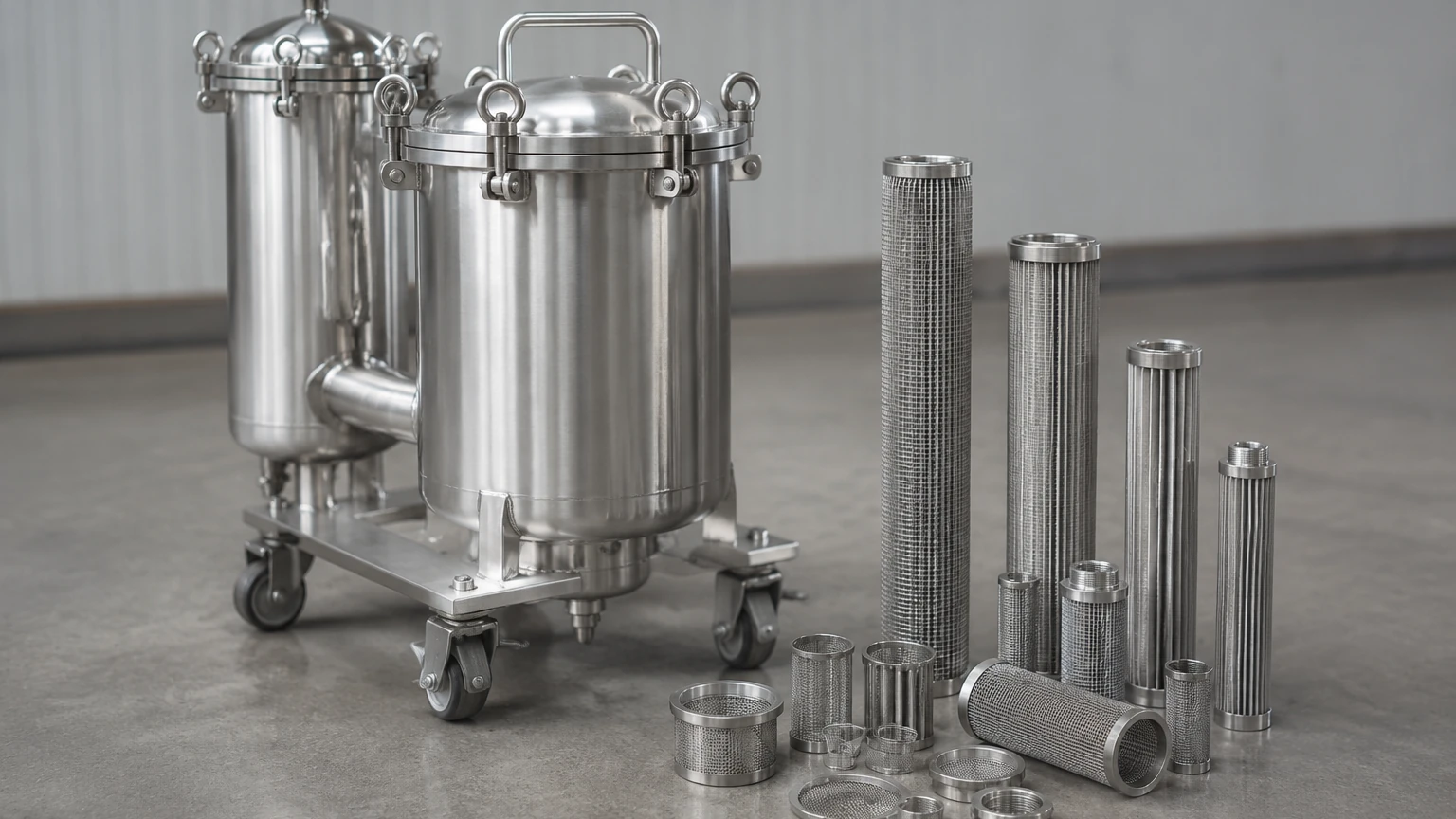
The housing must be constructed to handle the maximum system pressure and be compatible with the fluid. Stainless steel housings are the industry standard for mobile systems because they resist corrosion and are easy to decontaminate when switching between different types of fluids.
3. Filtration Elements
This is the core of the system. Depending on the target particle size, engineers may select from:
* Stainless Steel Wire Mesh: Ideal for coarse filtration and high-flow applications. These are durable and can be cleaned and reused.
* Sintered Metal Cartridges: Used for precision filtration where high pressure and high temperatures are present. Sintered elements provide a fixed pore structure that prevents media migration.
* Multi-Stage Filtration: Many mobile units use a coarse pre-filter to protect the pump and a fine secondary filter to achieve the final cleanliness specification.
Selecting Filter Media: Wire Mesh vs. Sintered Metal
When designing or purchasing a mobile filtration system, the choice of filter media is the most critical technical decision.
Stainless Steel Wire Mesh
Wire mesh filters are constructed by weaving stainless steel wires into specific patterns (plain, twilled, or dutch weave). For mobile systems, wire mesh offers the advantage of a high open area, which translates to low initial pressure drop and high flow rates. It is particularly effective for removing large contaminants and protecting downstream components. Because it is made of 304 or 316L stainless steel, it is highly resistant to chemical attack.
Sintered Metal Media
Sintered metal filters are created by bonding layers of wire mesh or metal powder through a high-temperature thermal process. This creates a porous material with exceptional mechanical strength. In a mobile filtration system, sintered elements are used when the application requires absolute filtration ratings (down to 1 micron or less) and the ability to withstand significant differential pressures without deforming. Unlike disposable paper or fiberglass elements, sintered stainless steel does not shed fibers into the fluid stream, making it ideal for pharmaceutical and high-purity chemical applications.
Fluid Dynamics and Flow Rate Optimization
One common mistake in specifying a mobile filtration system is overestimating the allowable flow rate. High flow rates through a small filter area increase the velocity of the fluid, which can force particles through the media or cause premature clogging.
Engineers must calculate the Flux Rate—the volume of fluid passing through a unit area of filter media over time. For viscous fluids like hydraulic oil, a lower flux rate is necessary to prevent high pressure drops. If the system is intended for multiple types of fluids, it must be designed for the highest viscosity fluid it will encounter. Stainless steel cartridges are advantageous here because their rigid structure allows for more aggressive cleaning and higher pressure limits compared to synthetic media.
Application-Specific Requirements
The configuration of a mobile filtration system must change based on the industry it serves.
Chemical Processing
In chemical environments, compatibility is the primary concern. A mobile system used for transferring corrosive acids or solvents must utilize 316L stainless steel for all wetted parts, including the filter mesh and the housing. Seals and gaskets must be made of PTFE or Viton to prevent degradation.
Food and Beverage
For food-grade applications, the mobile filtration system must meet sanitary standards. This involves using stainless steel components with high-quality surface finishes (often electropolished) to prevent bacterial growth. The filter elements must be capable of withstanding Clean-in-Place (CIP) procedures, which often involve high-temperature steam or caustic chemicals.
Hydraulic and Lube Oil
In hydraulic systems, the goal is often to meet specific ISO 4406 cleanliness codes. A mobile filtration system is used to "flush" a system after a repair. In these cases, the system should include a water-removal stage, as moisture is a common contaminant that degrades oil performance and causes component corrosion.
The Economic Case for Stainless Steel Filter Elements
While the initial cost of stainless steel filter elements is higher than disposable alternatives, the total cost of ownership (TCO) is significantly lower for industrial mobile filtration systems.
1. Reusability: Stainless steel elements can be cleaned via backwashing, ultrasonic cleaning, or chemical baths. This eliminates the recurring cost of purchasing, stocking, and disposing of single-use cartridges.
2. Durability: Mobile units are subject to vibration and physical shocks during transport. Stainless steel elements are robust enough to maintain their integrity under these conditions, whereas ceramic or paper elements may crack or collapse.
3. Waste Reduction: Using cleanable filters aligns with corporate sustainability goals by reducing the volume of oil-soaked waste sent to landfills.
Maintenance and Cleaning Protocols
To maintain the efficiency of a mobile filtration system, a strict maintenance schedule is required. The most important indicator of filter health is the differential pressure (ΔP). Most professional mobile units are equipped with pressure gauges before and after the filter housing. When the ΔP reaches a predetermined limit, the filter element must be removed and cleaned.
For stainless steel wire mesh, cleaning often involves:
* Backflushing: Reversing the flow of clean fluid through the filter to dislodge particles from the surface.
* Ultrasonic Cleaning: Using high-frequency sound waves in a cleaning solvent to remove fine particles trapped deep within the mesh or sintered pores.
* Chemical Cleaning: Using compatible solvents to dissolve organic or chemical deposits that cannot be removed mechanically.
Technical Checklist for Engineers
Before purchasing or commissioning a mobile filtration system, engineers should confirm the following technical specifications:
* Fluid Compatibility: Are all wetted parts (housing, pump, mesh, seals) compatible with the fluid's pH and chemical composition?
* Viscosity Range: Can the pump and filter handle the fluid at its lowest operating temperature (highest viscosity)?
* Micron Rating: Is the filtration absolute or nominal? Does it meet the required ISO cleanliness code for the target application?
* Flow Rate: Is the pump capacity matched to the filter surface area to prevent excessive flux?
* Portability Requirements: Does the unit need specific wheel types (e.g., non-marking for food plants) or lifting eyes for crane transport?
* Safety Compliance: Does the electrical system meet local codes (e.g., ATEX, UL, or CE)?
Conclusion
A mobile filtration system is a critical asset for maintaining fluid purity and protecting expensive industrial machinery. By focusing on high-quality stainless steel filtration components and proper engineering specifications, organizations can achieve reliable performance and a lower total cost of ownership. Whether for routine oil polishing or critical chemical transfer, the integration of precision-engineered filters ensures that mobile units deliver the same level of performance as permanent installations. For more technical details on custom filter components, engineers can review the options available on the Main Page of leading filtration manufacturers.
