


Stainless Steel Basket Filter
In industrial fluid handling, the protection of downstream equipment—such as pumps, flow meters, heat exchangers, and valves—is critical to maintaining operational uptime and system integrity. A stainless steel basket filter, often referred to as a basket strainer, serves as a robust mechanical separation solution designed to remove large-scale particulate matter from liquids and gases. Unlike finer cartridge filters used for polishing, the basket filter is engineered for high-capacity debris retention and ease of maintenance in demanding environments.
Selecting the appropriate filtration component requires a deep understanding of material science, fluid dynamics, and the specific mechanical stresses of the application. This guide provides a technical overview of stainless steel basket filters, focusing on engineering considerations, material selection, and the criteria necessary for optimizing filtration performance.
Structural Components and Material Selection
The efficacy of a stainless steel basket filter is largely determined by its construction materials and the geometry of the internal filter element. Stainless steel is the industry standard for these components due to its inherent corrosion resistance, mechanical strength, and ability to withstand extreme temperatures.
Material Grades: 304 vs. 316L
Engineering teams must specify the correct grade of stainless steel based on the chemical composition of the process fluid:
* Type 304 Stainless Steel: Suitable for general-purpose industrial applications, including water treatment and non-corrosive chemical processing. It offers excellent durability and cost-effectiveness.
* Type 316L Stainless Steel: Contains molybdenum, providing superior resistance to chlorides and pitting. This grade is essential for pharmaceutical, food and beverage, and marine applications where chemical sanitization or high-salinity environments are present.
The Filter Element (The Basket)
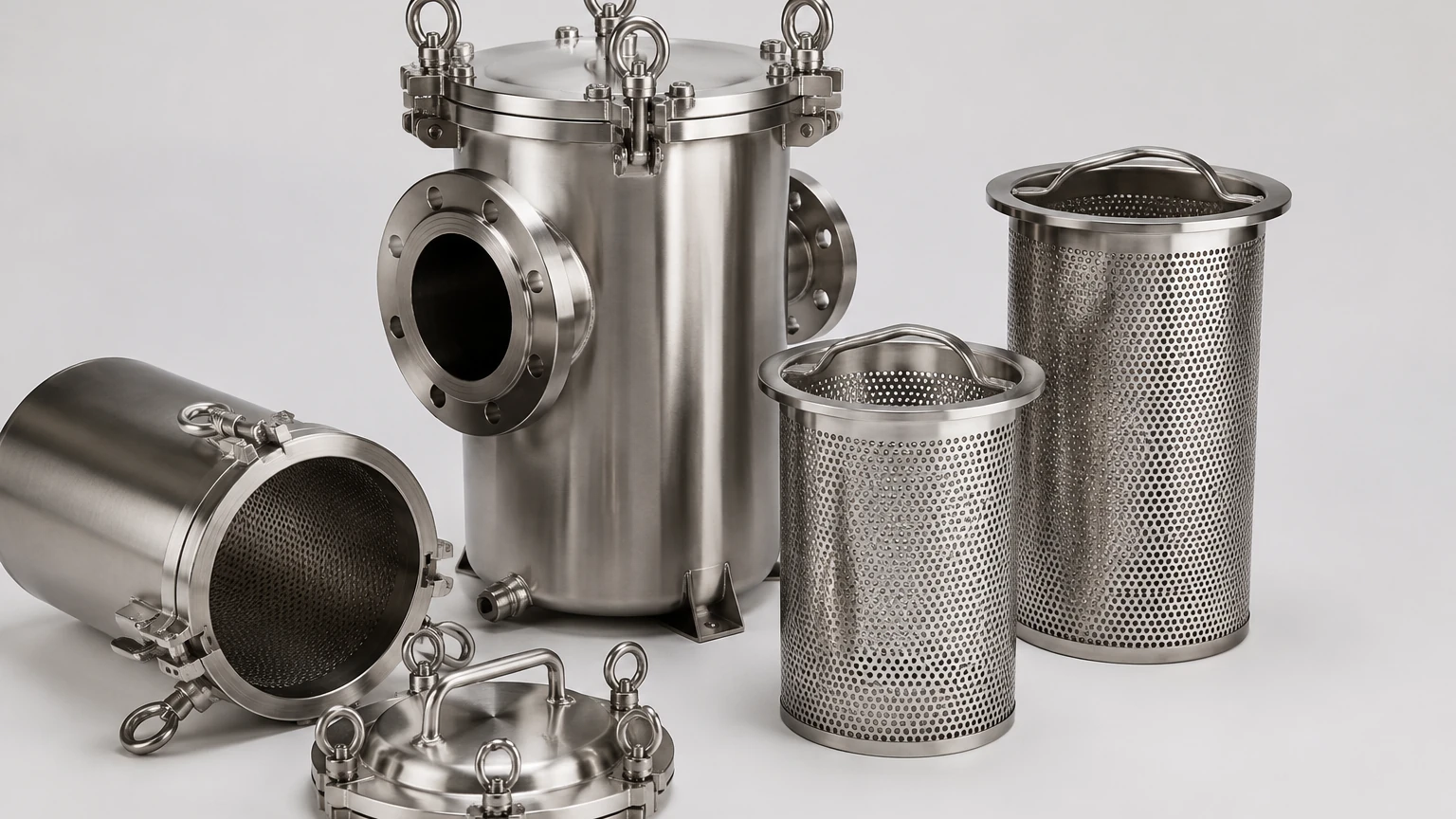
The internal basket is typically constructed using a perforated metal support sheet lined with a precision-woven wire mesh. The perforated outer layer provides the structural rigidity required to withstand differential pressure, while the inner mesh determines the filtration accuracy. For heavy-duty applications, reinforced handles and heavy-gauge support cages are integrated to prevent deformation during high-flow surges.
Engineering Performance: Micron Ratings and Flow Dynamics
When integrating a stainless steel basket filter into a system, engineers must balance filtration efficiency with hydraulic performance. The two most critical factors are the micron rating and the allowable pressure drop.
Understanding Micron Ratings
Filtration accuracy is measured in microns (μm). A basket filter can range from coarse straining (several millimeters) to fine filtration (down to 5 microns). It is important to distinguish between "nominal" and "absolute" ratings. In most basket strainer applications, nominal ratings are used to indicate the size of particles the mesh will retain at a specific percentage. Over-specifying a filter (choosing a micron rating much finer than necessary) can lead to premature clogging and excessive maintenance cycles.
Pressure Drop (ΔP) and Flow Rate
Every filter introduces a degree of resistance to the flow. The initial pressure drop (the difference in pressure between the inlet and outlet) must be calculated to ensure the pump can maintain the required flow rate. Factors influencing ΔP include:
* Fluid viscosity (higher viscosity increases resistance).
* The open area ratio of the mesh (the percentage of the basket surface that allows fluid passage).
* The accumulation of debris over time.
Standard engineering practice suggests cleaning or replacing the basket when the pressure drop reaches a predetermined limit, typically between 5 to 10 psi, to prevent structural damage to the filter element or cavitation in downstream pumps.
Application-Specific Considerations in Industrial Environments
Stainless steel basket filters are utilized across a broad spectrum of industries, each with unique operational constraints. Understanding these nuances is vital for successful implementation.
Chemical and Petrochemical Processing
In these sectors, filters must handle aggressive solvents and high-temperature fluids. The compatibility of the seals and gaskets (such as Viton, EPDM, or PTFE) is just as important as the stainless steel housing itself. Engineering teams should consult the Main Page to review material compatibility charts and housing options for hazardous environments.
Food, Beverage, and Pharmaceuticals
For hygienic applications, the stainless steel basket filter must feature smooth, crevice-free surfaces (often electropolished) to prevent bacterial growth. The design must allow for Complete-in-Place (CIP) or easy disassembly for manual cleaning. Compliance with FDA or 3-A Sanitary Standards is often a baseline requirement for these components.
Hydraulic and Lubrication Systems
In hydraulic circuits, basket filters protect precision valves from metal shavings and environmental contaminants. Here, the ability to withstand high-pressure spikes is the primary design concern. The filter housing must be rated for the maximum system pressure, often requiring heavy-wall cast or forged stainless steel constructions.
Maintenance Protocols and Operational Longevity
One of the primary advantages of a stainless steel basket filter is its reusable nature. Unlike disposable polymer cartridges, stainless steel baskets can be cleaned and returned to service, significantly reducing the total cost of ownership (TCO).
Cleaning Procedures
Effective cleaning depends on the nature of the contaminant. For non-adhesive particulates, high-pressure water washing or ultrasonic cleaning is usually sufficient. In cases where the filter is used for resins or oils, chemical solvent baths may be required. It is essential to inspect the mesh for signs of "blinding" (permanent clogging of the pores) or mechanical tears during every maintenance cycle.
Redundancy and Duplex Systems
For processes that cannot be shut down for cleaning, a duplex basket filter configuration is recommended. This setup involves two separate filter housings connected by a diverter valve. When one basket becomes loaded, the flow is switched to the clean housing, allowing for maintenance without interrupting the process flow.
Custom Engineering and OEM Integration
While standard basket filters meet many industrial needs, unique system footprints or specialized process requirements often necessitate custom-engineered solutions. Manufacturers like Kaifil specialize in providing tailored filtration components that align with specific OEM requirements.
Customization options often include:
* Bespoke Dimensions: Modifying the height or diameter of the basket to fit existing housings.
* Connection Types: Offering ANSI flanges, NPT threads, or sanitary tri-clamp fittings.
* Reinforced Structures: Adding internal baffles or external support rings for high-viscosity fluids.
* Specialized Coatings: Applying PTFE or other linings for extreme chemical resistance.
By working closely with a manufacturer during the design phase, engineering teams can ensure that the filtration solution is optimized for both performance and space efficiency.
Common Risks and Failure Modes
Failure to properly specify or maintain a stainless steel basket filter can lead to several common industrial issues:
1. Bypass: If the basket is not seated correctly within the housing, fluid will take the path of least resistance, allowing contaminants to pass downstream. Precision machining of the basket seat is critical to prevent this.
2. Basket Collapse: If the differential pressure exceeds the structural limit of the mesh or support cage, the basket may crumple. This not only allows contaminants through but can also release metal fragments into the system.
3. Corrosion Fatigue: Even stainless steel can fail if exposed to incompatible chemicals or cyclic loading in a corrosive environment. Regular NDT (non-destructive testing) or visual inspections are necessary for high-stakes applications.
Procurement Checklist: Confirming Technical Specifications
Before finalizing a purchase or requesting a quote for a stainless steel basket filter, procurement and engineering teams should confirm the following data points to ensure the component is fit for purpose:
* Fluid Properties: What is the chemical composition, viscosity, and specific gravity of the fluid?
* Operating Conditions: What are the maximum and minimum operating pressures and temperatures?
* Filtration Goal: What is the target micron rating, and what is the nature of the solids being removed (e.g., hard, soft, fibrous)?
* Flow Rate: What is the normal and maximum flow rate (GPM or m³/h)?
* Housing Requirements: Does the application require a specific inlet/outlet orientation or a quick-opening cover for rapid maintenance?
* Compliance: Are there specific industry certifications (e.g., ASME Section VIII, PED, or FDA) required for the project?
By addressing these technical boundaries, organizations can secure a filtration solution that provides reliable protection and long-term value. For those seeking detailed product specifications and custom manufacturing capabilities, reviewing the resources available on the Kaifil Main Page can assist in the selection of high-performance stainless steel filtration components.
