


Municipal Water Pretreatment Screens
In municipal water treatment, the pretreatment phase serves as the primary defense mechanism for the entire facility. The efficiency of downstream processes—including membrane filtration, reverse osmosis, and chemical disinfection—depends heavily on the performance of municipal water pretreatment screens. These components are engineered to remove large solids, debris, and inorganic matter from raw water sources such as rivers, lakes, or groundwater before they can cause mechanical damage or fouling in more sensitive equipment.
For engineers and facility managers, selecting the appropriate screening technology is not merely a matter of sizing; it involves a complex evaluation of material science, hydraulic flow dynamics, and long-term operational costs. As a specialized manufacturer of stainless steel filtration solutions, Kaifil provides the technical expertise required to navigate these engineering challenges. For more information on specific filtration components, professionals can visit the Main Page to review product options and application support.
The Role of Screening in Municipal Infrastructure
Municipal water pretreatment screens are categorized based on the size of the particles they are designed to intercept. The primary objective is to reduce the suspended solids load, thereby protecting pumps, valves, and downstream filtration media from abrasion and clogging.
Coarse vs. Fine Screening
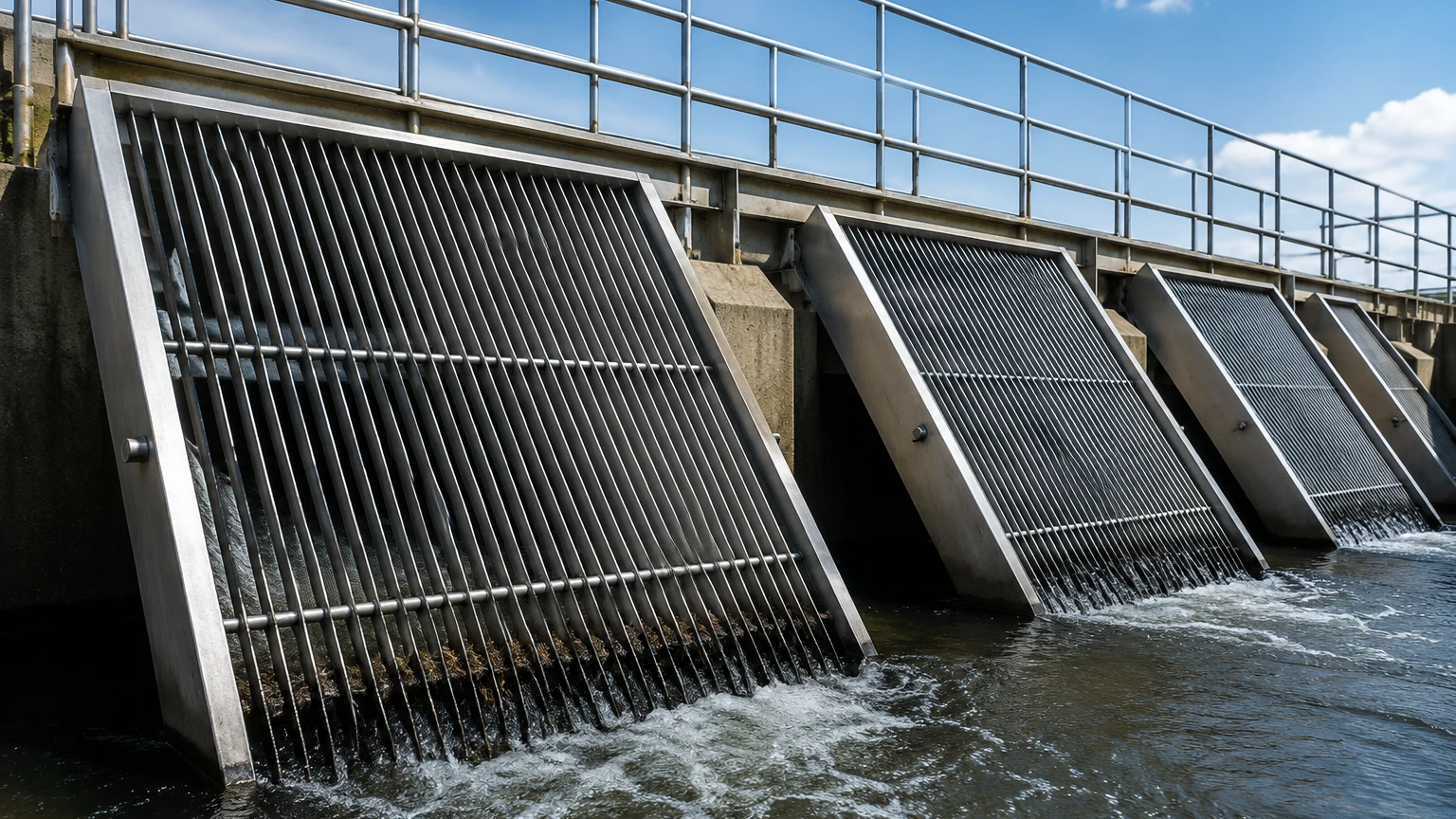
Coarse screens, often referred to as bar screens or trash racks, typically feature openings larger than 6mm. These are the first point of contact for raw water and are designed to capture large objects like branches, plastic waste, and stones. While essential for mechanical protection, they do not provide the precision required for process-level filtration.
Fine screens, which utilize stainless steel wire mesh or wedge wire, operate with openings ranging from 0.5mm down to several microns. These screens are critical in municipal pretreatment as they remove smaller organic fibers and grit that can bypass coarse screens. In modern facilities, fine screens are often the final step before water enters high-pressure pump systems or sensitive membrane bioreactors (MBRs).
Engineering Considerations for Screen Selection
When specifying municipal water pretreatment screens, several technical parameters must be balanced to ensure the system operates within its designed hydraulic limits without excessive maintenance requirements.
1. Filtration Accuracy and Micron Rating
The micron rating determines the smallest particle size the screen will reliably capture. In municipal pretreatment, selecting a rating that is too fine can lead to rapid blinding (clogging) and frequent backwashing cycles, which increases water waste and energy consumption. Conversely, a rating that is too coarse allows harmful particulates to pass through, potentially damaging expensive downstream membranes. Engineers must analyze the particle size distribution (PSD) of the raw water source across different seasons to determine the optimal aperture size.
2. Open Area Ratio and Flow Capacity
The open area of a screen is the percentage of the total surface area that allows water to pass. A higher open area results in lower approach velocities and reduced pressure drops ($ΔP$). This is critical in municipal applications where gravity-fed systems or low-pressure pumps are used. Stainless steel wire mesh filters offer a high open area while maintaining structural integrity, making them ideal for high-flow environments.
3. Material Durability and Corrosion Resistance
Municipal water often contains corrosive elements, including chlorides and dissolved gases. Furthermore, the cleaning chemicals used in pretreatment can be aggressive. Using high-grade stainless steel is standard practice to ensure longevity.
* Type 304 Stainless Steel: Suitable for general municipal water applications with low chloride levels.
* Type 316L Stainless Steel: Preferred for brackish water or environments where chemical resistance is paramount. The low carbon content in 316L helps prevent sensitization during welding, ensuring the structural joints of the filter cartridge remain resistant to intergranular corrosion.
Types of Stainless Steel Filter Media
Kaifil specializes in various metal filtration media that are commonly integrated into municipal water pretreatment screens. Each has distinct mechanical properties and performance characteristics.
Stainless Steel Wire Mesh Filters
Woven wire mesh is highly versatile. It can be manufactured in multiple weave patterns, such as plain weave, twill weave, or Dutch weave. For municipal pretreatment, Dutch weave is often selected for its superior strength and ability to provide fine filtration while resisting deformation under high differential pressure. These meshes can be pleated to increase the effective surface area, which extends the time between cleaning cycles.
Wedge Wire (V-Wire) Screens
Wedge wire is constructed by welding V-shaped profile wires onto support rods. This design creates a non-clogging surface because the aperture widens inwardly. In municipal pretreatment, wedge wire is highly effective for intake screens and self-cleaning filters. The smooth surface allows for efficient mechanical scraping or backpulsing to remove accumulated debris.
Sintered Metal Filters
For applications requiring extreme durability and precise filtration, multiple layers of stainless steel wire mesh are sintered together. This process uses heat and pressure to bond the wires at their contact points without the use of binders. Sintered filters are virtually immune to media migration and can withstand high-pressure backwashing, making them a robust choice for heavy-duty municipal systems.
Operational Challenges and Risk Mitigation
Implementing municipal water pretreatment screens involves addressing potential operational risks that can impact the total cost of ownership (TCO).
Blinding and Biofouling
Biological growth and sticky organic matter can adhere to the screen surface, causing a rapid increase in pressure drop. Engineers must consider the surface finish of the filter media. Electropolished stainless steel surfaces can reduce the adhesion of biofilms, making the screens easier to clean. Additionally, integrated backwash systems must be calibrated to the specific debris load of the water source.
Mechanical Stress and Fatigue
Screens are subject to constant hydraulic forces. In municipal systems, water hammer or sudden changes in flow rate can cause mechanical fatigue in poorly constructed filters. It is essential to confirm the collapse pressure of the filter cartridge. High-quality manufacturing processes, such as precision welding and reinforced support cores, are necessary to prevent structural failure under peak load conditions.
Replacement Cycles and Maintenance
While stainless steel screens have a significantly longer lifespan than synthetic alternatives, they are not infinite. Maintenance teams should monitor the differential pressure across the screen. A consistent baseline $ΔP$ after cleaning indicates a healthy screen, whereas a rising baseline suggests deep-seated fouling or physical damage that requires professional cleaning or replacement.
Customization and OEM Solutions in Water Treatment
No two municipal water sources are identical. Factors such as local mineral content, seasonal algae blooms, and industrial runoff necessitate customized filtration designs. Working with a manufacturer that understands the nuances of custom stainless steel filtration allows municipal engineers to optimize their systems for local conditions.
Customization options include:
* Bespoke Dimensions: Fitting screens into existing historical infrastructure where standard sizes are not applicable.
* Reinforced Structures: Adding internal or external support cages for high-pressure applications.
* Multi-Stage Filtration: Combining different mesh sizes within a single cartridge to provide graduated filtration, capturing larger particles on the outer layers and finer particles toward the core.
By focusing on these technical details, procurement teams can ensure that the municipal water pretreatment screens they install will provide reliable service for decades. For technical specifications and engineering support regarding custom metal filter components, visit the Main Page.
Conclusion: Selecting the Right Partner
The selection of municipal water pretreatment screens is a critical engineering decision that affects the reliability and efficiency of the entire water treatment plant. By prioritizing high-grade materials like stainless steel and selecting the appropriate filter structure—whether it be wire mesh, wedge wire, or sintered media—municipalities can protect their infrastructure and reduce long-term operational costs.
When evaluating suppliers, engineers should look for manufacturers who provide transparent data on filtration accuracy, material certifications, and structural performance. A focus on precision manufacturing and technical expertise ensures that the filtration components will meet the demanding requirements of municipal service, providing clean, safe water to the community while minimizing the need for emergency repairs and frequent replacements.
