


Submersible Well Pump Sand Screen
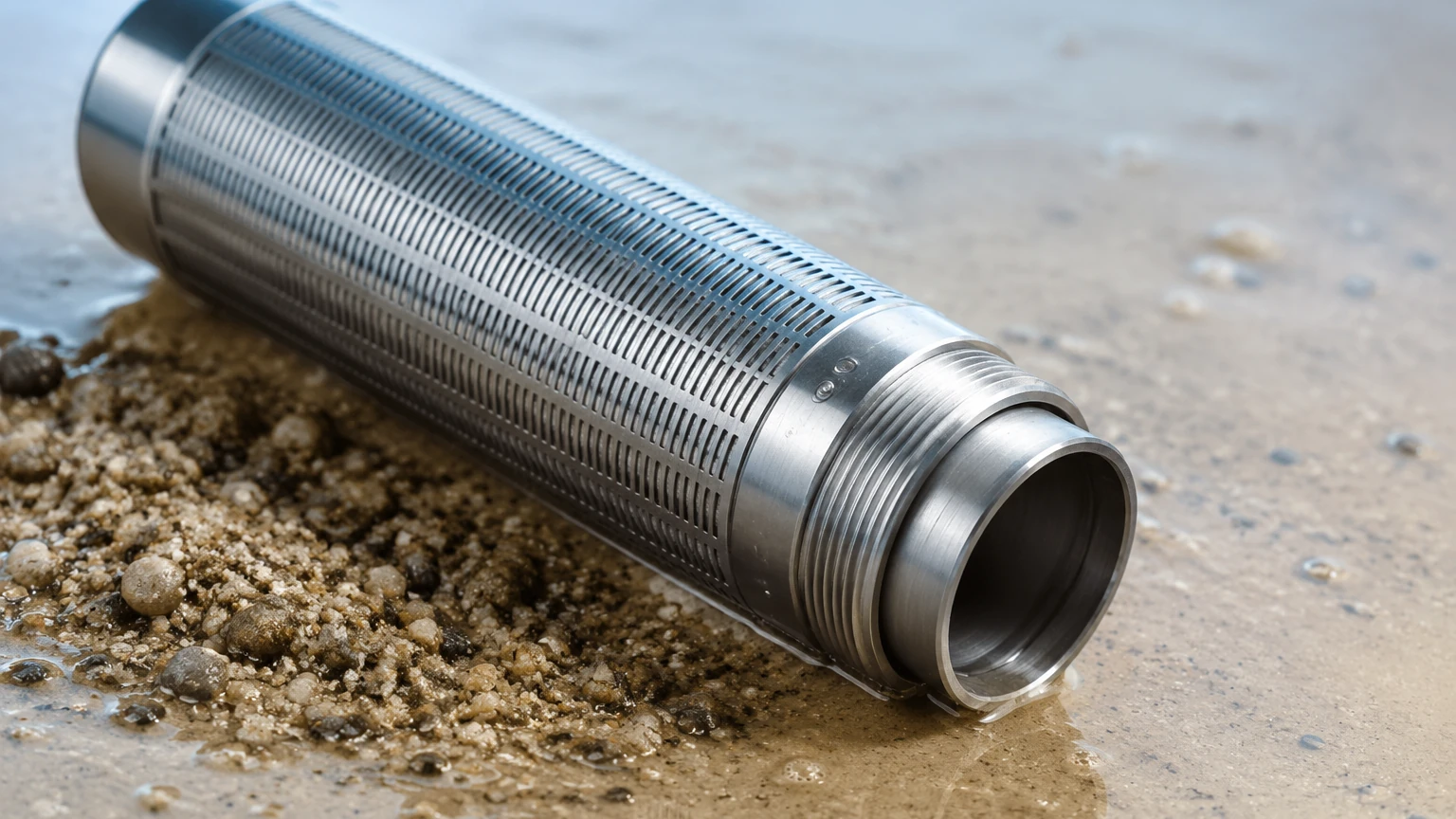
In industrial, agricultural, and municipal water extraction, the presence of abrasive particulates—specifically sand and silt—represents one of the most significant threats to the operational lifespan of submersible pumping systems. A submersible well pump sand screen serves as the primary mechanical barrier, designed to intercept these solids before they enter the pump intake. Without effective filtration at the source, sand ingress leads to rapid erosion of impellers, degradation of mechanical seals, and eventual motor failure, resulting in costly downtime and premature equipment replacement.
For engineers and facility managers, selecting the correct filtration component is not merely a matter of finding a part that fits; it requires a deep understanding of geological conditions, fluid dynamics, and material science. As a specialist in custom stainless steel filtration, Kaifil provides high-performance components designed to withstand the rigorous demands of deep-well environments. For more information on our full range of industrial filtration capabilities, please visit our Main Page.
The Critical Role of Sand Screens in Submersible Pump Systems
Submersible pumps are precision-engineered machines designed to move clear fluids. When sand enters the pump housing, it acts as an abrasive medium. Under high-velocity rotation, even small concentrations of sand can "sandblast" the internal surfaces of the pump. This erosion increases the clearances between moving parts, leading to a significant drop in hydraulic efficiency and head pressure.
A robust submersible well pump sand screen is engineered to mitigate these risks by providing a controlled aperture that allows water to pass while blocking grains that exceed a specific micron rating. The effectiveness of this screen directly correlates to the Mean Time Between Failures (MTBF) of the entire pumping system. In many industrial applications, the cost of pulling a pump from a deep well for repair far exceeds the initial investment in a high-quality stainless steel screen.
Engineering Material Selection for Deep-Well Durability
The environment within a wellbore is often chemically complex. Groundwater can be corrosive due to dissolved gases like carbon dioxide or hydrogen sulfide, or high mineral content. Consequently, material selection is the first technical hurdle in screen design.
Stainless Steel 304 vs. 316L
Stainless steel is the industry standard for sand screens due to its mechanical strength and corrosion resistance.
- Grade 304: Suitable for most freshwater applications where corrosion levels are moderate. It provides excellent structural integrity and is cost-effective for standard industrial wells.
- Grade 316L: Recommended for environments with higher chloride concentrations or acidic conditions. The addition of molybdenum enhances pitting resistance, ensuring the screen does not suffer from localized structural failure over decades of service.
Strength and Collapse Resistance
In deep-well applications, the screen must withstand significant hydrostatic pressure and the physical stresses of installation. Kaifil utilizes advanced manufacturing techniques to ensure that the screen maintains its geometric stability under load. A collapsed screen not only stops filtration but can also trap the pump within the well casing, leading to catastrophic system loss.
Understanding Filtration Accuracy and Flow Dynamics
One of the most common challenges in specifying a submersible well pump sand screen is balancing filtration efficiency with flow capacity. If the screen openings are too large, sand will pass through and damage the pump. If the openings are too small, the screen will create excessive pressure drop (delta P), leading to cavitation and reduced flow rates.
Determining the Correct Micron Rating
The filtration rating must be matched to the particle size distribution (PSD) of the well’s aquifer. This is typically determined through a sieve analysis of the formation sand. A common engineering rule of thumb is to select a screen slot size that retains approximately 90% to 95% of the filter pack material or the natural formation sand.
Open Area and Entrance Velocity
To maintain efficient pump operation, the "open area" of the screen must be maximized. A higher open area reduces the entrance velocity of the water. Lower entrance velocities are critical for two reasons:
1. Reduced Clogging: High-velocity water pulls sand particles more forcefully into the screen openings, increasing the likelihood of "bridging" or blinding.
2. Corrosion Mitigation: High-velocity flow can accelerate localized corrosion and erosion-corrosion at the screen surface.
Comparison of Screen Technologies: Wire Mesh vs. Wedge Wire
There are several structural designs used for sand screens, each offering distinct advantages depending on the application depth and sand volume.
Sintered Wire Mesh Screens
Sintered multi-layer wire mesh provides exceptional filtration precision. By bonding multiple layers of stainless steel mesh together, we create a media that is both mechanically strong and highly permeable. This is often the preferred choice for fine sand and silt applications where high-resolution filtration is required to protect high-tolerance centrifugal pumps.
Wedge Wire (V-Wire) Screens
Wedge wire screens are constructed by wrapping a triangular-shaped wire around internal support rods. This design creates a "V" shaped opening that widens inwardly. This geometry is inherently resistant to clogging because any particle that passes the outer narrow opening will easily clear the wider internal gap. For high-volume industrial wells, wedge wire offers superior structural strength and high open-area ratios.
Customization for Specific Geological and Industrial Conditions
No two wells are identical, which is why off-the-shelf solutions often fail in demanding industrial environments. Customization is essential for optimizing performance. When designing a submersible well pump sand screen, several variables must be confirmed:
1. Well Depth and Pressure: Higher depths require thicker wall structures to prevent collapse.
2. Pump Intake Geometry: The screen must interface perfectly with the pump’s suction housing to prevent bypass leakage.
3. Chemical Composition of Water: This dictates the choice of alloy and potential surface treatments (such as passivating or electropolishing) to extend service life.
4. Flow Rate Requirements: The total surface area of the screen must be calculated to ensure the pump’s Net Positive Suction Head (NPSH) requirements are met.
Kaifil works closely with engineering teams to develop bespoke filtration components that address these specific technical parameters, ensuring that the final product integrates seamlessly into the existing infrastructure.
Installation and Maintenance Protocols
Proper installation is vital to the performance of a sand screen. Any gaps or misalignments during the attachment of the screen to the pump intake can allow "sand bypass," rendering the filtration system useless. It is recommended to use high-quality stainless steel clamps or threaded connections that are rated for the vibration and torque produced by the pump motor.
Monitoring Performance
In industrial settings, monitoring the drawdown and discharge pressure of the well is a practical way to assess screen health. A gradual increase in drawdown (the difference between static and pumping water levels) often indicates that the screen is beginning to clog or scale.
Cleaning and Rehabilitation
Stainless steel screens are generally more amenable to well rehabilitation techniques than plastic or low-grade metal alternatives. They can withstand mechanical brushing, high-pressure jetting, and certain chemical treatments used to dissolve mineral scaling or biofouling. Regular maintenance intervals, determined by the specific water chemistry of the site, can significantly extend the life of both the screen and the pump.
Total Cost of Ownership (TCO) Considerations
When evaluating the procurement of a submersible well pump sand screen, purchasing teams should look beyond the initial unit price. The Total Cost of Ownership includes:
- Energy Costs: A screen with poor open area increases the work the pump must do, leading to higher electricity consumption.
- Maintenance Costs: The frequency of pump repairs and well cleaning.
- Downtime: The lost productivity associated with a pump failure.
Investing in a precision-engineered stainless steel screen from a manufacturer like Kaifil reduces these long-term costs by providing a durable, high-efficiency solution that protects the most expensive components of the water system.
Conclusion
The submersible well pump sand screen is a small but vital component in the hierarchy of industrial water management. By effectively managing sand ingress through proper material selection, precise micron ratings, and robust structural design, engineers can ensure the reliability of their water supply and the longevity of their pumping equipment.
Before proceeding with a filtration project, it is essential to confirm the particle size distribution of the well and the specific hydraulic requirements of the pump. For technical consultation and customized stainless steel filtration solutions tailored to your specific industrial needs, we invite you to explore the resources available on our Main Page.
