


Nitrogen Filtration
In industrial environments, nitrogen is a critical utility used for inerting, blanketing, purging, and as a carrier gas. However, the effectiveness of nitrogen in these applications is entirely dependent on its purity. Contaminants such as pipe scale, rust, moisture, and oil aerosols can compromise sensitive processes, lead to equipment failure, and contaminate end products. Nitrogen filtration is the technical process of removing these impurities to meet specific ISO quality standards or process-specific requirements.
For engineers and procurement teams, selecting the right filtration system involves more than just choosing a micron rating. It requires a deep understanding of gas dynamics, material compatibility, and the long-term operational costs associated with different filter media. As a specialist in stainless steel filtration, Kaifil provides the technical expertise necessary to navigate these complexities.
Understanding the Necessity of Nitrogen Filtration in Industrial Systems
Nitrogen is often produced on-site via Pressure Swing Adsorption (PSA) or membrane systems, or it is delivered in bulk liquid form. Regardless of the source, the gas must travel through a distribution network. This network is a primary source of particulate contamination. Carbon steel piping, even if treated, can shed scale over time. Furthermore, compressors used in the generation process can introduce oil carryover.
Nitrogen filtration serves three primary functions:
1. Protection of Downstream Equipment: High-speed valves, regulators, and analytical instruments are sensitive to particulate abrasion. Effective filtration prevents mechanical wear and clogging.
2. Product Integrity: In food, beverage, and pharmaceutical industries, nitrogen comes into direct contact with the product. Any microbial or particulate contamination can lead to batch rejection.
3. Process Stability: In electronics manufacturing, specifically during wave soldering, even trace amounts of oxygen or particulates in the nitrogen stream can cause oxidation defects.
To explore the full range of industrial filter components available for these systems, you can visit our Main Page for detailed technical specifications.
Engineering Considerations for High-Purity Nitrogen Filtration
When designing or specifying a system for nitrogen filtration, several engineering parameters must be evaluated to ensure the system performs reliably under varying flow conditions.
Gas Velocity and Flow Rates
Unlike liquid filtration, gas filtration must account for the compressibility of the medium. As pressure drops, the velocity of the nitrogen increases. If the velocity through the filter media is too high, it can lead to "channeling" or the migration of captured particles. Engineers must size the filter housing and element to maintain a face velocity that optimizes capture efficiency while minimizing turbulence.
Pressure Drop (Delta P)
Efficiency always comes at the cost of pressure drop. A high initial pressure drop reduces the available pressure for downstream processes and increases the energy load on the nitrogen generation system. For nitrogen applications, it is standard practice to select a filter that offers a low clean pressure drop (typically less than 2-3 psi) to allow for a longer service life as the filter loads with contaminants.
Filtration Efficiency and Micron Ratings
In nitrogen filtration, we distinguish between nominal and absolute micron ratings. For critical applications, such as pharmaceutical blanketing, an absolute-rated filter is required to ensure that 99.9% of particles at the specified size are retained. For pre-filtration stages, nominal ratings may be acceptable to extend the life of more expensive downstream absolute filters.
Material Selection: Why Stainless Steel is the Standard
While polymer-based filters are common in low-pressure, ambient-temperature applications, industrial nitrogen systems often demand the durability of metal. Stainless steel, specifically grades 304 and 316L, is the preferred material for several reasons:
* Thermal Stability: Nitrogen processes can involve cryogenic temperatures or high-heat recovery stages. Stainless steel maintains its structural integrity across a wide temperature spectrum where polymers would become brittle or melt.
* Chemical Compatibility: Nitrogen is inert, but the contaminants it carries—or the cleaning agents used on the lines—may not be. 316L stainless steel provides superior resistance to corrosion and chemical attack.
* High Pressure Differential Tolerance: In the event of a system surge, stainless steel filter elements can withstand significantly higher differential pressures without collapsing, preventing catastrophic downstream contamination.
* Cleanability: Unlike disposable synthetic filters, stainless steel mesh and sintered components can often be cleaned and reused, reducing the total cost of ownership.
Comparing Filter Structures: Sintered Mesh vs. Pleated Cartridges
The internal structure of the filter element determines its capacity for dirt-holding and its flow characteristics. In nitrogen filtration, two primary designs are utilized:
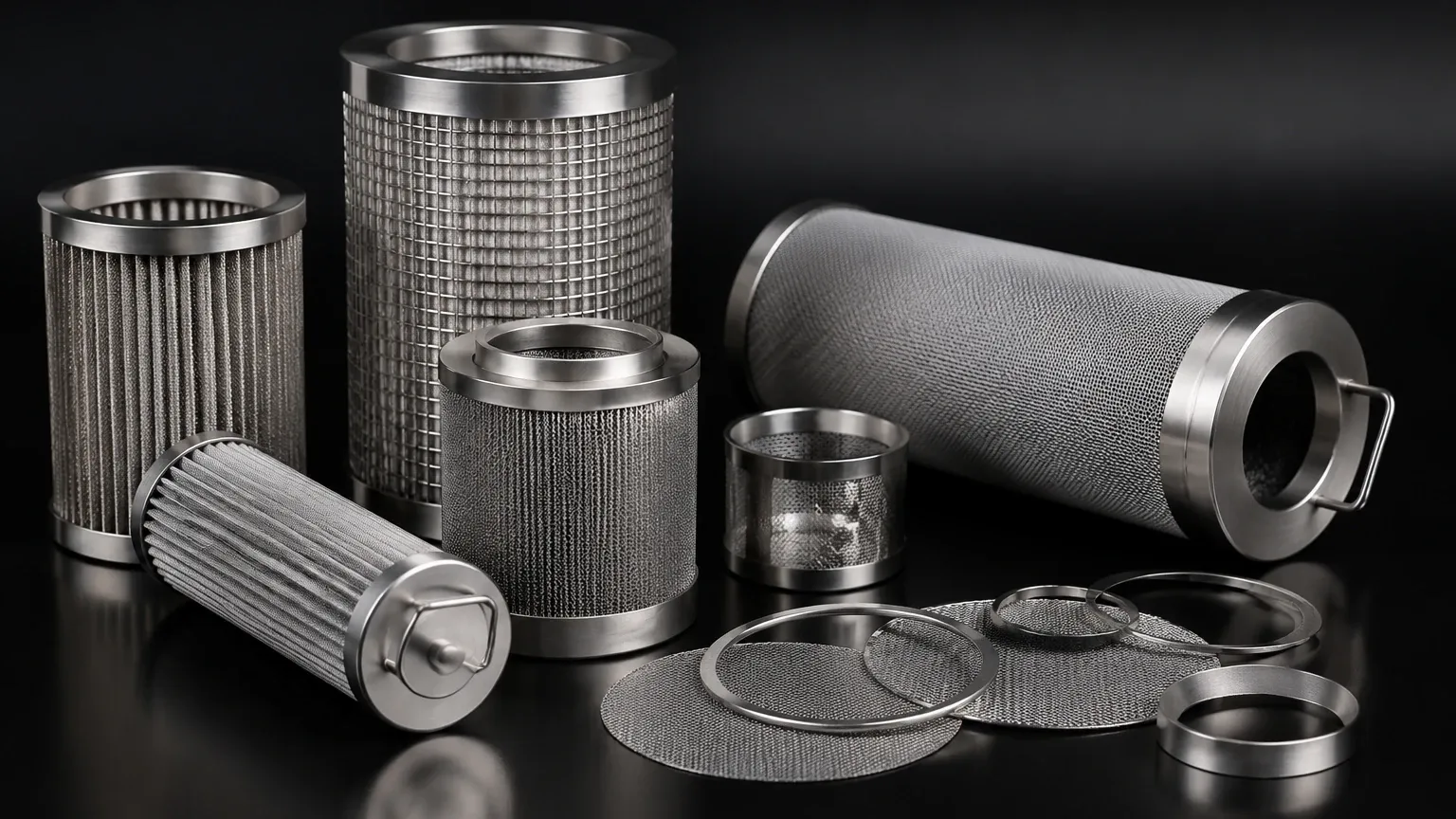
Sintered Metal Fiber and Mesh
Sintered metal filters are created by fusing layers of wire mesh or metallic fibers through a heat-treatment process without the use of binders. This creates a robust, porous structure. Sintered fiber felt is particularly effective for nitrogen filtration because it offers high porosity (up to 80%), allowing for high flow rates with minimal pressure drop. It is excellent for capturing fine particulates in high-pressure gas streams.
Pleated Stainless Steel Cartridges
For applications requiring a large filtration surface area in a compact footprint, pleated designs are ideal. By pleating the stainless steel wire cloth, the effective filtration area is increased significantly compared to a cylindrical element. This design is preferred for high-volume nitrogen lines where minimizing the frequency of maintenance shutdowns is a priority.
Operational Maintenance and Replacement Cycles
A common question for maintenance engineers is: "When should the nitrogen filter be replaced?" Relying on a fixed calendar schedule is often inefficient. The most reliable method for determining replacement cycles is monitoring the differential pressure across the filter.
1. Baseline Pressure: Record the pressure drop when the filter is new and the system is at full flow.
2. Terminal Differential Pressure: Most industrial nitrogen filters should be cleaned or replaced when the differential pressure reaches a predetermined limit, often between 10 and 15 psi, depending on the housing design.
3. Visual Inspection: For reusable stainless steel elements, regular inspection for signs of media migration or mechanical damage is essential during cleaning cycles.
In many nitrogen generation plants, redundant filter banks are installed with a duplex valve system. This allows for the maintenance of one filter while the other remains in operation, ensuring zero downtime for the nitrogen supply.
Total Cost of Ownership and Customization Options
When evaluating nitrogen filtration solutions, purchasing teams should look beyond the initial acquisition cost. The Total Cost of Ownership (TCO) includes the cost of energy (due to pressure drop), the cost of replacement elements, and the labor associated with maintenance.
Stainless steel filtration solutions from manufacturers like Kaifil offer a lower TCO over the life of the plant because the elements are durable and often cleanable. Furthermore, OEM customization allows for the integration of filters into existing footprints, eliminating the need for expensive piping reconfigurations.
Customization options typically include:
* End Cap Configurations: Compatibility with various housing styles (Code 7, 222, 226, etc.).
* Reinforced Cores: For high-pressure surge protection.
* Specific Alloy Selection: Using Monel or Hastelloy for specialized gas mixtures where standard stainless steel may not suffice.
Common Risks in Nitrogen Filtration Selection
Selecting an inadequate filter for nitrogen service carries several risks:
* Desiccant Carryover: In PSA systems, desiccant dust can bypass low-quality filters and enter the distribution line, acting as an abrasive that ruins seals and valves.
* Static Discharge: In high-velocity gas streams, static electricity can build up. Metal filters provide a conductive path to ground, reducing the risk of spark-induced incidents in volatile environments.
* Bypass Leaks: Poorly manufactured end caps or seals can allow unfiltered nitrogen to bypass the media entirely. Precision engineering in the manufacturing of the filter cartridge is vital to ensure a perfect seal within the housing.
Conclusion
Effective nitrogen filtration is a cornerstone of industrial process safety and product quality. By focusing on technical parameters such as gas velocity, absolute micron ratings, and material durability, engineers can implement filtration systems that provide long-term reliability. Stainless steel remains the gold standard for these applications, offering a balance of performance and cost-effectiveness that synthetic alternatives cannot match.
For technical professionals seeking to optimize their nitrogen systems, confirming the specific flow requirements and contaminant profiles is the first step toward selecting the ideal filtration component. To review specific product options and receive application support for your filtration needs, please refer to our Main Page.
