


Nitrogen Gas Purifier
In the landscape of modern industrial manufacturing, the demand for high-purity nitrogen gas has shifted from a specialized requirement to a standard operational necessity. Nitrogen is utilized extensively as an inert atmosphere for chemical reactions, a protective shield in electronics soldering, and a preservative in food and beverage packaging. However, the nitrogen produced by standard generators or delivered in bulk often contains trace impurities such as oxygen, moisture, carbon monoxide, and hydrocarbons. To bridge the gap between standard grade and ultra-high purity (UHP) gas, the implementation of a nitrogen gas purifier is essential.
For engineers and procurement specialists, selecting a nitrogen gas purifier involves more than just comparing flow rates. It requires a deep understanding of the purification chemistry, the mechanical integrity of the containment vessels, and the precision of the filtration components that protect the system. This guide examines the technical architecture of nitrogen purification systems and the critical role of stainless steel filtration in ensuring long-term performance and gas integrity.
Understanding the Mechanisms of Nitrogen Gas Purification
A nitrogen gas purifier operates by passing the feed gas through a series of media designed to chemically or physically remove specific contaminants. Unlike simple mechanical filtration, which targets particulates, purification targets molecular impurities. The process generally involves one or more of the following technologies:
Catalytic Deoxygenation
In systems where oxygen is the primary contaminant, a catalyst—often based on palladium or platinum—is used to facilitate a reaction between oxygen and a small amount of added hydrogen. This reaction produces water (H2O), which is subsequently removed by a downstream desiccant dryer. This method is highly effective for achieving oxygen levels below 1 part per million (ppm).
Chemical Adsorption
Adsorption-based purifiers utilize specialized getter materials or reactive metal beds (such as copper or nickel) to chemically bond with oxygen and carbon monoxide molecules. These beds are often regenerable through controlled heating and the introduction of a reducing gas. The efficiency of these beds is highly dependent on the surface area of the adsorbent and the contact time allowed by the flow velocity.
Molecular Sieves and Desiccants
To remove moisture (H2O) and carbon dioxide (CO2), molecular sieves with specific pore sizes (typically 3Å or 4Å) are employed. These materials trap molecules based on their kinetic diameter, ensuring that the nitrogen exiting the purifier has a dew point often reaching -70°C (-94°F) or lower.
The Role of Stainless Steel Filtration in Nitrogen Purifiers
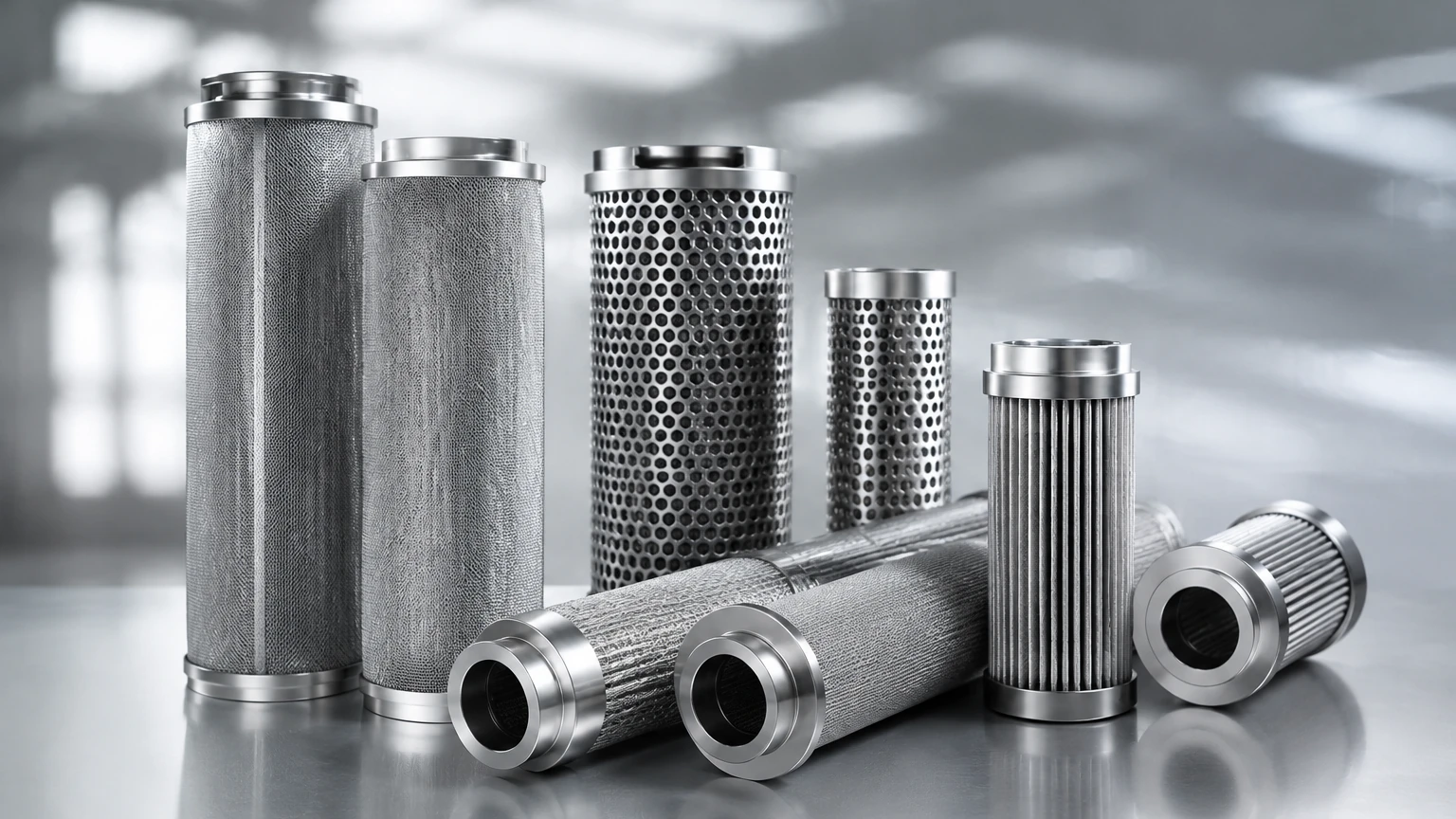
While the chemical media perform the molecular purification, the physical integrity of the nitrogen gas purifier relies heavily on high-precision filtration components. As a specialist in custom stainless steel filtration, Kaifil provides the critical components that safeguard these systems. Within a purifier, filtration serves two primary functions: bed retention and downstream protection.
Preventing Media Migration
The adsorbents and catalysts used in a nitrogen gas purifier are often in granular or pelletized forms. Over time, the thermal cycling and pressure fluctuations inherent in the purification process can cause these materials to break down into fine dust. Without robust stainless steel wire mesh or sintered metal filters at the inlet and outlet of the purifier vessels, this media dust can migrate into the process line, causing catastrophic failure in sensitive downstream equipment like mass flow controllers or semiconductor tools.
Protecting the Catalyst Bed
At the inlet of the purifier, stainless steel filter cartridges are used to remove any oil aerosols or particulates coming from the nitrogen generator or compressor. If these contaminants reach the catalyst bed, they can "poison" the reactive sites, significantly reducing the purifier's lifespan and efficiency. Stainless steel is the material of choice here due to its ability to withstand the high temperatures often required for catalyst activation and regeneration.
Critical Engineering Considerations for Purifier Selection
When evaluating a nitrogen gas purifier for industrial applications, engineering teams must look beyond the initial purity specification. Total cost of ownership and system reliability are determined by several technical factors.
Pressure Drop and Flow Dynamics
Every component in the gas path, from the adsorbent bed to the final filter, contributes to a pressure drop ($ΔP$). A well-engineered purifier must balance the need for high contact time (which requires a denser bed) with the need for minimal pressure loss. Using high-permeability stainless steel wire mesh filters allows for high-efficiency particulate capture without creating excessive resistance to flow.
Material Compatibility and Outgassing
In UHP applications, the materials used in the purifier's construction must not contribute to the contamination. Standard polymers and low-grade metals can outgas volatile organic compounds (VOCs) or moisture. Stainless steel (316L grade) is preferred for its chemical passivity and low outgassing rates. Furthermore, the internal surfaces of the filter housings and components are often electropolished to minimize surface area and prevent the entrapment of moisture molecules.
Thermal Management
Many nitrogen gas purifiers operate at elevated temperatures, particularly during the regeneration phase. Filtration components must maintain their structural integrity and micron rating at temperatures exceeding 300°C. Unlike polymer-based filters, Kaifil’s stainless steel filter cartridges are vacuum-brazed or welded to ensure they do not degrade or bypass under thermal stress.
Customization and OEM Integration
For many industrial equipment manufacturers, a standard off-the-shelf nitrogen gas purifier may not fit the spatial or performance constraints of their system. Customization is often required in the following areas:
* Micron Ratings: Depending on the sensitivity of the application, final stage filtration may need to range from 5 microns down to 0.01 microns.
* End-Cap Configurations: To ensure a leak-tight seal within the purifier vessel, custom end-caps (such as 222, 226, or threaded connections) are engineered to match the specific housing design.
* Surface Area Optimization: Pleated stainless steel wire mesh can be used to increase the effective filtration area, allowing for higher flow rates within a compact footprint.
Engineers looking for reliable components for their purification systems can explore the Main Page to understand the manufacturing capabilities available for custom metal filtration solutions.
Maintenance, Longevity, and Risk Mitigation
The effective lifespan of a nitrogen gas purifier is governed by the capacity of its adsorbent beds and the cleanliness of its filters. Neglecting maintenance leads to two primary risks: breakthrough and bypass.
Managing Breakthrough
Breakthrough occurs when the chemical media is saturated and can no longer remove impurities. Modern purifiers often include sensors to monitor oxygen or moisture levels at the outlet. However, a less discussed aspect is the pressure differential across the filters. As filters trap media fines, the $ΔP$ increases. If the filters are not cleaned or replaced, the increased pressure can eventually cause mechanical deformation or "channeling" within the adsorbent bed, leading to premature breakthrough.
Cleaning and Reuse
One of the significant advantages of stainless steel filtration in nitrogen gas purifiers is the ability to clean and reuse the components. Sintered mesh and wire cloth filters can be ultrasonically cleaned or backflushed, restoring their original flow characteristics. This significantly reduces the long-term operational cost compared to disposable polymer filters, which must be discarded and replaced frequently.
Technical Specifications to Confirm Before Purchase
Before finalizing the design or purchase of a purification system, technical professionals should confirm the following data points with their suppliers:
1. Inlet Gas Quality: What is the maximum allowable O2 and H2O concentration in the feed gas? Overloading the purifier will lead to rapid media exhaustion.
2. Particle Retention Efficiency: Does the final filter meet the ISO 12500-3 standards for particulate removal in gas streams?
3. Maximum Operating Pressure: Ensure the filter housings and internal elements are rated for the system's peak pressure, including safety margins.
4. Regeneration Requirements: Does the system require a separate purge gas or vacuum for regeneration, and can the internal components withstand those specific conditions?
Conclusion
A nitrogen gas purifier is a vital investment for any facility requiring high-purity gas for critical processes. By integrating advanced chemical adsorption with high-performance stainless steel filtration, these systems provide a reliable barrier against contaminants that threaten product quality and equipment longevity. For engineers tasked with designing or maintaining these systems, focusing on the quality of the internal filtration components is as important as the purification media itself. Durable, high-precision metal filters ensure that the nitrogen remains pure from the moment it leaves the purifier bed until it reaches the point of use.
For more information on high-performance filtration components for industrial gas applications, visit the Main Page to consult with filtration experts.
