


Nitrogen Sparging
Nitrogen sparging is a critical process in industrial fluid management, primarily utilized to remove dissolved oxygen and other unwanted gases from liquids. By introducing nitrogen—a chemically inert gas—into a liquid medium, engineers can prevent oxidation, enhance product stability, and maintain the integrity of sensitive compounds. In B2B industrial environments ranging from pharmaceutical manufacturing to chemical processing, the efficiency of this process depends heavily on the precision of the gas distribution hardware. Selecting the appropriate porous metal components is essential for achieving the required mass transfer and ensuring long-term operational reliability.
Understanding the Mechanics of Nitrogen Sparging
The fundamental principle behind nitrogen sparging is based on Henry’s Law, which states that the amount of dissolved gas in a liquid is proportional to its partial pressure above the liquid. When nitrogen bubbles are introduced into a liquid containing dissolved oxygen, the partial pressure of oxygen in the gas phase (the bubble) is initially zero. This creates a concentration gradient that drives the dissolved oxygen out of the liquid and into the nitrogen bubble, which then rises to the surface and is vented away.
For engineers, the primary goal is to maximize the gas-liquid interface area. The total surface area available for mass transfer is inversely proportional to the bubble size; smaller bubbles provide a significantly higher surface area-to-volume ratio than larger bubbles. Consequently, the use of precision-engineered porous media, such as sintered stainless steel, is preferred over simple drilled pipes. These porous elements create a fine mist of micro-bubbles, drastically increasing the efficiency of the deoxygenation process and reducing the total volume of nitrogen gas required to reach the target dissolved oxygen (DO) levels.
The Role of Porous Metal Media in Gas Distribution
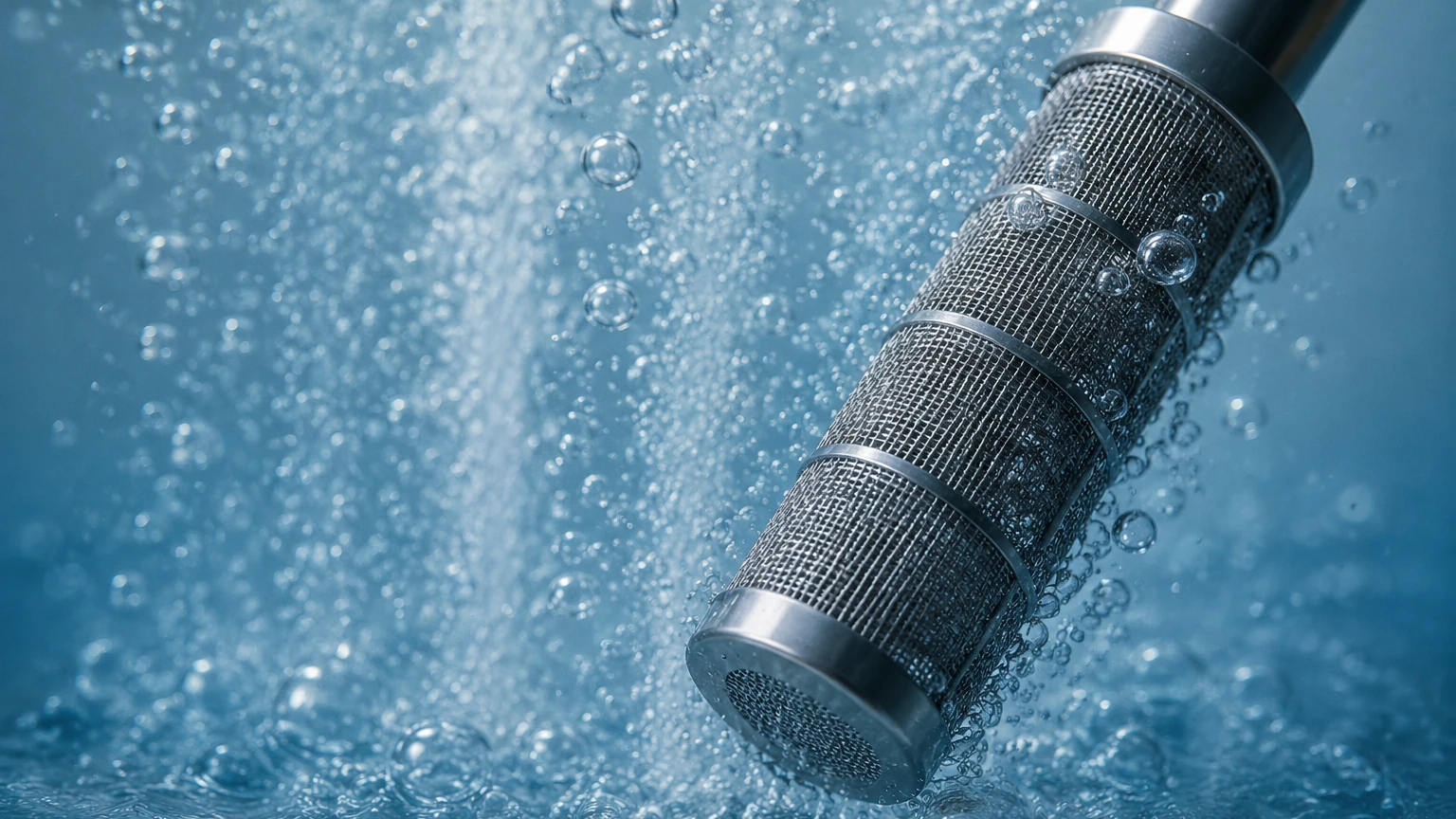
In industrial sparging systems, the sparger element is the hardware responsible for gas injection. While various materials can be used, stainless steel porous media are the industry standard for demanding B2B applications. These components are typically manufactured through a sintering process, where stainless steel powder or fine wire mesh is fused together to create a rigid structure with controlled porosity.
Compared to polymer-based or ceramic alternatives, stainless steel spargers offer superior mechanical strength and thermal stability. In high-pressure hydraulic systems or high-temperature chemical reactors, the structural integrity of the sparger is paramount. Sintered metal elements can withstand significant differential pressures without deforming, ensuring that the bubble size and distribution remain consistent throughout the production cycle. Furthermore, the uniform pore distribution in high-quality stainless steel filters prevents "channeling," a common failure mode where gas escapes through a few large openings rather than across the entire surface of the element.
Engineering Considerations for Sparger Design and Material Selection
When specifying a nitrogen sparging system, engineers must evaluate several technical parameters to ensure the hardware aligns with the specific process requirements. The following factors are critical during the selection phase:
1. Micron Rating and Pore Size
The micron rating of the porous element determines the initial size of the nitrogen bubbles. For most deoxygenation tasks, a micron rating between 0.5 and 20 microns is selected. A finer pore size creates smaller bubbles, which is ideal for rapid deoxygenation in batch tanks. However, finer pores also result in a higher pressure drop across the element, requiring higher gas supply pressures.
2. Material Compatibility
While 316L stainless steel is the most common choice due to its excellent corrosion resistance and weldability, certain applications may require specialized alloys. In highly acidic or saline environments, materials such as Hastelloy or Monel may be necessary. For the food and beverage and pharmaceutical industries, the material must also meet stringent sanitary standards to prevent contamination.
3. Flow Rate and Pressure Drop
The relationship between gas flow rate and pressure drop (Delta P) is a vital engineering calculation. If the pressure drop is too high, the system may fail to deliver the required volume of nitrogen. Conversely, if the flow rate is too high for the surface area of the sparger, the micro-bubbles may coalesce into larger bubbles, reducing mass transfer efficiency. Engineers must balance the sparger's surface area with the intended nitrogen flow rate to maintain the "fine bubble" regime.
4. Connection and Configuration
Spargers are available in various configurations, including in-line pipe spargers, flange-mounted elements, and tank-bottom probes. The choice depends on whether the process is continuous (in-line) or batch (tank-based). Proper placement within the vessel is also necessary to ensure that the nitrogen bubbles have sufficient residence time in the liquid to facilitate gas exchange.
Key Industrial Applications of Nitrogen Sparging
Nitrogen sparging is utilized across a broad spectrum of industries, each with specific performance expectations and regulatory requirements.
Food and Beverage Production
In the production of edible oils, fruit juices, and wine, dissolved oxygen is a primary cause of spoilage and flavor degradation. Sparging nitrogen through the product before packaging extends shelf life and maintains nutritional value. In the brewing industry, nitrogen is used to displace oxygen in bright tanks to prevent the oxidation of hops and malt compounds.
Pharmaceutical and Biotech Manufacturing
Many pharmaceutical ingredients are sensitive to oxygen, which can trigger degradation pathways. Nitrogen sparging is used to protect active pharmaceutical ingredients (APIs) during synthesis and storage. In bioreactors, precise gas control is necessary to maintain the correct environment for cell cultures, where nitrogen may be used alongside oxygen and carbon dioxide to balance dissolved gas concentrations.
Chemical and Petrochemical Processing
In chemical reactors, nitrogen sparging serves a dual purpose: removing reactive gases and providing gentle agitation. Unlike mechanical impellers, which can shear sensitive molecules or create localized high-heat zones, gas sparging provides uniform mixing. It is also used to strip volatile organic compounds (VOCs) from wastewater streams before treatment.
Managing Operational Risks and Maintenance Protocols
Despite the durability of stainless steel spargers, operational challenges can arise if maintenance is neglected. The most common risk is fouling or clogging of the porous media. In liquids containing suspended solids, fats, or biological matter, particles can lodge within the pore structure, increasing pressure drop and reducing gas flow.
To mitigate these risks, engineers should implement a Clean-in-Place (CIP) or Steam-in-Place (SIP) protocol. Stainless steel elements are particularly well-suited for these processes because they can withstand aggressive chemical cleaning agents and high-temperature sterilization. In cases of severe fouling, ultrasonic cleaning is an effective method for restoring the permeability of the sintered metal.
Another risk is mechanical stress caused by "water hammer" or sudden pressure surges in the gas line. Integrating check valves and pressure regulators into the gas delivery system protects the sparger from backflow and sudden mechanical shocks. For long-term reliability, it is recommended to monitor the differential pressure across the sparger; a steady increase in Delta P usually indicates the need for a cleaning cycle.
Technical Evaluation for Industrial Procurement
For procurement teams and engineers, selecting a filtration partner for nitrogen sparging components requires a focus on manufacturing precision and technical support. A reliable supplier should provide detailed specifications regarding pore size distribution, material certifications (such as 316L mill test reports), and flow-pressure curves.
Before finalizing a design, the following questions should be confirmed:
* What is the target dissolved oxygen level, and what is the starting concentration?
* What are the dimensions of the vessel or pipe where the sparger will be installed?
* Are there specific sanitary or regulatory standards (e.g., FDA, 3A) that must be met?
* What is the maximum available gas pressure at the point of use?
By addressing these technical details, organizations can ensure that their sparging systems operate at peak efficiency with minimal downtime. For those seeking specialized filtration and gas distribution components, visiting the Main Page of a dedicated manufacturer like Kaifil provides access to technical data sheets and customization options tailored to industrial requirements.
Total Cost of Ownership and Efficiency
While the initial cost of a precision sintered metal sparger is higher than that of a simple perforated pipe, the total cost of ownership (TCO) is often lower. The increased efficiency in nitrogen usage can lead to significant cost savings over time, especially in large-scale operations where nitrogen gas consumption is high. Furthermore, the durability of stainless steel reduces the frequency of replacements and the associated labor costs of maintenance. When engineering a nitrogen sparging solution, focusing on the quality of the porous element is an investment in process stability and product quality.
