


Oil and Water Separator Filter
In industrial fluid management, the effective isolation of immiscible liquids is a critical requirement for maintaining equipment integrity, ensuring product purity, and meeting environmental compliance standards. The oil and water separator filter serves as a primary component in systems designed to remove water from hydrocarbon-based fluids or, conversely, to remove oil contaminants from water streams. For engineers and procurement professionals, selecting the appropriate filtration media and housing configuration is essential to optimize the efficiency of these separation processes.
Industrial filtration often requires more than simple particulate removal. When dealing with liquid-liquid mixtures, factors such as surface tension, specific gravity, and droplet size distribution dictate the success of the separation. Stainless steel filtration components, particularly those engineered with precision wire mesh, play a vital role in these applications due to their structural rigidity and predictable pore geometry.
The Engineering Principles of Oil-Water Separation
The separation of oil and water generally relies on the physical differences between the two phases. Most industrial systems utilize one or a combination of the following principles, where the oil and water separator filter acts as the functional heart of the operation:
Gravity and Density Differential
Because oil and water have different densities, they will naturally stratify over time if left undisturbed. However, in high-flow industrial environments, gravity alone is often insufficient. Filters are used to facilitate this process by slowing down the flow or providing surfaces that encourage the accumulation of specific phases.
Coalescence
Coalescence is the process where small droplets of a dispersed phase (such as water in fuel) collide and merge into larger droplets. As these droplets grow, their buoyancy or weight increases, allowing them to separate from the continuous phase more rapidly. An oil and water separator filter designed for coalescing typically uses a multi-layered media structure. Stainless steel wire mesh is frequently used as a support or a pre-filtration stage in these systems to protect delicate coalescing elements from particulate fouling.
Mechanical Filtration and Surface Tension
In some specialized applications, the filter media is treated or engineered to be hydrophobic (repelling water) or oleophobic (repelling oil). By utilizing the surface tension of the liquids, a precision-engineered mesh can allow one phase to pass through while blocking the other. This is particularly common in high-precision hydraulic systems and fuel filtration where water must be strictly excluded from the downstream process.
Material Selection: Why Stainless Steel is Preferred
When specifying an oil and water separator filter for heavy-duty industrial use, material choice is paramount. While synthetic fibers and paper-based media are common in light-duty applications, stainless steel remains the industry standard for demanding environments.
Corrosion Resistance
Oil and water mixtures, especially in wastewater treatment or chemical processing, can be chemically aggressive. The presence of dissolved salts, acids, or alkalis can quickly degrade standard carbon steel or plastic components. Utilizing 304 or 316L stainless steel ensures that the filter maintains its structural integrity over a long service life, even when exposed to corrosive aqueous phases.
Thermal and Pressure Stability
Industrial processes often operate at elevated temperatures or under significant pressure. Synthetic filters may soften or deform, leading to "media migration" or bypass. Stainless steel wire mesh filters maintain their pore size and shape under high differential pressures, ensuring consistent filtration performance regardless of the operating conditions.
Cleanability and Sustainability
Unlike disposable cartridges, stainless steel filter elements are often cleanable and reusable. In systems where the contaminant load is high, the ability to backwash or ultrasonically clean the filter significantly reduces the total cost of ownership. This aligns with modern industrial goals of reducing waste and optimizing maintenance schedules.
Key Technical Specifications for Engineers
To ensure the performance of an oil and water separator filter, several technical parameters must be evaluated during the design or procurement phase. Professionals should consult the Main Page to review product options and application support that meet these specific criteria:
1. Micron Rating: This defines the size of particles or droplets the filter can effectively intercept. In oil-water separation, a precise micron rating is necessary to ensure that the coalescing process is not hindered by oversized particulates.
2. Flow Rate and Velocity: The velocity of the fluid through the media affects the residence time required for coalescence. If the velocity is too high, droplets may be sheared back into smaller sizes, defeating the purpose of the separator.
3. Differential Pressure (ΔP): Monitoring the pressure drop across the filter is the primary method for determining when a filter requires cleaning or replacement. A high-quality stainless steel filter is designed to operate with a low initial ΔP to maximize the available service life.
4. Viscosity Considerations: The viscosity of the oil phase significantly impacts the ease with which water can be separated. Higher viscosity fluids require larger surface areas or specialized mesh weaves to maintain efficient throughput.
Customization and OEM Integration
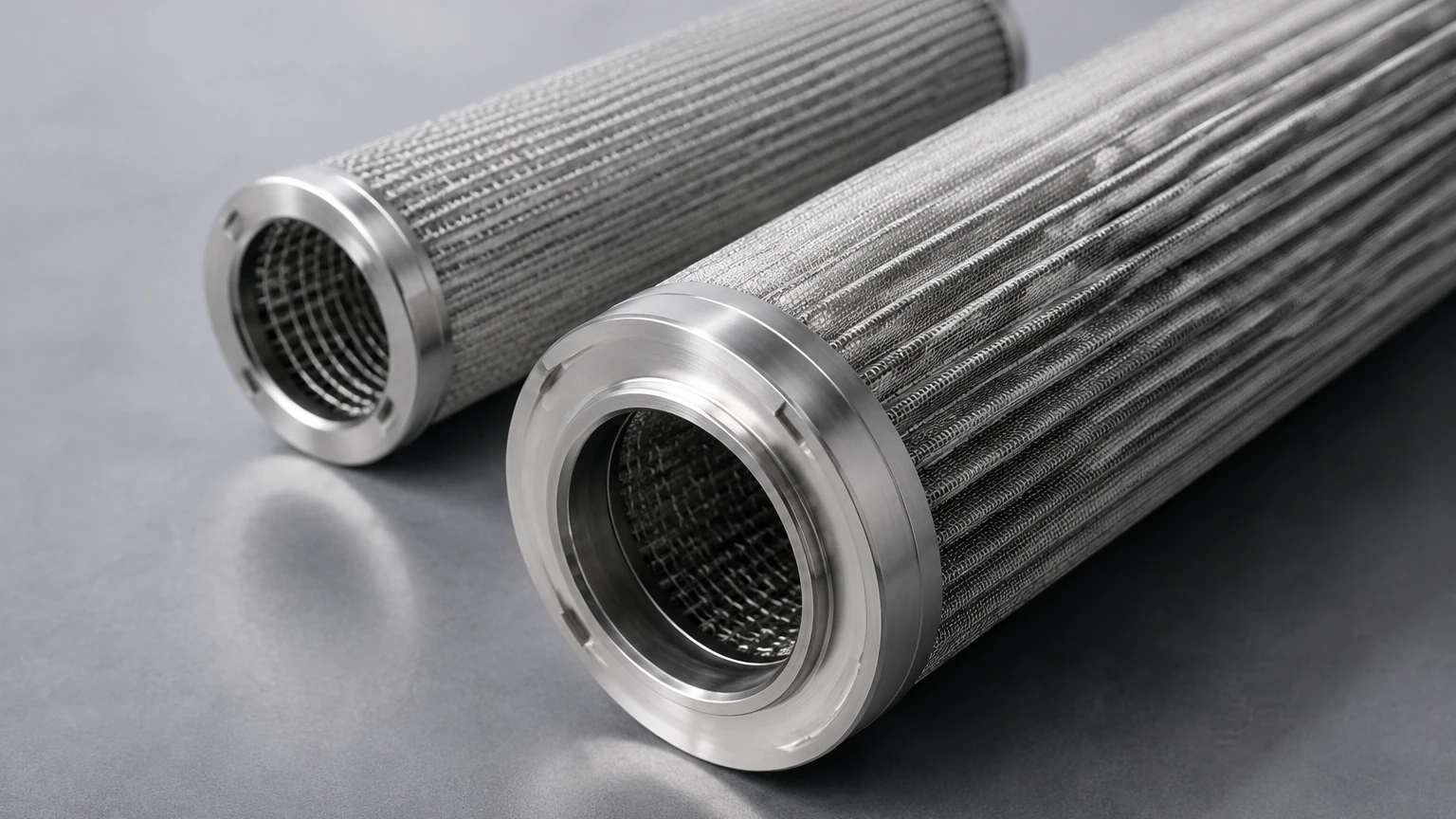
No two industrial applications are identical. Factors such as the chemical composition of the fluids, the available installation space, and specific flow requirements often necessitate customized filtration solutions. OEM manufacturers like Kaifil specialize in developing bespoke stainless steel filter cartridges and wire mesh components tailored to unique separator housings.
Customization options often include:
* Variable Mesh Weaves: Choosing between plain, twilled, or Dutch weaves to balance filtration fineness with flow capacity.
* Reinforced Structures: Adding internal cores or external shrouds to the filter element to withstand extreme pressure spikes in hydraulic or high-pressure fuel systems.
* End Cap Configurations: Engineering specific fittings (e.g., thread types, O-ring grooves, or flange mounts) to ensure a leak-proof interface with existing separator vessels.
Common Applications for Oil and Water Separator Filters
Hydraulic Systems
Water is one of the most common contaminants in hydraulic oil, leading to fluid oxidation, additive depletion, and component corrosion. An oil and water separator filter in the kidney loop or return line helps maintain the dielectric strength and lubricity of the hydraulic fluid.
Marine and Power Generation Fuel Systems
Diesel and turbine fuels must be free of water to prevent microbial growth and injector damage. Coalescing separators using stainless steel mesh stages are standard in these industries to handle large volumes of fuel with high reliability.
Industrial Wastewater Treatment
Before discharging process water into municipal sewers or natural bodies of water, industries must remove residual oils and greases. Large-scale separator filters help meet environmental regulations by reducing the oil content to permissible parts-per-million (PPM) levels.
Food and Beverage Processing
In the production of edible oils or the management of process water, filtration systems must meet strict sanitary standards. Stainless steel is the material of choice here due to its non-leaching properties and ability to withstand rigorous Clean-in-Place (CIP) cycles.
Maintenance and Performance Optimization
To maximize the lifespan of an oil and water separator filter, a proactive maintenance strategy is required. For stainless steel elements, this involves regular monitoring of differential pressure and scheduled inspections for signs of scaling or mechanical wear.
When the filter reaches its terminal pressure drop, cleaning should be performed according to the manufacturer’s guidelines. For metal mesh, this may include solvent cleaning, back-flushing with high-pressure air or water, or ultrasonic baths to remove deeply embedded contaminants. Proper handling during the cleaning process ensures that the precision weave of the mesh is not damaged, preserving the filter's micron rating for subsequent use.
Conclusion
The selection of an oil and water separator filter is a technical decision that impacts the efficiency, safety, and cost-effectiveness of industrial operations. By prioritizing high-quality materials like stainless steel and focusing on precise engineering specifications, engineers can ensure long-term performance in even the most challenging environments. Whether for OEM integration or system upgrades, understanding the nuances of coalescence, material compatibility, and customization is the key to successful fluid separation. For those seeking detailed technical specifications or custom-engineered components, visiting the Main Page provides access to professional filtration solutions and expert guidance tailored to diverse industrial needs.
