


Oil Filter Element
In industrial machinery, the longevity and reliability of hydraulic systems, turbines, and lubrication circuits depend heavily on the cleanliness of the circulating fluid. Contamination is the primary cause of component wear, valve sticking, and catastrophic system failure. The oil filter element serves as the critical barrier, capturing particulate matter that would otherwise degrade mechanical tolerances and accelerate fluid oxidation. For engineers and procurement professionals, selecting the appropriate filtration component requires a deep understanding of fluid dynamics, material science, and the specific operational demands of the application.
Industrial filtration is not a one-size-fits-all solution. Factors such as fluid viscosity, operating temperature, flow rate, and the nature of the contaminants dictate the design and material composition of the filter. This guide examines the technical nuances of oil filter elements, focusing on stainless steel solutions and the engineering considerations necessary for optimizing industrial performance.
Engineering Fundamentals of Oil Filter Elements
The primary function of an oil filter element is to maintain fluid cleanliness levels according to specific industry standards, such as ISO 4406. To achieve this, the filter must balance three competing factors: filtration efficiency, pressure drop (differential pressure), and dirt-holding capacity.
Filtration Efficiency and Micron Ratings
Filtration efficiency is often expressed as a micron rating. However, a simple micron value is rarely sufficient for industrial specifications. Engineers must distinguish between nominal and absolute ratings. A nominal rating indicates the filter's ability to capture a percentage of particles of a given size, whereas an absolute rating (often defined by a Beta Ratio of 75 or higher) indicates that the filter captures virtually all particles of that size. In high-precision hydraulic systems, absolute-rated elements are essential to protect sensitive components like servo valves.
Differential Pressure (ΔP)
As oil passes through the filter media, it encounters resistance, resulting in a pressure drop. This differential pressure is influenced by the fluid's viscosity, the flow velocity, and the permeability of the filter media. An ideal oil filter element provides high efficiency with minimal initial pressure drop. As the filter captures contaminants, the ΔP increases. Monitoring this increase is vital for determining the optimal replacement interval before the system's bypass valve opens or the element collapses.
Material Selection: The Case for Stainless Steel Mesh
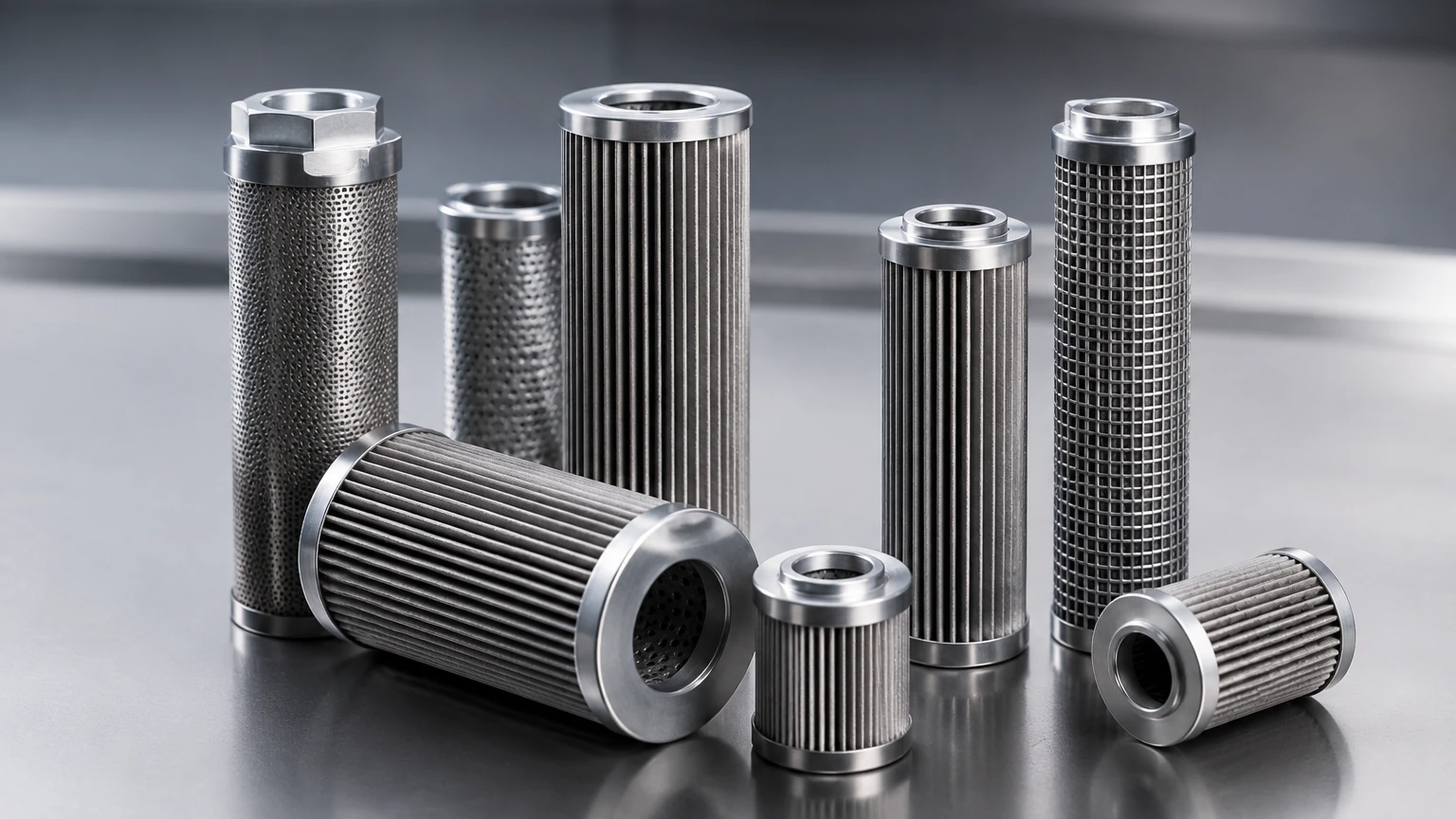
While disposable cellulose or fiberglass elements are common in light-duty applications, demanding industrial environments often require the durability of metal media. Stainless steel wire mesh and sintered metal fibers are the materials of choice for applications involving high temperatures, aggressive chemicals, or high-pressure differentials.
Corrosion and Temperature Resistance
Stainless steel (typically grades 304 or 316L) offers exceptional resistance to corrosion, making it suitable for synthetic oils, fire-resistant fluids, and chemical processing environments. Furthermore, metal elements can operate at temperatures far exceeding the limits of polymer-based media, which may soften or degrade when exposed to hot industrial lubricants.
Structural Integrity and Cleanability
Unlike synthetic media, which may suffer from media migration (where fibers break loose and enter the downstream flow), stainless steel wire mesh provides a stable pore structure. This structural integrity is critical in high-pressure systems where the oil filter element must withstand significant mechanical stress. Additionally, many stainless steel elements are cleanable and reusable, offering a sustainable alternative to disposable cartridges in specific applications, provided that a standardized cleaning protocol (such as ultrasonic cleaning) is followed.
Performance Metrics: Efficiency, Beta Ratio, and Capacity
To accurately evaluate an oil filter element, technical teams rely on standardized testing protocols, most notably the Multi-Pass Test (ISO 16889). This test provides the Beta Ratio (β), which is the ratio of particles of a given size upstream of the filter to the number of particles downstream.
Understanding the Beta Ratio
A Beta Ratio of βx = 200 means that for every 200 particles of size 'x' entering the filter, only one passes through, indicating 99.5% efficiency. For critical industrial applications, engineers often specify βx ≥ 1000 (99.9% efficiency). High Beta Ratios ensure that the fluid remains within the target ISO cleanliness codes, significantly extending the mean time between failures (MTBF) for pumps and bearings.
Dirt-Holding Capacity (DHC)
DHC refers to the total weight of a standardized contaminant the filter can retain before reaching a terminal differential pressure. A higher DHC directly correlates to longer service intervals. Pleated designs are frequently used to maximize the surface area within a given footprint, thereby increasing the DHC without increasing the external dimensions of the filter housing.
Customization and OEM Integration for Industrial Systems
Off-the-shelf filtration products often fail to meet the specific requirements of specialized industrial equipment. Customization is frequently necessary to accommodate unique flow paths, non-standard housing dimensions, or extreme operating conditions. As a professional manufacturer, Kaifil specializes in developing tailored filtration solutions that align with specific engineering constraints.
Tailored Media Configurations
Customization allows for the optimization of the mesh weave and layer configuration. For instance, a multi-layer sintered mesh can combine a fine filtration layer with coarser support layers to provide both high precision and mechanical strength. This is particularly useful in heavy-duty hydraulic systems where the oil filter element is subjected to frequent pressure surges.
OEM Specifications and Compatibility
For original equipment manufacturers (OEMs), integrating a custom-designed filter element ensures that the filtration system is perfectly matched to the machine's performance characteristics. This includes specifying the exact end-cap materials, gasket types (such as Viton or EPDM for chemical compatibility), and internal support cores to prevent element collapse under high-viscosity cold-start conditions.
Maintenance Strategies and Differential Pressure Monitoring
The effectiveness of an oil filter element is only as good as the maintenance strategy supporting it. Relying on fixed calendar intervals for filter changes often leads to either premature replacement (increasing costs) or delayed replacement (risking system damage).
Condition-Based Monitoring
Modern industrial systems utilize differential pressure indicators—mechanical or electronic—to signal when a filter element is reaching its capacity. Electronic sensors can integrate with PLC systems to provide real-time data, allowing maintenance teams to plan replacements during scheduled downtime. This approach ensures that the oil filter element is utilized to its maximum potential while maintaining system safety.
Handling High Viscosity Fluids
In applications involving heavy gear oils or cold-start scenarios, the initial differential pressure can be high due to fluid thickness rather than contamination. In these cases, the selection of an element with a high-strength center tube and a bypass valve with a correctly calibrated cracking pressure is essential. Proper engineering at the selection stage prevents the bypass of unfiltered oil during the warm-up phase.
Economic Considerations: Total Cost of Ownership
When procuring an oil filter element, the purchase price is only one component of the Total Cost of Ownership (TCO). A lower-cost, lower-quality element may lead to higher long-term expenses through increased frequency of changes, higher disposal costs, and, most significantly, the cost of unplanned downtime and component repair.
Longevity and System Protection
Investing in a high-quality stainless steel or high-efficiency synthetic element reduces the rate of component wear. By maintaining a cleaner fluid environment, the service life of expensive hydraulic pumps and motors can be extended by two to four times. Furthermore, high-capacity elements reduce the labor costs associated with frequent filter changes.
Sustainable Filtration Solutions
In industries where environmental impact is a concern, the move toward cleanable stainless steel elements can significantly reduce the waste stream. While the initial investment in a cleanable oil filter element and the necessary cleaning equipment is higher, the elimination of recurring disposal costs and the reduction in consumable purchases often result in a favorable return on investment (ROI) over the machine's lifecycle.
Conclusion
Selecting the right oil filter element is a technical decision that impacts the efficiency, safety, and profitability of industrial operations. By focusing on material compatibility, precise micron ratings, and robust structural design, engineers can ensure their systems operate at peak performance. Whether through standard configurations or custom OEM designs, the goal remains the same: protecting the heart of the machinery from the silent threat of contamination. For those seeking specialized assistance in material selection or custom filter design, reviewing technical specifications and application support on the Main Page can provide the necessary foundation for an optimized filtration strategy.
