


Oil Filter System for Cooking Oil
In industrial food processing and large-scale culinary operations, the management of frying oil is a critical factor influencing both product quality and operational overhead. An efficient oil filter system for cooking oil is not merely a peripheral accessory; it is a fundamental engineering component designed to maintain the chemical stability and physical clarity of the oil. For engineers and facility managers, understanding the technical nuances of filtration media, micron ratings, and material compatibility is essential for optimizing the lifecycle of expensive frying fats and oils.
As cooking oil is subjected to high temperatures, it undergoes several chemical changes, including oxidation, hydrolysis, and polymerization. These processes are accelerated by the presence of food particles, moisture, and carbonized debris. By implementing a robust mechanical filtration strategy, operators can significantly delay the rise of Total Polar Materials (TPM) and Free Fatty Acids (FFA), ensuring the oil remains within safety and sensory parameters for longer periods.
The Engineering Principles of Cooking Oil Filtration
Filtration in a high-temperature environment requires a deep understanding of fluid dynamics and material science. When designing or selecting an oil filter system for cooking oil, the primary objective is the removal of suspended solids—ranging from large breading crumbs to microscopic carbonized silt—without compromising the flow rate required by the heating system.
Mechanical vs. Chemical Filtration
In industrial applications, mechanical filtration is the first line of defense. This involves passing the oil through a physical barrier, such as a stainless steel wire mesh or a sintered metal cartridge. While chemical treatments (like active powders) are sometimes used to neutralize acids, mechanical filtration prevents the initial degradation by removing the catalysts for oxidation. For many OEM systems, the durability and reusability of stainless steel components provide a superior return on investment compared to single-use paper or fabric media.
Temperature and Viscosity Considerations
Cooking oil filtration typically occurs at temperatures between 150°C and 190°C (300°F to 375°F). At these temperatures, the viscosity of the oil is significantly lower than at room temperature, which facilitates faster flow through fine mesh. However, the filtration system must be engineered to withstand thermal expansion and the corrosive nature of fatty acids at elevated temperatures. This is why high-grade stainless steel, such as 304 or 316L, is the industry standard for these components.
Material Selection: Why Stainless Steel Dominates
For an industrial oil filter system for cooking oil, the choice of material is non-negotiable. The filtration media must be food-safe, corrosion-resistant, and capable of withstanding rigorous cleaning cycles. Kaifil specializes in manufacturing stainless steel filtration solutions that meet these stringent requirements.
1. Corrosion Resistance: During the frying process, moisture from food reacts with oil to form fatty acids. Stainless steel 316L offers excellent resistance to these organic acids, preventing the leaching of metallic ions into the food product.
2. Thermal Stability: Unlike synthetic fibers or paper, stainless steel does not degrade or lose structural integrity at frying temperatures. It maintains its micron rating and shape even under the pressure of high-volume pumps.
3. Cleanability and Hygiene: In the food and beverage industry, sanitation is paramount. Stainless steel filters can be cleaned using caustic solutions, high-pressure steam, or ultrasonic baths, ensuring that no bacterial growth or old oil residue remains between batches.
Technical Specifications: Micron Ratings and Weave Types
Selecting the correct micron rating is a balancing act between filtration efficiency and system throughput. If the mesh is too coarse, fine carbon particles will remain in the oil, leading to "peppering" on the food and faster oil breakdown. If the mesh is too fine, the filter may clog prematurely, causing a high-pressure drop and potentially damaging the pump.
Understanding Micron Ratings
In the context of an oil filter system for cooking oil, micron ratings typically range from 5 to 80 microns.
* 5-20 Microns: Used for fine polishing and removing microscopic carbonized silt. Often found in secondary filtration stages.
* 40-80 Microns: Standard for primary filtration to remove breading, flour particles, and larger debris.
Wire Mesh Weave Patterns
The geometry of the weave determines the filter's performance characteristics.
* Plain Weave: Provides a simple, straight-through flow and is easy to clean. It is suitable for larger particle removal.
* Dutch Weave: This pattern uses a higher density of wires, creating a more tortuous path for particles. It offers superior strength and much finer filtration levels, making it ideal for high-pressure industrial oil systems where precision is required.
Integration into Industrial Frying Systems
For OEM manufacturers of industrial fryers, the integration of the filter component is a key design consideration. The filter must fit within the footprint of the machine while being easily accessible for maintenance.
Filter Cartridges vs. Flat Screens
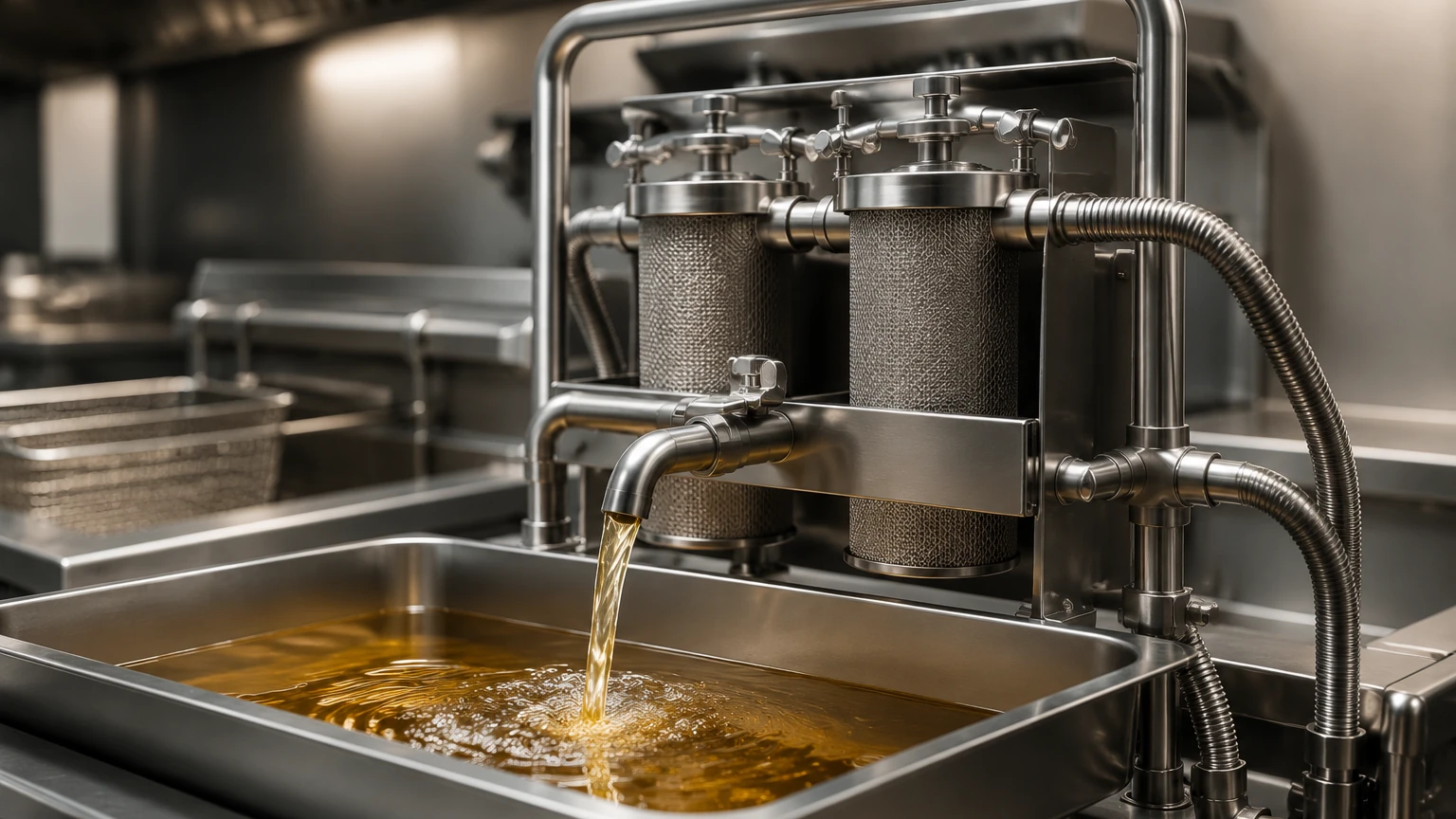
* Stainless Steel Filter Cartridges: These provide a large surface area in a compact volume. They are ideal for continuous frying lines where the oil is constantly circulated through a filtration loop. The cylindrical design handles internal and external pressure well, preventing the media from collapsing.
* Custom Mesh Screens: These are often used as pre-filters in the fryer vat or the collection tank. They catch large debris before it enters the pump, protecting the mechanical seals and impellers from abrasive wear.
Pressure Drop and Pump Performance
Every filter introduces a degree of resistance to the flow, known as pressure drop (ΔP). As the filter accumulates debris, the pressure drop increases. An engineered Main Page solution takes into account the pump's curve to ensure that even as the filter loads, the system maintains sufficient flow to prevent the heating elements from overheating or the oil from scorching due to stagnation.
Operational Impact and Total Cost of Ownership
Investing in a high-quality oil filter system for cooking oil has a direct impact on the bottom line. While the initial cost of stainless steel filtration components is higher than disposable alternatives, the long-term savings are substantial.
Extending Oil Life
The most significant cost in any frying operation is the oil itself. By removing the carbonized particles that catalyze oxidation, a precision filter can extend the usable life of oil by 30% to 50%. This reduces the frequency of oil disposal and the labor costs associated with oil changes.
Product Consistency
Consistent filtration ensures that every batch of food has the same flavor, color, and texture. Fine particles left in the oil eventually burn and attach to the food, creating off-flavors and unappealing dark spots. A reliable filtration system maintains the sensory profile of the brand.
Reduced Waste and Sustainability
Disposable paper filters contribute significantly to a facility's waste stream and are often saturated with oil, making them heavy and difficult to dispose of. Reusable stainless steel filters align with corporate sustainability goals by eliminating this recurring waste and reducing the overall environmental footprint of the production line.
Maintenance and Cleaning Protocols for Metal Filters
To ensure the longevity of a stainless steel oil filter system for cooking oil, a proper maintenance schedule is required. Unlike disposable media, metal filters can be restored to near-original performance through effective cleaning.
* Daily Rinsing: In many operations, a simple hot oil backwash or a rinse with hot water and grease-cutting detergent is sufficient for daily maintenance.
* Deep Cleaning: Periodically, filters should be subjected to a deep clean. This may involve soaking in a specialized caustic solution to dissolve polymerized oil (varnish) that has baked onto the mesh.
* Ultrasonic Cleaning: For fine-micron Dutch weave filters, ultrasonic cleaning is the most effective method. The cavitation bubbles reach deep into the weave to dislodge particles that manual scrubbing cannot reach.
Customization and OEM Solutions
No two industrial frying applications are identical. Factors such as the type of breading (flour vs. heavy batter), the type of oil (vegetable, palm, or animal fat), and the production volume all dictate the required filter specifications.
Kaifil works closely with engineering teams to develop customized filtration components. This includes:
* Custom Dimensions: Tailoring the diameter and length of filter cartridges to fit existing housing units.
* Reinforced Structures: Adding internal support cores or external cages to filters that operate under high-pressure differentials.
* End Cap Configurations: Providing various fitting types, such as threaded, flange, or 222/226 O-ring styles, to ensure a leak-proof seal within the system.
Conclusion: Selecting the Right Partner for Filtration
The efficiency of an oil filter system for cooking oil is a primary determinant of the success of an industrial food processing operation. By prioritizing high-grade materials, precise engineering, and a clear understanding of the filtration requirements, manufacturers can achieve significant cost savings and superior product quality.
When evaluating filtration components, engineers should look beyond the initial purchase price and consider the durability, reusability, and technical support offered by the manufacturer. With extensive experience in stainless steel wire mesh and precision metal filtration, Kaifil provides the technical expertise needed to solve complex filtration challenges in the food and beverage industry. For more information on custom filtration components and engineering support, visit our Main Page to explore our full range of industrial solutions.
