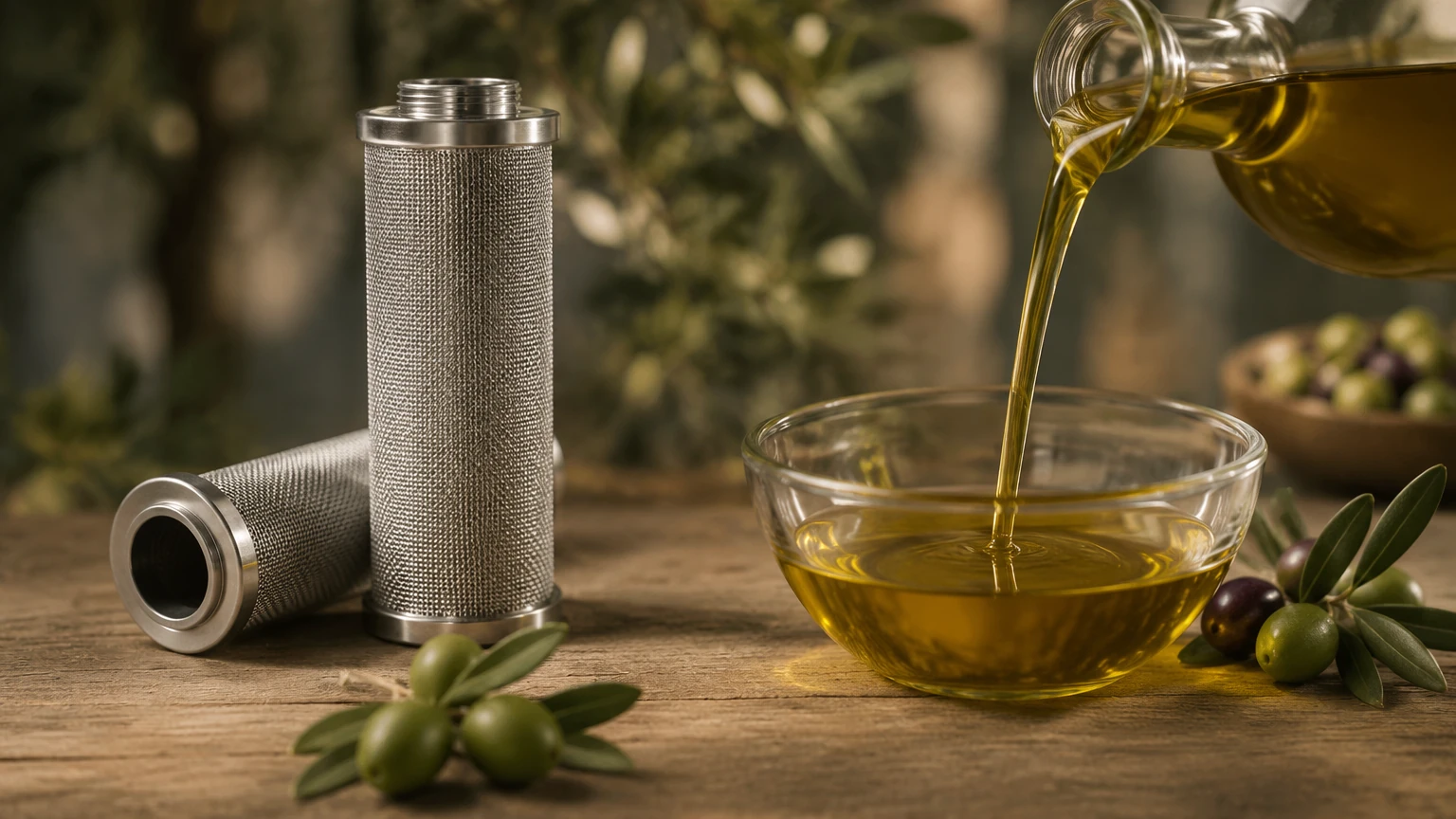
Olive Oil Filter
In the production of high-quality olive oil, filtration is a critical stage that determines the final product's clarity, shelf stability, and market value. While the extraction process separates the oil from the fruit, the resulting "cloudy" oil contains suspended solids, moisture, and organic residues. An industrial olive oil filter is designed to remove these impurities without compromising the organoleptic properties—the flavor, aroma, and color—of the oil. For engineers and production managers, selecting the correct filtration technology is a balance between achieving high throughput and maintaining the delicate chemical balance of the oil.
The Role of Filtration in Olive Oil Processing
Freshly pressed olive oil naturally contains micro-particles of olive pulp, skin, and pits, along with small amounts of vegetation water. If left unfiltered, these particles eventually settle at the bottom of storage tanks, forming a layer of sediment known as "sludge." This sediment can undergo anaerobic fermentation, which introduces off-flavors (such as "muddy sediment" defects) and accelerates the oxidation of the oil.
An effective olive oil filter serves three primary functions:
1. Clarification: Removing suspended solids to produce a bright, transparent appearance that consumers associate with premium quality.
2. Stabilization: Removing moisture and organic matter that can catalyze oxidation or provide a substrate for microbial activity.
3. Protection: Shielding downstream equipment, such as bottling lines and fine nozzles, from abrasive particles.
Technical Specifications and Material Selection
In the food and beverage industry, material compatibility is paramount. Stainless steel is the industry standard for olive oil filtration due to its inert nature and resistance to corrosion. At Kaifil, we focus on high-grade stainless steel components, typically using AISI 304 or 316L, to ensure that the filtration process does not introduce metallic contaminants or react with the oil's fatty acids.
Micron Ratings and Particle Retention
Olive oil filtration usually occurs in stages, moving from coarse to fine. The choice of micron rating depends on the desired final product:
* Coarse Filtration (50–100 microns): Used immediately after extraction to remove large pulp fragments and pit shards.
* Polishing/Fine Filtration (5–20 microns): Used to achieve the characteristic "brilliant" clarity of retail-grade extra virgin olive oil.
* Ultra-Fine Filtration (below 1 micron): Rarely used for olive oil as it may remove beneficial polyphenols and alter the flavor profile.
Viscosity and Temperature Considerations
Olive oil is a non-Newtonian fluid whose viscosity changes significantly with temperature. At lower temperatures, the oil thickens, increasing the pressure drop across the filter media. Engineering a filtration system requires calculating the maximum allowable pressure (ΔP) to ensure that the flow rate remains consistent even when ambient temperatures fluctuate in the processing facility.
Types of Stainless Steel Olive Oil Filters
For industrial applications, stainless steel filter media offer significant advantages over disposable paper or cloth filters, including durability, reusability, and higher pressure tolerance.
1. Stainless Steel Wire Mesh Filters
Wire mesh filters are highly effective for primary clarification. These filters consist of precision-woven stainless steel cloth that provides a fixed pore size. They are particularly valued in olive oil production for their:
* Rigidity: They can withstand high back-pressure during cleaning cycles.
* Cleanability: Unlike cellulose media, stainless steel mesh can be washed and reused, reducing the total cost of ownership.
* Customization: The weave pattern (plain, twill, or dutch weave) can be adjusted to balance flow rate and filtration fineness.
2. Pleated Stainless Steel Cartridges
For fine filtration, pleated cartridges provide a much larger surface area within a compact housing. This design allows for higher flow rates and longer service intervals before the filter becomes blinded by sediment. In olive oil applications, pleated cartridges are often used in the final polishing stage before bottling.
3. Sintered Metal Filters
Sintered metal filters are created by fusing layers of wire mesh or metal powders under high heat and pressure. The result is a porous structure with exceptional mechanical strength. While more expensive, sintered filters are used in high-pressure hydraulic systems or for extreme-duty clarification where the filter must withstand aggressive cleaning chemicals or high-temperature steam sterilization (SIP).
Engineering Challenges: Avoiding Oxidation and Flavor Loss
One of the primary concerns for engineers designing an olive oil filter system is the prevention of oxidation. Olive oil is highly sensitive to oxygen exposure, which is exacerbated during filtration if the system is not properly sealed.
* Closed-Loop Systems: Modern industrial filters are housed in airtight stainless steel vessels. This prevents the oil from coming into contact with air, preserving the volatile compounds responsible for the oil's aroma.
* Inert Gas Blanketing: In some high-end installations, nitrogen or argon is used to displace air within the filter housing, further protecting the oil from oxidative stress.
* Shear Stress: High-speed pumping through restrictive filter media can cause shear stress, which may impact the oil's emulsion stability. Selecting a filter with sufficient surface area allows for lower flux rates (flow per unit area), which treats the oil more gently.
Maintenance and Total Cost of Ownership (TCO)
While the initial capital expenditure for a stainless steel filtration system is higher than for disposable systems, the long-term economics often favor permanent metal media. Engineers must consider the following when evaluating TCO:
1. Consumable Costs: Disposable filter sheets or bags represent a recurring expense and a waste disposal challenge.
2. Product Loss: Every time a filter is changed, a certain volume of oil remains trapped in the media (hold-up volume). Stainless steel filters typically have lower hold-up volumes and can be purged more effectively with compressed air or nitrogen.
3. Labor and Downtime: Frequent filter changes require manual labor and stop the production line. Durable stainless steel elements designed for backwashing or ultrasonic cleaning significantly extend the time between maintenance intervals.
Selecting the Right Filter for Your Operation
When specifying an olive oil filter, procurement teams and engineers should confirm the following parameters with their manufacturer:
* Flow Rate Requirements: What is the peak hourly volume the filter must handle?
* Initial Oil Quality: Is the oil coming directly from a centrifuge or has it been allowed to settle in tanks first?
* Desired Clarity: Is the goal a "veiled" look or a "brilliant" finish?
* Housing Compatibility: Does the filter element fit existing housing standards (e.g., Code 7, 222, or 226)?
At Kaifil, we specialize in manufacturing custom stainless steel filtration solutions that meet these specific industrial requirements. By focusing on precision engineering and high-quality materials, we help producers achieve consistent filtration results that protect the integrity of their olive oil.
The Importance of Customization
No two olive oil production lines are identical. Factors such as the olive variety, the geographic region of harvest, and the specific extraction technology used all influence the characteristics of the oil. A standard, off-the-shelf filter may not provide the optimal balance of throughput and clarity. Custom-designed filter elements allow for the adjustment of mesh density, pleat depth, and reinforcement structures to handle the unique particulate load of a specific harvest.
For example, oils with a high wax content may require specific mesh geometries to prevent premature blinding. Conversely, oils destined for rapid turnover in the food service industry may prioritize high-volume flow over extreme clarity. Working with a manufacturer that understands these nuances is essential for optimizing the production process.
Conclusion
An industrial olive oil filter is more than a simple sieve; it is a precision tool that safeguards the quality and longevity of one of the world’s most valuable food products. By utilizing stainless steel media, producers can ensure hygienic processing, reduce waste, and maintain the complex flavor profiles that define premium olive oil. Understanding the technical demands of filtration—from micron ratings to oxidation control—enables engineers to implement systems that are both efficient and cost-effective.
For more information on customized stainless steel filtration components and industrial solutions, visit our Main Page to explore our full range of manufacturing capabilities and technical support options. Whether you are upgrading an existing line or designing a new facility, selecting the right filtration partner is the first step toward superior oil quality.