


Polyester Filter Bag
In the landscape of industrial liquid filtration, the polyester filter bag remains a foundational component for high-capacity, cost-effective solids removal. Engineers and procurement teams often specify polyester (polyethylene terephthalate, or PET) due to its unique balance of mechanical strength, thermal stability, and chemical resistance. While stainless steel filtration components, such as those found on the Main Page, provide permanent and high-precision solutions for extreme environments, the polyester filter bag serves as a critical depth-filtration media in batch processing, pre-filtration, and high-dirt-load applications.
Selecting the correct filtration media requires a deep understanding of the material’s physical properties, the mechanics of depth filtration, and the operational variables that influence service life. This guide examines the technical specifications of polyester filter bags, their engineering advantages, and the criteria necessary for optimizing their performance within industrial systems.
Understanding Polyester Filter Bag Construction and Materials
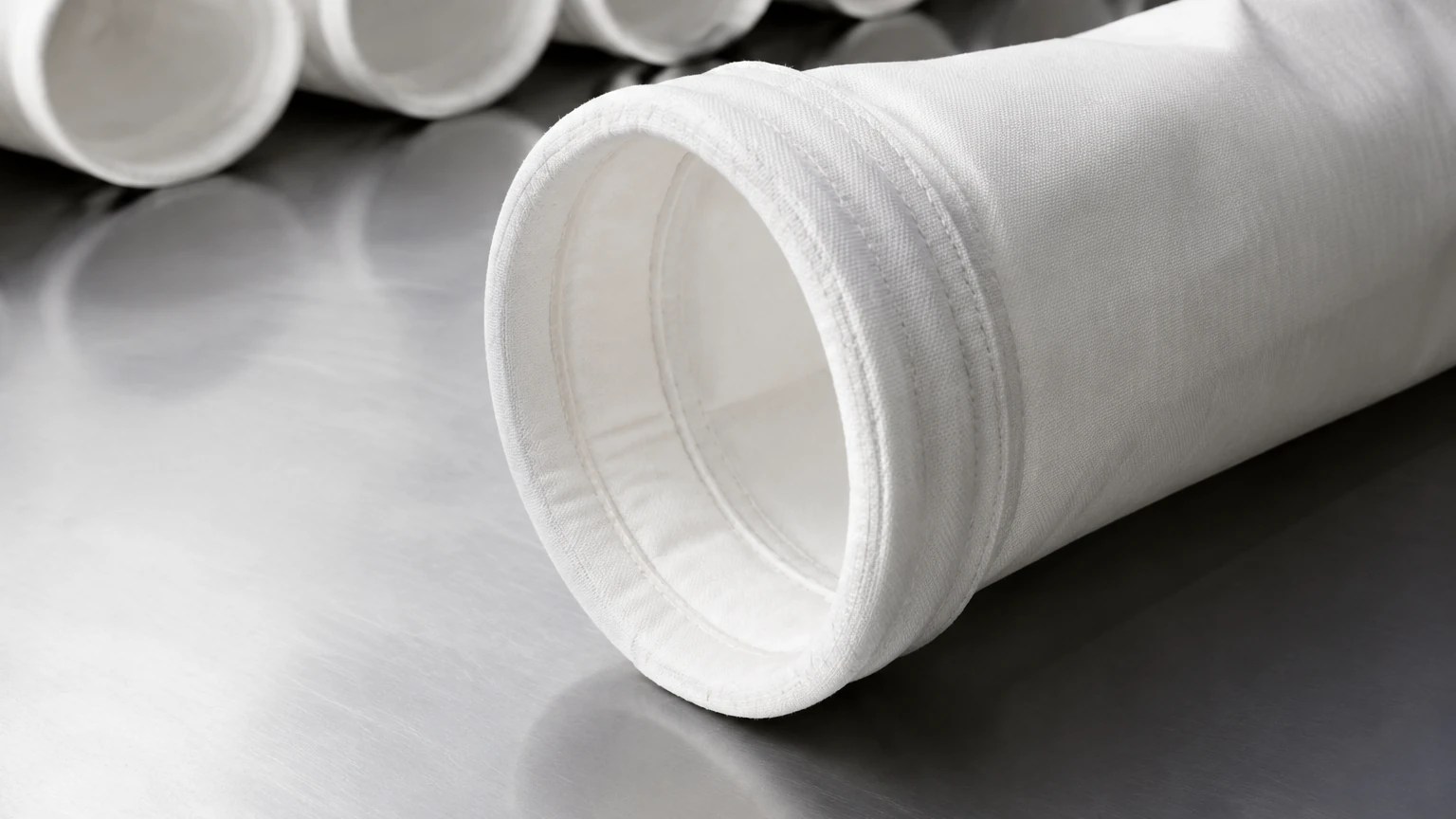
The performance of a polyester filter bag is primarily determined by its construction method. Most industrial bags are manufactured using needle-punched felt or monofilament mesh.
Needle-Punched Felt
Polyester needle felt is created by mechanically interlocking synthetic fibers through a process of repetitive needling. This creates a three-dimensional "depth" media. Unlike surface filtration, where particles are stopped on a single plane, depth filtration allows particles to be trapped throughout the thickness of the felt. This structure is ideal for handling fluids with a wide range of particle sizes and high concentrations of solids.
Surface Treatments: Singeing and Glazing
One technical concern with needle-punched felts is fiber migration—the risk of loose polyester fibers detaching and contaminating the filtrate. To mitigate this, manufacturers apply surface treatments:
* Singeing: The surface of the felt is exposed to an open flame to melt away loose protruding fibers.
* Glazing: A more intensive thermal process where the surface is calendared under heat and pressure. This creates a smooth, fused surface that significantly reduces fiber migration and improves the release of filter cakes during cleaning or disposal.
Monofilament Mesh
In contrast to felt, monofilament polyester mesh uses a single-strand fiber woven into a precise grid. This provides surface filtration with highly accurate pore sizes. It is typically used for straining applications where specific particle sizes must be excluded with high precision, though it lacks the high dirt-holding capacity of needle felt.
Technical Performance: Micron Ratings and Flow Dynamics
When evaluating a polyester filter bag, engineers must distinguish between nominal and absolute micron ratings. Most felt filter bags are nominally rated, meaning they are designed to capture a high percentage (typically 60% to 80%) of particles at the specified micron size.
The Impact of Fluid Viscosity
The flow rate through a polyester media is inversely proportional to the fluid's viscosity. In industrial applications, as viscosity increases, the pressure drop across the bag also increases. To maintain a constant flow rate in high-viscosity applications (such as resins or heavy oils), engineers must either increase the filtration surface area (by using larger or multiple bags) or accept a higher initial differential pressure.
Dirt-Holding Capacity and Depth Mechanics
The primary advantage of the polyester filter bag is its high solids-loading capacity. The tortuous path created by the needle-punched fibers ensures that particles are trapped not just by size exclusion, but also by impingement and adsorption within the fiber matrix. This allows the bag to operate longer before reaching the terminal pressure drop compared to thin-film or single-layer surface media.
Chemical and Thermal Resistance Parameters
Polyester is selected over other polymers like polypropylene when thermal stability is a priority. While polypropylene is limited to approximately 90°C (194°F), polyester can reliably operate at continuous temperatures up to 135°C (275°F), with short-term spikes reaching 150°C.
Chemical Compatibility
Engineers must verify chemical compatibility before installation. Polyester offers excellent resistance to:
* Organic Solvents: Highly stable in the presence of most oils, fuels, and many industrial solvents.
* Oxidizing Agents: Generally resistant to common oxidizers used in water treatment.
* Mineral and Organic Acids: Performs well in acidic environments, though high concentrations of strong acids at elevated temperatures can cause hydrolysis.
However, polyester is susceptible to degradation by strong alkalis and high-temperature steam (hydrolysis). In applications involving caustic cleaning cycles or high-pH process fluids, alternative materials or specialized stainless steel components may be required. For high-durability alternatives in aggressive chemical environments, technical teams often consult the Main Page to evaluate metal mesh options.
Structural Integrity: Sealing Rings and Support Baskets
A filter bag is only as effective as its seal. Even the highest quality polyester media will fail if fluid bypasses the bag at the housing interface. There are three primary sealing mechanisms used in industrial polyester filter bags:
1. Steel or Stainless Steel Rings: A galvanized or stainless steel wire is sewn into the top of the bag. This ring relies on the downward pressure of the housing lid to create a seal against the internal flange.
2. Plastic Flanges (V-Rings): Molded plastic tops (often polypropylene or polyester) feature a shaped profile that snaps into the housing. These provide a more positive, bypass-free seal and are often easier to install.
3. Drawstring Tops: Used primarily in open-discharge systems or gravity-fed applications where a pressurized seal is not required.
The Role of the Support Basket
Because polyester bags are flexible, they require a rigid internal support structure to withstand the differential pressure of the fluid flow. Stainless steel perforated baskets are the standard. The engineering of these baskets is critical; the open area of the basket must be sufficient to prevent excessive pressure drop, while the perforation size must be small enough to prevent the polyester felt from stretching or "extruding" through the holes under high pressure.
Application-Specific Selection for Industrial Processes
The versatility of the polyester filter bag makes it suitable for a wide range of sectors, provided the engineering specifications match the process requirements.
* Chemical Processing: Used for the filtration of catalysts, solvents, and intermediate chemical products where temperature stability is required.
* Food and Beverage: Polyester bags used in this sector must be manufactured from FDA-compliant materials. They are commonly used for clarifying syrups, edible oils, and beverages.
* Water Treatment: Effective for removing silt, sand, and pipe scale in industrial cooling water loops and pre-filtration for reverse osmosis (RO) systems.
* Automotive and Coatings: Essential for removing contaminants from paints, primers, and degreasing baths, where silicone-free construction is mandatory to prevent surface defects.
Operational Guidelines: Maximizing Service Life and Efficiency
To achieve the lowest total cost of ownership (TCO), maintenance teams should follow established engineering protocols for bag replacement.
Monitoring Differential Pressure ($ΔP$)
The most common mistake in bag filtration is replacing the bag based on a fixed time interval rather than actual loading. Monitoring the differential pressure between the inlet and outlet of the filter housing is the only accurate way to determine when a polyester filter bag is spent.
* Initial $ΔP$: Typically 1 to 3 PSI for a clean bag.
* Terminal $ΔP$: Usually recommended at 15 to 25 PSI. Exceeding this can lead to "breakthrough," where particles are forced through the media, or mechanical failure of the bag.
Preventing Fluid Bypass
During installation, it is vital to ensure the bag is fully seated in the support basket. If the bag is not properly extended to the bottom of the basket, the weight of the fluid can cause the bag to tear at the neck or the bottom seam. Using a specialized bag-insertion tool can ensure proper alignment in deep housings.
Engineering Specifications for Custom Filtration Systems
For many industrial OEMs, standard off-the-shelf bags are insufficient. Customization options for polyester filter bags include:
* Multi-Layered Construction: Combining different micron ratings within a single bag to create a graded-density structure, which significantly extends service life in high-load applications.
* Custom Dimensions: Tailoring bag lengths and diameters to fit proprietary housing designs.
* Reinforced Seams: Using ultrasonic welding instead of sewing to eliminate needle holes, ensuring 100% filtration efficiency at the seams.
In complex systems where polyester bags serve as a secondary stage, they are often paired with primary stainless steel strainers or magnetic separators to remove large or metallic debris first. This staged approach protects the polyester media from premature blinding. For more information on integrating these components, technical resources on the Main Page offer guidance on hardware compatibility.
Conclusion: Selecting the Right Filtration Partner
The polyester filter bag is a highly engineered tool that, when selected correctly, provides exceptional clarity and protection for industrial processes. By evaluating the specific thermal, chemical, and mechanical requirements of an application, engineers can ensure they are using the most efficient media for the task. Whether used as a standalone solution or as part of a multi-stage system involving precision metal components, understanding the nuances of polyester filtration is key to maintaining operational uptime and product quality.
