


Petrochemical Coalescers
In the petrochemical industry, the separation of immiscible liquids and the removal of entrained mists from gas streams are critical processes for ensuring product purity, protecting downstream equipment, and maintaining environmental compliance. Petrochemical coalescers serve as the primary engineering solution for these challenges. Unlike standard filtration, which primarily removes solid particulates, coalescing is a mechanical process that merges small droplets of a discontinuous phase into larger droplets, allowing them to be separated from a continuous phase based on density differences.
For engineers and procurement professionals, selecting the right coalescing technology requires a deep understanding of fluid dynamics, material science, and the specific chemical environment of the facility. This guide examines the technical foundations of petrochemical coalescers, the engineering considerations involved in their design, and the criteria necessary for selecting high-performance components.
The Engineering Principles of Coalescence
Petrochemical coalescers operate on the principle of surface science and fluid mechanics. The process typically involves three distinct stages: interception, attachment, and coalescence.
Interception and Attachment
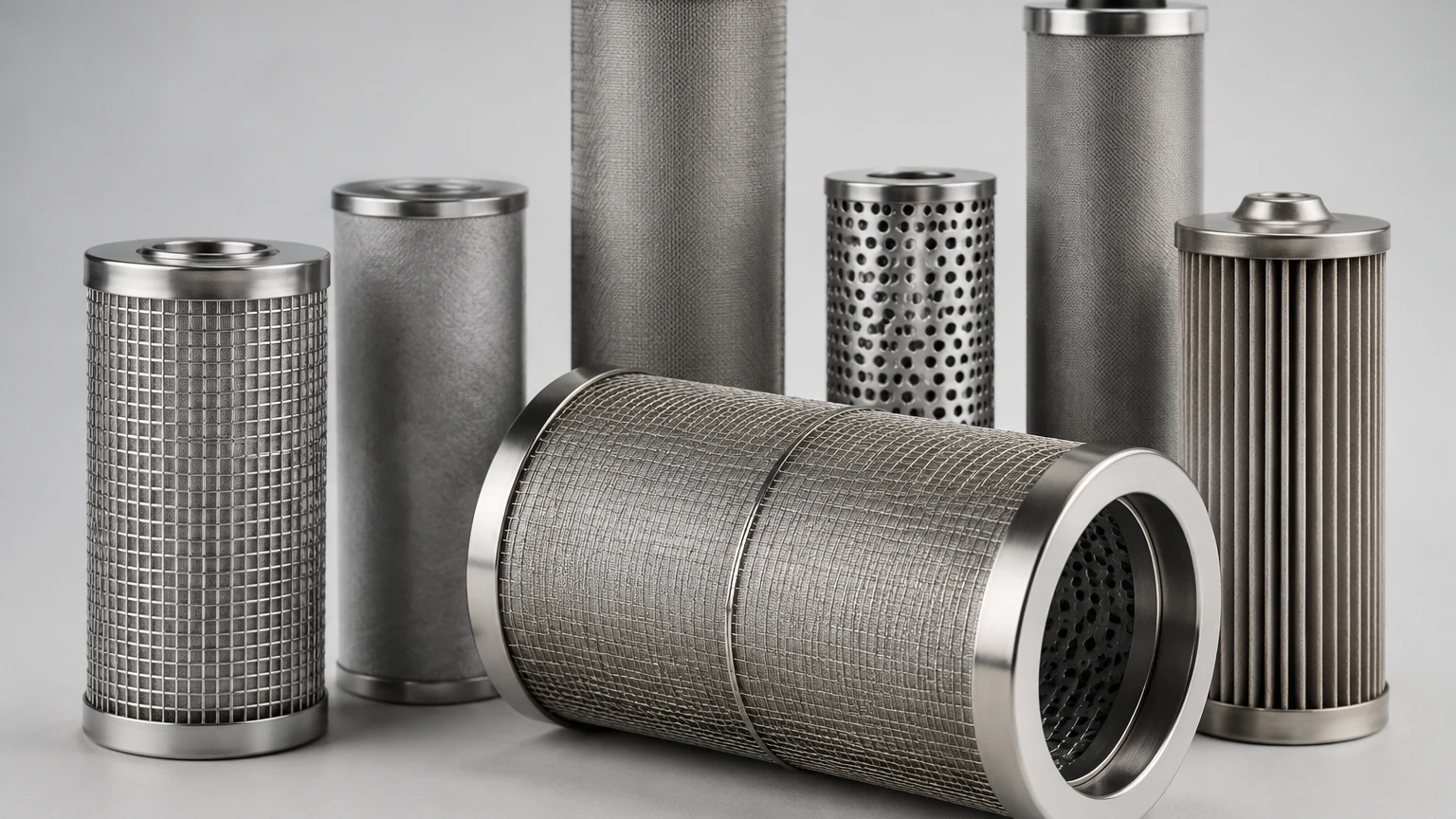
As the contaminated fluid passes through the coalescing media—often a specialized stainless steel wire mesh or a multi-layered cartridge—the fine droplets (the dispersed phase) come into contact with the fibers of the media. This contact is governed by several mechanisms, including inertial impaction, Brownian motion, and direct interception. In petrochemical applications, where fluids often have high velocities, inertial impaction is the dominant mechanism for larger droplets, while smaller sub-micron droplets are captured via diffusion.
The Coalescence Process
Once a droplet is intercepted, it attaches to the surface of the media. As more droplets are captured, they move along the fibers and collide with one another, merging to form larger droplets. This growth continues until the droplets reach a size where the drag forces of the flowing fluid or the forces of gravity overcome the adhesive forces holding them to the media.
Phase Separation
In a liquid-liquid coalescer, the enlarged droplets then migrate to a settling zone. If the dispersed phase is heavier than the continuous phase (e.g., water in hydrocarbons), the droplets sink to the bottom of the vessel. If the dispersed phase is lighter, they rise to the top. The efficiency of this separation is largely defined by Stokes' Law, which states that the settling velocity of a droplet is proportional to the square of its diameter. By increasing the droplet size, petrochemical coalescers exponentially accelerate the separation process.
Critical Applications in Petrochemical Processing
Petrochemical coalescers are deployed across various stages of the value chain, from upstream extraction to downstream refining and chemical synthesis.
Removal of Water from Hydrocarbons
One of the most common applications is the removal of entrained water from fuels, solvents, and feedstocks. Water in petrochemical streams can lead to several industrial issues, including:
* Catalyst Poisoning: In many refining processes, water can deactivate expensive catalysts.
* Corrosion: The presence of water, especially when combined with sulfur compounds or chlorides, accelerates the corrosion of carbon steel piping and storage tanks.
* Product Quality: Final products such as jet fuel or diesel must meet strict moisture content standards to prevent ice formation or microbial growth.
Gas-Liquid Separation
In gas processing, petrochemical coalescers are used to remove liquid aerosols from gas streams. This is vital for protecting compressors from liquid slugging and for preventing the loss of valuable chemicals, such as amine or glycol, in gas sweetening and dehydration units. High-efficiency stainless steel wire mesh coalescers are particularly effective in these high-pressure environments due to their structural integrity and resistance to thermal shock.
Material Selection: The Case for Stainless Steel
In the demanding environment of a petrochemical plant, the material of the coalescing media is as important as its geometry. While synthetic fibers are used in some low-temperature applications, stainless steel remains the industry standard for high-performance petrochemical coalescers.
Chemical Compatibility
Petrochemical streams often contain aggressive chemicals, including hydrogen sulfide (H2S), organic acids, and various solvents. Stainless steel alloys, such as 304L, 316L, and specialized duplex grades, provide the necessary corrosion resistance to ensure a long service life. Unlike polymer-based media, stainless steel does not swell, soften, or degrade when exposed to hydrocarbons or high temperatures.
Thermal Stability
Many petrochemical processes operate at elevated temperatures that would compromise the structural integrity of synthetic filters. Stainless steel coalescers maintain their mechanical properties and filtration accuracy across a wide temperature range, ensuring consistent performance during process fluctuations.
Durability and Reusability
Industrial environments subject filtration components to high differential pressures and potential mechanical stress. Stainless steel wire mesh and sintered metal cartridges offer superior collapse strength. Furthermore, in many applications, stainless steel media can be cleaned and returned to service, reducing the total cost of ownership compared to disposable cartridges.
Key Evaluation Criteria for Engineers
When specifying petrochemical coalescers, engineers must look beyond simple micron ratings. A comprehensive technical evaluation should include the following factors:
1. Surface Tension and Interfacial Tension (IFT)
Coalescence is heavily dependent on the interfacial tension between the two liquids. A low IFT (typically below 20 dynes/cm) indicates that the droplets are stable and difficult to merge. In such cases, specialized media coatings or high-surface-area configurations are required to break the emulsion. Engineers should provide fluid analysis data to the manufacturer to ensure the media is optimized for the specific IFT of the stream.
2. Flux and Velocity
The "flux" or the flow rate per unit area of the media is a critical design parameter. If the velocity is too high, the drag forces will strip droplets from the media before they have grown sufficiently large, leading to "re-entrainment." Conversely, if the velocity is too low, the inertial impaction mechanism is weakened. Proper sizing of the coalescer vessel and the internal elements is essential to maintain the optimal velocity profile.
3. Pressure Drop (Delta P)
The clean pressure drop and the terminal pressure drop (the point at which the element must be cleaned or replaced) must be accounted for in the system's pump or compressor head calculations. High-quality stainless steel coalescers are designed to maximize void volume, providing high dirt-holding capacity and low initial resistance to flow.
4. Particulate Loading
Petrochemical coalescers are not designed to function as primary particulate filters. If the process stream contains significant solid contaminants, these solids will clog the fine pores of the coalescing media, leading to rapid pressure buildup and premature failure. In these scenarios, a dedicated pre-filter should be installed upstream of the coalescer to protect the specialized media.
Common Risks and Mitigation Strategies
Even a well-designed coalescing system can face operational challenges. Understanding these risks is the first step toward effective mitigation.
Surfactant Interference
Surfactants (surface-active agents) are often present in petrochemical streams, either as naturally occurring compounds or as process additives like corrosion inhibitors. Surfactants lower the interfacial tension and can coat the coalescing media, making it "disarmed." When media is disarmed, droplets cannot attach or merge effectively. To mitigate this, engineers may select specific grades of stainless steel mesh that are less susceptible to surfactant coating or implement upstream carbon treatment to remove the surfactants.
Incorrect Sizing for Turn-down Ratios
Petrochemical plants rarely operate at a constant 100% capacity. A coalescer designed only for peak flow may perform poorly during low-flow conditions (turn-down). It is vital to specify the full range of operating flow rates so the manufacturer can design a solution that maintains efficiency across the entire operational envelope.
Media Migration
In lower-quality coalescing elements, there is a risk of media migration, where fragments of the filter material break off and enter the downstream flow. By utilizing precision-welded stainless steel wire mesh and robust cartridge designs, this risk is virtually eliminated, protecting sensitive downstream equipment.
Customization and OEM Integration
Every petrochemical facility has unique constraints, whether it is a limited footprint for a new vessel or a specific chemical compatibility requirement. Standard off-the-shelf solutions often fail to meet the precise needs of complex industrial processes.
Working with a manufacturer that specializes in custom stainless steel filtration allows engineers to tailor the coalescer to the application. Customization options include:
* Variable Mesh Densities: Layering different wire mesh counts to create a graduated density, improving both filtration and coalescence.
* Custom Dimensions: Designing elements to fit existing housings during a plant retrofit or expansion.
* Alloy Selection: Choosing the specific grade of stainless steel (e.g., 316L, 904L, or Monel) that best suits the chemical profile of the process fluid.
For those seeking to optimize their filtration systems or explore custom manufacturing capabilities, it is beneficial to Review product options and application support on the Kaifil Main Page.
Conclusion: Ensuring Long-Term Performance
Petrochemical coalescers are vital components that ensure the efficiency and safety of industrial operations. By focusing on the fundamentals of droplet growth, selecting durable materials like stainless steel, and carefully evaluating the physical properties of the process fluids, engineers can implement separation solutions that stand up to the rigors of the petrochemical environment.
Before finalizing a procurement decision, technical teams should confirm the fluid's interfacial tension, the presence of surfactants, and the expected particulate load. Partnering with a manufacturer that understands these engineering nuances ensures that the resulting filtration system provides reliable performance, minimizes maintenance downtime, and achieves the desired separation efficiency for years to come.
