


Phenol Storage Tank Design
Phenol, also known as carbolic acid, is a critical precursor in the production of resins, plastics, and pharmaceuticals. However, its unique physical and chemical properties—specifically its high melting point of 41°C (105.8°F), its corrosive nature toward certain metals, and its significant toxicity—demand rigorous engineering standards. A successful phenol storage tank design must prioritize thermal management, material compatibility, and environmental safety to ensure long-term operational integrity and product purity.
For industrial facilities, the storage of phenol is not merely a matter of containment but a complex exercise in process engineering. This article examines the technical requirements for designing phenol storage systems, focusing on material selection, heating configurations, safety protocols, and the integration of precision filtration to protect downstream processes.
Material Selection and Corrosion Control
The choice of material is the foundation of any phenol storage tank design. While phenol is not aggressively corrosive to carbon steel at ambient temperatures in its pure, anhydrous state, several factors often necessitate the use of higher-grade alloys.
Stainless Steel vs. Carbon Steel
In many industrial applications, particularly in the pharmaceutical and polymer sectors, product purity is paramount. Carbon steel tanks can lead to "iron pick-up," where trace amounts of iron leach into the phenol, causing it to discolor (typically turning pink or red). This discoloration can render the phenol unsuitable for high-end chemical synthesis.
Stainless steel, specifically Grades 304L and 316L, is the industry standard for high-purity phenol storage. These materials offer excellent resistance to corrosion and prevent the metallic contamination that compromises product quality. The "L" (low carbon) variants are preferred to prevent intergranular corrosion in the heat-affected zones of welds, which is a critical consideration for tanks that will be subjected to constant heating cycles.
Lining and Coating Considerations
If carbon steel must be used for cost reasons, internal linings such as baked phenolic resins or specific epoxy coatings may be applied. However, these linings must be meticulously inspected. Any breach in the coating can lead to localized pitting corrosion, which is harder to detect and manage than uniform corrosion in an unlined stainless steel tank.
Thermal Management and Insulation
One of the most challenging aspects of phenol storage tank design is managing the substance's phase state. Because phenol solidifies at 41°C, storage systems must be equipped with reliable heating and insulation to maintain the temperature between 50°C and 60°C (122°F to 140°F). If the temperature falls below the freezing point, the phenol will crystallize, potentially damaging pumps, clogging pipes, and making the product impossible to transfer.
Heating Systems
There are three primary methods for maintaining phenol in a liquid state:
1. External Heating Jackets: These are often preferred because they eliminate the risk of product contamination from a leaking internal coil. Steam or hot oil is circulated through the jacket to provide uniform heat distribution.
2. Internal Steam Coils: While efficient, internal coils represent a potential point of failure. If the coil leaks, water enters the phenol, which significantly increases its corrosivity toward carbon steel and can cause violent reactions if the water flashes to steam.
3. Electric Trace Heating: This is a common choice for piping and smaller tanks. It provides precise temperature control and is easier to maintain than steam systems, though it requires robust electrical infrastructure.
Insulation Requirements
To minimize energy consumption and prevent localized "cold spots" where phenol might solidify, tanks must be fully insulated. High-density mineral wool or polyurethane foam, protected by an aluminum or stainless steel weather jacket, is typically used. The insulation thickness must be calculated based on the lowest expected ambient temperature to ensure the heating system can maintain the required 50-60°C range.
Safety Systems and Environmental Protection
Phenol is a hazardous substance that is toxic by inhalation, ingestion, and skin contact. Furthermore, it is flammable at elevated temperatures (flash point of approximately 79°C). Therefore, the phenol storage tank design must incorporate multiple layers of protection.
Nitrogen Blanketing
To prevent the oxidation of phenol (which leads to discoloration) and to eliminate the risk of a flammable atmosphere, phenol tanks are almost always nitrogen-blanketed. A constant pressure of dry nitrogen is maintained in the vapor space. This system requires high-precision pressure regulators and vacuum relief valves to ensure that the tank does not over-pressurize during filling or collapse during emptying.
Venting and Vapor Recovery
Because phenol has a significant vapor pressure at storage temperatures, vents must be designed to prevent the release of toxic fumes into the atmosphere. Vapors are typically routed through a scrubber system or a dedicated vapor recovery unit. Conservation vents must be heated or insulated to prevent phenol vapors from sublimating and clogging the vent, which could lead to catastrophic tank failure.
Secondary Containment
As with any hazardous chemical, phenol tanks must be situated within a secondary containment dike or bund. The capacity of this area should be at least 110% of the largest tank's volume. The containment area must be lined with a material resistant to phenol to prevent groundwater contamination in the event of a primary tank failure.
The Role of Filtration in Phenol Storage
In industrial chemical processing, the integrity of the phenol is only as good as the systems that handle it. Particulate contamination can originate from various sources: atmospheric dust entering during maintenance, corrosion byproducts from upstream piping, or degraded product residues. Integrating high-performance filtration into the phenol storage tank design is essential for protecting downstream equipment like high-pressure pumps and reactor nozzles.
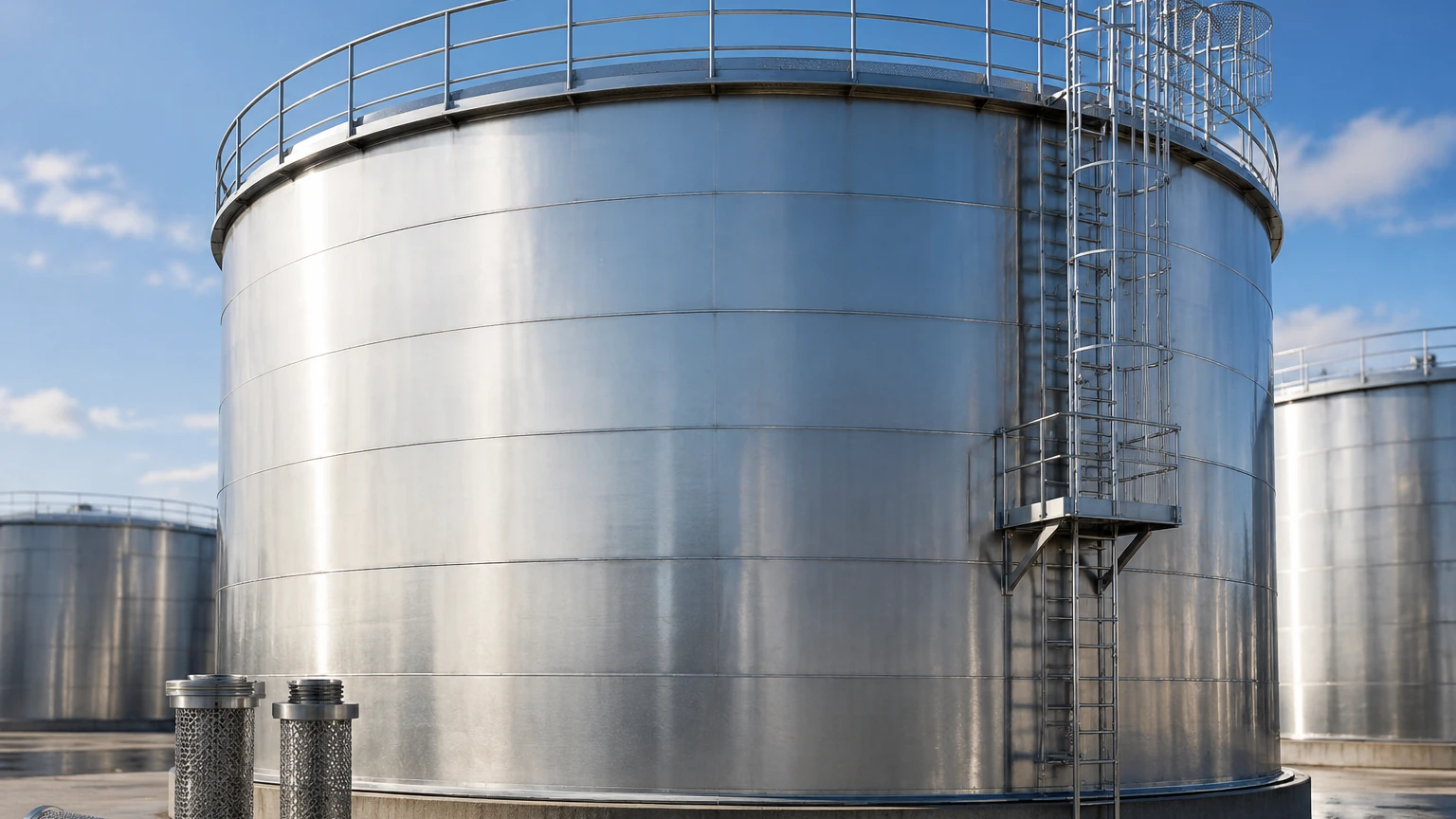
Stainless Steel Filter Cartridges
Given the operating temperatures (50-60°C) and the chemical nature of phenol, polymer-based filter elements are often unsuitable due to potential chemical degradation or softening. Stainless steel wire mesh filters and pleated metal filter cartridges are the preferred solution. These components offer:
* Thermal Stability: They maintain structural integrity at temperatures far exceeding the melting point of phenol.
* Durability: Unlike disposable filters, stainless steel elements can often be cleaned and reused, reducing the total cost of ownership.
* Precision: They provide exact micron ratings to ensure that even microscopic particulates are removed before the phenol enters the production line.
For engineers looking to optimize their filtration stages, reviewing specialized components is a vital step. You can Review product options and application support on the Kaifil Main Page to understand how custom metal filtration solutions can be integrated into chemical storage and transfer systems.
Structural Design and Nozzle Configuration
The mechanical design of the tank usually follows standards such as API 650 (for atmospheric storage) or ASME Section VIII (if the tank is pressurized). Key structural considerations include:
* Sloped Bottoms: To facilitate complete drainage and cleaning, a sloped or conical bottom is recommended. This prevents the accumulation of "heels" (residual product) that can degrade over time.
* Nozzle Placement: Inlet nozzles should be designed to minimize splashing and static electricity generation. Submerged fill pipes or "dip tubes" are standard practice, but they must include siphon-break holes to prevent accidental back-siphoning.
* Manways: Large-diameter manways are necessary for inspection, but they must be equipped with high-quality gaskets (typically PTFE or graphite-filled) that are chemically compatible with hot phenol.
Maintenance and Inspection Protocols
A robust phenol storage tank design must account for the entire lifecycle of the equipment. Regular inspection intervals are mandatory to check for signs of stress corrosion cracking, insulation degradation, and the functionality of heating elements.
1. External Inspections: Conducted annually to check the integrity of the weather jacket and insulation. Any signs of moisture ingress can lead to "corrosion under insulation" (CUI), a major risk for carbon steel components.
2. Internal Inspections: Typically performed every 5 to 10 years, depending on the material of construction and local regulations. This involves ultrasonic thickness testing (UT) of the tank shell and floor.
3. Filtration Maintenance: Differential pressure gauges should be installed across all filters. A rise in pressure indicates that the filter is doing its job but requires cleaning or replacement. Monitoring these levels helps prevent pump cavitation and flow restrictions.
Conclusion
Designing a storage system for phenol requires a deep understanding of the material's physical limitations and safety hazards. By selecting high-grade stainless steel, implementing a redundant heating and insulation strategy, and ensuring robust nitrogen blanketing, engineers can create a system that is both safe and efficient. Furthermore, the inclusion of precision metal filtration ensures that the phenol remains pure, protecting the quality of the final product and the longevity of the processing equipment.
For technical teams and purchasing managers, selecting the right components is the key to minimizing downtime and operational risk. For more information on custom filtration engineering and industrial metal filter products, visit the Main Page to explore how specialized manufacturing can support your chemical processing needs.
