


Plate Fin Heat Exchanger
In the landscape of industrial thermal management, the plate fin heat exchanger (PFHE) represents a pinnacle of compact design and high-efficiency heat transfer. Originally developed for aerospace and cryogenic applications where space and weight are critical constraints, these units have become indispensable in modern chemical processing, air separation, and power generation. For engineers and technical procurement teams, understanding the mechanical nuances and filtration requirements of a plate fin heat exchanger is essential for ensuring system longevity and operational efficiency.
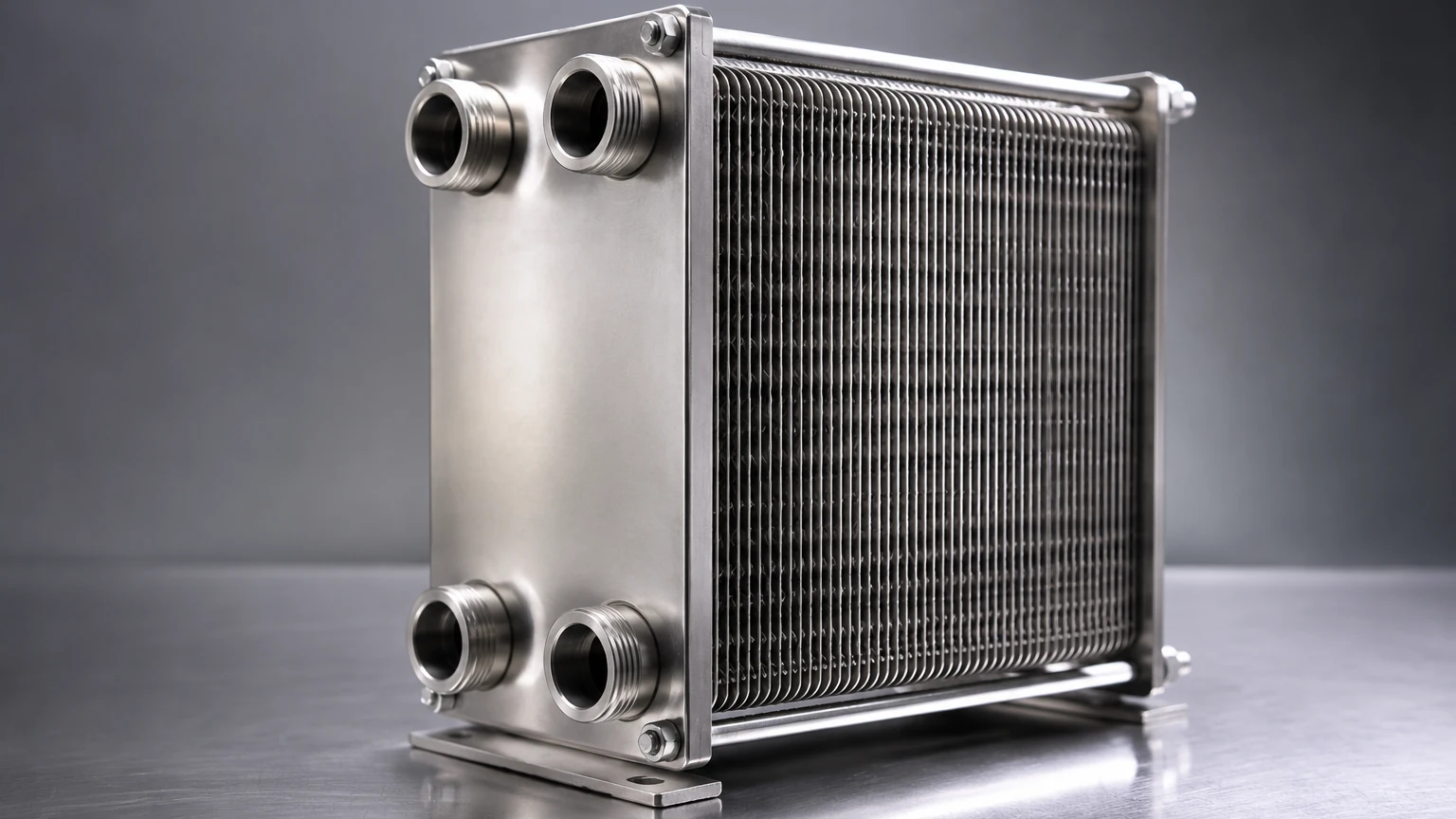
Unlike traditional shell and tube designs, the plate fin heat exchanger utilizes a series of corrugated layers (fins) sandwiched between flat metal plates (parting sheets). This architecture creates an exceptionally high surface area-to-volume ratio, often exceeding 1,000 m²/m³. However, this complexity introduces specific engineering challenges, particularly regarding fluid cleanliness and pressure drop management.
Engineering Characteristics and Design Advantages
The primary appeal of the plate fin heat exchanger lies in its thermal effectiveness. By manipulating the geometry of the fins, engineers can induce turbulence at relatively low Reynolds numbers, significantly enhancing the heat transfer coefficient.
Compactness and Weight Efficiency
Because the heat transfer surface density is so high, a PFHE can be up to five to ten times smaller than a shell and tube exchanger for the same thermal duty. In offshore oil and gas platforms or modular chemical plants, this reduction in footprint translates directly to lower structural costs and easier installation.
Multi-Stream Capability
One of the most distinct advantages of the PFHE is its ability to handle multiple process streams within a single block. A single unit can facilitate heat exchange between three, four, or even more fluids simultaneously. This is achieved by stacking different layers dedicated to different streams, which are then manifolded at the headers. This capability is vital in complex processes like the liquefaction of natural gas (LNG) or air separation units (ASU).
Temperature Approach
PFHEs are capable of achieving very close temperature approaches, often as low as 1°C. This high thermal effectiveness (often exceeding 95%) is critical in cryogenic processes where energy recovery is paramount to the economic viability of the operation.
The Critical Role of Precision Filtration in PFHE Performance
While the narrow passages of a plate fin heat exchanger provide excellent thermal performance, they are highly susceptible to fouling and plugging. The gaps between fins are often measured in millimeters (typically 1.0 mm to 5.0 mm). Consequently, even small amounts of particulate matter can lead to catastrophic failure or significant efficiency losses.
Preventing Fin Plugging
Particulates carried by the process fluid can become trapped in the fin corrugations. This not only reduces the effective heat transfer area but also creates localized hot spots and increases the pressure drop across the unit. Once a PFHE is significantly fouled, cleaning it becomes a complex and often expensive process, sometimes requiring chemical circulation or specialized thermal cleaning.
Protecting the Brazed Joints
Most industrial plate fin heat exchangers are manufactured using vacuum brazing. The integrity of these brazed joints is vital for the structural stability of the unit under high pressure. Abrasive particles can cause erosion at the fin-to-plate interface, eventually leading to internal leaks or cross-contamination between streams.
To mitigate these risks, high-performance stainless steel filtration is mandatory. Implementing custom wire mesh filters or stainless steel filter cartridges upstream of the heat exchanger ensures that only clean fluids enter the delicate fin structures. For technical specifications on filtration components that protect these systems, you can review the technical resources on our Main Page.
Fin Geometries and Selection Criteria
The performance of a plate fin heat exchanger is largely dictated by the geometry of the fins used in each layer. Engineers must select fin types based on a balance between heat transfer requirements and the allowable pressure drop.
1. Plain Fins: These are straight, continuous channels. They offer the lowest pressure drop but also the lowest heat transfer enhancement. They are typically used in applications where the fluid is prone to mild fouling or where pressure drop is the primary constraint.
2. Perforated Fins: Small holes are punched into the fin material. This helps in pressure equalization between channels and provides some turbulence, though their primary use is in applications requiring specific flow distribution.
3. Serrated (Offset Strip) Fins: The fin is cut and offset at regular intervals. This is the most common type for high-performance applications. The constant restarting of the boundary layer at each offset significantly increases the heat transfer coefficient, albeit at the cost of a higher pressure drop.
4. Wavy Fins: These fins have a sinusoidal or zig-zag path. They provide a middle ground between plain and serrated fins, offering good heat transfer with a moderate pressure drop and better resistance to plugging than serrated designs.
Material Selection and Environmental Compatibility
Material selection for a plate fin heat exchanger is driven by the operating temperature, pressure, and the chemical nature of the fluids.
Aluminum Alloys
In cryogenic applications, aluminum is the standard material due to its excellent thermal conductivity and the fact that it does not become brittle at low temperatures. Most air separation units and LNG plants utilize brazed aluminum heat exchangers (BAHX).
Stainless Steel and Nickel Alloys
For high-temperature applications or corrosive environments, such as those found in chemical processing or exhaust gas heat recovery, stainless steel is the preferred choice. Stainless steel PFHEs offer superior oxidation resistance and mechanical strength at elevated temperatures. However, the brazing process for stainless steel is more demanding than for aluminum, requiring specialized vacuum furnaces and nickel-based filler metals.
Corrosion Considerations
Engineers must be wary of chloride-induced stress corrosion cracking (SCC) in stainless steel units, especially in coastal or marine environments. Proper fluid chemistry management and the use of high-grade alloys (like 316L or Duplex steels) are often necessary. Furthermore, the filtration system must be equally resistant to the environment, utilizing compatible stainless steel wire mesh to prevent galvanic corrosion.
Maintenance Strategies and Fouling Mitigation
Because of their compact and complex internal structure, plate fin heat exchangers are often considered "non-cleanable" by mechanical means. Therefore, the maintenance strategy must focus on prevention and chemical cleaning.
Monitoring Pressure Drop
An increase in pressure drop is the earliest indicator of fouling. By installing differential pressure sensors across the PFHE, operators can track the rate of particulate accumulation. If the pressure drop exceeds the design threshold, it indicates that the upstream filtration system may need servicing or that the micron rating of the filter elements needs to be adjusted.
Chemical Cleaning (CIP)
Cleaning-in-Place (CIP) involves circulating specialized solvents or acidic/alkaline solutions through the exchanger to dissolve scale or organic deposits. The compatibility of these chemicals with both the base metal and the brazing filler must be verified to prevent damaging the unit.
Filter Replacement Cycles
Maintaining the integrity of the filtration system is the most cost-effective way to preserve the PFHE. Stainless steel filter cartridges should be inspected and cleaned or replaced according to a strict schedule. Using high-quality, precision-manufactured filters ensures that the bypass of contaminants is minimized, directly extending the time between required heat exchanger cleanings.
Technical Considerations for Engineering and Procurement
Before finalizing the specification for a plate fin heat exchanger, engineering teams should confirm several critical parameters to ensure the unit is fit for purpose:
* Design Pressure and Temperature: Ensure the brazing process and material thickness are rated for the maximum possible excursion conditions, not just steady-state operation.
* Fluid Compatibility: Verify that all fluids (including trace contaminants) are compatible with the base metal and the braze alloy.
* Fouling Factor: While PFHEs have high turbulence, a realistic fouling factor must be included in the thermal sizing to prevent the unit from being undersized after a few months of operation.
* Filtration Specification: Determine the maximum allowable particle size based on the fin gap. A common rule of thumb is that the filter should remove particles larger than 1/3 to 1/5 of the minimum fin passage width.
* Thermal Stress: In multi-stream units, large temperature differences between adjacent layers can cause significant thermal stress. Finite Element Analysis (FEA) is often required to ensure the header-to-block connections can withstand these stresses during startup and shutdown.
Conclusion
The plate fin heat exchanger is a sophisticated component that offers unparalleled efficiency for demanding industrial applications. However, its performance is inextricably linked to the quality of the fluids passing through it. By integrating robust, high-precision stainless steel filtration solutions, engineers can protect these valuable assets from fouling and erosion, ensuring a low total cost of ownership and reliable operation. For those seeking customized filtration components designed to meet the rigorous demands of industrial heat transfer systems, explore the technical capabilities and product offerings available on our Main Page.
