


Pleated Filter Water
In industrial water treatment and process liquid management, the efficiency of a filtration system is often dictated by the geometric configuration of the filter media. Pleated filter water systems represent a significant engineering advancement over traditional depth or surface filters. By folding the filter media into a series of pleats, manufacturers can drastically increase the available surface area within a standard cylindrical footprint. For engineers and procurement specialists, understanding the technical nuances of pleated filtration—ranging from material selection to fluid dynamics—is essential for optimizing process uptime and ensuring product purity.
As a specialized manufacturer, Kaifil provides high-performance stainless steel filtration components designed to meet the rigorous demands of industrial water applications. Navigating the selection of these components requires a deep dive into how pleated structures interact with various water-based contaminants and the mechanical stresses of high-pressure systems.
The Engineering Logic Behind Pleated Geometry
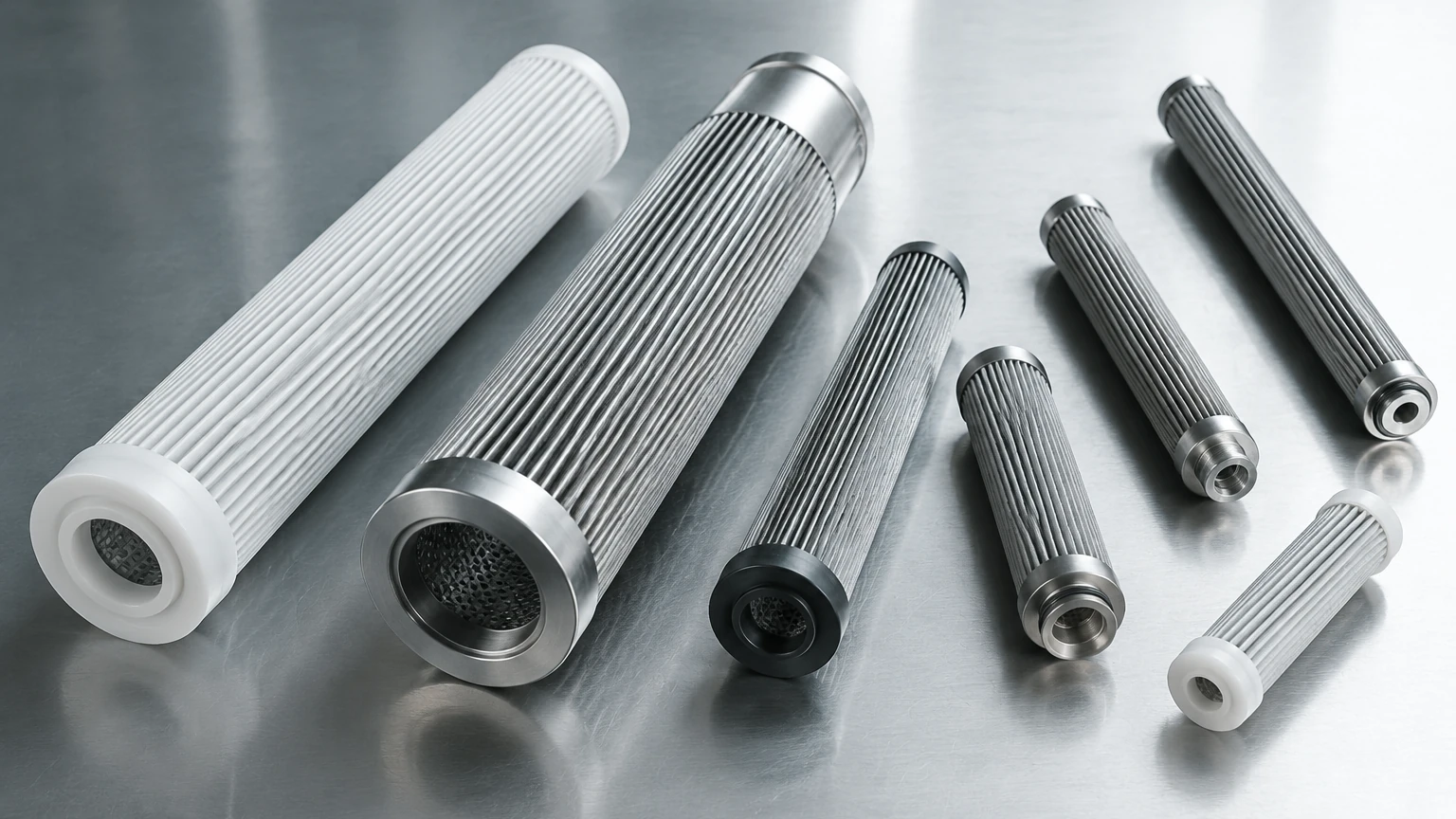
The primary driver for selecting a pleated filter for water applications is the maximization of the filtration surface area. In a standard non-pleated cylindrical filter, the filtration area is limited to the outer circumference of the media. By contrast, a pleated design allows for several times more surface area to be packed into the same housing volume.
Increased Dirt-Holding Capacity
Surface area is directly proportional to the dirt-holding capacity of a filter. In industrial water systems where suspended solids, scale, or biological matter are present, a higher surface area allows for a more gradual accumulation of contaminants. This results in a slower increase in differential pressure ($ΔP$) across the filter, extending the service life between cleaning cycles or replacements.
Reduced Flux and Improved Efficiency
Flux refers to the volume of water passing through a unit area of filter media over time (typically measured in GFD – gallons per square foot per day). By increasing the surface area through pleating, the flux per square inch of media is reduced for any given flow rate. Lower flux rates generally lead to higher filtration efficiency, as particles are less likely to be forced through the media pores by high-velocity fluid streams. This is particularly critical when dealing with deformable particles or when absolute filtration ratings are required.
Material Considerations: Stainless Steel vs. Polymeric Media
While many commercial water filters utilize polypropylene or polyester pleated media, industrial applications often demand the structural integrity and chemical resistance of stainless steel. For systems involving high temperatures, aggressive chemical cleaning agents, or high-pressure differentials, stainless steel pleated filters are the standard choice.
Corrosion Resistance and Longevity
In water filtration, the presence of dissolved oxygen, chlorides, or varying pH levels can quickly degrade inferior metals. Kaifil utilizes high-grade stainless steel alloys, such as 304 and 316L, to ensure long-term resistance to corrosion. 316L, in particular, is preferred for pharmaceutical and food-grade water systems due to its superior resistance to pitting and crevice corrosion.
Thermal and Mechanical Stability
Polymeric filters often have a maximum operating temperature of 60°C to 80°C, beyond which the media may soften or lose its pore structure. Stainless steel pleated filters can operate at temperatures exceeding 300°C, making them indispensable for steam filtration, hot water loops, and boiler feed water treatment. Furthermore, the rigid nature of metal pleats prevents "pleat collapse" under high-pressure surges, a common failure mode in plastic-based systems.
Technical Parameters for Filter Selection
When evaluating pleated filter water solutions, engineers must look beyond simple dimensions. Several technical parameters define the performance and suitability of a filter for a specific industrial process.
Micron Ratings: Absolute vs. Nominal
A nominal micron rating is an industry-standard indicating the filter's ability to retain a major percentage (usually 60% to 90%) of particles of a specific size. However, for critical applications, an absolute rating is required. An absolute rating implies a 99.9% (Beta 1000) or higher efficiency at the specified micron size. In pleated stainless steel mesh, the precision of the weave allows for highly accurate absolute ratings, ensuring that no particles larger than the pore size pass through the system.
Pleat Density and Geometry
The number of pleats per inch and the depth of each pleat must be carefully engineered. If the pleats are too tightly packed (high pleat density), the fluid cannot easily reach the bottom of the folds, leading to "pleat blinding." This effectively reduces the usable surface area and causes a rapid spike in pressure drop. Conversely, too few pleats fail to capitalize on the benefits of the pleated design. Manufacturers like Kaifil optimize pleat geometry based on the viscosity of the fluid and the nature of the contaminants.
Differential Pressure (ΔP) Limits
Every filter has a clean pressure drop and a maximum allowable terminal pressure drop. For reusable stainless steel filters, the terminal $ΔP$ is the point at which the filter must be removed for cleaning. Understanding the structural collapse pressure of the pleated element is vital for safety, particularly in hydraulic or high-pressure water injection systems.
Applications of Pleated Water Filtration in Industry
The versatility of pleated stainless steel filters makes them suitable for a wide array of demanding sectors. Each industry presents unique challenges regarding water quality and system constraints.
Chemical and Petrochemical Processing
In chemical manufacturing, water is often used as a solvent, a coolant, or a cleaning agent. These systems frequently involve exposure to aggressive chemicals or high-temperature processes. Pleated stainless steel filters provide the necessary chemical compatibility to handle acidic or alkaline water streams while maintaining high flow rates required for large-scale production.
Food and Beverage Production
Water used in food and beverage production must meet stringent hygiene standards. Pleated filters are used for the clarification of ingredients, the filtration of bottle-wash water, and the protection of downstream RO (Reverse Osmosis) membranes. The cleanable nature of stainless steel allows for sterilization via steam or hot water, ensuring that the filtration system does not become a breeding ground for bacteria.
Pharmaceutical and Biotech
In the pharmaceutical industry, Water for Injection (WFI) and purified water systems require absolute filtration to remove pyrogens, bacteria, and fine particulates. Pleated metal fiber felt or fine wire mesh provides the high-efficiency filtration needed to protect sensitive equipment and ensure product safety. To explore specific configurations for these regulated environments, engineers can Review product options and application support on the Main Page of the Kaifil website.
Maintenance, Cleaning, and Total Cost of Ownership
One of the most significant advantages of stainless steel pleated filters over disposable alternatives is their reusability. While the initial capital expenditure (CapEx) for a stainless steel element is higher than a plastic cartridge, the total cost of ownership (TCO) is often much lower over the life of the project.
Cleaning Methodologies
Depending on the contaminant, several methods can be used to restore the performance of a pleated stainless steel filter:
1. Backwashing: Reversing the flow of clean water through the filter to dislodge surface-bound particles.
2. Ultrasonic Cleaning: Using high-frequency sound waves in a cleaning solvent to remove fine particles embedded deep within the pleats or mesh pores.
3. Chemical Cleaning (CIP): Using acids, bases, or surfactants to dissolve organic or mineral scaling without disassembling the housing.
4. Burn-off/Pyrolysis: For organic contaminants, controlled heating can oxidize the material, leaving the stainless steel mesh clean.
Sustainability and Waste Reduction
In modern industrial operations, reducing the environmental footprint is a key KPI. Disposable filters contribute significantly to landfill waste and require constant procurement and logistics support. Reusable pleated filters align with sustainability goals by eliminating the waste stream associated with frequent filter change-outs.
Customization: Tailoring Filtration to the Process
Off-the-shelf filtration solutions often force engineers to compromise on flow rate, pressure drop, or filtration efficiency. Custom-engineered pleated filters allow for a perfect match between the filter's performance characteristics and the process requirements.
Specifying Custom Requirements
When working with a manufacturer like Kaifil, engineers should provide the following data points to ensure an optimal design:
* Fluid Characteristics: Temperature, pH, and chemical composition.
* Contaminant Profile: Particle size distribution (PSD), concentration (PPM), and the physical nature of the solids (e.g., hard, slimy, or fibrous).
* Operating Parameters: Normal and maximum flow rates, operating pressure, and maximum allowable pressure drop.
* Mechanical Interface: Connection types (flanged, NPT, threaded), housing dimensions, and seal material requirements (EPDM, Viton, PTFE).
The Role of OEM Support
For equipment manufacturers (OEMs), integrating a custom pleated filter into a larger system—such as a water desalination unit or a high-pressure pump skid—requires close collaboration with the filter manufacturer. Custom pleat heights, specialized end-cap designs, and reinforced internal cores can be engineered to meet the specific mechanical stresses of the OEM equipment.
Conclusion: Optimizing Industrial Water Systems
Pleated filter water technology is a cornerstone of efficient industrial fluid management. By leveraging the increased surface area and robust mechanical properties of pleated stainless steel, facilities can achieve higher purity levels, protect expensive downstream equipment, and reduce long-term operational costs. Whether the application involves high-temperature steam, corrosive chemical water, or high-purity pharmaceutical loops, the selection of the right pleated architecture is a critical engineering decision.
For technical professionals seeking to optimize their filtration processes, focusing on the intersection of material science and geometric design is key. By moving away from disposable, low-performance options and toward engineered, reusable stainless steel solutions, industries can ensure more reliable and sustainable water treatment outcomes. For more detailed technical specifications and to consult with filtration experts on custom designs, visit the Kaifil Main Page.
